



Dr. Michael Calvert
Assistant Superintendent, South Allegheny School District, Pennsylvania
Been using Humy in his district since 2024
“We enjoyed the program last year and used it frequently.”
Short questions assignment
With Clio the Cultural Anthropologist
A ready-made set of 5 short questions for Grade 7, shared by a teacher on Humy. Students answer 5 questions and an AI Clio the Cultural Anthropologist replies to each. Humy scores every answer against the rubric below.
Free teacher account · 20 AI messages a month, shared with your students · No credit card
Avec Clio, découvre les monuments emblématiques de la Roumanie, de la France, de l’Espagne, de la Grèce et de la Tunisie
PreviewInstructions
Si tu pouvais partager une seule photo de voyage, quel monument choisirais-tu? Clio, anthropologue culturelle, t’invite à regarder au-delà de l’image: chaque édifice raconte une histoire.
Question 1
Question 2
You have 2 submission attempts
Finish assignmentSi tu pouvais partager une seule photo de voyage, quel monument choisirais-tu ? Clio, anthropologue culturelle, t’invite à regarder au-delà de l’image : chaque édifice raconte une histoire.
Ta mission : identifier ce que ces monuments révèlent de leur époque et expliquer tes idées à partir d’indices précis.
En Roumanie, le château de Bran est associé à la légende de Dracula, même si cette histoire ne résume pas son passé. En France, la tour Eiffel fut construite pour l’Exposition universelle de 1889. En Espagne, les arcs et les motifs géométriques de l’Alhambra témoignent de l’art islamique. En Grèce, le Parthénon était dédié à Athéna, protectrice de la cité. En Tunisie, l’amphithéâtre d’El Jem accueillait des spectacles à l’époque romaine.
Réponds en quelques phrases par question : nomme le monument concerné et appuie chaque explication sur un détail du texte.
Pour commencer ton enquête avec Clio, clique sur le bouton « start assignment ».
Students can open this rubric while they work. Humy scores each answer against it.
Answers are either correct or incorrect and scored out of 1 point max. Chaque réponse doit nommer le monument concerné et expliquer ce qu’il révèle de son époque à l’aide d’un détail précis du texte.

Explorer of human cultures
Students talk to an AI version of Clio the Cultural Anthropologist, grounded in a curated biography and selected historical sources. As with any AI, students should check important claims.
In your classroom
Create a free teacher account, open this assignment and choose Copy to my assignments to make it yours.
Students open it and type their first name and last initial. No email, no password.
Every answer gets a score and written feedback. You see every result.
Signed up but don't see it? Open Assignments → Community library.
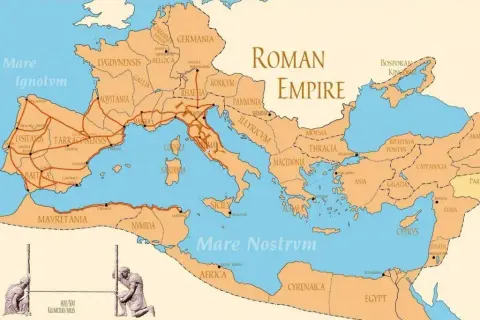
Geography, History
with Julius Caesar

History
with George Washington

Geography, History
with the AI tutor
Paying customers
























Dr. Michael Calvert
Assistant Superintendent, South Allegheny School District, Pennsylvania
Been using Humy in his district since 2024
“We enjoyed the program last year and used it frequently.”

Jacob Chisom
World and American History, Monticello High School, Arkansas
Been using Humy in his classroom since 2024
“My students say it’s a welcome change of pace. I’m not a fan of the “sage on the stage” model, so I try to incorporate research-oriented and self-paced activities. With Humy, students have to take charge of their learning. They’ve become more adept at critical thinking, forming better questions, and improving their reading comprehension. The interview feature has been my go-to tool. I create assignments where students must ask historical figures a set number of questions, then summarize the responses to ensure they’re truly absorbing the material. This approach lets them actively explore the past rather than passively consuming information.”
Roger Campbell
7th-grade World History, Lancaster County, Pennsylvania
Been using Humy in his classroom since 2024
“Humy has helped me bring historical figures, sometimes long past, to life. When my students interact with these figures in real-time, it eliminates some of the perceived “ancient” characteristics of my curriculum. This has shifted my students’ thinking away from viewing history as abstract or irrelevant. Real-time interactions make historical figures relatable, even allowing students to ask off-topic questions that help put historical lives in a more relevant context for 13-year-olds. The feature I use the most is the interview feature. After teaching a topic, most recently Gandhi and Joan of Arc, I have the students ask pointed, focused questions. We practice good conversation techniques beforehand, teaching them to listen (or read) carefully and formulate thoughtful follow-up questions rather than just interrogating. It helps students practice effective conversation skills.”
Dr. Michael Calvert
Assistant Superintendent, South Allegheny School District, Pennsylvania
Been using Humy in his district since 2024
“We enjoyed the program last year and used it frequently.”
Jacob Chisom
World and American History, Monticello High School, Arkansas
Been using Humy in his classroom since 2024
“My students say it’s a welcome change of pace. I’m not a fan of the “sage on the stage” model, so I try to incorporate research-oriented and self-paced activities. With Humy, students have to take charge of their learning. They’ve become more adept at critical thinking, forming better questions, and improving their reading comprehension. The interview feature has been my go-to tool. I create assignments where students must ask historical figures a set number of questions, then summarize the responses to ensure they’re truly absorbing the material. This approach lets them actively explore the past rather than passively consuming information.”
Roger Campbell
7th-grade World History, Lancaster County, Pennsylvania
Been using Humy in his classroom since 2024
“Humy has helped me bring historical figures, sometimes long past, to life. When my students interact with these figures in real-time, it eliminates some of the perceived “ancient” characteristics of my curriculum. This has shifted my students’ thinking away from viewing history as abstract or irrelevant. Real-time interactions make historical figures relatable, even allowing students to ask off-topic questions that help put historical lives in a more relevant context for 13-year-olds. The feature I use the most is the interview feature. After teaching a topic, most recently Gandhi and Joan of Arc, I have the students ask pointed, focused questions. We practice good conversation techniques beforehand, teaching them to listen (or read) carefully and formulate thoughtful follow-up questions rather than just interrogating. It helps students practice effective conversation skills.”
FAQ
Ready when you are
Free teacher account · 20 AI messages a month, shared with your students · No credit card.