



Dr. Michael Calvert
Assistant Superintendent, South Allegheny School District, Pennsylvania
Been using Humy in his district since 2024
“We enjoyed the program last year and used it frequently.”
Interview assignment
With Al Capone
A ready-made interview for Grade 11, shared by a teacher on Humy. Students question an AI Al Capone in a live chat.
Free teacher account · 20 AI messages a month, shared with your students · No credit card
Interview Al Capone: Weighing Prohibition’s Benefits and Costs in America
PreviewInteract responsibly with the AI and verify facts. Note that teachers have access to these conversations.
Hello, I'm Al Capone. I'm ready for your interview. What's your first question?
When a law bans something people still want, who benefits—and who bears the cost? Put that question to Al Capone, whose criminal empire profited from illegal liquor.
YOUR MISSION: Investigate whether Prohibition’s intended benefits outweighed its unintended consequences, then form a judgment supported by evidence.
From 1920 to 1933, the Eighteenth Amendment and Volstead Act restricted the manufacture, sale, and transportation of alcohol. Supporters hoped to reduce drinking and its social harms; illegal markets also fueled organized crime, violence, and corruption.
Ask Capone probing questions about customers, enforcement, profits, and public safety. Press him on contradictions: he witnessed this era firsthand, but he also had reasons to defend his business. Distinguish his perspective from established historical facts, and consider whose experiences his account leaves out.
Begin: Select the “start assignment” button to begin your AI-powered historical figure interview with Al Capone.
Grade the student’s interview choices and evidence-based judgment—not the AI persona’s answers. Maximum total: 20 points. Each criterion earns only its listed point values.

American gangster
Students talk to an AI version of Al Capone, grounded in a curated biography and selected historical sources. As with any AI, students should check important claims.
In your classroom
Create a free teacher account, open this assignment and choose Copy to my assignments to make it yours.
Students open it and type their first name and last initial. No email, no password.
Students submit when they finish, and their work appears in Humy.
Signed up but don't see it? Open Assignments → Community library.

US History
with Eliot Ness
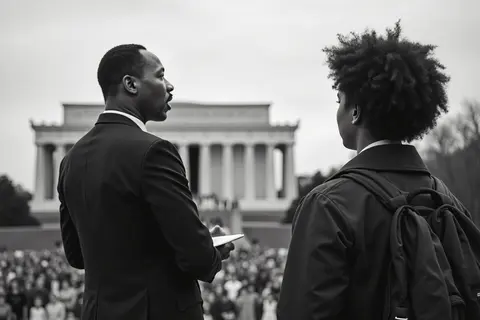
History, Social Studies
with Martin Luther King Jr.

US History
with George Washington and 2 more
Paying customers



























Dr. Michael Calvert
Assistant Superintendent, South Allegheny School District, Pennsylvania
Been using Humy in his district since 2024
“We enjoyed the program last year and used it frequently.”

Jacob Chisom
World and American History, Monticello High School, Arkansas
Been using Humy in his classroom since 2024
“My students say it’s a welcome change of pace. I’m not a fan of the “sage on the stage” model, so I try to incorporate research-oriented and self-paced activities. With Humy, students have to take charge of their learning. They’ve become more adept at critical thinking, forming better questions, and improving their reading comprehension. The interview feature has been my go-to tool. I create assignments where students must ask historical figures a set number of questions, then summarize the responses to ensure they’re truly absorbing the material. This approach lets them actively explore the past rather than passively consuming information.”
Roger Campbell
7th-grade World History, Lancaster County, Pennsylvania
Been using Humy in his classroom since 2024
“Humy has helped me bring historical figures, sometimes long past, to life. When my students interact with these figures in real-time, it eliminates some of the perceived “ancient” characteristics of my curriculum. This has shifted my students’ thinking away from viewing history as abstract or irrelevant. Real-time interactions make historical figures relatable, even allowing students to ask off-topic questions that help put historical lives in a more relevant context for 13-year-olds. The feature I use the most is the interview feature. After teaching a topic, most recently Gandhi and Joan of Arc, I have the students ask pointed, focused questions. We practice good conversation techniques beforehand, teaching them to listen (or read) carefully and formulate thoughtful follow-up questions rather than just interrogating. It helps students practice effective conversation skills.”
Dr. Michael Calvert
Assistant Superintendent, South Allegheny School District, Pennsylvania
Been using Humy in his district since 2024
“We enjoyed the program last year and used it frequently.”
Jacob Chisom
World and American History, Monticello High School, Arkansas
Been using Humy in his classroom since 2024
“My students say it’s a welcome change of pace. I’m not a fan of the “sage on the stage” model, so I try to incorporate research-oriented and self-paced activities. With Humy, students have to take charge of their learning. They’ve become more adept at critical thinking, forming better questions, and improving their reading comprehension. The interview feature has been my go-to tool. I create assignments where students must ask historical figures a set number of questions, then summarize the responses to ensure they’re truly absorbing the material. This approach lets them actively explore the past rather than passively consuming information.”
Roger Campbell
7th-grade World History, Lancaster County, Pennsylvania
Been using Humy in his classroom since 2024
“Humy has helped me bring historical figures, sometimes long past, to life. When my students interact with these figures in real-time, it eliminates some of the perceived “ancient” characteristics of my curriculum. This has shifted my students’ thinking away from viewing history as abstract or irrelevant. Real-time interactions make historical figures relatable, even allowing students to ask off-topic questions that help put historical lives in a more relevant context for 13-year-olds. The feature I use the most is the interview feature. After teaching a topic, most recently Gandhi and Joan of Arc, I have the students ask pointed, focused questions. We practice good conversation techniques beforehand, teaching them to listen (or read) carefully and formulate thoughtful follow-up questions rather than just interrogating. It helps students practice effective conversation skills.”
FAQ
Ready when you are
Free teacher account · 20 AI messages a month, shared with your students · No credit card.