Logic
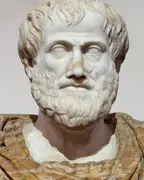
Aristotle
c. 350 BCE Athens, Greece
He showed that an argument can be checked by its form alone: given the premises, the conclusion follows whatever the argument is about.
 People behind AI
As Anthropic goes public, we celebrate 63 scientists who shaped computer science and AI, from ancient times to today. Humy uses Claude and historical sources to simulate each of them.
The cast, in order of appearance
Logic
c. 350 BCE Athens, Greece
He showed that an argument can be checked by its form alone: given the premises, the conclusion follows whatever the argument is about.

Automatic control mechanisms
9th century Baghdad, Iraq
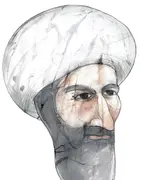
Scholars in ninth-century Baghdad, the three brothers wrote the Kitab al-Hiyal (Book of Ingenious Devices): about 100 devices, mostly automatic vessels, with control mechanisms that exploit even small changes in air and water pressure.
Geared water-driven automata
early 11th century Córdoba, Spain
In early eleventh-century al-Andalus he wrote the Kitab al-Asrar (Book of Secrets): 31 models, most of them water clocks. Five of them, automata driven by water wheels, pass power through complex gear trains built to run intermittently.

A water clock, fully described
1203 Damascus, Syria
Got the water clock his father built at the Jayrun Gate of Damascus's Umayyad Mosque running again, and in 1203 described it in a book: a record of how a self-acting machine was built, kept working and improved.
Automata with self-regulating controls
c. 1206 Diyarbakır, Turkey
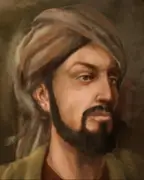
At the Artuqid court in Diyarbakır he wrote a book of fifty chapters on water clocks, automata, fountains and pumps, many run by floats and pulleys that control them automatically, each described so that a successor could rebuild it.
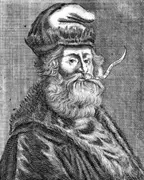
Reasoning by wheel
c. 1274 Palma, Spain
His “Art” combined a fixed alphabet of basic concepts by tables and lettered wheels turning one inside another, so that every combination of them could be produced and examined.

Machines that move themselves
1552 Cairo, Egypt
In 1552 he wrote al-Turuq al-Saniyya, a book of machines that move or keep time by themselves: water clocks, moving figures, a water-driven six-cylinder pump and a spit turned by steam, besides devices for lifting weights.

A test for machines
1637 Leiden, Netherlands
He argued that a machine built to look and act like us could still be told from a human by two tests: using language freely, and reasoning about anything at all.

Arithmetic by machine
1642–45 Rouen, France
He built a machine of toothed wheels that adds and subtracts, carrying the tens by itself. It showed that a piece of mental work could be handed to a mechanism.
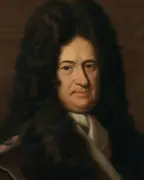
Ones and zeros
1703 Hanover, Germany
He set out arithmetic in 0 and 1, designed a machine to multiply and divide, and proposed a language of symbols in which reasoning would be done by calculation.
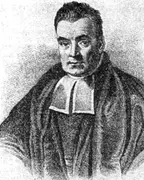
Learning from evidence
1763 Tunbridge Wells, United Kingdom
His essay, published after his death, showed how to work back from what has been observed to the chance behind it: the starting point of the inference used throughout machine learning.
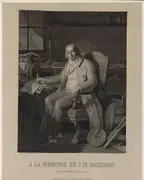
The punched card
1801–04 Lyon, France
His loom wove any pattern from a chain of punched cards: change the cards, and the same machine makes a different cloth. Babbage borrowed the cards to give his Analytical Engine its instructions.
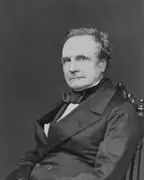
The Analytical Engine
1837 London, United Kingdom
He designed a general-purpose mechanical computer: a store for numbers, a mill to work on them, and programs on punched cards borrowed from the Jacquard loom.
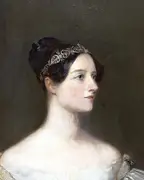
More than numbers
1843 London, United Kingdom
Her notes on the Analytical Engine include a worked program for it, and the insight that such a machine could work on anything expressed in symbols: music as well as numbers.

The algebra of thought
1854 Cork, Ireland
He turned logic into algebra, writing “and”, “or” and “not” as operations on symbols that take only the values 1 and 0. Reworked by his successors, it is the algebra in which digital circuits are designed.
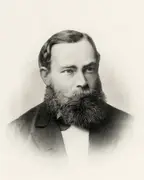
A script for thought
1879 Jena, Germany
His Begriffsschrift, or “concept-script”, of 1879 set out the first predicate calculus: quantifiers and variables that let a proof be written wholly in symbols, step by step. Logic-based AI grew from that idea of proof.
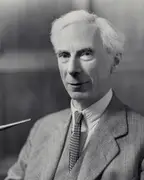
Mathematics from logic
1910–13 Cambridge, United Kingdom
With Whitehead he spent ten years deriving mathematics from logic, one symbolic step at a time, in Principia Mathematica. The Logic Theorist, a program begun in 1955, went on to prove thirty-eight of its theorems.
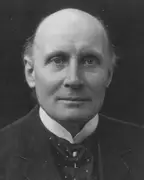
Operations without thinking
1910–13 Cambridge, United Kingdom
Co-author with Russell of Principia Mathematica, three volumes of symbolic proof; its chapter 2 gave the Logic Theorist, an early AI program, its theorems to prove. He also said what good notation is for: sparing the brain needless work.
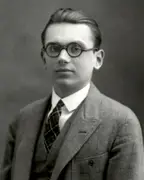
What no system can prove
1931 Vienna, Austria
He showed that any consistent formal system rich enough for arithmetic contains statements it can neither prove nor refute, by coding formulas as numbers: a trick Turing built on.

The lambda calculus
1936 Princeton, United States
With his lambda calculus he proposed the first precise definition of what can be calculated, and in 1936 showed that some problems of logic can be settled by no method. Turing, working independently, published the same result months later.
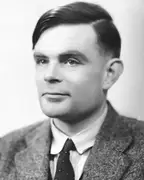
The universal machine
1936 Cambridge, United Kingdom
At 23 he defined computation with an imaginary machine that can imitate any other. In 1950 he asked whether such a machine could think, and proposed a test: conversation.
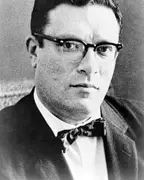
Three Laws of Robotics
1942 New York, United States
In the story “Runaround” he set out three rules built into every robot's brain, the first of them never to harm a human, then wrote for over forty years about their loopholes. He also coined the word “robotics”.

The artificial neuron
1943 Chicago, United States
With the young logician Walter Pitts he described the nerve cell as a logic gate, and showed that networks of such cells could compute: the first logical model of a neural network.

Nerve nets as logic
1943 Chicago, United States
At nineteen, with no degree, he worked out the mathematical logic of the paper with Warren McCulloch that treats nerve cells as on-off switches and shows what networks of them can compute: the starting point for artificial neural networks.
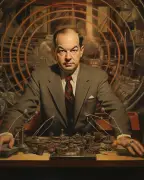
The stored program
1945 Princeton, United States
His report on the EDVAC set out the design nearly every computer has used since, with program and data in one memory, and described its parts as neurons.
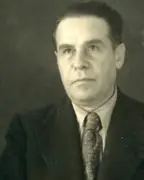
Purpose and feedback
1945–47 Mexico City, Mexico
Mexican physiologist who co-wrote “Behavior, Purpose and Teleology” (1943) with Norbert Wiener and Julian Bigelow, linking purpose to feedback. Wiener then worked with him at Mexico's National Institute of Cardiology, wrote Cybernetics (1948) there and dedicated it to him.
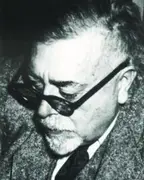
Feedback
1947 Mexico City, Mexico
He named cybernetics, the study of control and communication in the animal and the machine, and was among the first to warn what automatic machines would do to work.
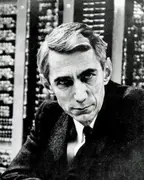
Information
1948 New York, United States
He measured information in bits and, to show that English can be modelled by chance, strung words together by choosing each from the odds given the word before: the idea a language model runs on.
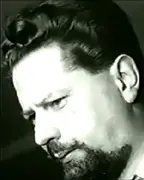
The robot tortoise
1948–49 Bristol, United Kingdom
In 1948–49 he built two robot “tortoises”, Elmer and Elsie, each with two valves for a brain. They explored, sought light and got round obstacles: lifelike behaviour from very few parts, built to test an idea about brains.
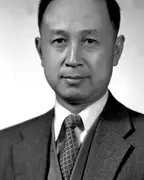
Engineering cybernetics
1954 Pasadena, United States
His 1954 book Engineering Cybernetics, written at Caltech, turned Norbert Wiener's cybernetics into an engineering science for designing control and guidance systems. After his return to China, he advocated research on artificial intelligence in the early 1980s.
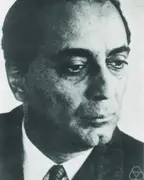
India builds its own computer
1954 Mumbai, India
As director of the Tata Institute of Fundamental Research, he chose to have a computer designed in-house rather than bought abroad: TIFRAC, built by R. Narasimhan's team (1955–60). He later chaired the committee that proposed India's Department of Electronics.
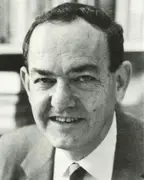
A thinking machine
1955–56 Pittsburgh, United States
Trained in political science, he studied how people decide and saw that computers could handle symbols as well as numbers. With Newell and Shaw he built the Logic Theorist, which found proofs the way a person might: by trying.

Programming and Soviet cybernetics
1955 Moscow, Russia
In 1952–53 he taught an early Soviet course on programming, with a notation for describing programs. In 1955 he co-wrote, with Sobolev and Kitov, the article that publicly dismissed ideological charges against cybernetics; from 1958 he edited Problems of Cybernetics.

Backing computing and cybernetics
1955 Moscow, Russia
A leading mathematician of the Soviet atomic project, he headed Moscow University's computational mathematics department from 1952, where Lyapunov taught programming. In 1955 he co-signed, with Lyapunov and Kitov, the article that publicly dismissed ideological charges against cybernetics.

Legitimising Soviet cybernetics
1955 Moscow, Russia
Co-wrote “The Main Features of Cybernetics” (1955), which likened computers to human thought and dismissed ideological charges against cybernetics; in 1959 he urged Khrushchev to manage the economy with networked computers.
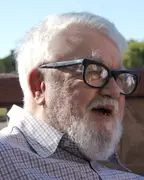
The name
1955–56 Hanover, New Hampshire, United States
He put the words “artificial intelligence” on the 1955 proposal for a summer workshop at Dartmouth College. The workshop met there in 1956, and the field has carried the name since.

Search by rule of thumb
1956 Pittsburgh, United States
With Simon and Shaw he wrote the Logic Theorist, often called the first artificial intelligence program: it found proofs of theorems from Principia Mathematica by search guided by rules of thumb, much as a person would.

List processing
1956 Santa Monica, United States
The programmer of the three. At RAND he made Newell and Simon's Logic Theorist run on the JOHNNIAC computer, and with them devised IPL, the first list-processing language, to write it in.

Neurons on a computer
1956 Poughkeepsie, United States
Chief architect of IBM's first scientific computer, he co-signed the Dartmouth proposal and tested Hebb's theory of how the brain learns on simulated networks of neurons. The first formed none of the cell groups Hebb predicted; a revised one did.

Learning as prediction
1956 Hanover, New Hampshire, United States
At Dartmouth he described a machine that learns from worked examples to predict the answers to new problems. By 1964 he had a general theory: weigh every program that could have produced the data, the shortest most heavily.

The Dartmouth notes
1956 Hanover, New Hampshire, United States
A graduate student working for Rochester at IBM, he went to the Dartmouth workshop in Rochester's place for three of its weeks. His report on the fifth and sixth lists who came and what each was working on.
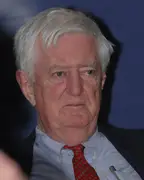
Pandemonium
1958 Lexington, United States
He designed Pandemonium, a program that learns to recognise patterns: ranks of “demons” shout when they spot their own features, and it learns which shouts to trust. Later neural networks for recognising images are organised much like it.
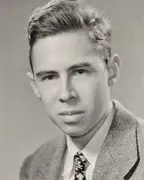
The machine that learns
1958 Buffalo, New York, United States
He built the perceptron, a network of artificial neurons that learns to tell patterns apart by adjusting the strength of its own connections.

Machine learning
1959 Poughkeepsie, United States
His checkers program learned from its own games until it played better than he did. Writing it up in 1959, he gave the field the phrase “machine learning”.
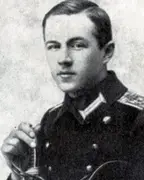
Organising Soviet cybernetics
1959 Moscow, Russia
Founded and chaired the Soviet Academy of Sciences' Scientific Council on Cybernetics (1959), which from 1974 had an AI section; in 1959, with Kitov and Lyapunov, he proposed a state network of computing centres to manage the economy.

Learning automata and automata games
1961–63 Moscow, Russia
Modelled learning with an automaton that its environment rewards or penalises at random, showed that in a steady environment enough memory lets it settle on the best action, and studied games between automata ignorant of the rules.
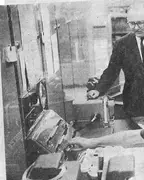
Computing as a public service
1961 Buenos Aires, Argentina
At the University of Buenos Aires he and the dean, Rolando García, founded the Instituto de Cálculo around a Ferranti Mercury computer, Clementina, which began work in 1961. In 1955 he had written critical articles on cybernetics and “electronic brains”.
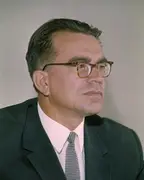
Computer network for the economy
1963 Kyiv, Ukraine
Led the Kyiv computing centre that became the Institute of Cybernetics, developed a theory of digital automata used to design computers, and in 1963 planned a network of computing centres to manage the Soviet economy at every level.
Psychonics and situational management
1964 Moscow, Russia
In 1964 he and psychologist Veniamin Pushkin started the “psychonics” seminar in Moscow, which challenged Newell and Simon's model of thinking as search. From it grew his “situational management”: computer control of complex systems through models of real-world situations.
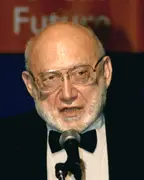
The expert system
1965–67 Stanford, United States
A geneticist who wanted a computer to work out the structure of molecules, he began DENDRAL at Stanford with Edward Feigenbaum. It is counted as the first expert system: a program that reasons from a specialist's knowledge.
Information measured by programs
1965 Moscow, Russia
With his students he gave Shannon's information theory a rigorous mathematical foundation. In 1961 he argued that the human mind could in principle be modelled, and in 1965 proposed measuring information by the shortest program that produces an object.

The first chatbot
1966 Cambridge, Massachusetts, United States
He wrote ELIZA, a program that answered typed sentences like a therapist. People confided in it, and he spent the rest of his life warning against trusting machines with human judgment.

Founding South African computer science
1967 Johannesburg, South Africa
Led the University of the Witwatersrand's computing centre from 1962 and in 1967 became South Africa's first professor of computer science; as vice-chancellor of Rhodes he founded Quæstiones Informaticæ (1979), forerunner of the South African Computer Journal.
A robot that plans
1968 Menlo Park, United States
At the Stanford Research Institute he helped lead the team behind Shakey, the first mobile robot to reason about its actions, and co-invented A*, a route-finding search still in use. He later wrote a history of the field.
The limits of the perceptron
1969 Cambridge, Massachusetts, United States
With Seymour Papert he proved what a single-layer perceptron can never compute, in a book that helped turn the field away from neural networks for a decade.
Collective behaviour of automata
1969 Saint Petersburg, Russia
Worked with Mikhail Tsetlin on automata that learn from reward and penalty, and studied how groups of them can act well together through local interactions, without central control; with Dmitry Pospelov he explained this for general readers in 1984.
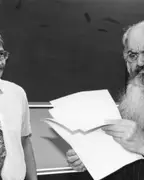
The Viable System Model
1971–73 Santiago, Chile
British cybernetician who led Chile's Project Cybersyn (1971–73) for Salvador Allende's government: a telex network, computer software and an operations room meant to steer state-run industry in near real time, built on his Viable System Model.
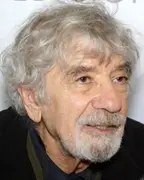
Autopoiesis
1972 Santiago, Chile
With Francisco Varela at the University of Chile he defined autopoiesis (1972), life as a self-producing network, simulated in 1974 as Protobio. Earlier, with Heinz von Foerster in Illinois, he put the observer at the centre of cognition.
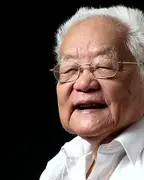
Machine proof of geometry theorems
1977 Beijing, China
In 1977 he introduced a mechanical method for proving theorems of elementary geometry, turning a geometry problem into polynomial equations that a computer can work through. “Wu's method” won a major achievement award at China's 1978 National Science Conference.
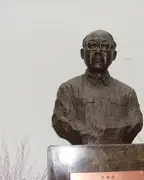
Generalised resolution for theorem proving
1979–82 Changchun, China
With his students at Jilin University he proposed “generalised resolution”, a machine-reasoning rule that keeps axioms in their natural if-then form, and proved it complete for first-order logic. In 1980 he launched a yearly national AI seminar for universities.

Inference machines for future AI
1982 Tokyo, Japan
From 1982 he directed ICOT's research centre in Tokyo, which ran Japan's Fifth Generation Computer project on the lines his group had proposed: parallel inference machines, programmed in logic, as a base for future AI.
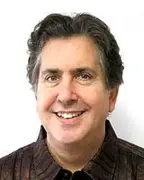
Common sense, by hand
1984 Austin, United States
In 1984 he set out to write down by hand the millions of everyday facts and rules that people never state, so that a machine could reason with common sense. The project, Cyc, was still running when he died.
Milestone
9 October 1986 San Diego, United States
A paper in Nature shows how a network with hidden layers can learn by passing its errors backwards. Others had found the method before; this paper shows what it could do, and it still trains neural networks.
Milestone
11 May 1997 New York, United States
IBM's chess computer wins a six-game match against the world champion, Garry Kasparov, searching 100 to 200 million positions a second.
Milestone
October 2012 Toronto, Canada
A deep neural network trained on graphics chips wins the ImageNet image-recognition contest by a wide margin, and the field turns to deep learning.
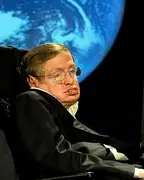
The warning
2014 London, United Kingdom
In London in 2014 he told the BBC that full artificial intelligence could end the human race, and the warning made headlines worldwide. In 2015 he signed an open letter calling for research to keep AI robust and beneficial.
Milestone
9–15 March 2016 Seoul, South Korea
DeepMind's program wins four games of five at Go against Lee Sedol, one of the strongest players in the world. Its makers had called beating any professional a feat “previously thought to be at least a decade away”.
Milestone
12 June 2017 Mountain View, United States
Eight researchers describe the transformer, the network design behind today's large language models, in work done at Google.
Milestone
30 November 2022 San Francisco, United States
OpenAI opens a chatbot built on a large language model to anyone who wants to try it, and talking to a machine becomes an everyday thing.
Milestone
14 March 2023 San Francisco, United States
Anthropic introduces its assistant, Claude. By company lore, as The New Yorker reports it, the name is partly a tribute to Claude Shannon.
Milestone
8 October 2024 Stockholm, Sweden
The Nobel Prize in Physics goes to two pioneers of machine learning “for foundational discoveries and inventions that enable machine learning with artificial neural networks”.
Milestone
20 January 2025 Hangzhou, China
DeepSeek releases R1, a reasoning model that rivals OpenAI's o1 at a fraction of the price, as open weights anyone can download. Chinese labs go on to match leading Western models with open models of their own.
Milestone
19 November 2026 New York, United States
The maker of Claude begins trading on Nasdaq under the ticker ANT.
Who is here. The 63 people on the globe are no longer living, and are named by at least two of the eight general histories of AI below, or by the histories of their own part of the world as often as anyone from there.
The figures. An AI figure on Humy is a simulation built from the historical record. It can be wrong: treat what it says as a way into the sources, not as the sources.
The occasion. Anthropic began trading on Nasdaq on 19 November 2026. Humy is independent and not affiliated with Anthropic; Claude is one of the models teachers can choose on Humy.
Suggest an edit. Spotted a mistake, or someone missing? Write to hello@humy.ai.