


Primary sourcePainting1849-1850
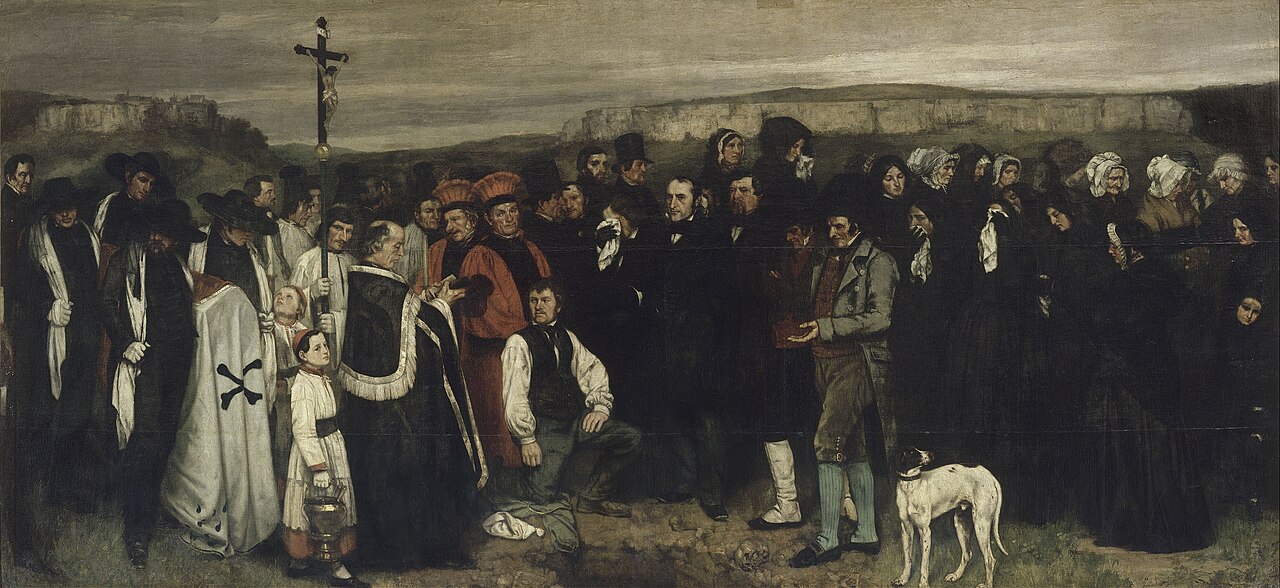
A Burial at Ornans
Gustave Courbet · 1849-1850
Courbet's huge 1849-50 painting of a provincial funeral in his hometown, painted with real townspeople as the mourners and on a scale once reserved for grand history painting.
Courbet's own monumental painting, later called by him 'the burial of Romanticism,' marking his break with grand traditional art.
About this source
What it is
Painted by Gustave Courbet between 1849 and 1850, this vast canvas depicts a funeral in his birthplace, Ornans. Real townspeople posed as models, including figures identified as friends of Courbet's grandfather and possibly his grandfather himself. It is now in the Musée d'Orsay in Paris.
Why it matters
Courbet painted an ordinary, local event on the grand scale normally used for religious or historical scenes, and its showing at the 1850 Paris Salon caused an outraged reaction. Many saw its horizontal, equal arrangement of figures as an egalitarian, even socialist, statement about rural life, though historians still debate whether Courbet intended a political message or simply a faithful picture of his region. Courbet himself called it
This painting is part of the curated material that grounds the AI version of Gustave Courbet on Humy.ai — when students ask about related events, the AI can quote it and cite it.
More Gustave Courbet sources
Browse all 96 →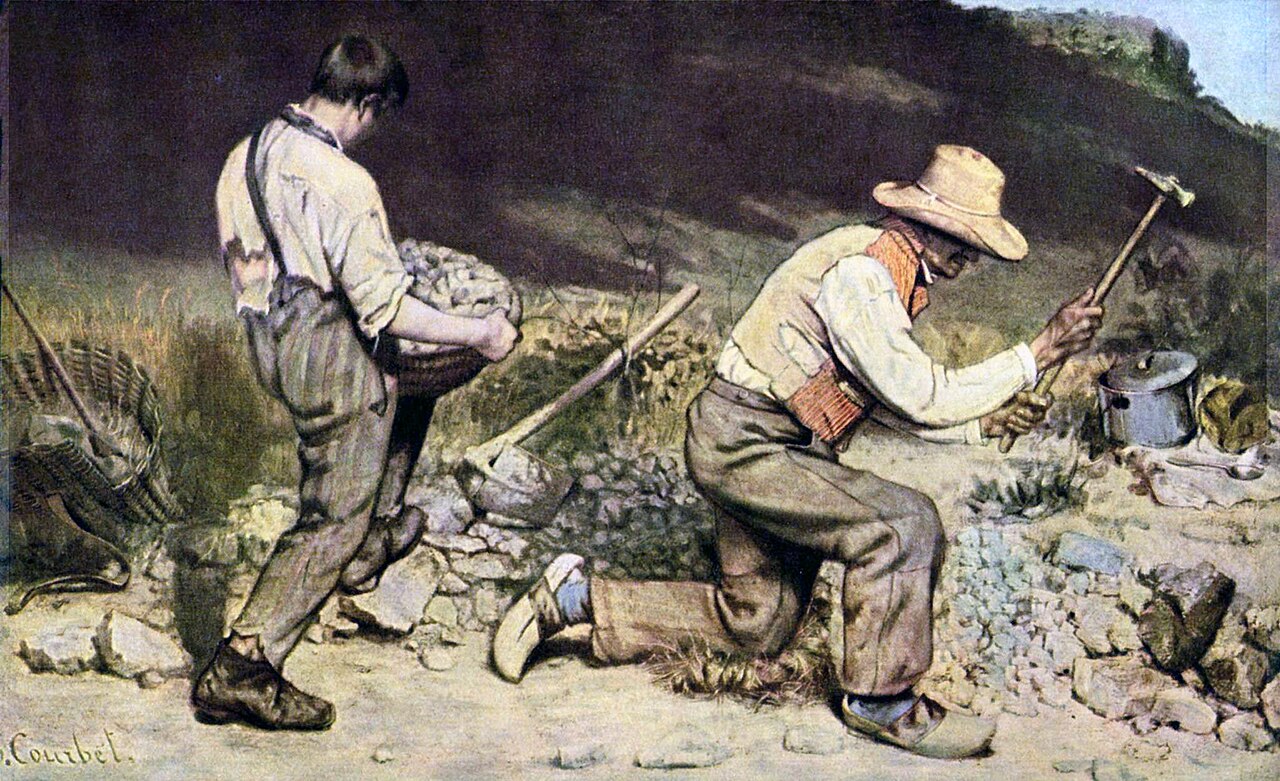 Painting
Primary source
The Stone Breakers
Gustave Courbet · 1849
 Painting
Primary source
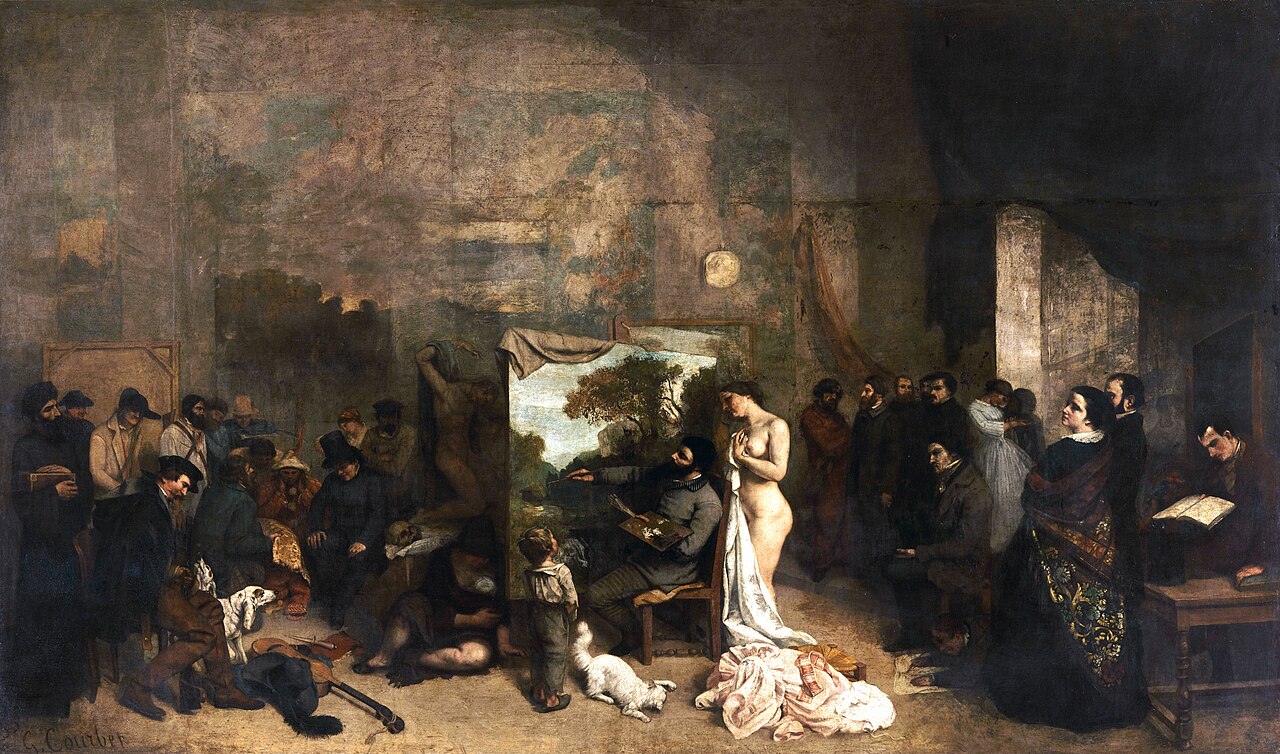
The Painter's Studio
Gustave Courbet · 1855
 Painting
Primary source
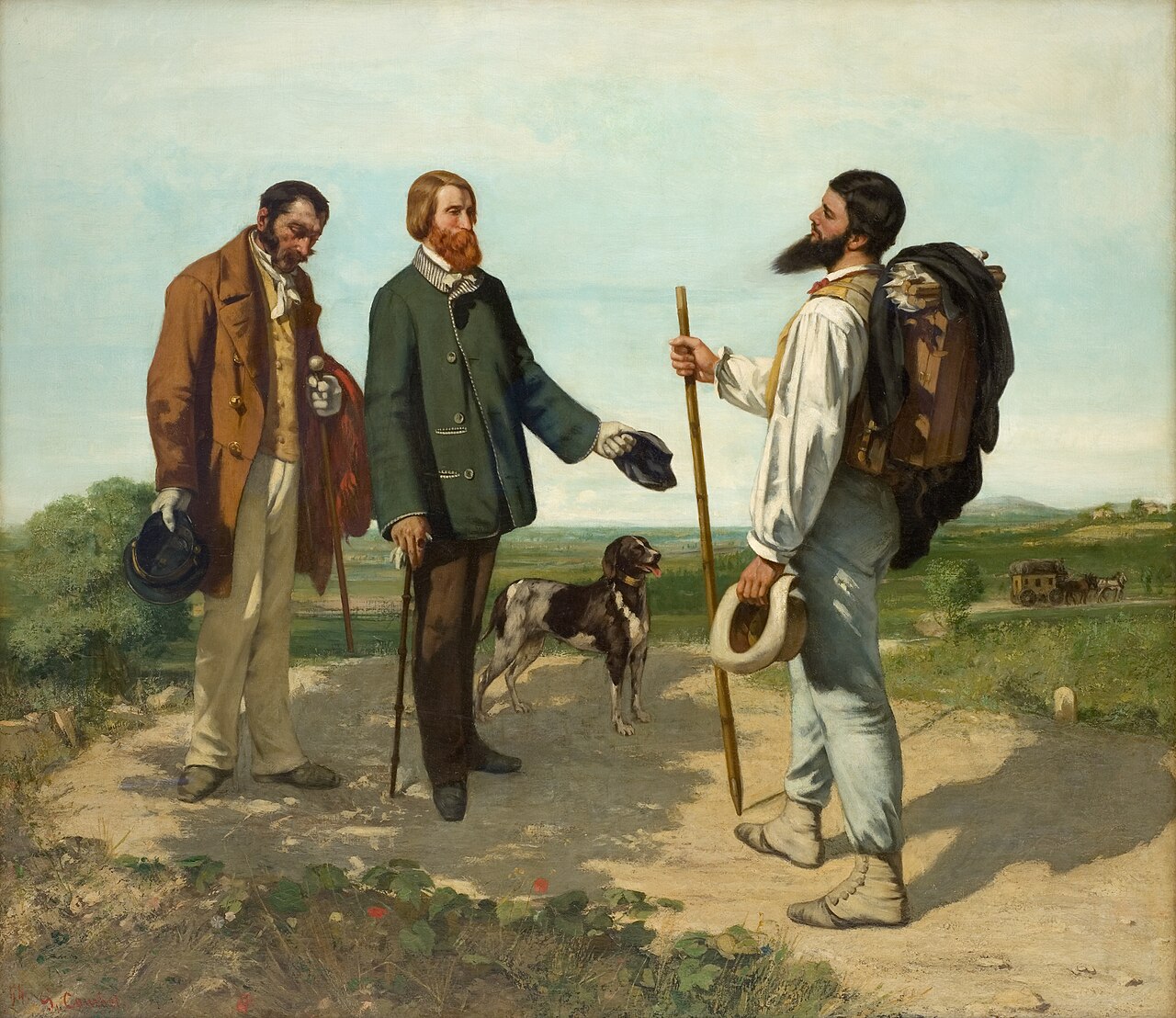
The Meeting, or Bonjour, Monsieur Courbet!
Gustave Courbet · 1854
 Painting
Primary source
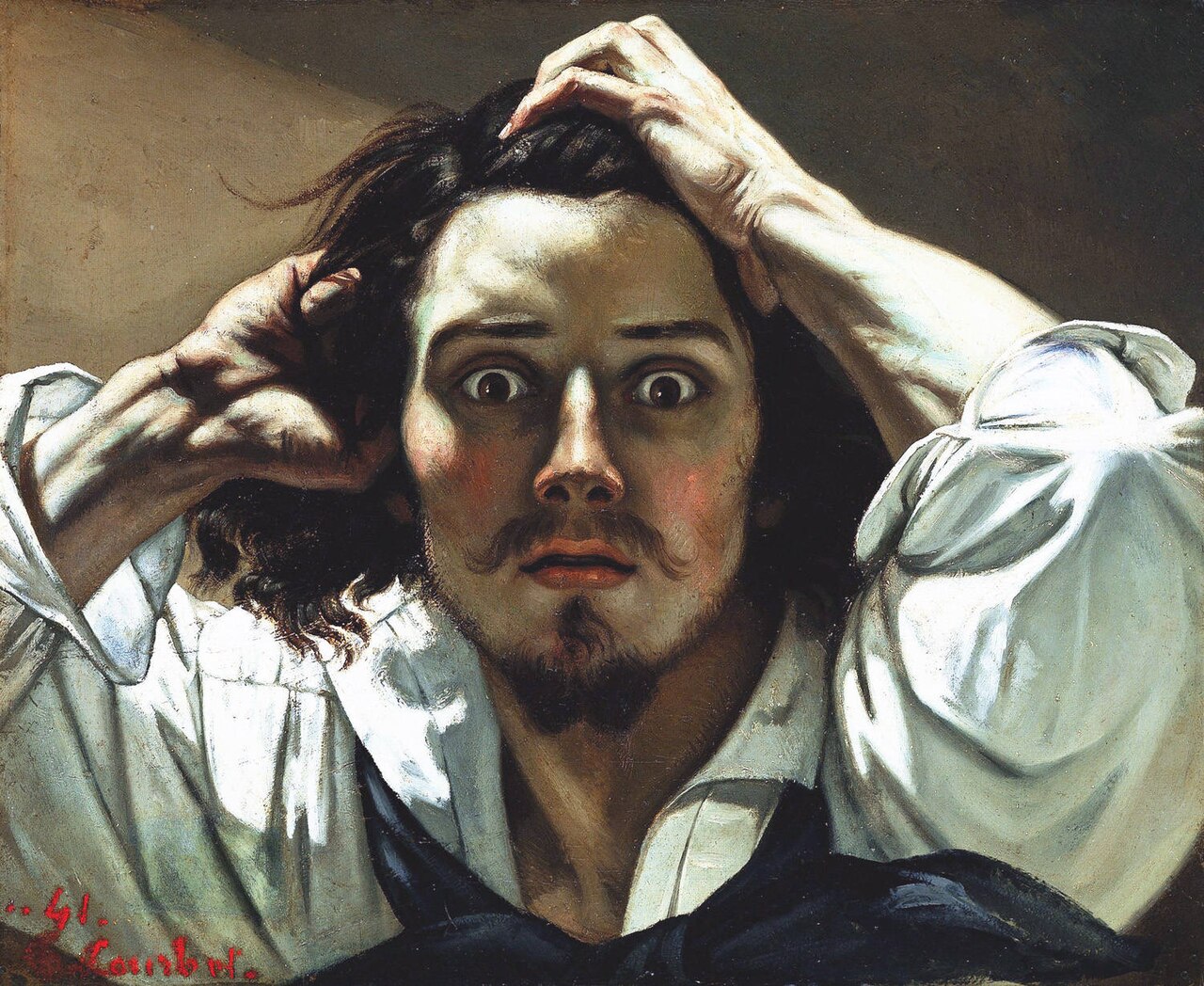
Le Désespéré
Gustave Courbet · c. 1843-1845
Free account
Read every Gustave Courbet source
Sign up free →
Ready when you are
Start chatting with Gustave Courbet now.
20 messages free · No credit card · Available in 50+ languages.