


Secondary sourcePainting1876
Aeolipile Illustration from an 1876 Reference Work
1876
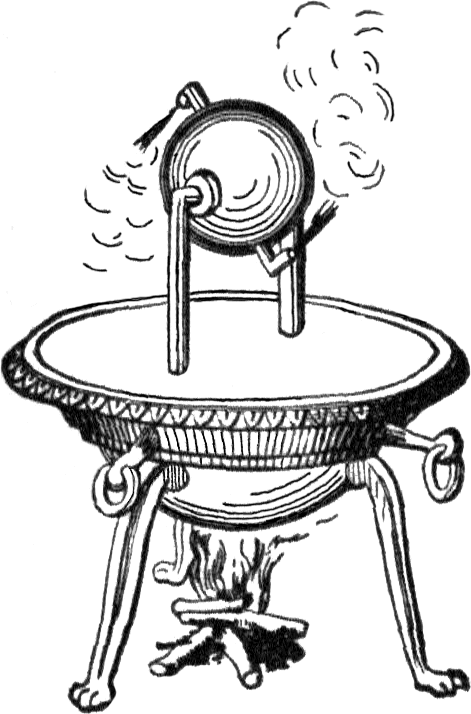
A diagram of Hero's aeolipile copied for an 1876 reference book from an earlier edition of Hero's own writings on pneumatics.
This diagram, copied from an edition of Hero's own text, illustrates the aeolipile he described in antiquity.
About this source
What it is
This line drawing shows an aeolipile: a hollow metal sphere with a bent outlet pipe, mounted over a ribbed basin on legs, with steam rising and a fire burning below. According to the entry in the reference work where it appeared, the image was copied from an edition of Hero's work Spiritalia, edited by Woodcroft of London.
Why it matters
The aeolipile is one of the inventions described in Hero of Alexandria's writings on pneumatics, where he explained how steam could be used to create movement. This 1876 diagram shows how editors and publishers kept republishing and explaining his descriptions long after his lifetime, helping later generations understand early ideas about steam power.
Look closer
- Why does the reference work say this image was copied from an edition of Hero's own text?
- What might be lost or changed when a diagram is copied from one book into another?
- How does this image help explain an ancient invention to readers who cannot see the original object?
This painting is part of the curated material that grounds the AI version of Hero of Alexandria on Humy.ai — when students ask about related events, the AI can quote it and cite it.
More Hero of Alexandria sources
Meet the AI Hero of Alexandria →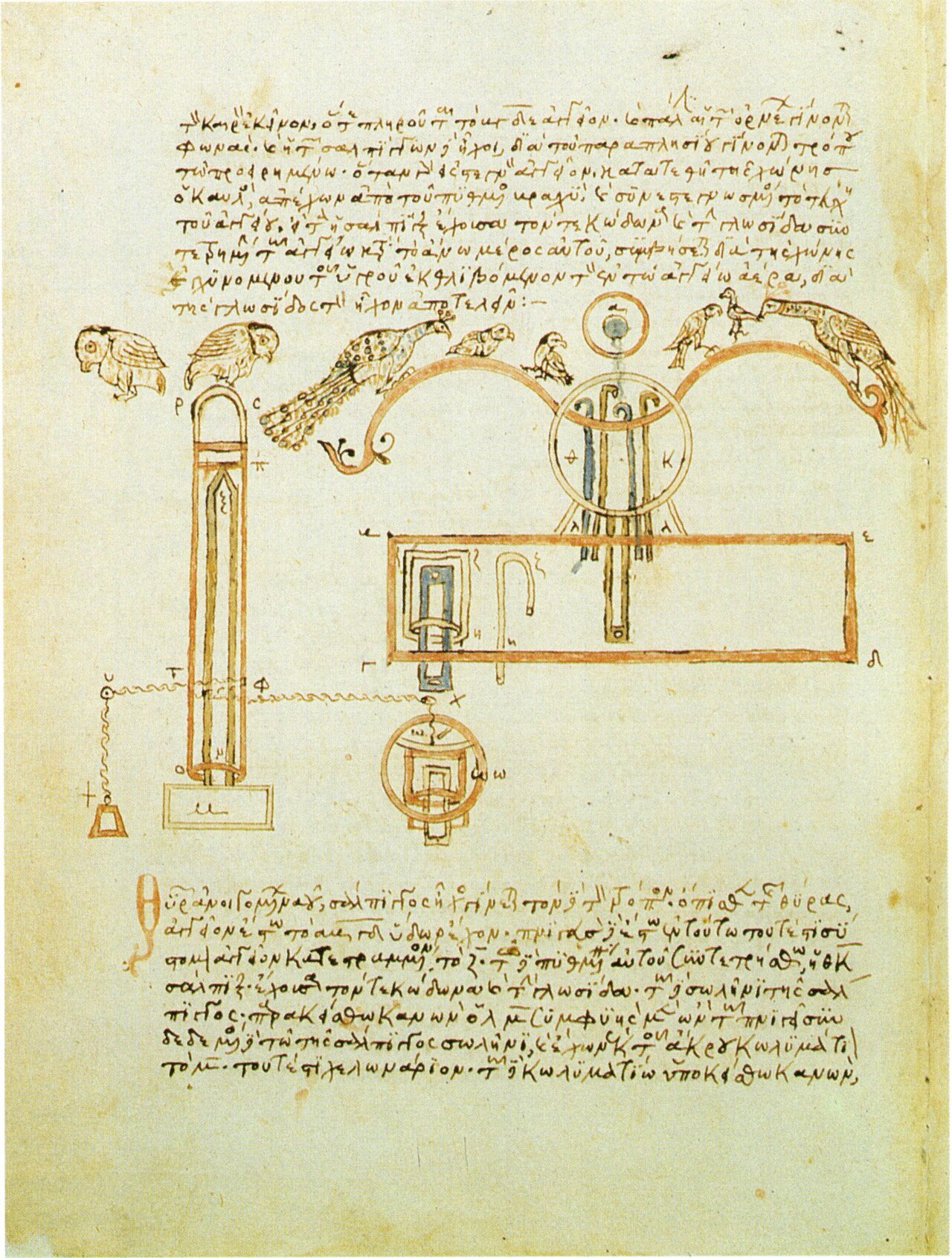 Book
Secondary source
Pneumatica
Hero of Alexandria · 1st century AD (this copy later)
 Book
Secondary source
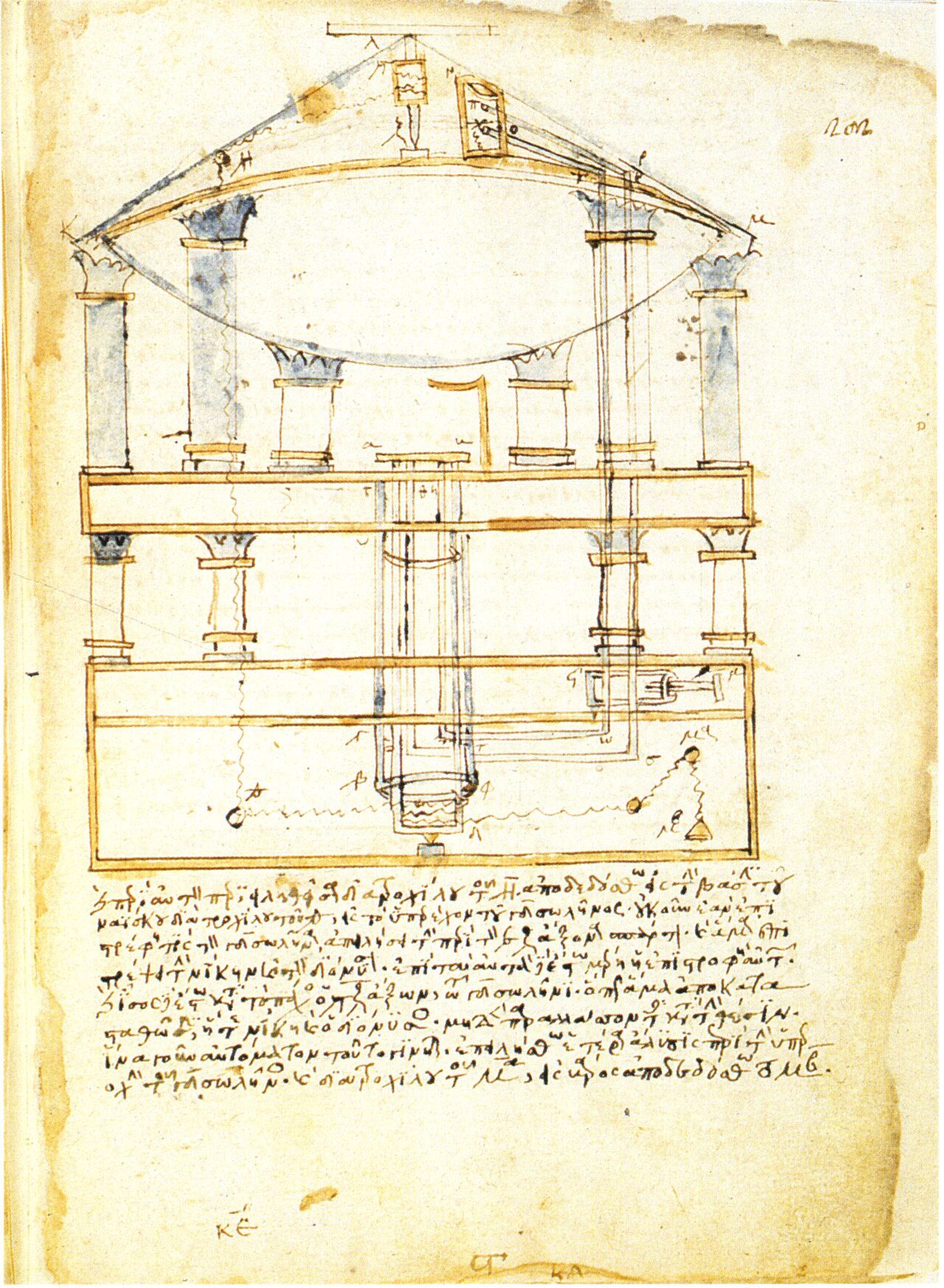
Automata (Bacchus diagram)
Hero of Alexandria · 1st century AD (this copy later)
 Painting
Secondary source
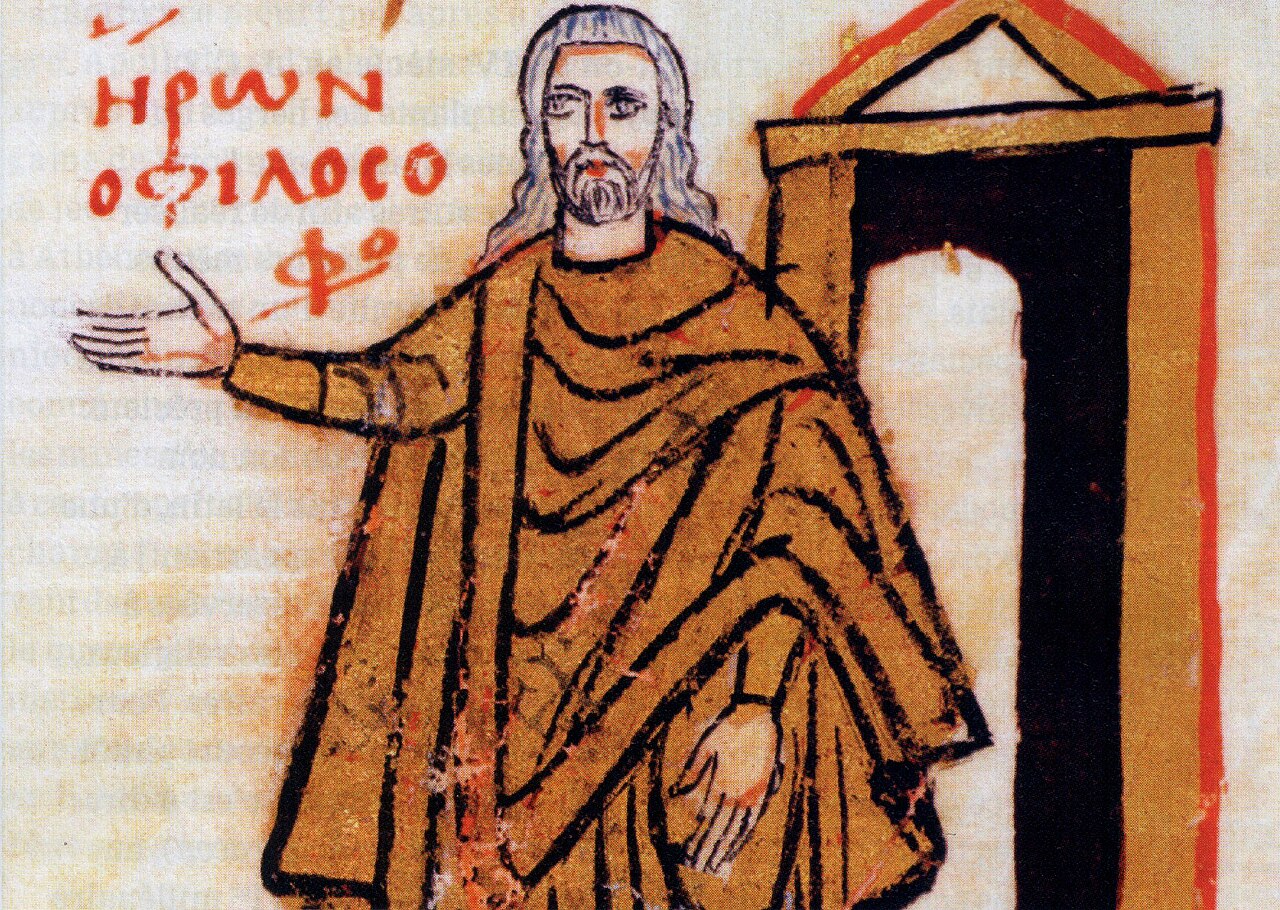
Hero of Alexandria in the Codex of Saint Gregory Nazianzenos
Unknown author · 9th century AD
 Document
Secondary source
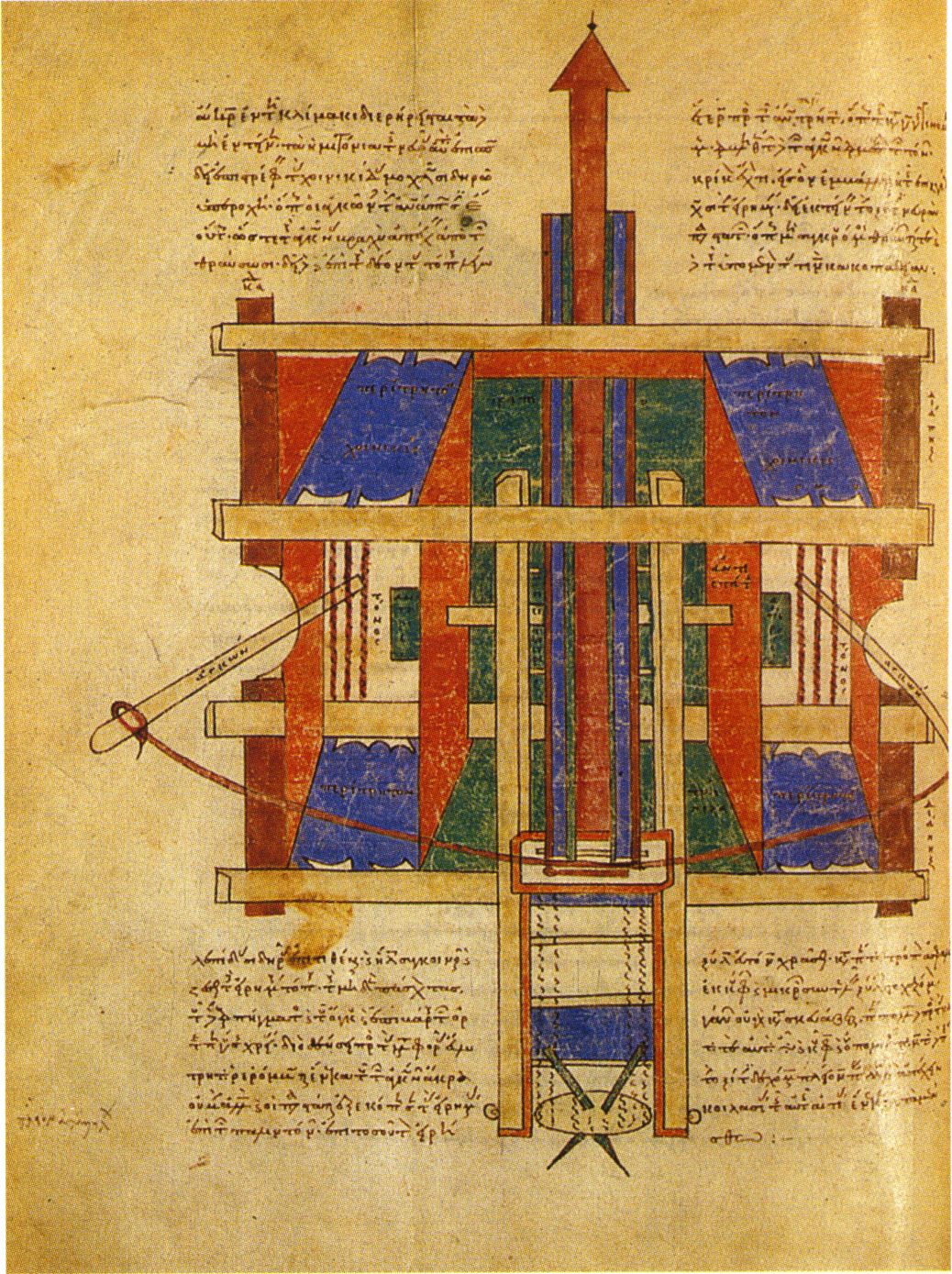
Belopoiika (design drawing of a siege engine)
Hero of Alexandria · 1st century AD (this copy later)
 Book
Secondary source
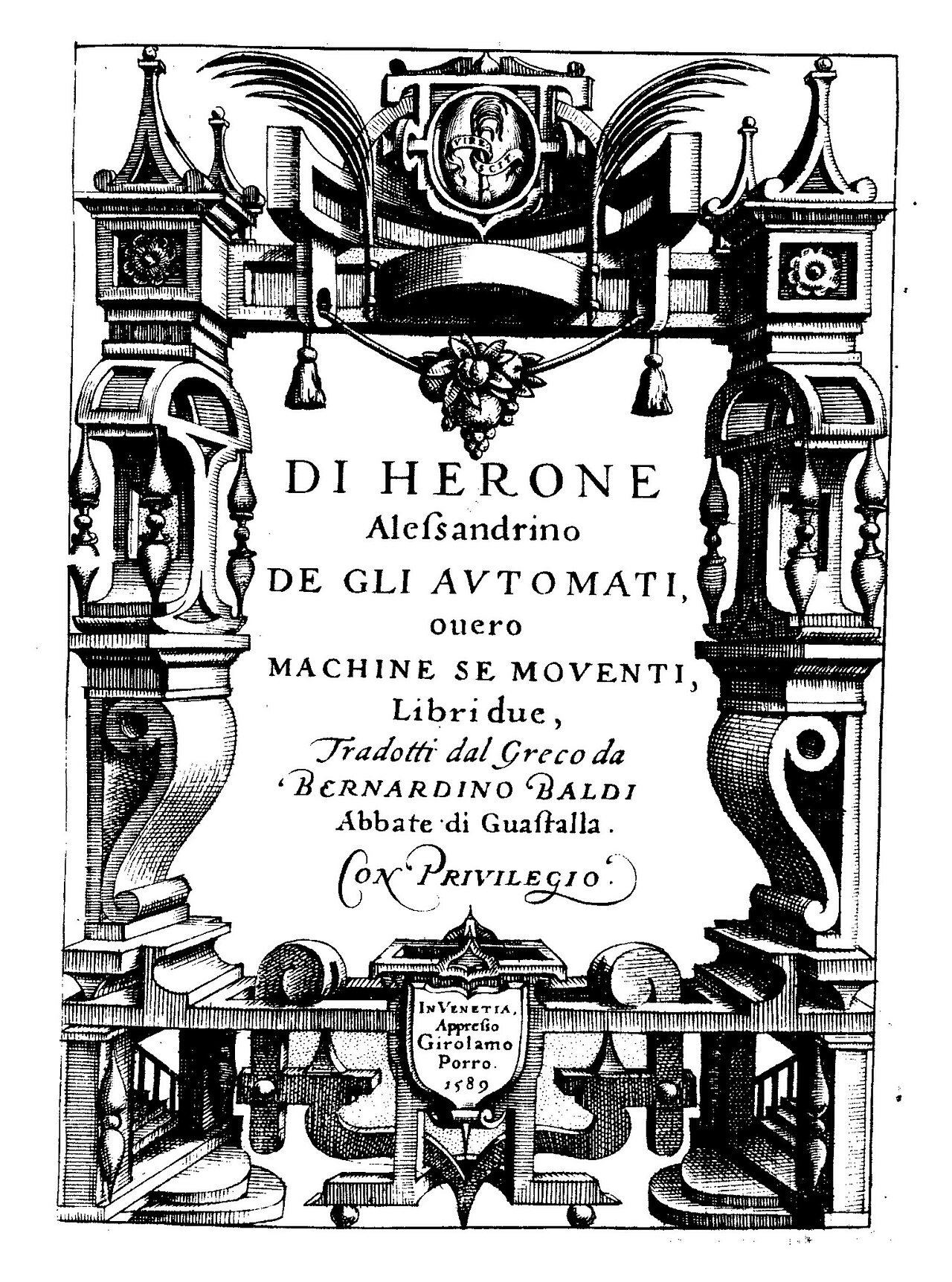
De gli automati, ouero Machine se mouenti
Hero : Alexandrinus · 1589
Ready when you are
Start chatting with Hero of Alexandria now.
20 messages free · No credit card · Available in 50+ languages.