


Secondary sourcePainting
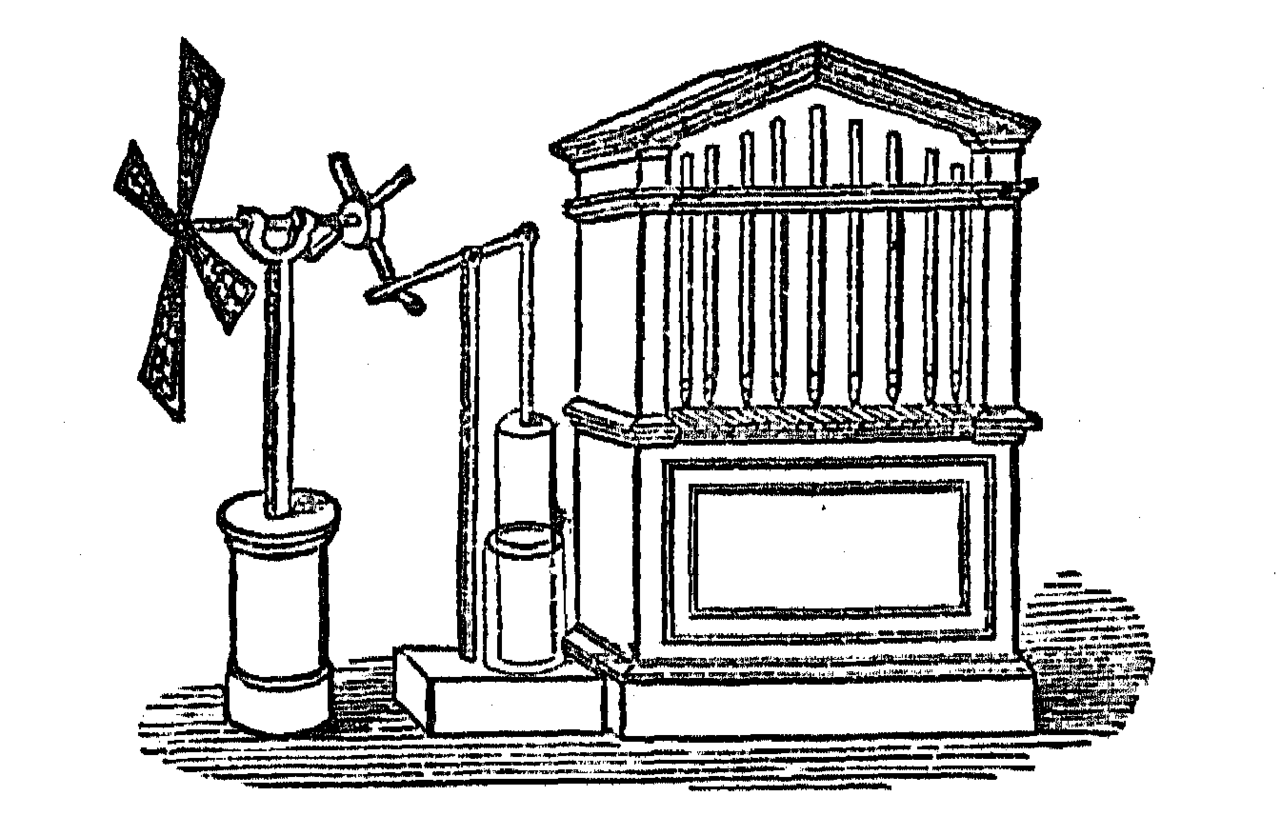
An Altar Organ Blown by a Windmill
Edward Francis Rimbault
A diagram reproducing Hero's design for an altar organ powered by a windmill, the earliest known machine driven by wind power.
Reproduces Hero's own design for a wind-powered organ, showing his inventive range as an engineer.
About this source
What it is
This drawing reproduces a design by Hero of Alexandria for an altar organ blown by the action of a windmill, included in Edward Francis Rimbault's book on early English organ builders. The image shows a windmill connected by a pipe to an organ housed in a temple-like structure.
Why it matters
This device is recorded as the earliest documented machine powered by wind. It shows Hero's remarkable range as an engineer, combining mechanics, pneumatics and music, and his lasting influence on later writers studying the history of instruments and machines.
Look closer
- What does combining a windmill with an organ tell us about Hero's approach to engineering?
- Why might this design be important to historians of both music and technology?
- What parts of the original design might be missing or simplified in this later drawing?
This painting is part of the curated material that grounds the AI version of Hero of Alexandria on Humy.ai — when students ask about related events, the AI can quote it and cite it.
More Hero of Alexandria sources
Meet the AI Hero of Alexandria → Book
Secondary source
Pneumatica
Hero of Alexandria · 1st century AD (this copy later)
 Book
Secondary source
Automata (Bacchus diagram)
Hero of Alexandria · 1st century AD (this copy later)
 Painting
Secondary source
Hero of Alexandria in the Codex of Saint Gregory Nazianzenos
Unknown author · 9th century AD
 Document
Secondary source
Belopoiika (design drawing of a siege engine)
Hero of Alexandria · 1st century AD (this copy later)
 Book
Secondary source
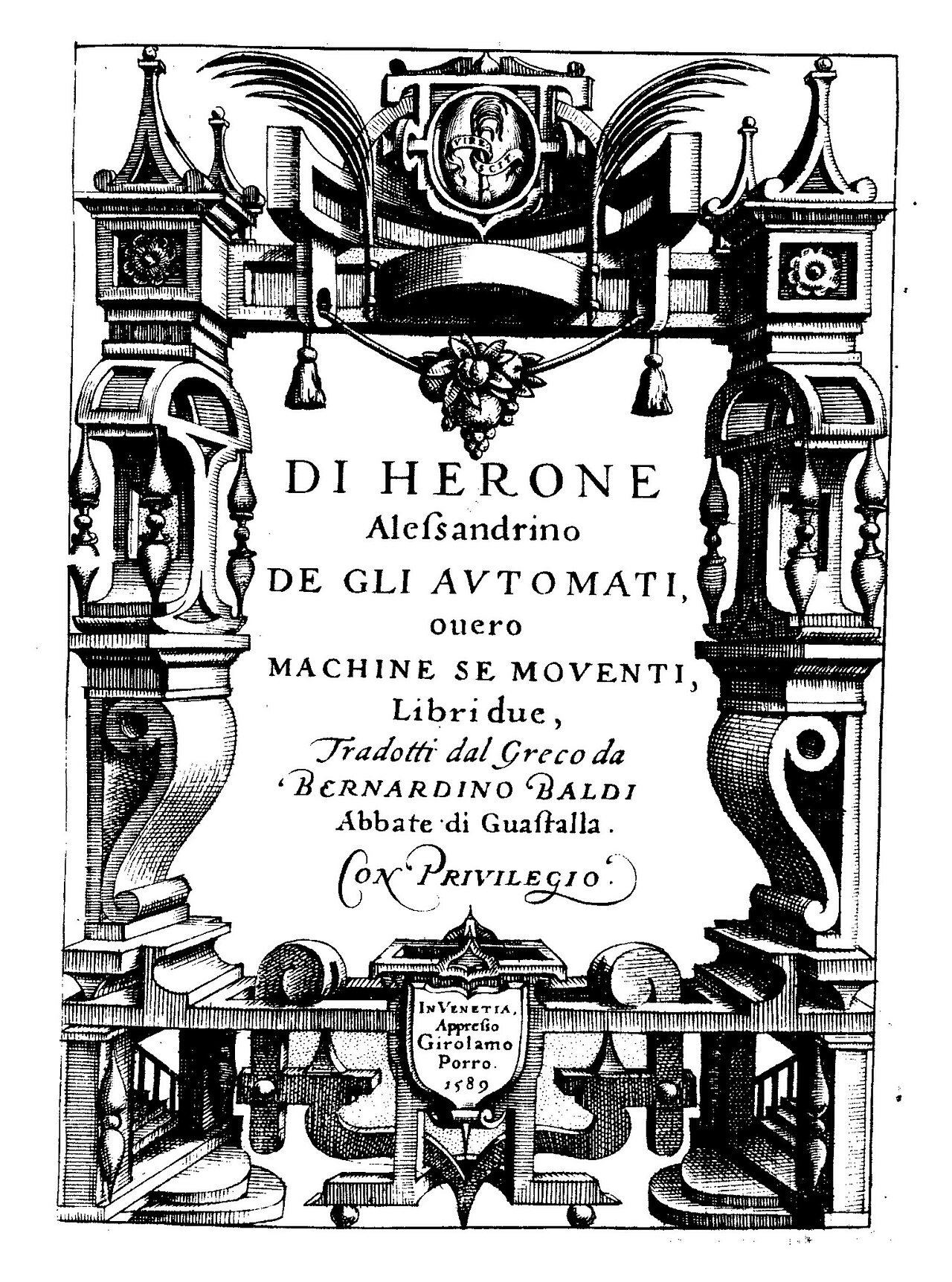
De gli automati, ouero Machine se mouenti
Hero : Alexandrinus · 1589
Ready when you are
Start chatting with Hero of Alexandria now.
20 messages free · No credit card · Available in 50+ languages.