


Secondary sourcePainting1942 (depicting 1660)
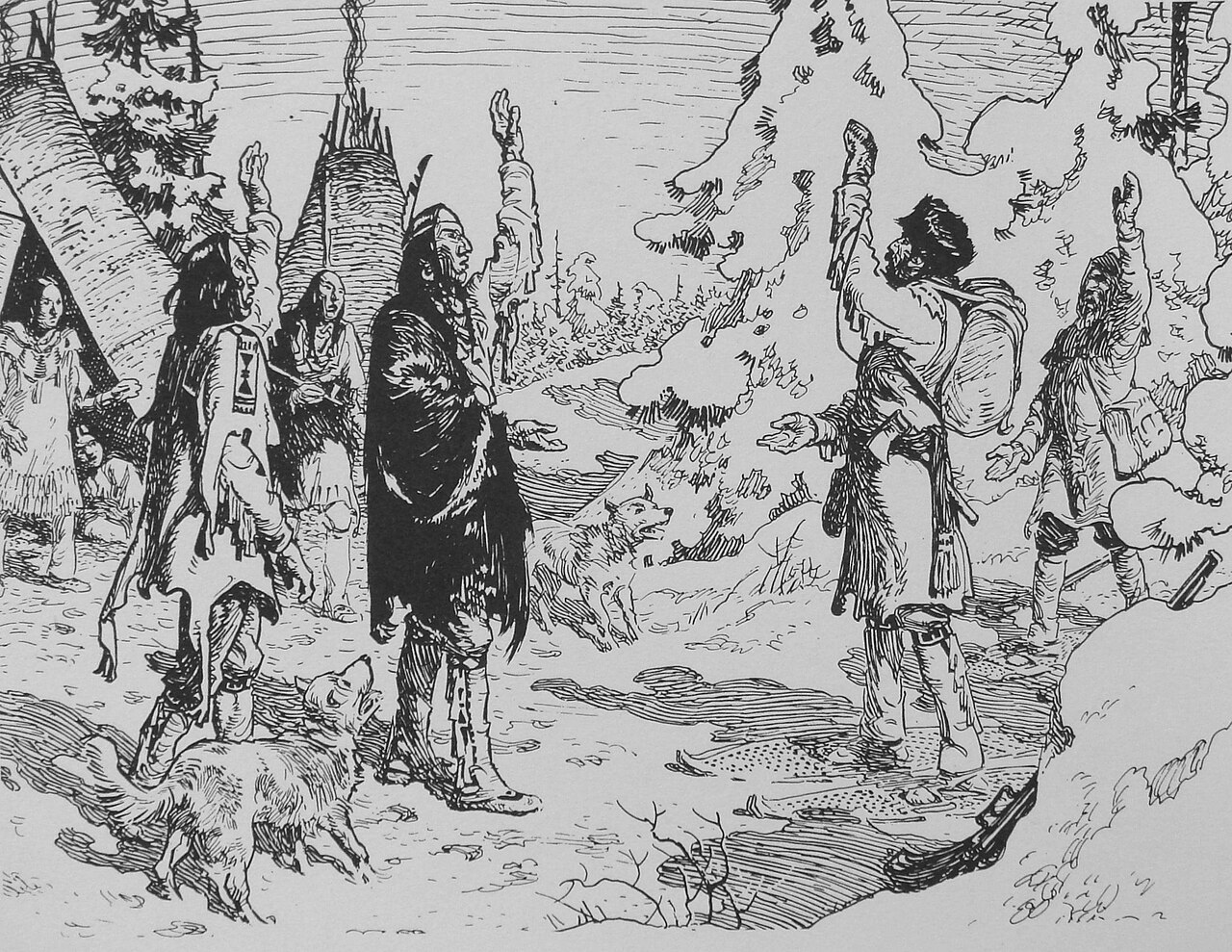
Arrival of Radisson in an Indian camp 1660
Charles William Jefferys · 1942 (depicting 1660)
A 20th-century pen-and-ink drawing imagining Radisson's arrival at an Indigenous camp during his travels.
This later illustration imagines Radisson's arrival at an Indigenous camp, shaping how his travels were remembered.
About this source
What it is
This is a black-and-white pen-and-ink drawing by Canadian illustrator Charles William Jefferys, made for a picture history of Canada published in 1942. It shows a winter scene: on one side tipis, people and wolves; on the other, a bearded European man in a fur-trimmed coat raising his arm toward the group.
Why it matters
The drawing was not made at the time of the events it shows. It is a much later reconstruction, created to teach Canadian history, and reveals how 20th-century Canadians pictured Radisson's journeys and his meetings with Indigenous peoples in the west.
Look closer
- What details suggest this was drawn long after the events happened?
- How are the European figure and the Indigenous people each shown — what does their pose or placement suggest?
- Why might an illustrator in 1942 want to create this kind of image for a history textbook?
This painting is part of the curated material that grounds the AI version of Pierre-Esprit Radisson on Humy.ai — when students ask about related events, the AI can quote it and cite it.
More Pierre-Esprit Radisson sources
Meet the AI Pierre-Esprit Radisson →Primary source
Radisson's narratives of the 1682–1683 and 1684 voyages to Hudson Bay
Pierre-Esprit Radisson · 1684–1685
 Book
Primary source
Jesuit Relations, Relation of 1659–1660
Jesuit missionaries of New France (ed. Jérôme Lalemant) · 1660
 Painting
Secondary source
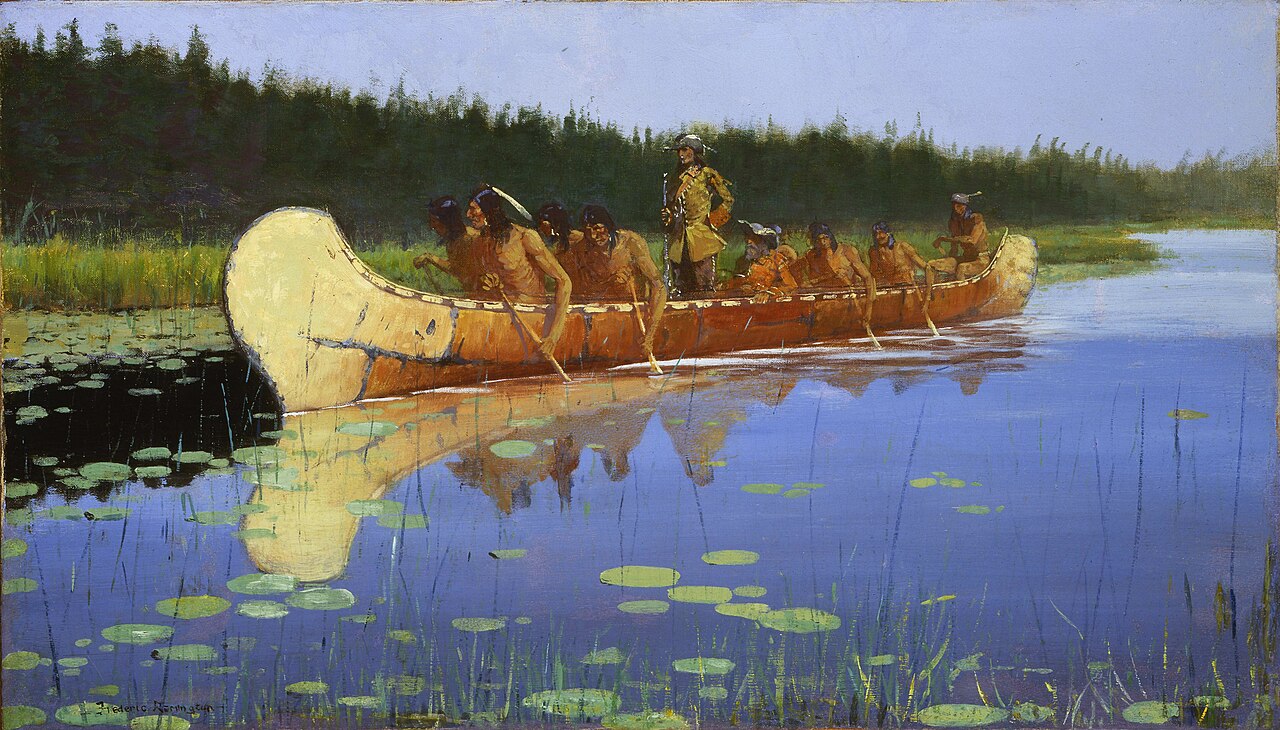
Radisson and Groseilliers
Frederic Remington · 1905
Primary source
Voyages of Peter Esprit Radisson, 1652-1684
Pierre-Esprit Radisson · 1652-1684 (manuscript); published later
 Book
Secondary source
Chouart et Radisson: odyssée de deux Canadiens-français
N.-E. Dionne · 1910
Ready when you are
Start chatting with Pierre-Esprit Radisson now.
20 messages free · No credit card · Available in 50+ languages.