


Primary sourcePaintingcirca 1819
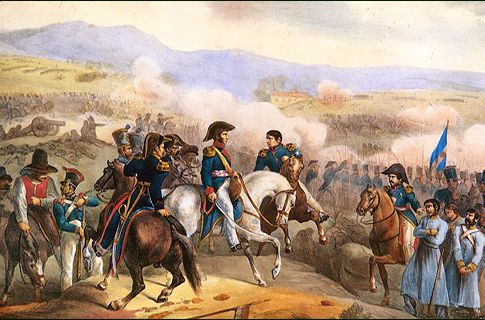
Batalla de Maipú
Théodore Géricault · circa 1819
A coloured lithograph of a cavalry battle, dated about 1819, close in time to the Battle of Maipú that O'Higgins led.
The print shows the Battle of Maipú, the victory O'Higgins led, from close to the time it happened.
About this source
What it is
This is a coloured lithograph of a cavalry battle on a hillside. Mounted officers in blue and white uniforms with plumed hats ride in the centre, with soldiers, smoke and a blue-and-white flag on the right. Hills and a distant building sit under a pale sky. The print is dated circa 1819 and is credited to Théodore Géricault in the Wikimedia Commons record.
Why it matters
The Battle of Maipú was a major victory in Chile's struggle for independence, and O'Higgins led the army there. Because the print was made about a year after the battle, it is close to the events it shows. It reflects how Europeans and Chileans pictured the war at the time. Its blue and white colours match the flag shown in the scene, and the battle is presented as a heroic cavalry charge.
Look closer
- Who is at the centre of the picture, and how does the artist make them look important?
- What do the smoke and the flag tell you about the battle that the image wants you to notice?
- What might a print made far from the battlefield leave out about the real fighting?
This painting is part of the curated material that grounds the AI version of Bernardo O'Higgins on Humy.ai — when students ask about related events, the AI can quote it and cite it.
More Bernardo O'Higgins sources
Meet the AI Bernardo O'Higgins →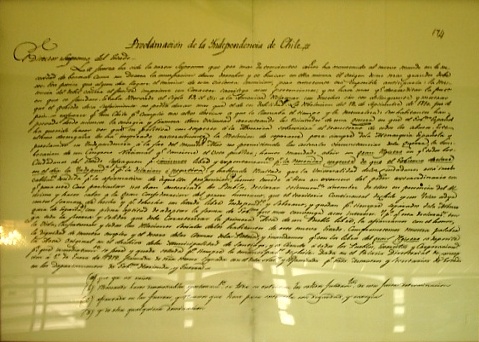 Document
Primary source
Chilean Declaration of Independence
Bernardo O'Higgins · 1 January 1818 (dated); proclaimed 12 February 1818
Primary source
Provisional Constitution for the State of Chile of 1818
Bernardo O'Higgins · 8 August 1818
 Document
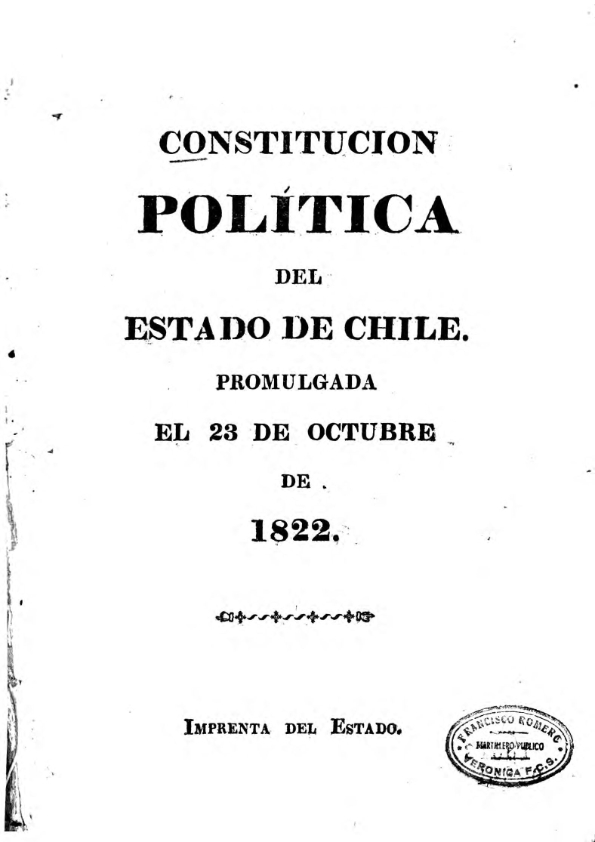
Primary source
Political Constitution of the State of Chile of 1822
José Antonio Rodríguez Aldea · 23 October 1822
 Painting
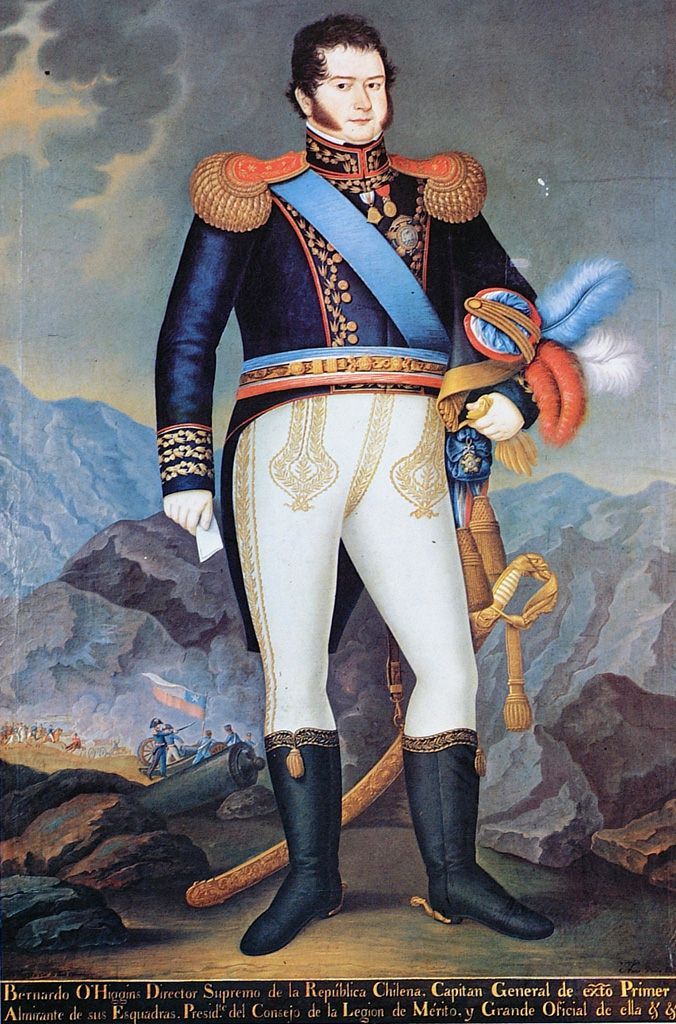
Primary source
Portrait of Bernardo O'Higgins
José Gil de Castro
 Painting
Primary source
Bernardo O'Higgins Holding the Chilean Constitution
José Gil de Castro
Ready when you are
Start chatting with Bernardo O'Higgins now.
20 messages free · No credit card · Available in 50+ languages.