


Primary sourceArtifact1961
Berlin Wall
1961
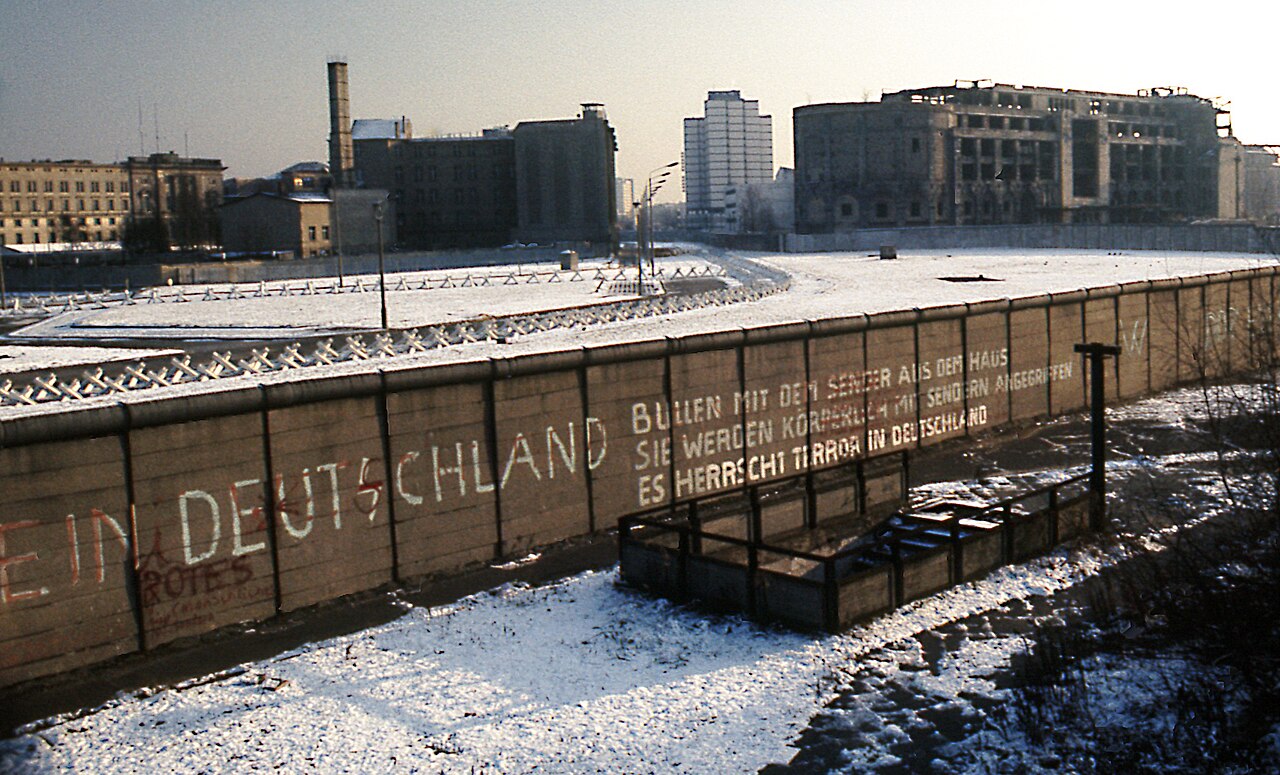
A concrete barrier built in 1961 to seal off West Berlin, constructed with Khrushchev's approval as his answer to the Berlin crisis.
Khrushchev approved the wall's construction in 1961 as his solution to the Berlin crisis, making it a hallmark of his leadership.
About this source
What it is
The Berlin Wall was a guarded concrete barrier erected by the East German government starting in August 1961, dividing West Berlin from East Berlin and East Germany. It included guard towers, fences and a cleared 'death strip'.
Sections of the wall survive today as memorials and museum exhibits in Berlin.
Why it matters
The wall stopped the mass flight of East Germans to the West and became the defining physical symbol of the Cold War division of Europe. It was built with the approval of Soviet leader Nikita Khrushchev, who saw it as a way to solve the ongoing crisis over Berlin without triggering war with the West. The wall shows how Cold War leaders used physical barriers and propaganda to control populations and project power.
Look closer
- Why might a government call a wall that keeps its own citizens in a 'protection' measure?
- What does the photograph's damaged buildings and empty 'death strip' tell you about life near the wall?
- What does the wall's existence suggest about why people wanted to leave East Germany?
This artifact is part of the curated material that grounds the AI version of Nikita Khrushchev on Humy.ai — when students ask about related events, the AI can quote it and cite it.
More Nikita Khrushchev sources
Meet the AI Nikita Khrushchev →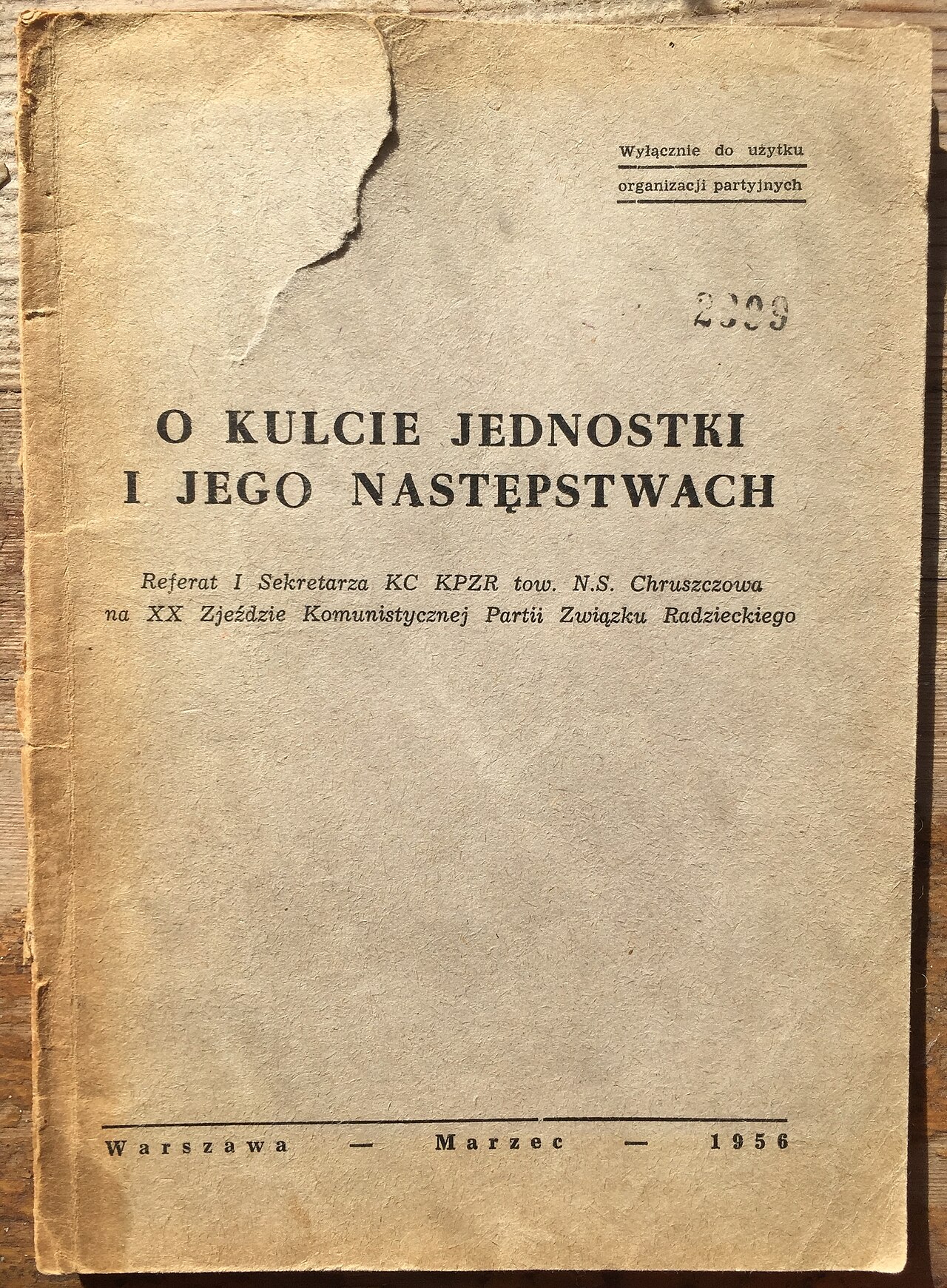 Speech
Primary source
On the Cult of Personality and Its Consequences
Nikita Khrushchev · 25 February 1956
Primary source
Letter From Chairman Khrushchev to President Kennedy
Nikita Khrushchev · 26-27 October 1962
Primary source
Khrushchev's Message to Kennedy of 27 October 1962
Nikita Khrushchev · 27 October 1962
 News clip
Primary source
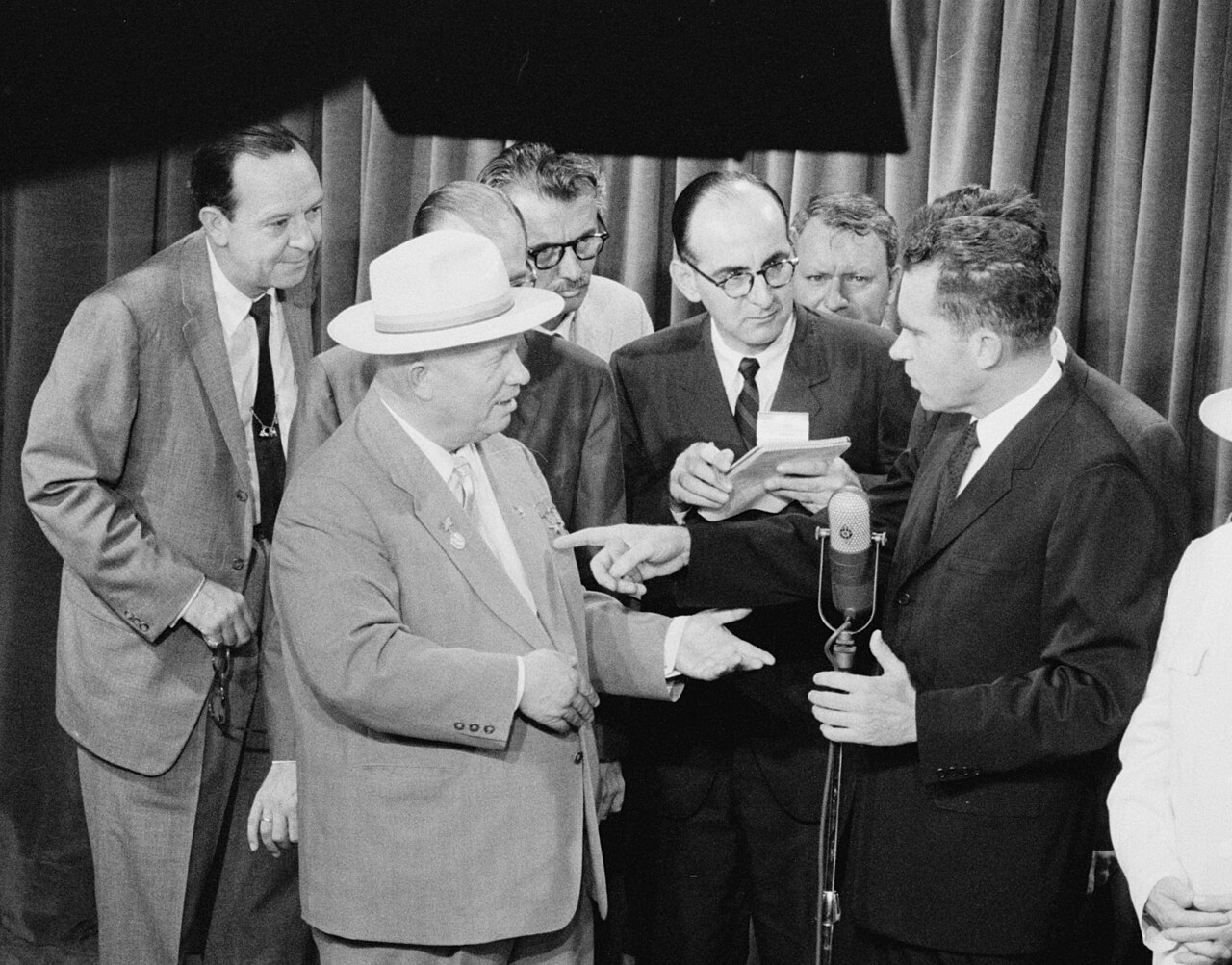
Kitchen Debate
24 July 1959
Primary source
Partial Nuclear Test Ban Treaty
5 August 1963
Ready when you are
Start chatting with Nikita Khrushchev now.
20 messages free · No credit card · Available in 50+ languages.