


Primary sourcePainting1926
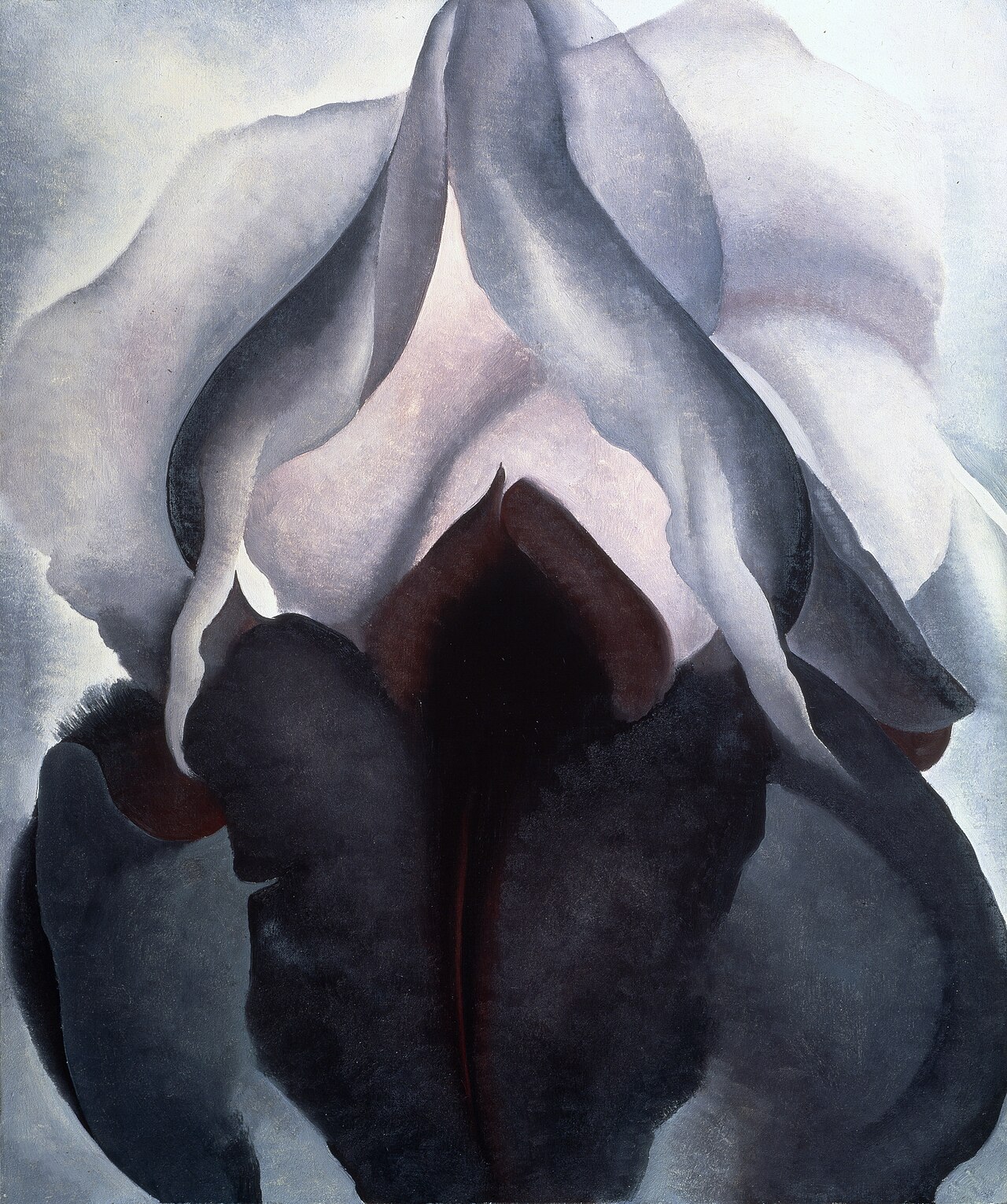
Black Iris
Georgia O'Keeffe · 1926
A 1926 oil painting by Georgia O'Keeffe showing a magnified iris flower, the canonical example of her large-scale flower paintings.
One of O'Keeffe's signature large flower paintings, central to debates over how her work was interpreted by critics and her husband.
About this source
What it is
Georgia O'Keeffe painted Black Iris in oil in 1926. It was first shown at the Intimate Gallery in New York and later entered the Metropolitan Museum of Art as part of the Alfred Stieglitz Collection, donated after her husband's death.
The close-up view shows the dark lower petals and pale upper petals of an iris in rich blacks, purples, and maroons blended with light tones.
Why it matters
Critics such as Lewis Mumford and art historian Linda Nochlin read O'Keeffe's magnified flowers as sexual imagery, a reading reinforced by Alfred Stieglitz, her husband and gallerist, who displayed her flower paintings alongside nude photographs of her. O'Keeffe repeatedly rejected these interpretations, insisting she simply wanted viewers to really look at a flower's own detail and colour.
Look closer
- What do you notice first about the colours and shapes in this painting?
- Why might viewers project their own associations onto a close-up image?
- How might knowing the artist's own words change how you read the painting?
This painting is part of the curated material that grounds the AI version of Georgia O'Keeffe on Humy.ai — when students ask about related events, the AI can quote it and cite it.
More Georgia O'Keeffe sources
Browse all 99 →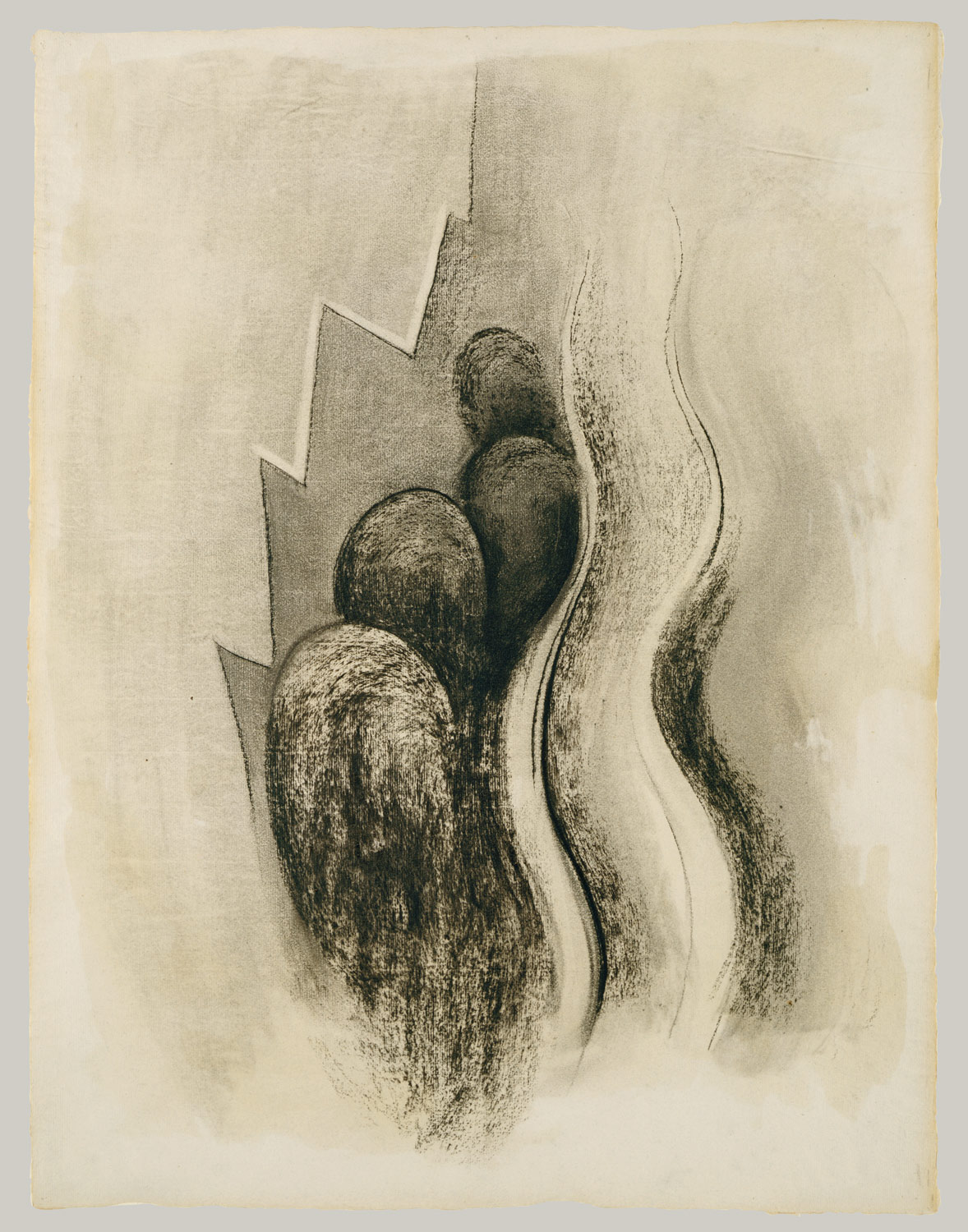 Artifact
Primary source
Drawing XIII
Georgia O'Keeffe · 1915
 Artifact
Primary source
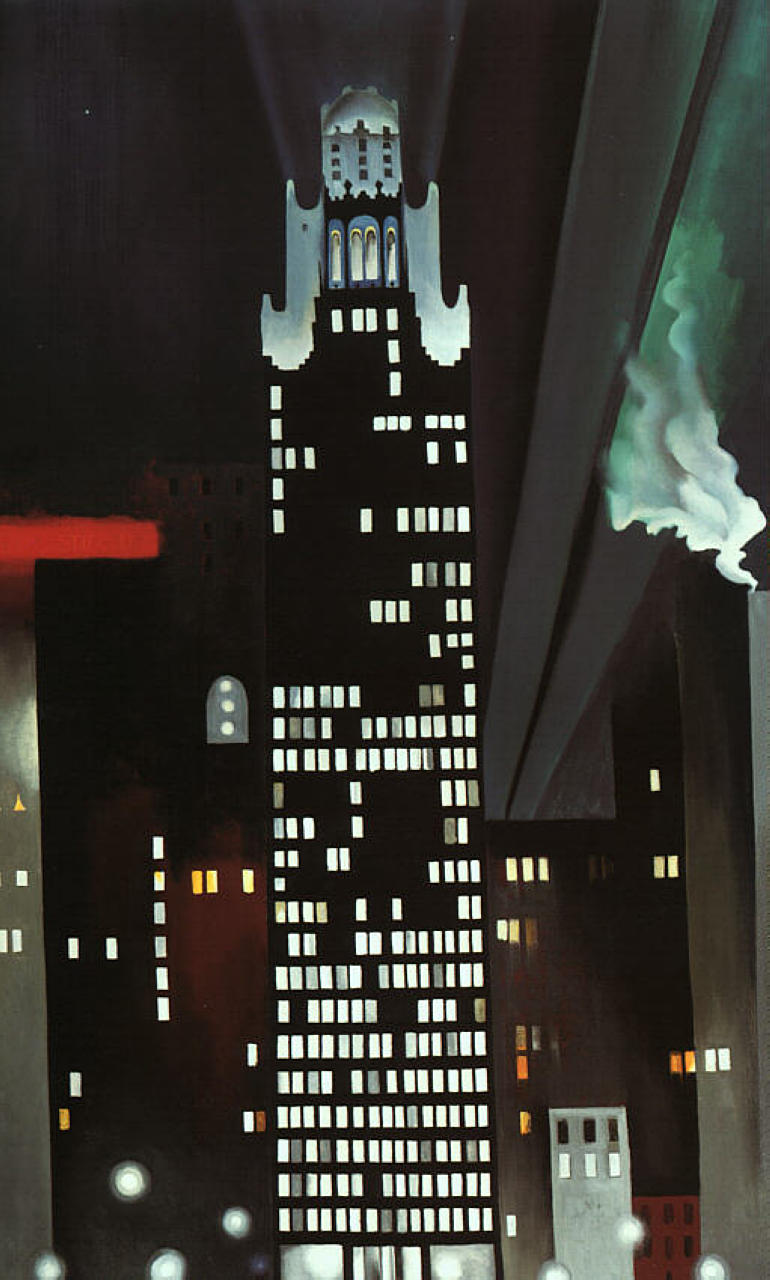
Radiator Building—Night, New York
Georgia O'Keeffe · 1927
 Photograph
Primary source
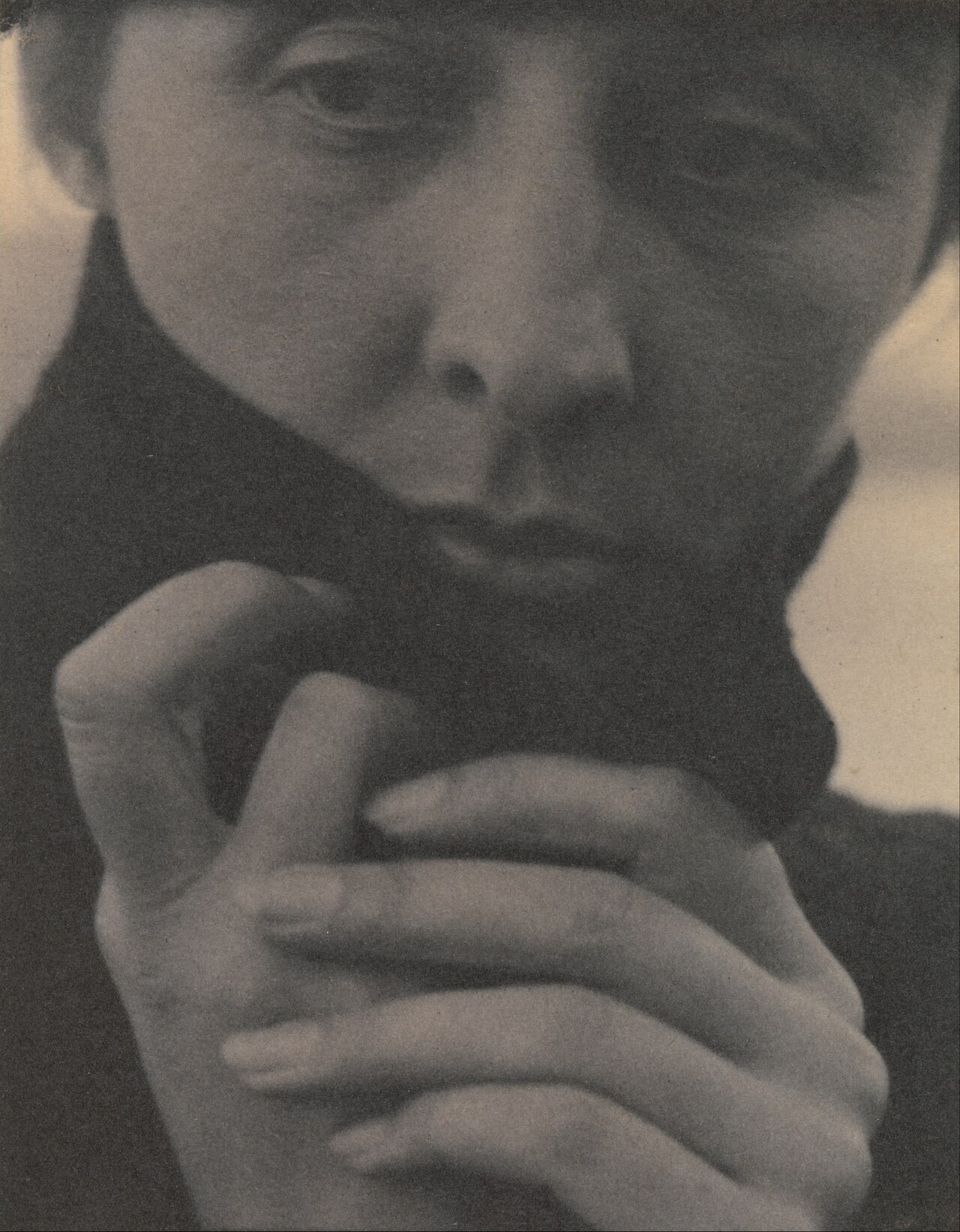
Georgia O'Keeffe (Stieglitz portrait)
Alfred Stieglitz · 1918
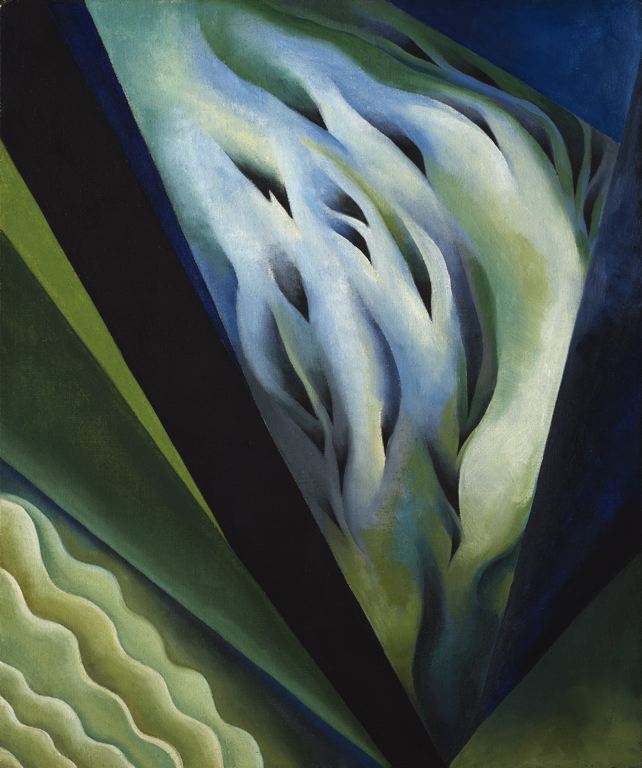 Painting
Primary source
Blue and Green Music
Georgia O'Keeffe · 1919-1921
Free account
Read every Georgia O'Keeffe source
Sign up free →
Ready when you are
Start chatting with Georgia O'Keeffe now.
20 messages free · No credit card · Available in 50+ languages.