


Primary sourcePainting1902
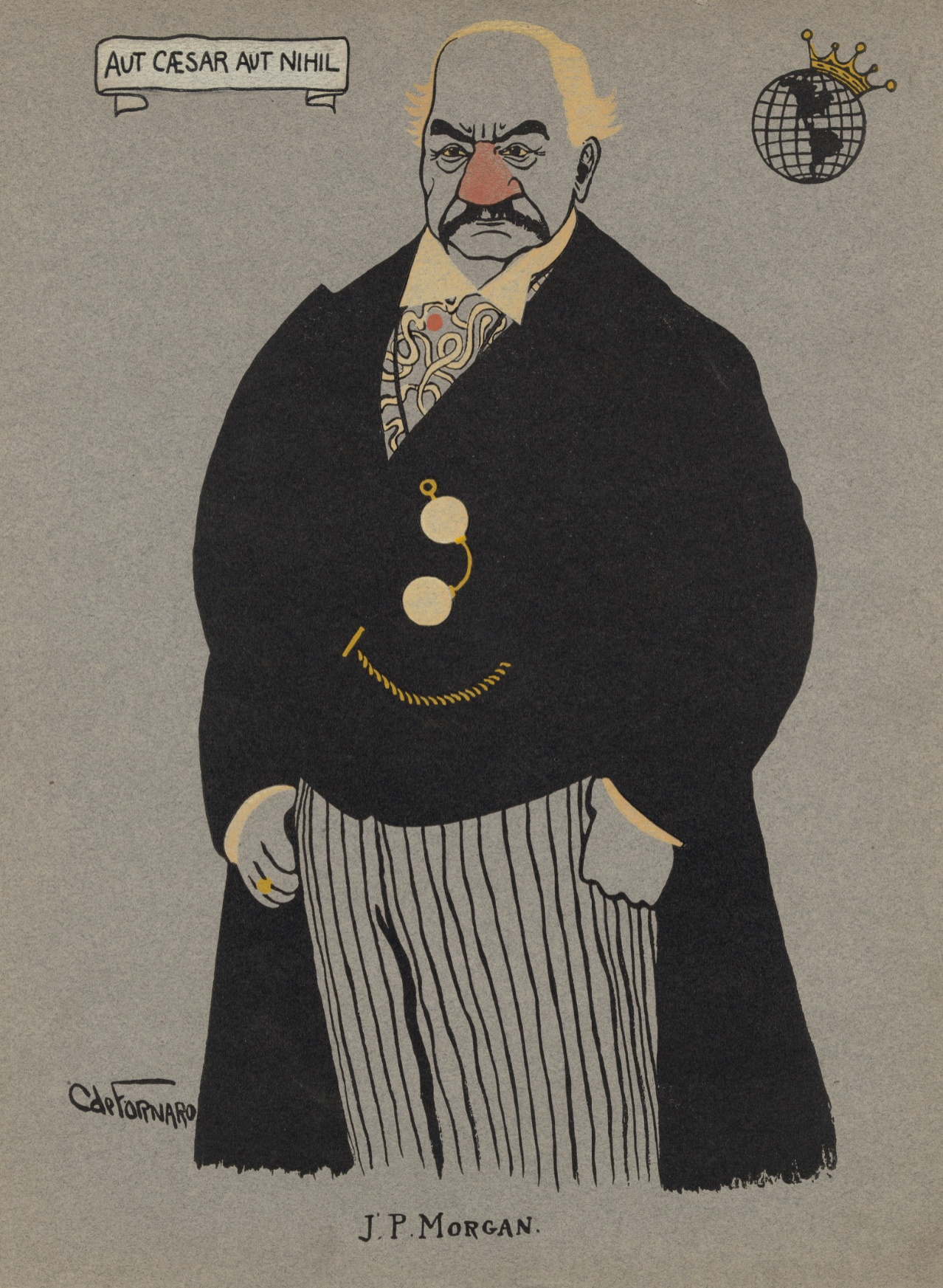
Caricature of J. P. Morgan by Carlo de Fornaro
Carlo De Fornaro · 1902
A 1902 caricature of Morgan by Italian artist Carlo de Fornaro, published in a book mocking America's millionaires.
This caricature of Morgan shows how contemporaries viewed his ambition and power as almost imperial.
About this source
What it is
This is a drawn caricature of J. P. Morgan made in 1902 by Carlo de Fornaro, an Italian journalist and caricaturist. It shows a heavy-set bald man with a grey moustache in a dark overcoat, with the Latin banner "Aut Caesar aut nihil" (either Caesar or nothing) and a crowned globe above him. It was published in de Fornaro's book of caricatures, Millionaires of America.
Why it matters
The caricature shows how Morgan, one of the most powerful bankers of his time, was mocked by artists and writers who saw him and other wealthy Americans as acting like emperors. The Latin phrase suggests Morgan wanted total power or nothing at all.
Look closer
- What does the Latin phrase "Aut Caesar aut nihil" imply about how the artist viewed Morgan?
- Why might an artist use humor or exaggeration to criticize a powerful person instead of writing an article?
- What parts of Morgan's real personality or career might this image be simplifying or leaving out?
This painting is part of the curated material that grounds the AI version of J.P. Morgan on Humy.ai — when students ask about related events, the AI can quote it and cite it.
More J.P. Morgan sources
Browse all 99 → Document
Primary source
Testimony of J. P. Morgan before the Pujo Committee
U.S. House Committee on Banking and Currency (Pujo Committee) · 18 December 1912
 Photograph
Primary source
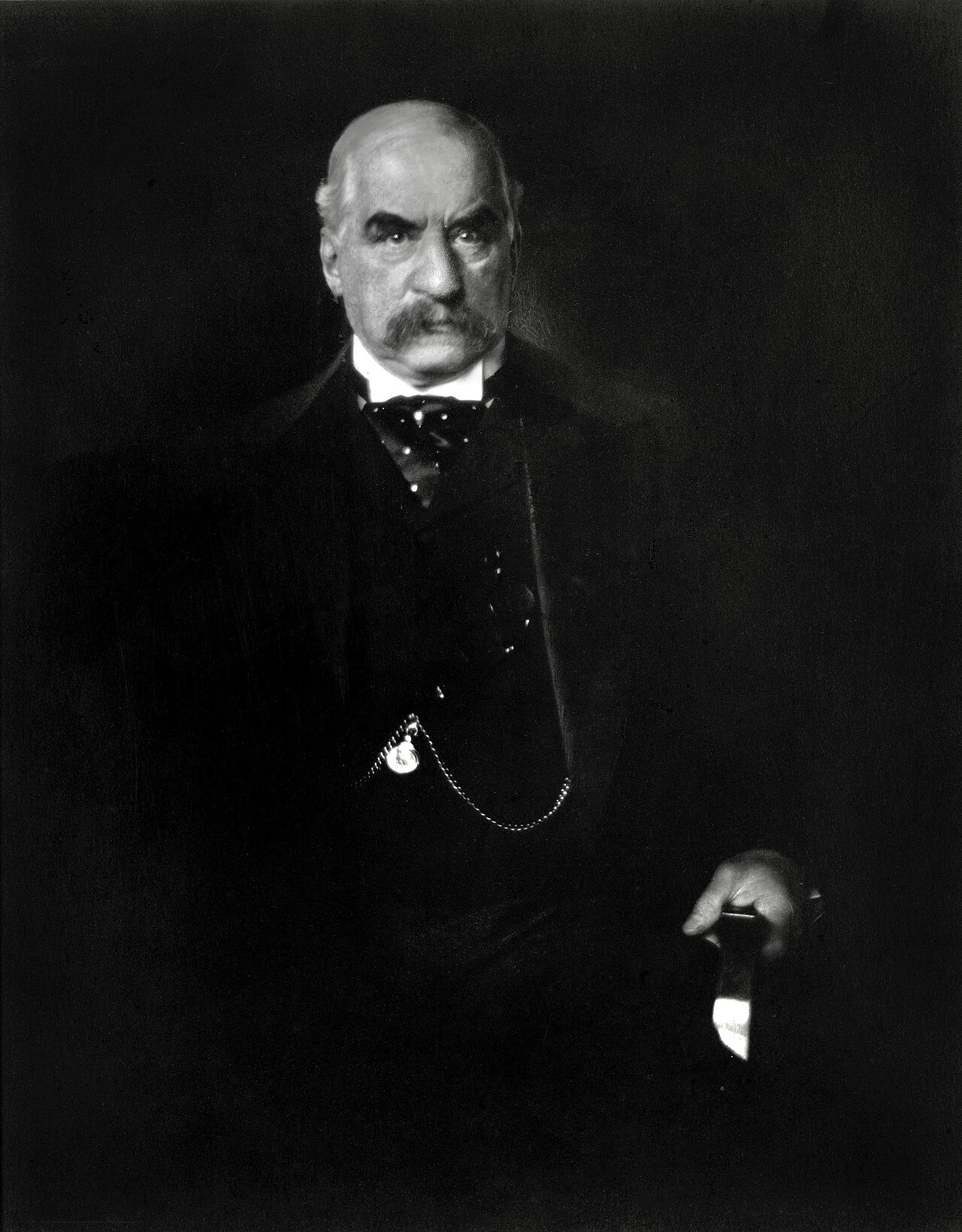
Photographic Portrait of J. Pierpont Morgan
Edward Steichen
 Document
Primary source
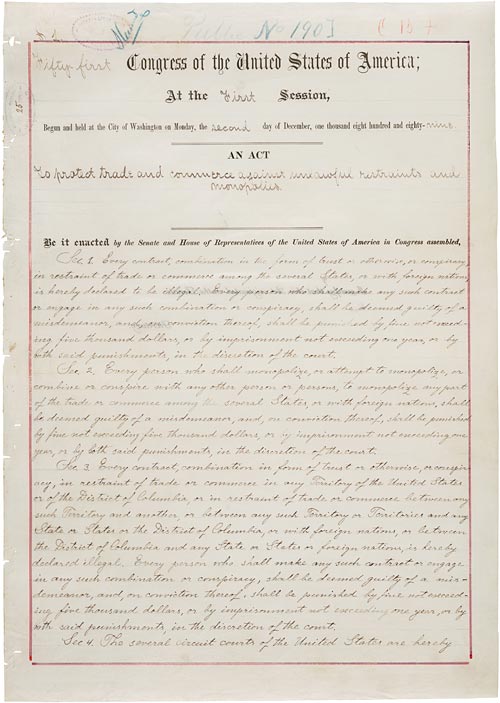
Sherman Anti-Trust Act
2 July 1890
 Document
Primary source
Pujo Report
U.S. House Committee on Banking and Currency · 28 February 1913
Free account
Read every J.P. Morgan source
Sign up free →
Ready when you are
Start chatting with J.P. Morgan now.
20 messages free · No credit card · Available in 50+ languages.