


Primary sourcePhotograph1911
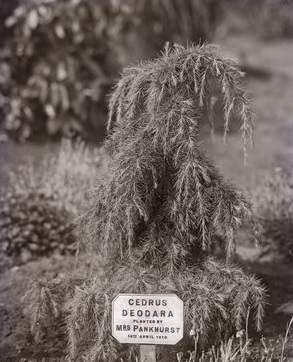
Cedrus Deodara Planted by Mrs Pankhurst, 1911
Colonel Linley Blathwayt · 1911
A photograph of a cedar tree planted by Emmeline Pankhurst at Eagle House, a Somerset sanctuary for suffragettes recovering from prison.
This photograph commemorates Pankhurst's visit to a sanctuary for suffragettes recovering from imprisonment.
About this source
What it is
This photograph, taken by Colonel Linley Blathwayt around 1911, shows a young weeping deodar cedar tree planted by Emmeline Pankhurst in the garden at Eagle House in Batheaston, Somerset, with a sign reading 'Cedrus Deodara Planted by Mrs Pankhurst'.
Why it matters
Eagle House, home of Colonel Blathwayt and his family, served as a place where suffragettes could recover after imprisonment. Tree-planting ceremonies there commemorated the suffragettes who stayed, linking the natural landscape to the movement's history. This image reflects the quieter, supportive side of the campaign, away from arrests and protest.
Look closer
- Why might planting a tree have been chosen as a way to honour suffragettes?
- What does the sign in the photograph tell us about how this event was recorded and remembered?
- Who took this photograph, and why might he have wanted to document it?
This photograph is part of the curated material that grounds the AI version of Emmeline Pankhurst on Humy.ai — when students ask about related events, the AI can quote it and cite it.
More Emmeline Pankhurst sources
Meet the AI Emmeline Pankhurst →Primary source
Freedom or Death
Emmeline Pankhurst · 1913
Primary source
My Own Story
Emmeline Pankhurst · 1914
 Photograph
Primary source
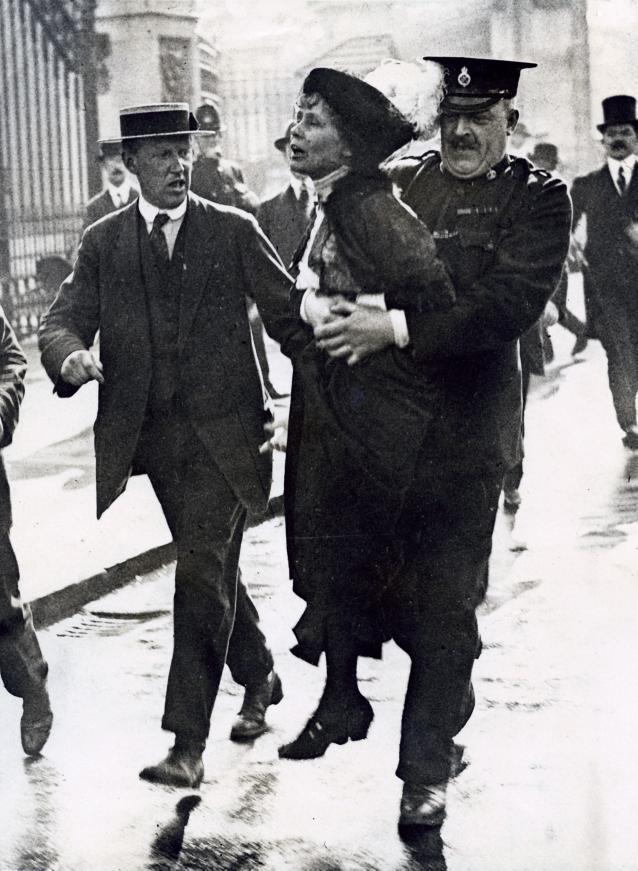
Emmeline Pankhurst Arrested, 1914
Unknown author · 22 May 1914
 Newspaper article
Primary source
Votes for Women
Frederick Pethick-Lawrence and Emmeline Pethick-Lawrence · 10 October 1907
 Photograph
Primary source
Emmeline Pankhurst Addresses a Crowd in New York City
Topical Press Agency · 1913
Ready when you are
Start chatting with Emmeline Pankhurst now.
20 messages free · No credit card · Available in 50+ languages.