


Primary sourcePainting1882
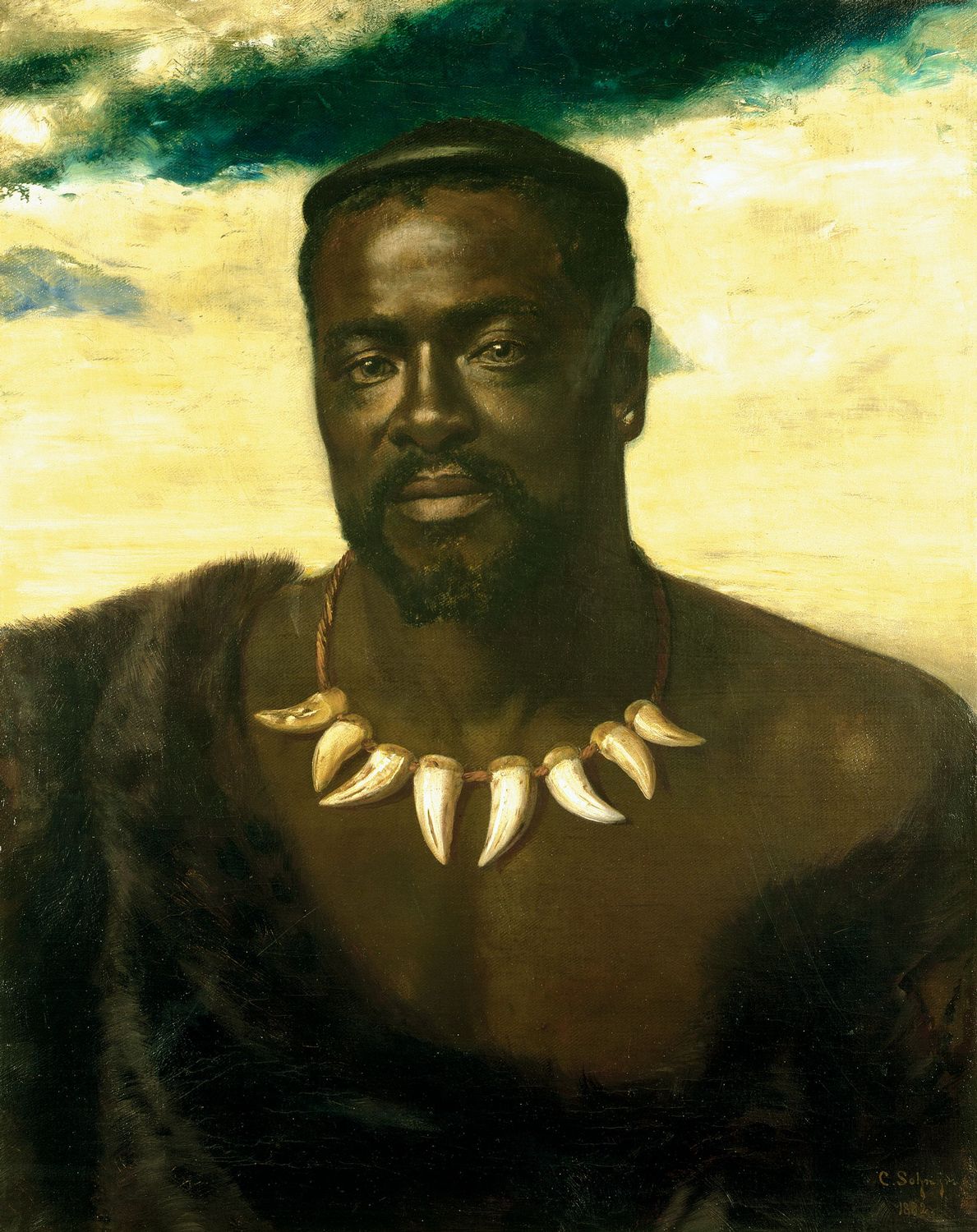
Cetshwayo, King of the Zulus
Carl Rudolph Sohn · 1882
An 1882 oil portrait of Cetshwayo commissioned by Queen Victoria after she received him at Osborne House.
This royal commission portrays Cetshwayo as a dignified visitor to England after his capture and release.
About this source
What it is
This oil painting of Cetshwayo kaMpande was made in 1882 by the artist Carl Rudolph Sohn, commissioned by Queen Victoria. It shows the king wearing a headring and a necklace of large animal teeth over bare shoulders and a fur cloak. It is signed and dated at lower right and remains in the Royal Collection.
Why it matters
Cetshwayo had led the Zulu Kingdom and fought the British in the Anglo-Zulu War before being captured in 1879. After his release he travelled to England, where Queen Victoria received him and ordered this portrait. The painting reframed a former enemy as a dignified royal guest, and Victoria herself recorded in her journal that she found him an impressive and intelligent man.
Look closer
- Why might Queen Victoria have wanted a formal portrait of a man her own army had defeated?
- What choices did the artist make in posing and dressing Cetshwayo, and what difficulties did he face finding the right materials?
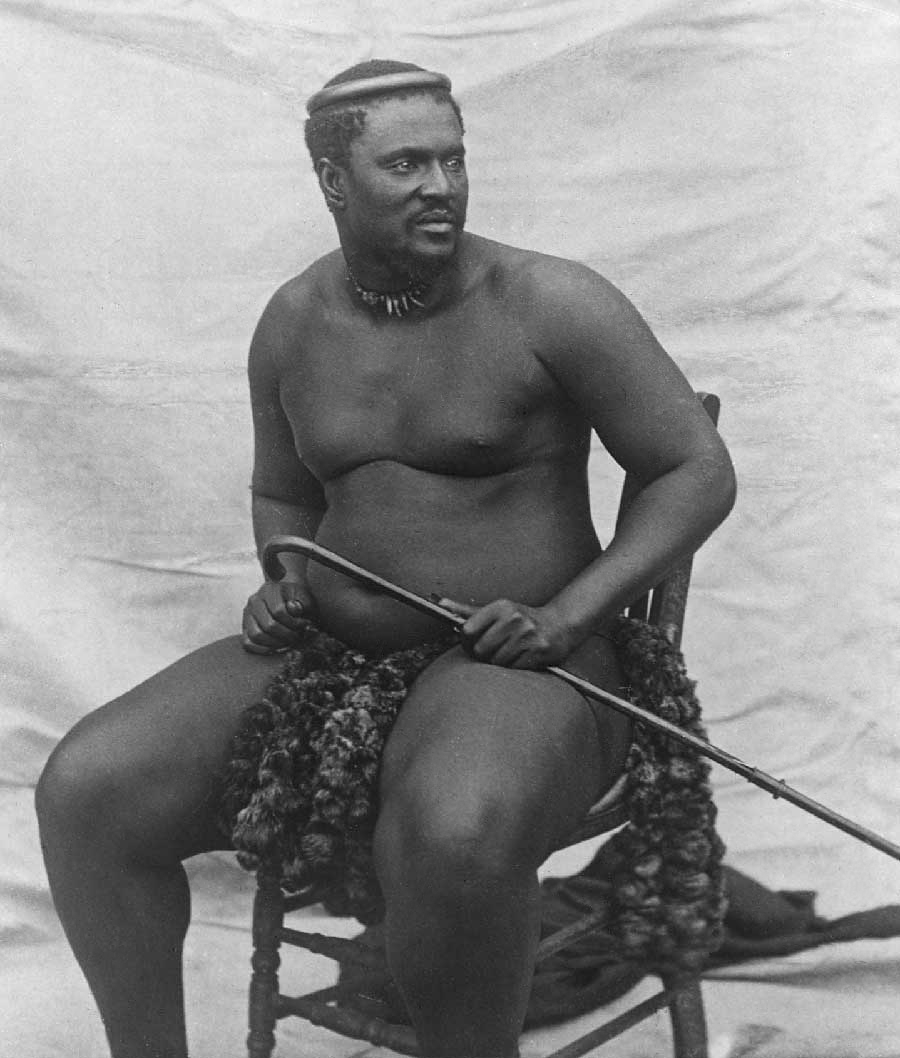
- How does this image compare with photographs of Cetshwayo taken at the same time?
This painting is part of the curated material that grounds the AI version of Cetshwayo kaMpande on Humy.ai — when students ask about related events, the AI can quote it and cite it.
More Cetshwayo kaMpande sources
Meet the AI Cetshwayo kaMpande →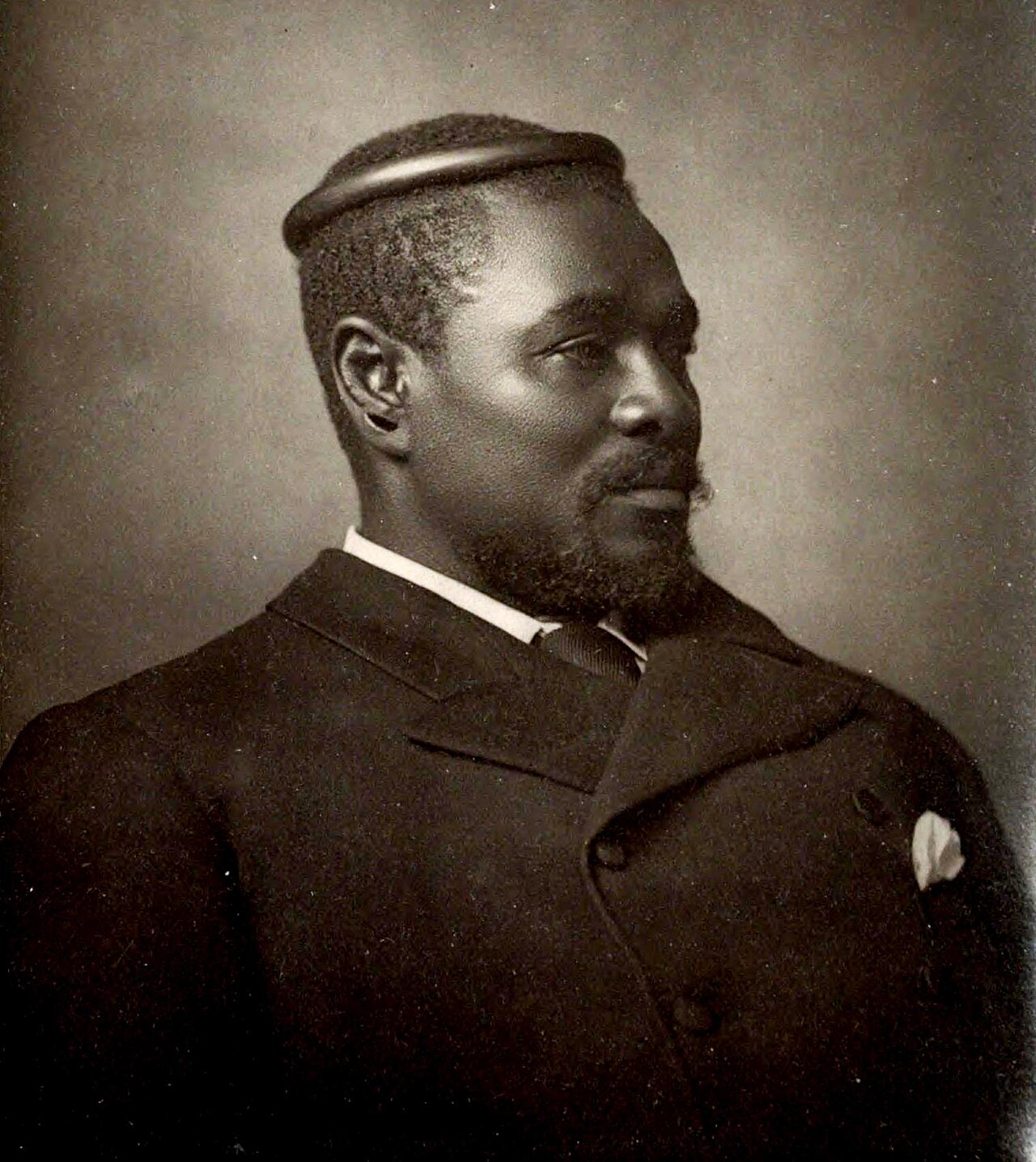 Photograph
Primary source
Portrait of Cetshwayo kaMpande, London 1882
Alexander Bassano · 1882
 Photograph
Primary source
Photograph of Cetshwayo kaMpande, c. 1875
c. 1875
 Painting
Primary source
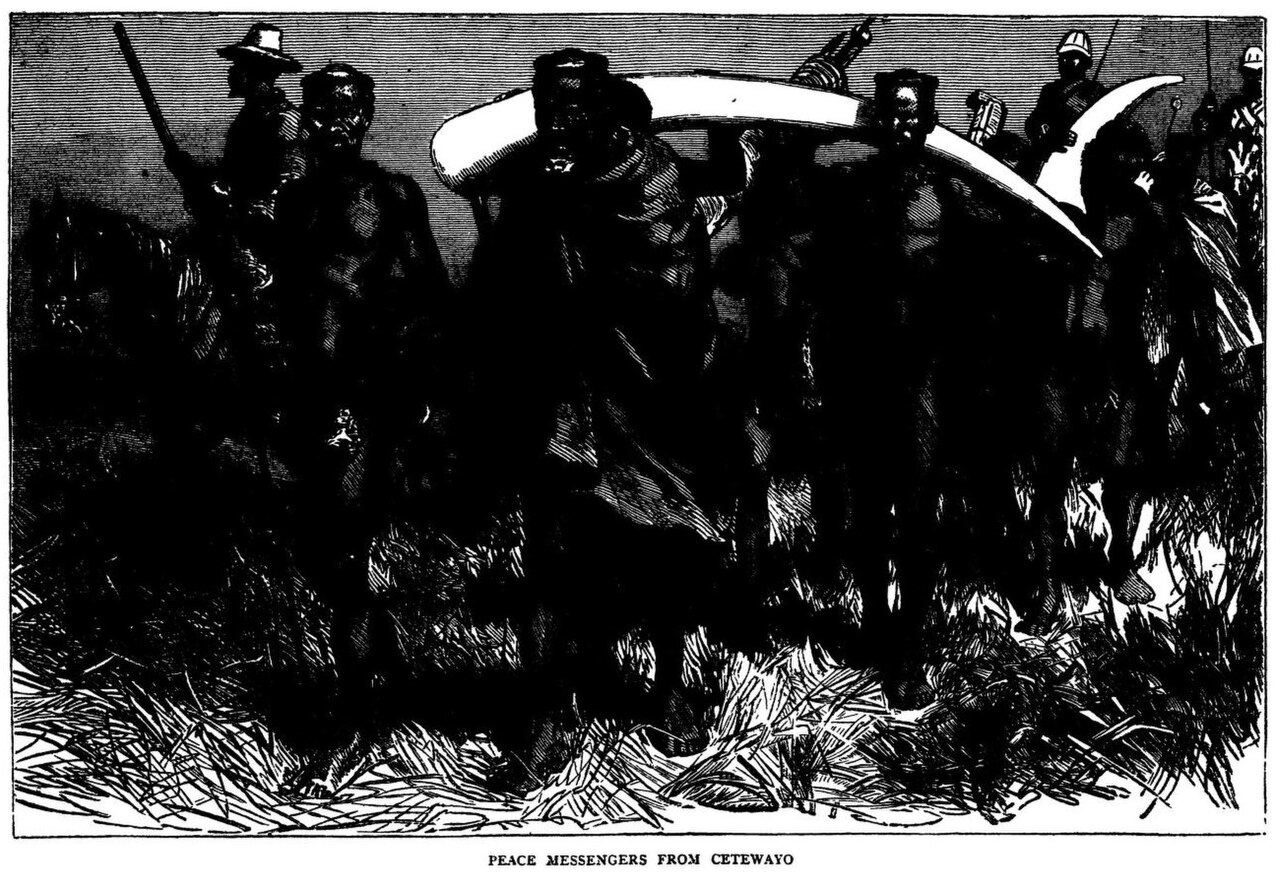
Peace Messengers from Cetawayo
1879
Secondary source
History of the Zulu War and Its Origin
Frances Ellen Colenso and Edward Durnford · 1880
Secondary source
Cetywayo and His White Neighbours
H. Rider Haggard · 1882
Ready when you are
Start chatting with Cetshwayo kaMpande now.
20 messages free · No credit card · Available in 50+ languages.