


Primary sourceDocument1821
Cherokee Syllabary
Sequoyah · 1821
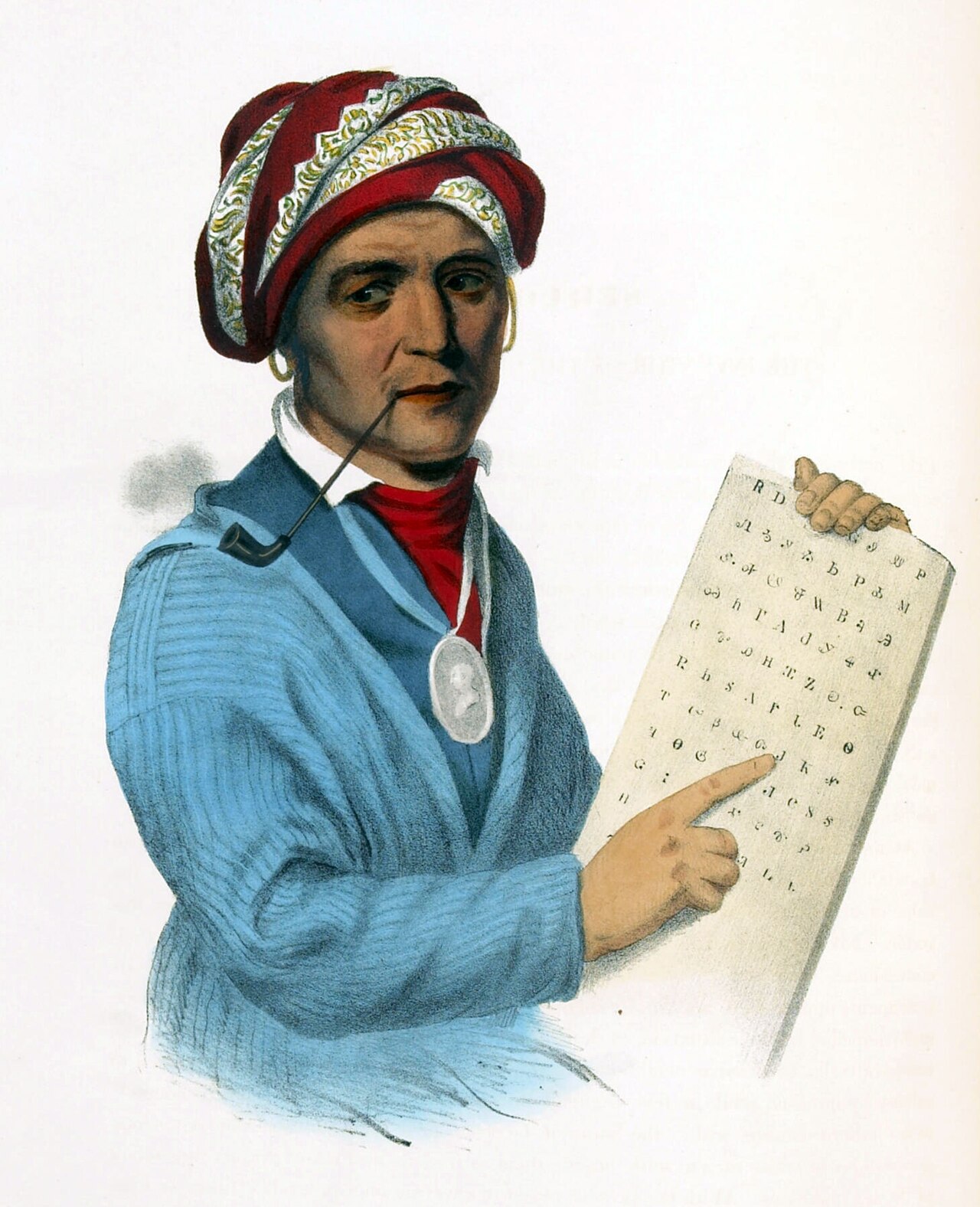
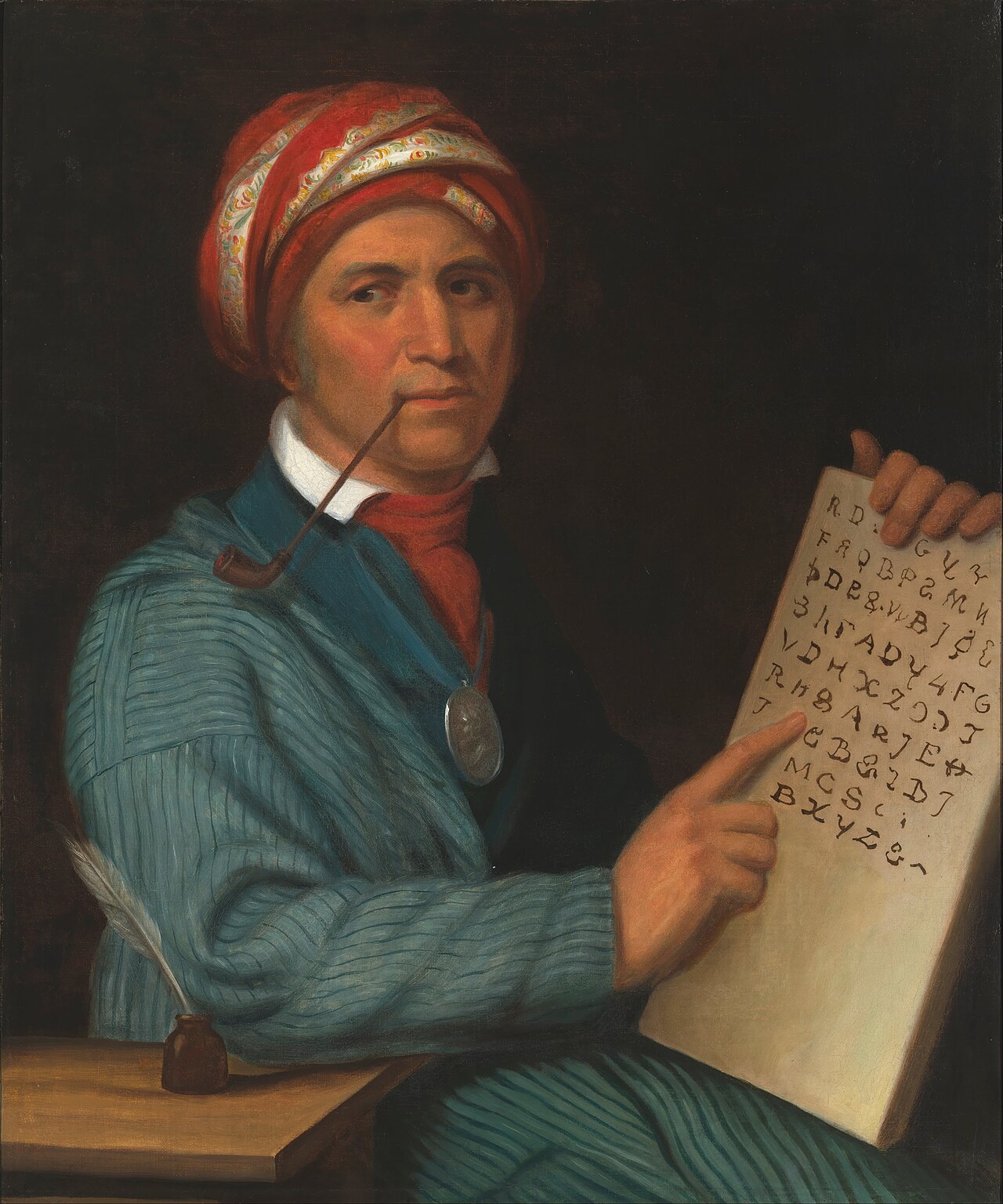
The writing system Sequoyah invented for the Cherokee language, completed in 1821, shown here in a 19th-century print of him holding a tablet of the characters.
This is Sequoyah's own invention, the defining achievement of his life, shown here held up by him in a tablet.
About this source
What it is
The Cherokee syllabary is a writing system invented by Sequoyah in the late 1810s and early 1820s. Each symbol stands for a syllable rather than a single sound. Sequoyah worked on it for about twelve years before finishing it in 1821. He was illiterate before creating it.
Why it matters
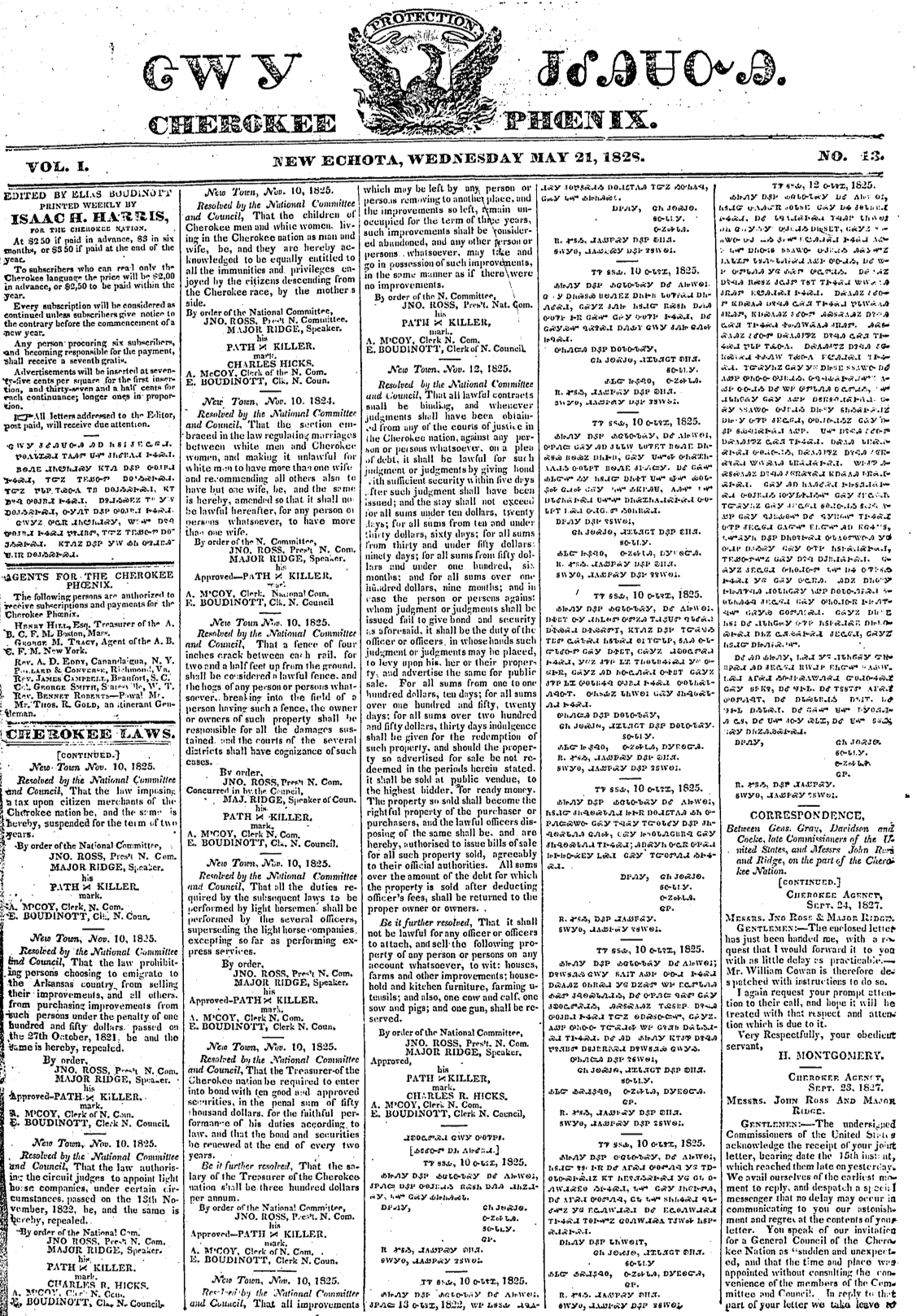
The syllabary spread very quickly through Cherokee society — by 1825 most Cherokees could read and write it. It was later adapted for printing by Elias Boudinot and used in the Cherokee Phoenix newspaper. Linguist Albert Gallatin praised it as easier to learn than the English alphabet. It is a rare example of a single person from a non-literate society creating a fully working writing system, and it is still used today.
Look closer
- Why might a writing system based on syllables, rather than letters for single sounds, be easier to learn quickly?
- What does the rapid spread of the syllabary tell you about its usefulness to the Cherokee Nation?
- How does this print show Sequoyah presenting his invention to others?
This document is part of the curated material that grounds the AI version of Sequoyah on Humy.ai — when students ask about related events, the AI can quote it and cite it.
More Sequoyah sources
Meet the AI Sequoyah →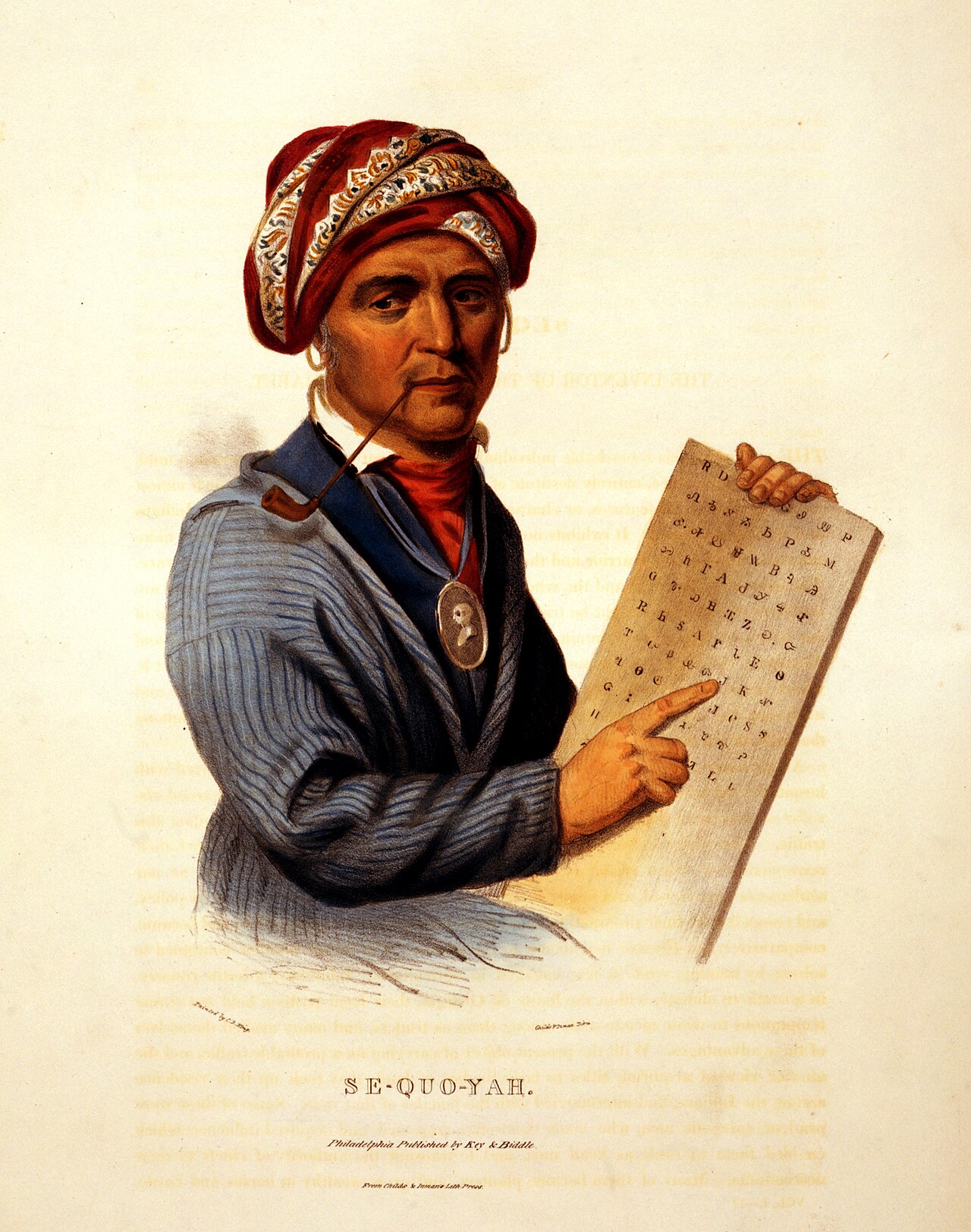 Painting
Secondary source
Sequoyah, Cherokee Inventor
Charles Bird King · 1836
 Painting
Primary source
Sequoyah
Henry Inman · 1830
 Newspaper article
Primary source
Cherokee Phoenix
Elias Boudinot · 21 May 1828
 Document
Secondary source
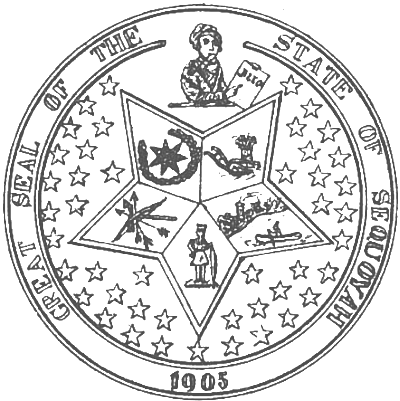
Great Seal of the State of Sequoyah
1905
 Artifact
Tertiary source
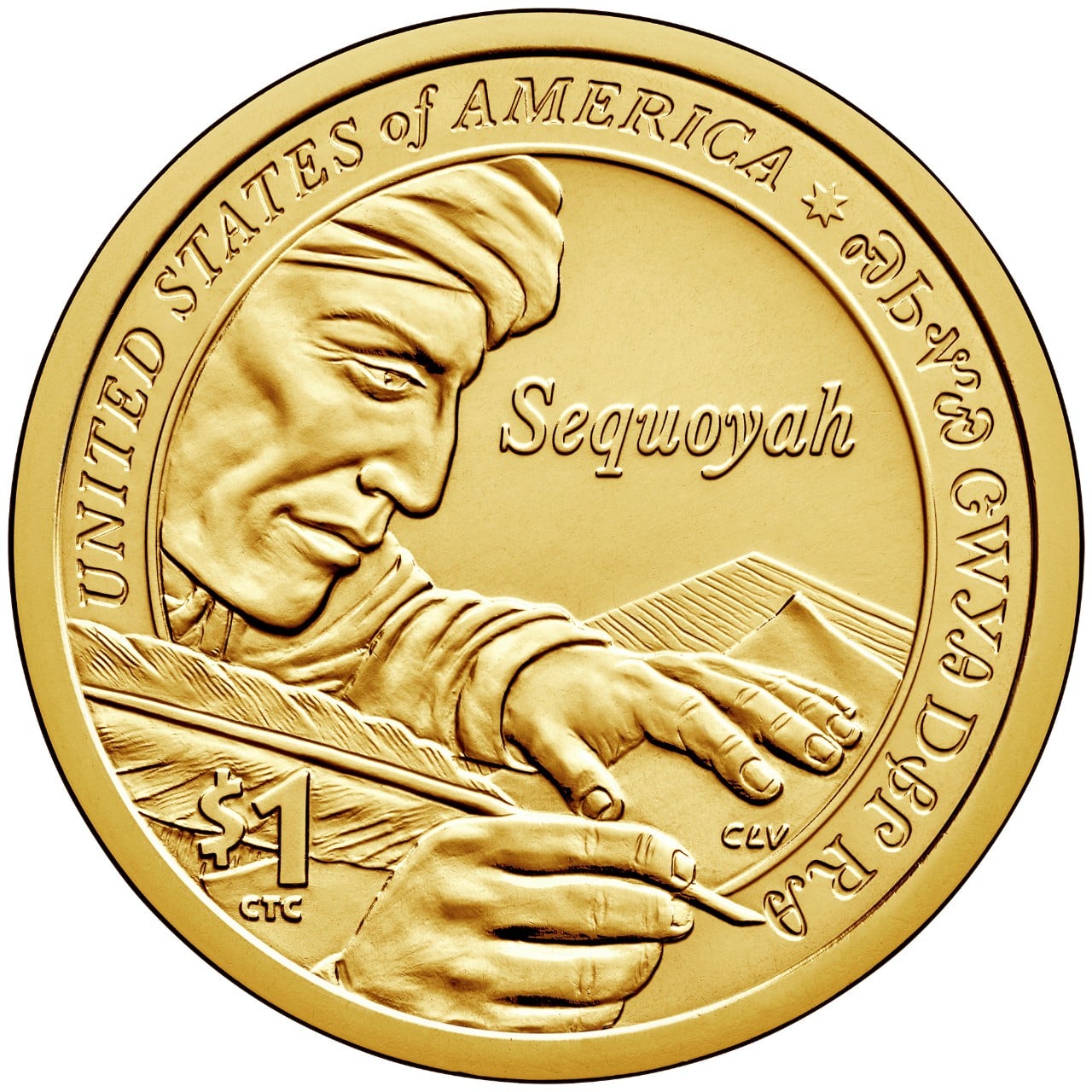
Sequoyah Native American $1 Coin (2017)
United States Mint · 2017
Ready when you are
Start chatting with Sequoyah now.
20 messages free · No credit card · Available in 50+ languages.