


Secondary sourcePainting1881
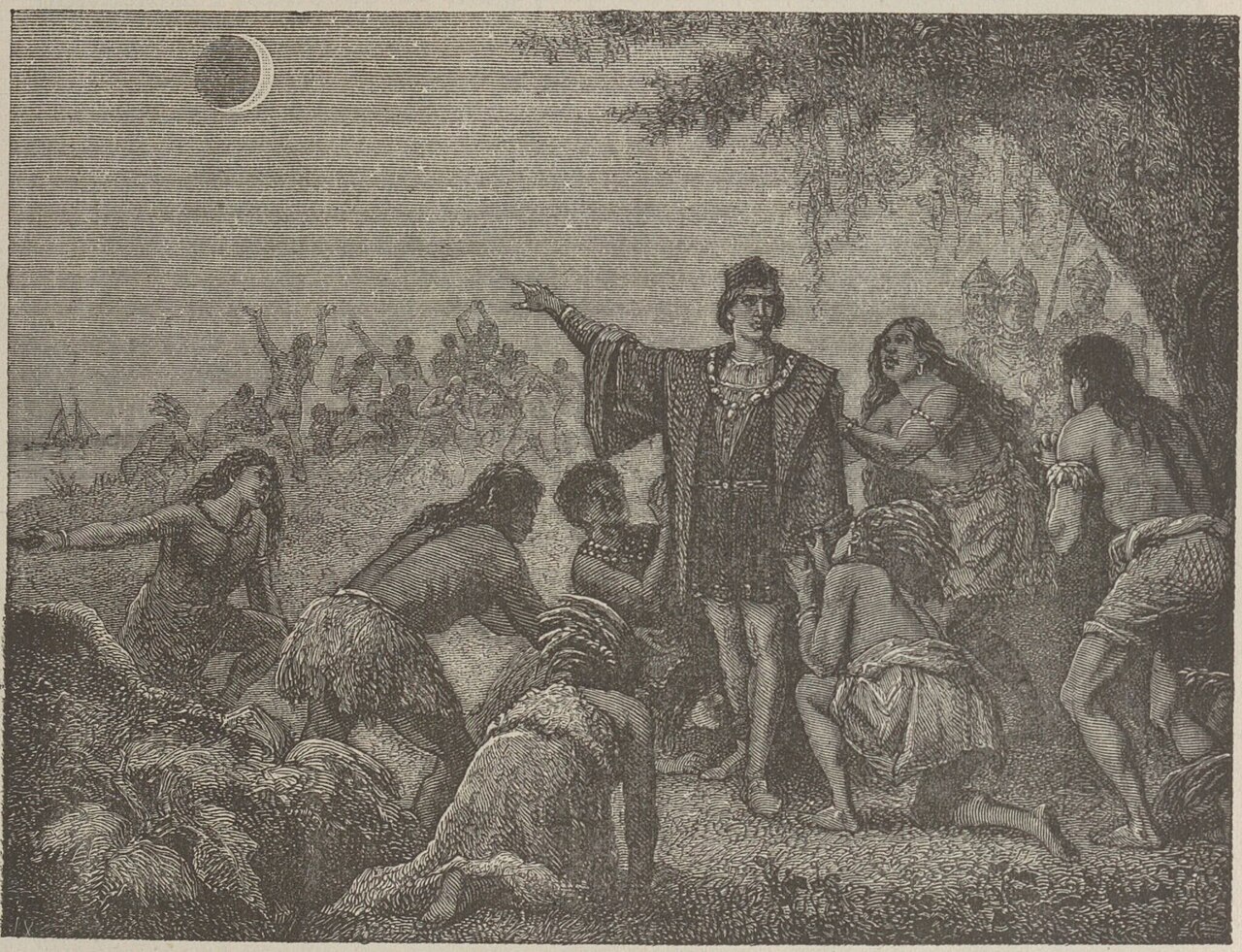
Columbus and the 1504 Lunar Eclipse
Camille Flammarion · 1881
An 1881 illustration from Camille Flammarion's astronomy book showing Columbus using a lunar eclipse to frighten the Jamaican people into giving him food.
Depicts Columbus using astronomical knowledge to secure food from Indigenous people in Jamaica, 1504.
About this source
What it is
This engraving appeared in 1881 in Astronomie populaire, a popular science book written by the French astronomer Camille Flammarion. It illustrates a story about Christopher Columbus, stranded in Jamaica and short of food, who is said to have used his knowledge of an upcoming lunar eclipse to threaten the local Caribbean people, convincing them to supply him with food.
Why it matters
The image shows how later writers used stories about Columbus to teach science and history together, turning him into an example of European cleverness. It also reflects how Indigenous people were often portrayed as submissive or easily deceived in European accounts of this period.
Look closer
- How does the artist pose Columbus compared to the Indigenous people in the scene?
- What does the story being told say about who holds power in this encounter?
- Why might a 19th-century science book want to retell this particular Columbus story?
This painting is part of the curated material that grounds the AI version of Christopher Columbus on Humy.ai — when students ask about related events, the AI can quote it and cite it.
More Christopher Columbus sources
Meet the AI Christopher Columbus →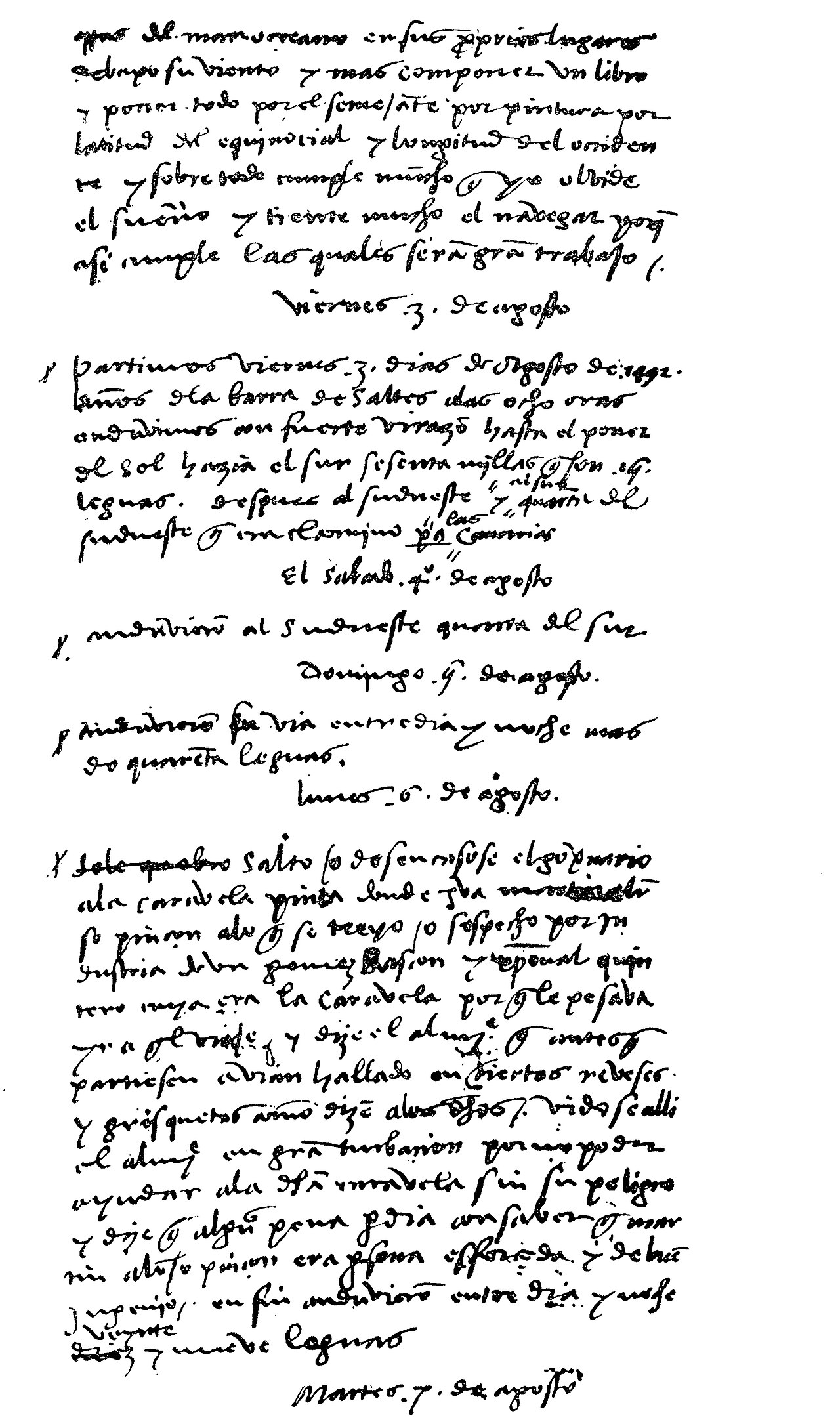 Diary entry
Primary source
Christopher Columbus' Journal
Christopher Columbus · 3 August 1492 – 15 March 1493
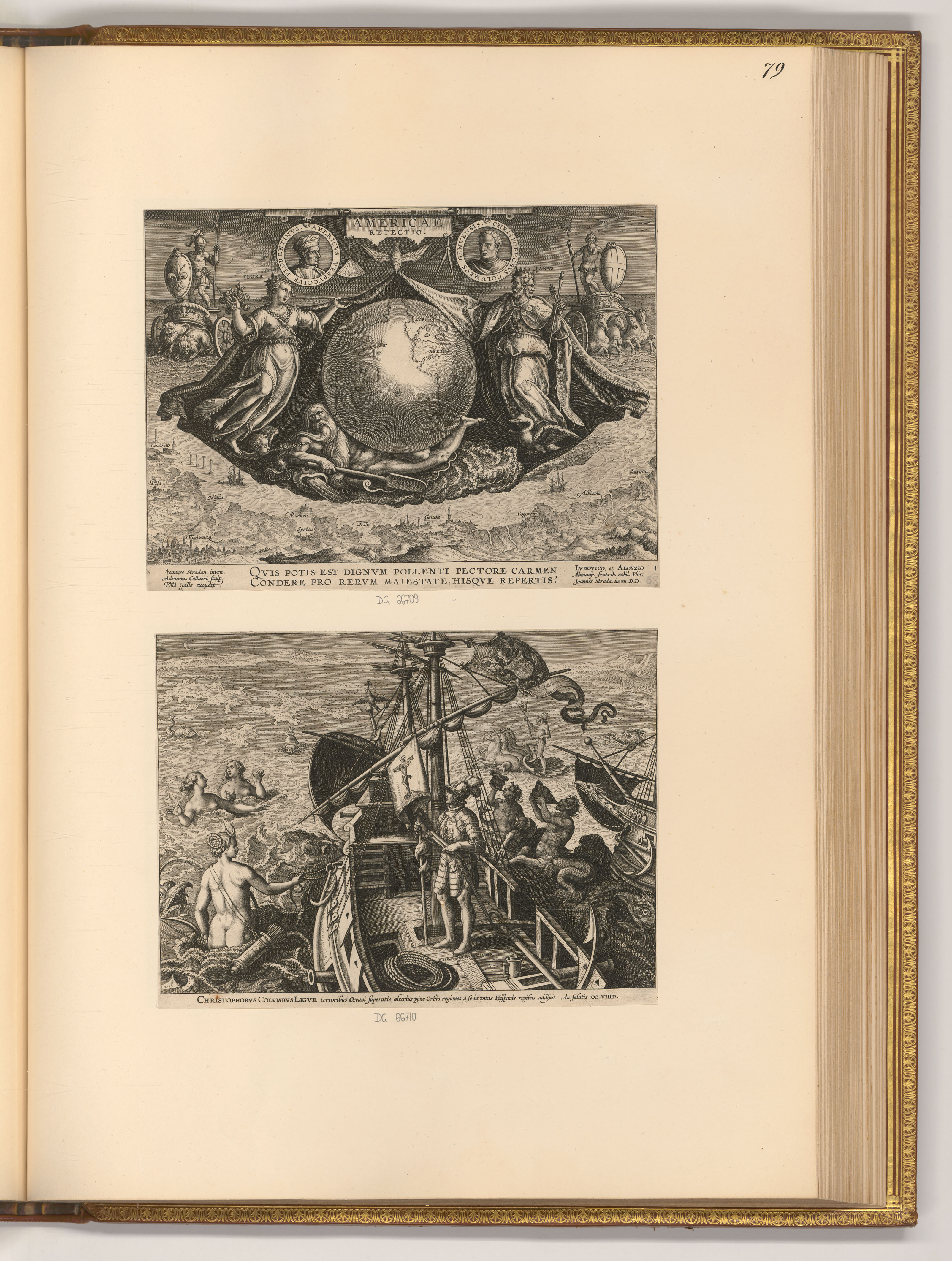 Painting
Secondary source
Americae Retectio Title Page with Columbus on His Ship
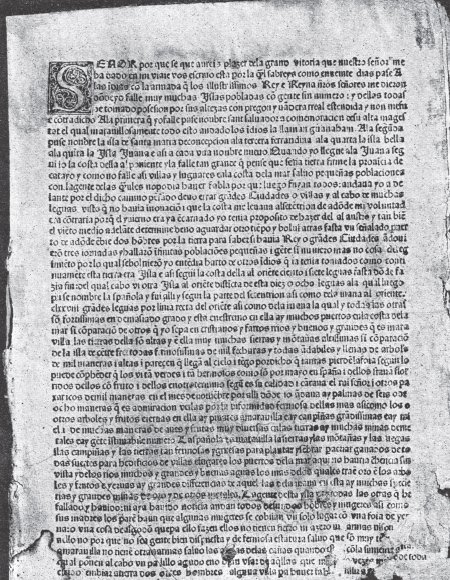 Letter
Primary source
Columbus Letter on the First Voyage
Christopher Columbus · 15 February 1493
 Painting
Secondary source
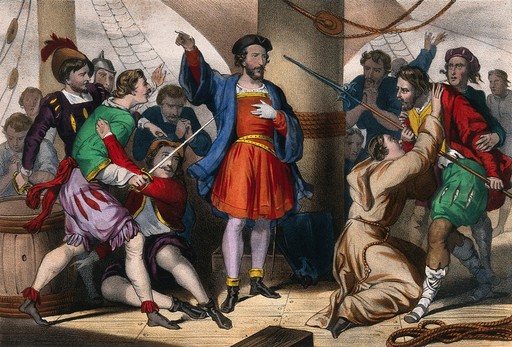
Columbus Admonishes His Men
Cassé
 Document
Primary source
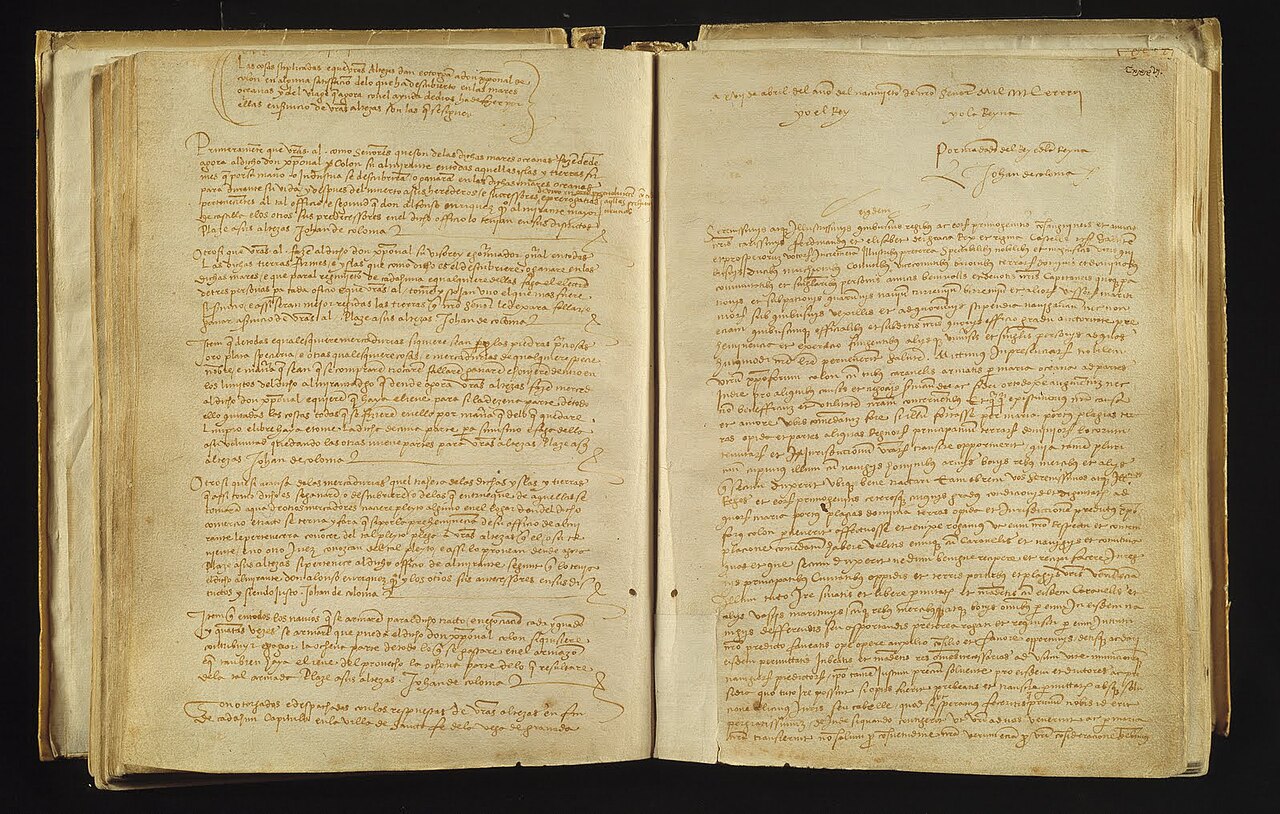
Capitulations of Santa Fe
Catholic Monarchs · 17 April 1492
Ready when you are
Start chatting with Christopher Columbus now.
20 messages free · No credit card · Available in 50+ languages.