


Secondary sourcePainting1752
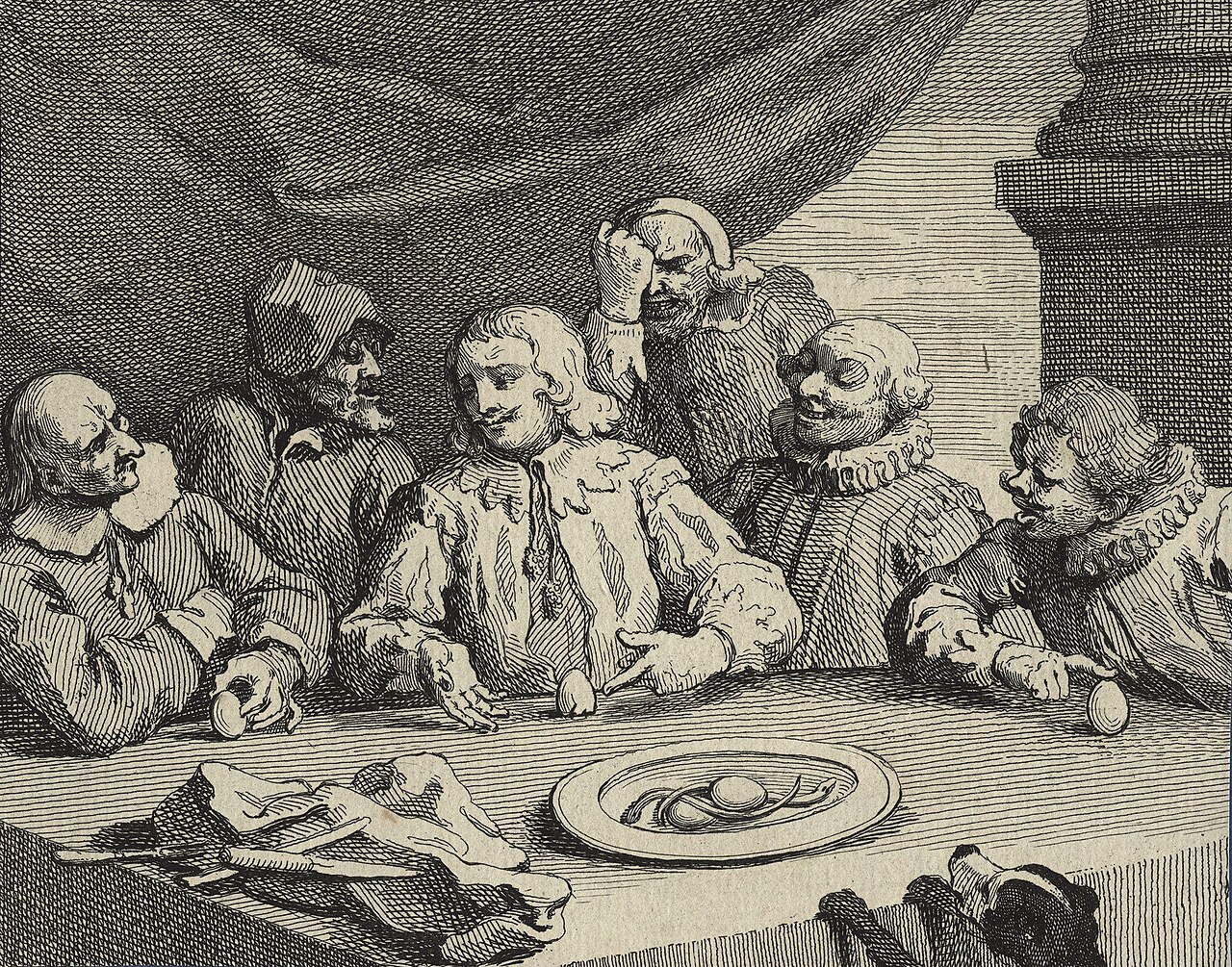
Columbus Breaking the Egg
William Hogarth · 1752
A 1752 engraving by William Hogarth illustrating the legendary tale of Columbus and the egg, used as a subscription ticket for Hogarth's own book.
Depicts a popular legend about Columbus, showing how his story was retold generations after his death.
About this source
What it is
This is an engraving made in 1752 by English artist William Hogarth. It was issued as a ticket for people who subscribed to his book The Analysis of Beauty. The print shows Columbus demonstrating how to make an egg stand upright by cracking its end, after his critics mocked his achievement as simple.
Why it matters
The story of the egg is a legend, not a real event, first told about another figure before being attached to Columbus. Hogarth used it as a joke about his own critics, comparing himself to Columbus facing people who dismissed his ideas as obvious. The print shows how stories about Columbus spread and were reshaped long after his life, becoming popular culture.
Look closer
- Why would Hogarth compare himself to Columbus?
- What does the print suggest about how legends grow around famous explorers?
- Does this image tell us anything true about Columbus's real voyages, or only about his later reputation?
This painting is part of the curated material that grounds the AI version of Christopher Columbus on Humy.ai — when students ask about related events, the AI can quote it and cite it.
More Christopher Columbus sources
Meet the AI Christopher Columbus →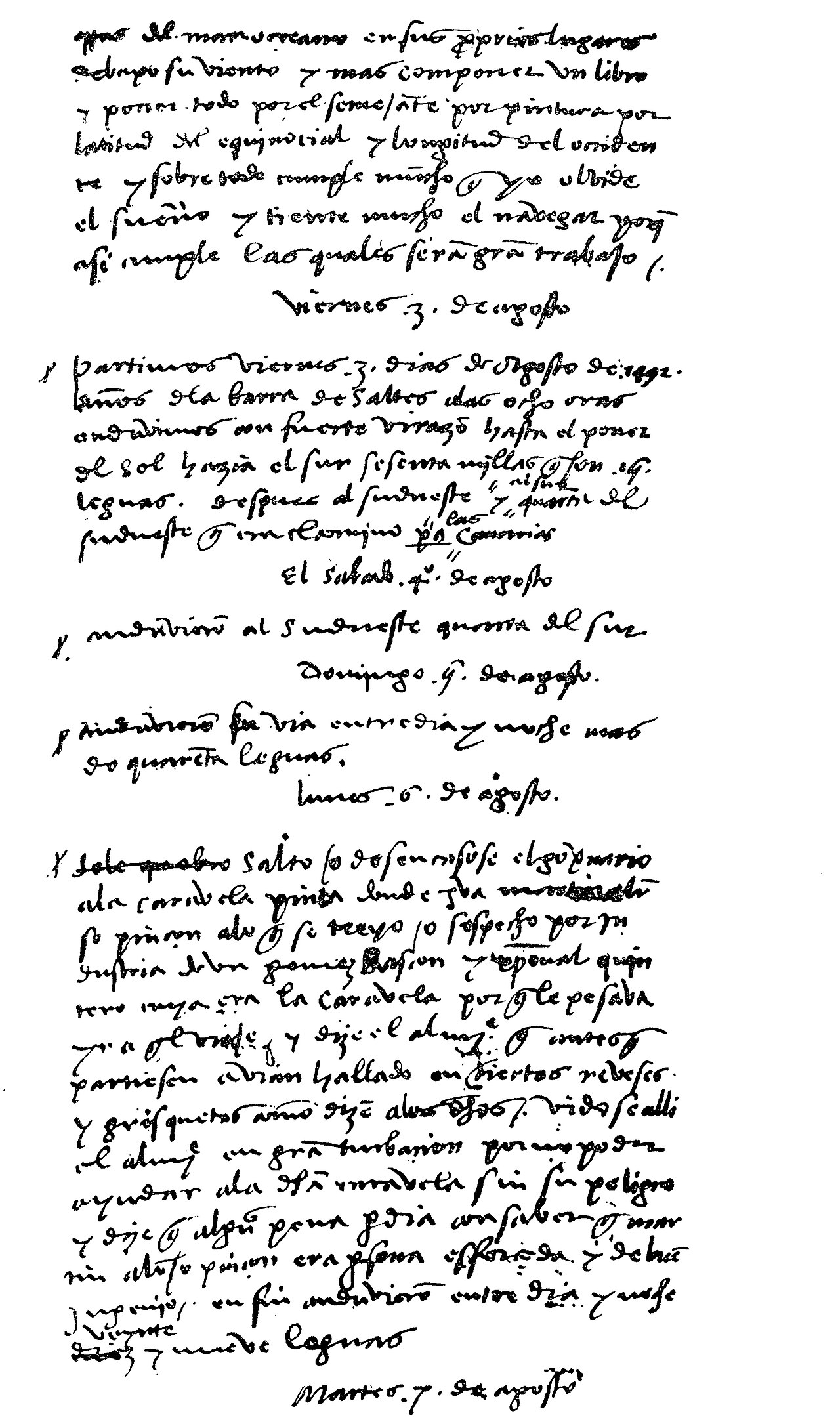 Diary entry
Primary source
Christopher Columbus' Journal
Christopher Columbus · 3 August 1492 – 15 March 1493
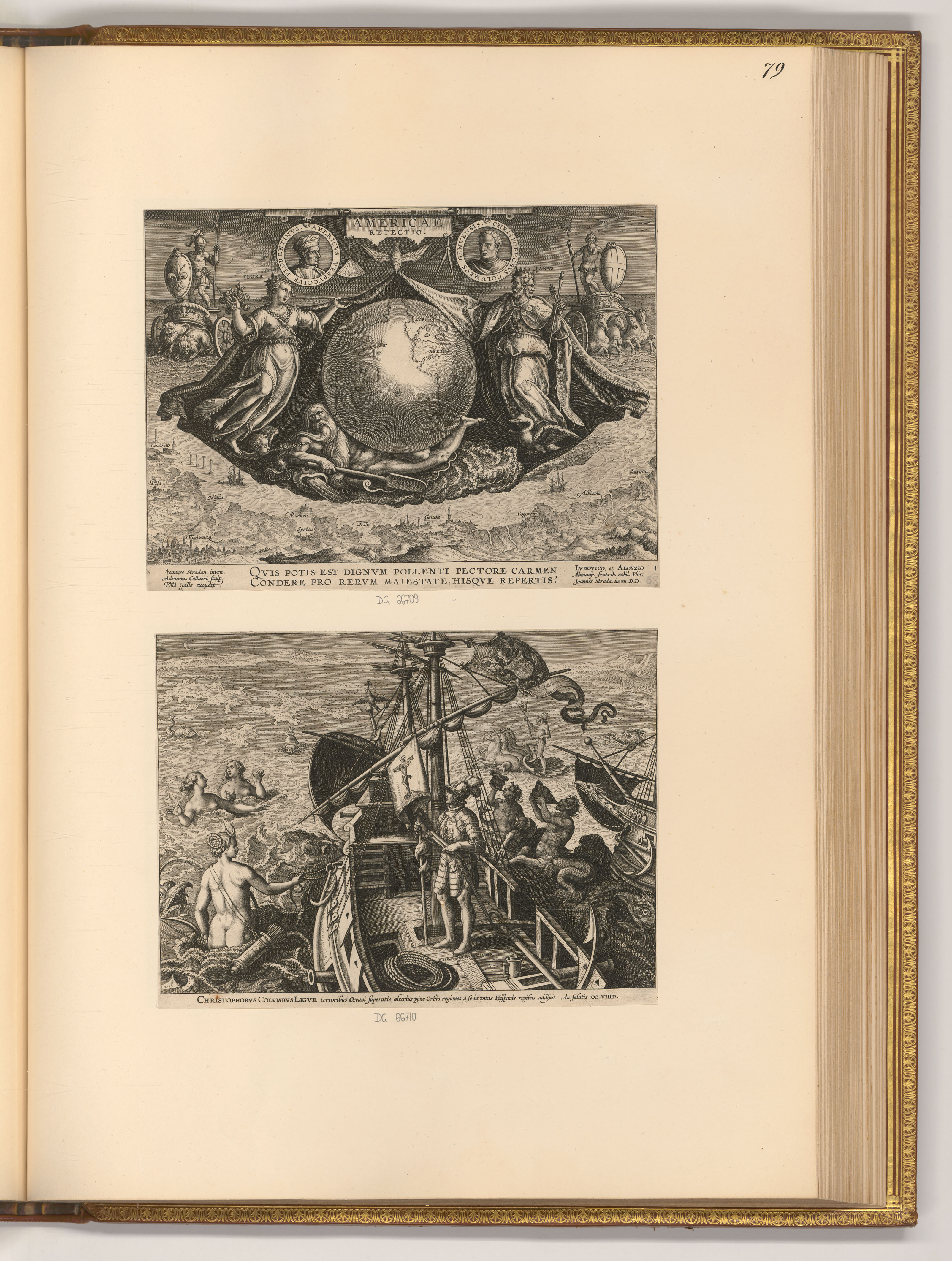 Painting
Secondary source
Americae Retectio Title Page with Columbus on His Ship
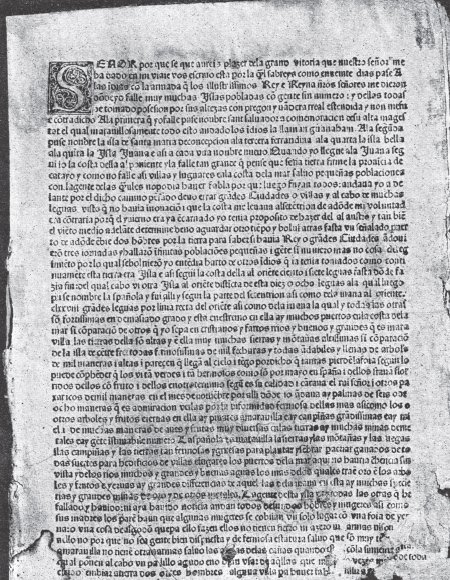 Letter
Primary source
Columbus Letter on the First Voyage
Christopher Columbus · 15 February 1493
 Painting
Secondary source
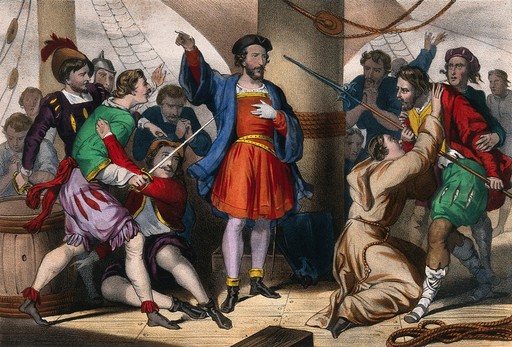
Columbus Admonishes His Men
Cassé
 Document
Primary source
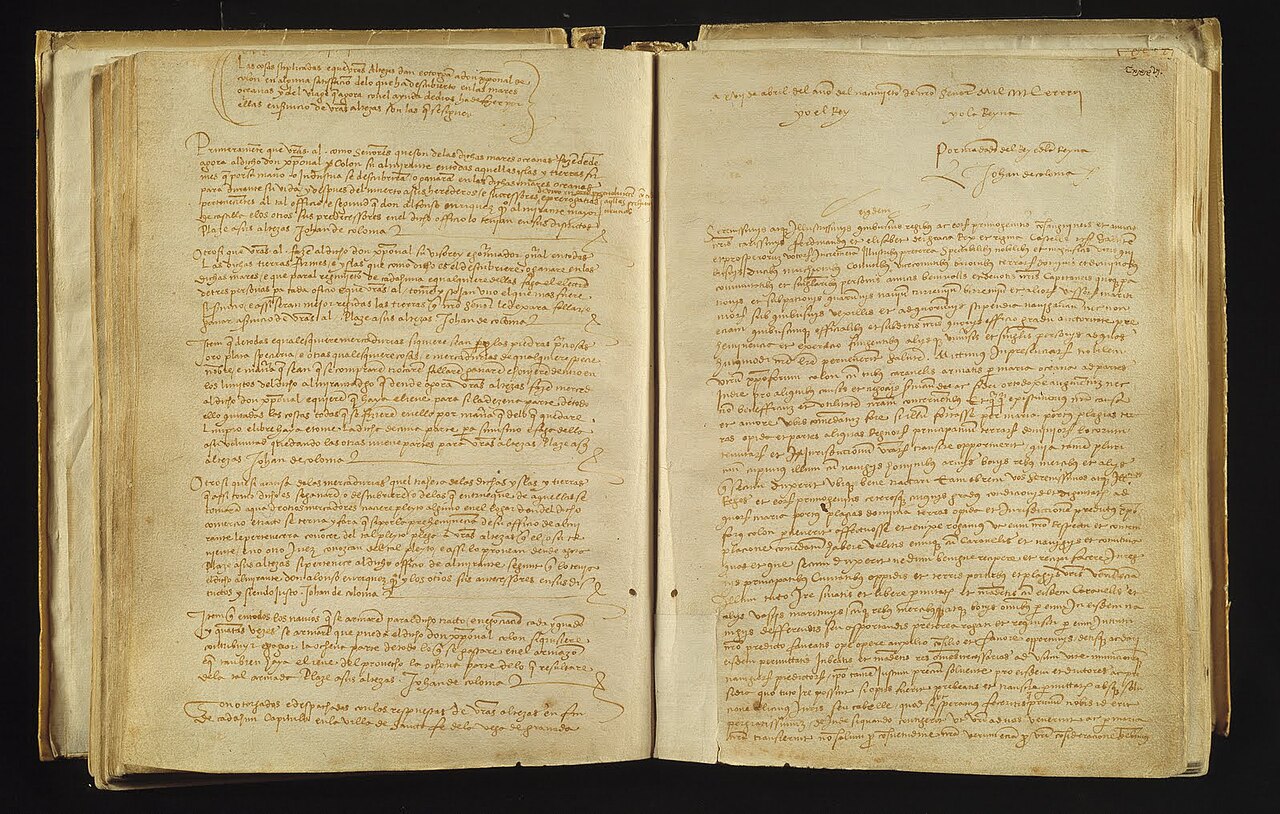
Capitulations of Santa Fe
Catholic Monarchs · 17 April 1492
Ready when you are
Start chatting with Christopher Columbus now.
20 messages free · No credit card · Available in 50+ languages.