


Primary sourcePhotograph1850-01-29
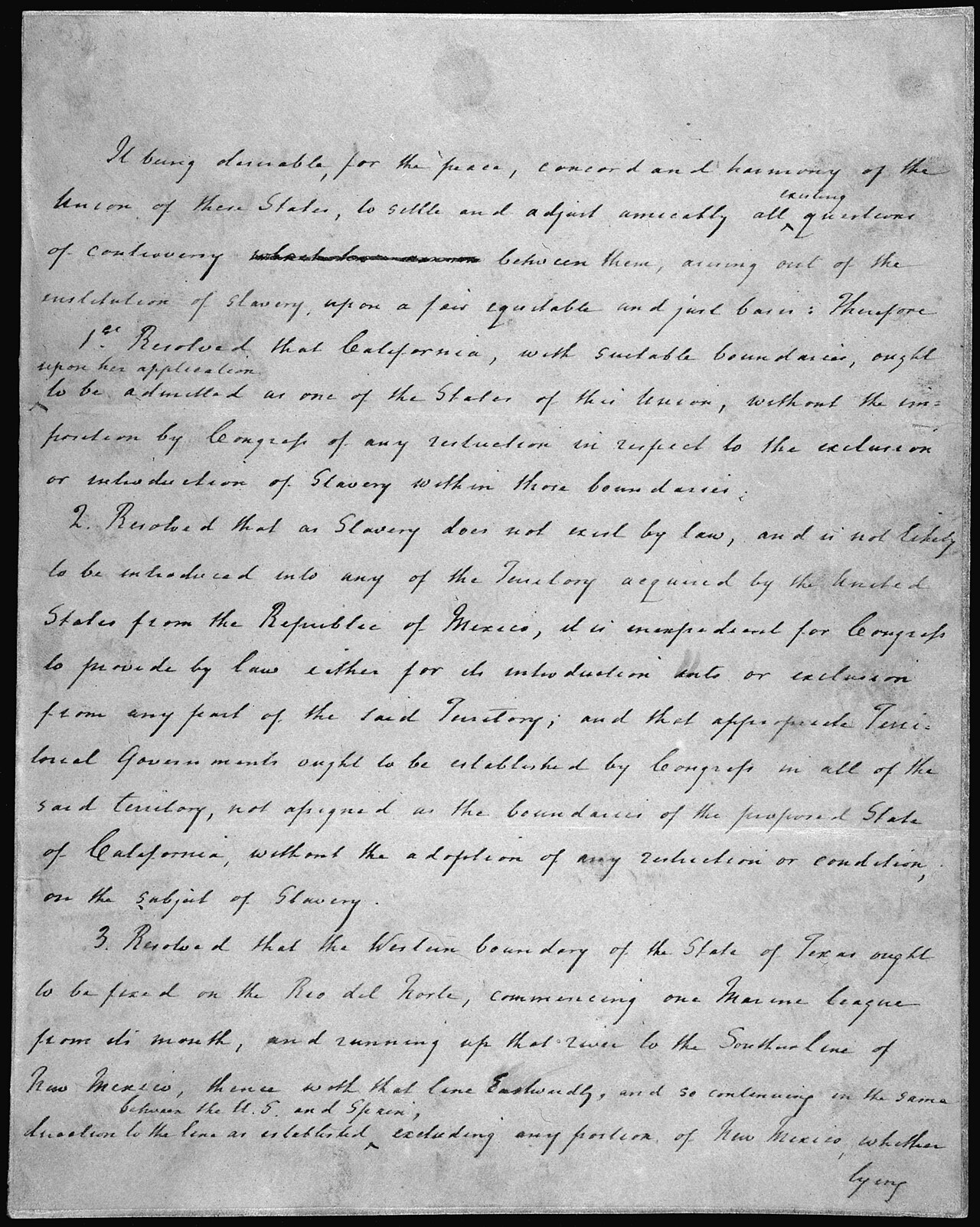
Compromise of 1850, Page 1 of 6 (National Archives)
Henry Clay · 1850-01-29
The first page of Henry Clay's January 1850 resolutions on slavery and the territories, the proposals that led to the Compromise of 1850 that Douglas helped broker.
This is Clay's own handwritten resolution, the founding document of the Compromise of 1850.
About this source
What it is
This is a photograph of a handwritten Senate manuscript page, showing a resolution introduced by Senator Henry Clay on January 29, 1850. The text begins with the words "It being desirable, for the peace, concord and harmony of the Union of these States." The original is held in Record Group 46 of the National Archives, and the record notes that the resolution later became known as the Compromise of 1850.
Why it matters
The resolutions dealt with California, slavery, and the Texas western boundary, and they became the starting point for the Compromise of 1850. Douglas was one of the legislators who worked to pass the compromise measures in the following months. The page shows the written form of a legislative proposal, with strikeouts and changes made as it was drafted.
Look closer
- What do the strikeouts and handwritten changes tell you about how the resolution was drafted?
- Whose interests does the opening sentence about "peace, concord and harmony" seem to protect?
- What might this page leave out about the people affected by slavery in the territories?
This photograph is part of the curated material that grounds the AI version of Henry Clay and Stephen A. Douglas on Humy.ai — when students ask about related events, the AI can quote it and cite it.
More Henry Clay sources
Meet the AI Henry Clay → Document
Primary source
Compromise of 1850
Henry Clay · 29 January 1850 (resolutions); statutes enacted September 1850
 Document
Primary source
Missouri Compromise Conference Committee Report
1 March 1820
 Document
Primary source
Treaty of Ghent
24 December 1814
 Speech
Primary source
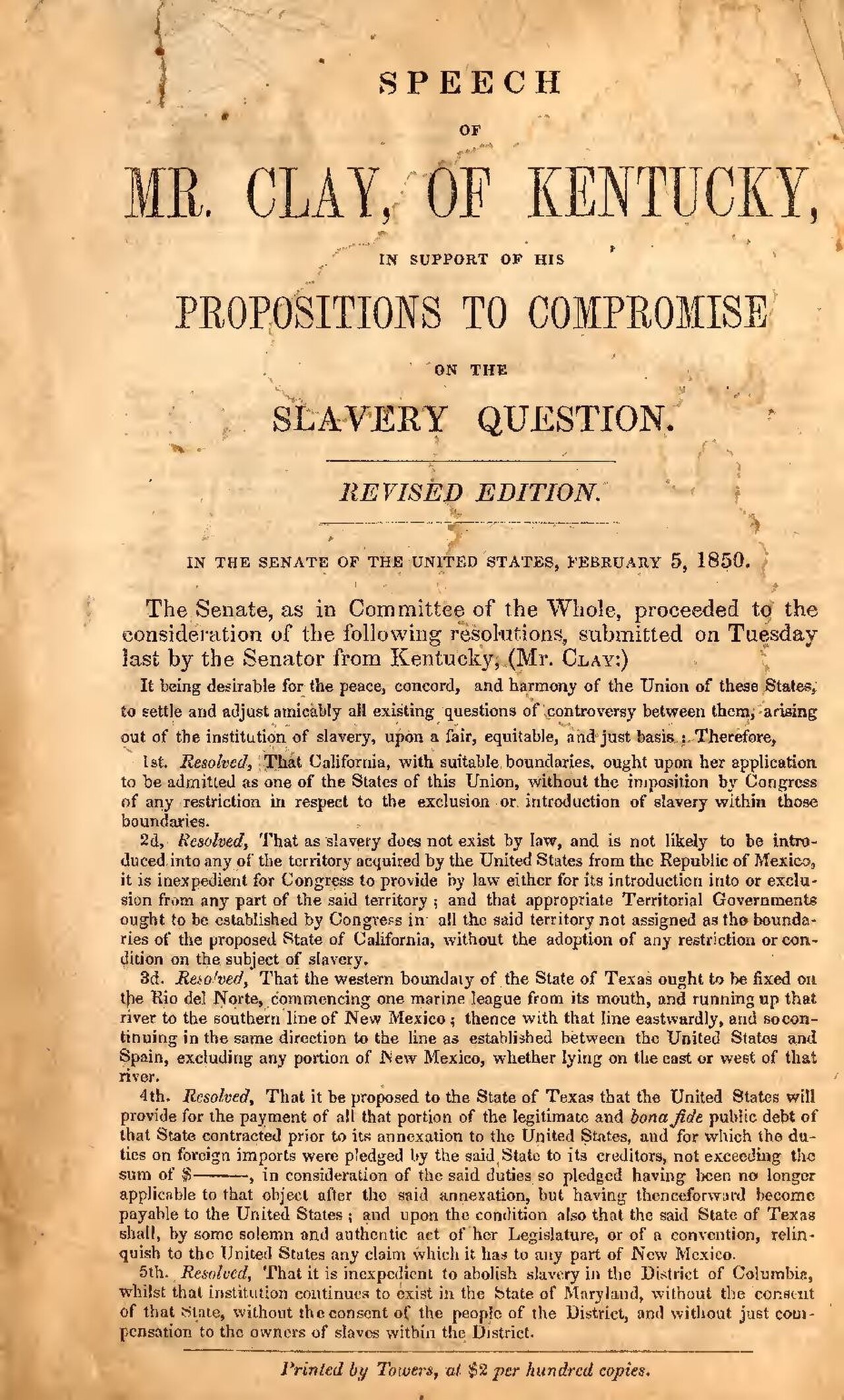
Speech on the Compromise Resolutions
Henry Clay · 5-6 February 1850
 Speech
Primary source
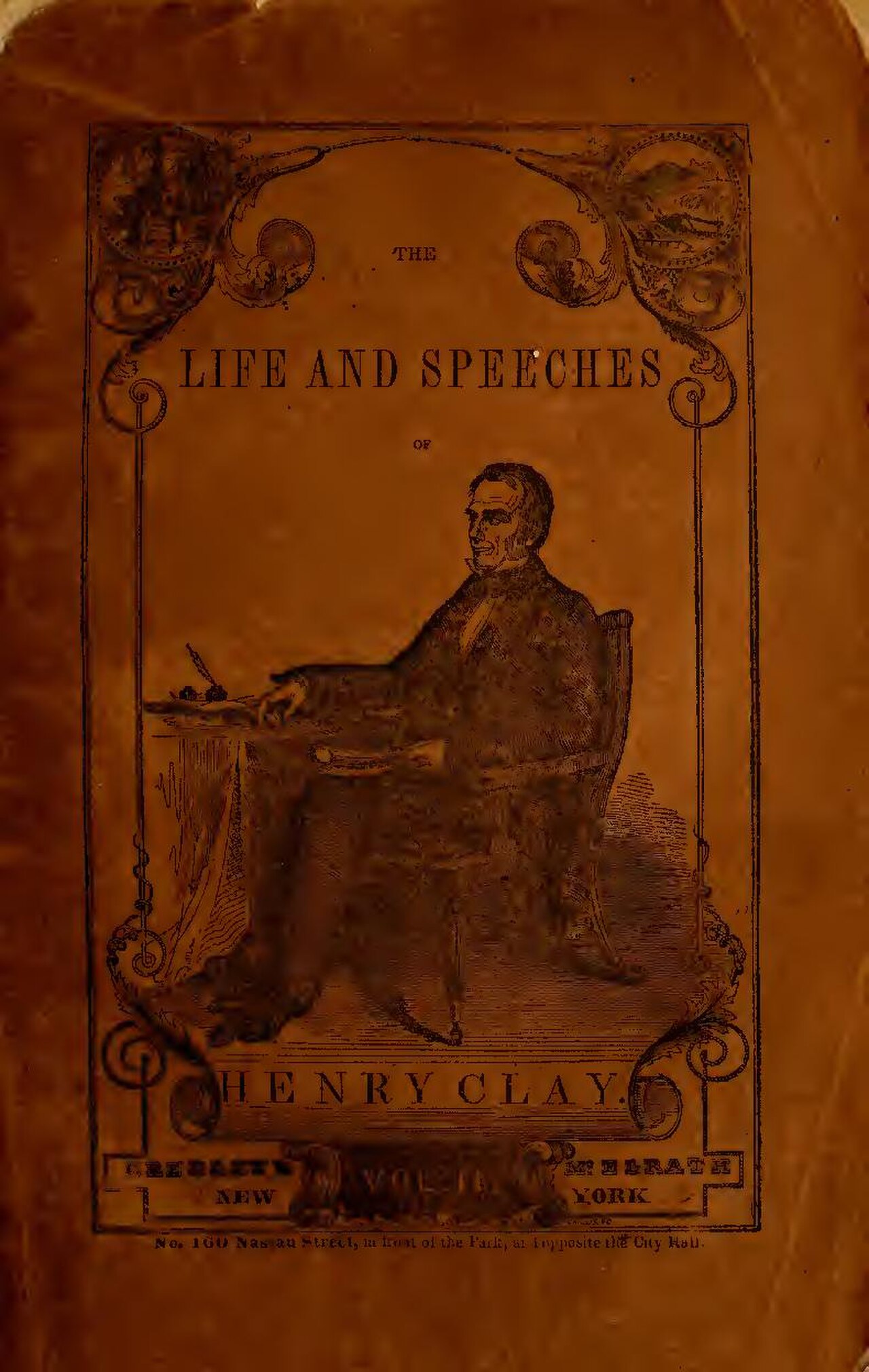
Speech in Defense of the American System
Henry Clay · 2, 3, and 6 February 1832
Ready when you are
Start chatting with Henry Clay now.
20 messages free · No credit card · Available in 50+ languages.