


Primary sourcePhotograph
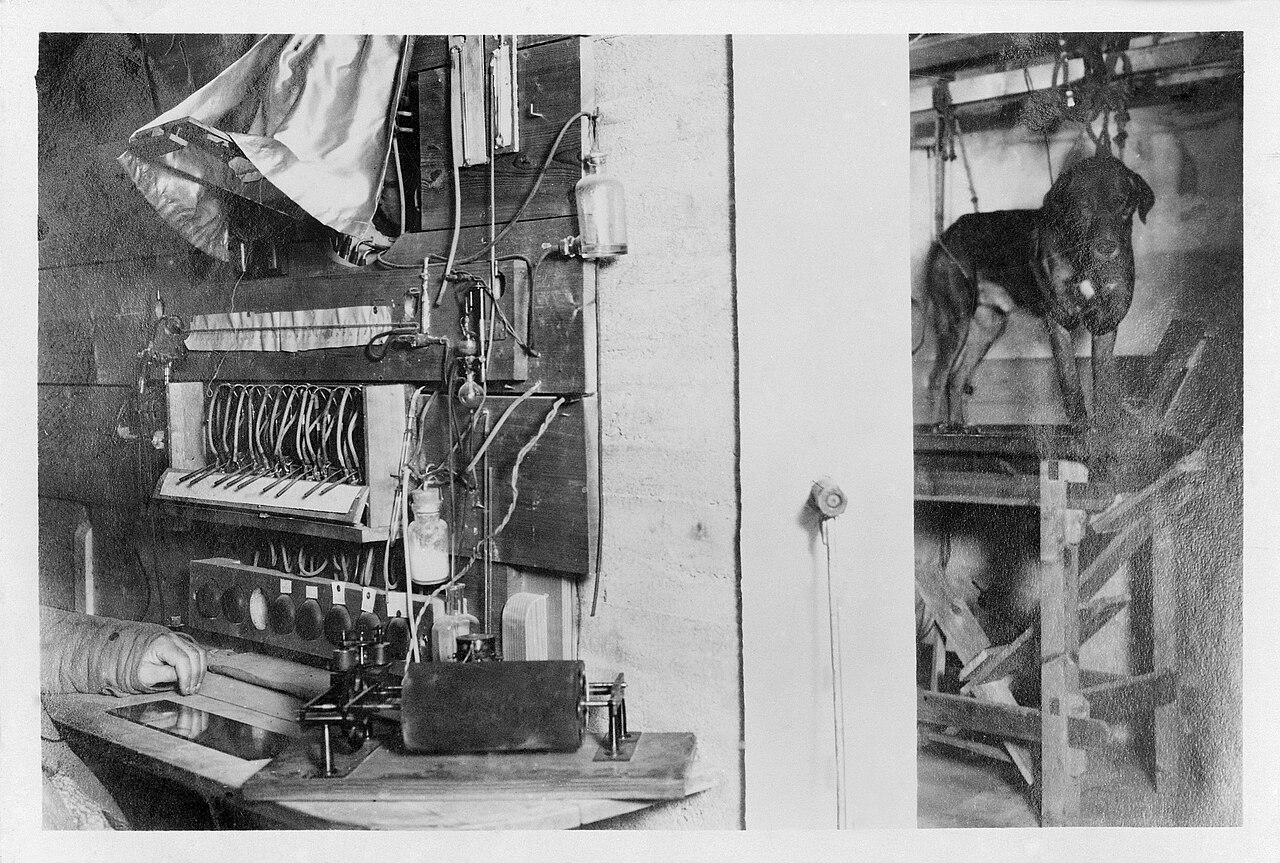
Concrete Suspended Room, Pavlov's Laboratory
A photograph of the isolation chamber used in Ivan Pavlov's conditioning experiments, showing a dog in position.
This photograph documents the isolation chamber central to Pavlov's conditioning experiments, the method for which he is best known.
About this source
What it is
This black-and-white photograph shows two adjoining views inside a laboratory: experimental apparatus with tubes and glass containers on one side, and a dog standing in a wooden harness frame on the other. It depicts the concrete suspended room used in Ivan Pavlov's research, with the chamber door open and a dog in position.
Why it matters
This isolation chamber was where Pavlov's famous conditioning trials were carried out, keeping animals isolated from outside stimuli so researchers could study their responses precisely. The photograph gives direct physical evidence of the experimental setup behind Pavlov's scientific discoveries about conditioned reflexes.
Look closer
- Why might isolating the dog from outside sounds and sights have been important for Pavlov's experiments?
- What does the equipment visible in the photo suggest about how controlled these experiments were?
- What can't this photograph tell you about how the dog was treated or felt during the experiment?
This photograph is part of the curated material that grounds the AI version of Ivan Pavlov on Humy.ai — when students ask about related events, the AI can quote it and cite it.
More Ivan Pavlov sources
Meet the AI Ivan Pavlov → Book
Primary source
The Work of the Digestive Glands
Ivan Pavlov · 1897 (published 1902)
 Artifact
Secondary source
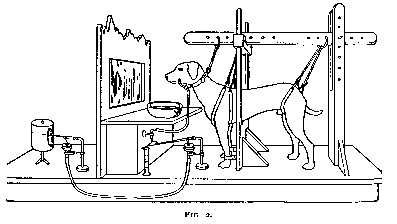
Diagram of Pavlov's Conditioned Reflex Apparatus
Yerkes, R. M., & Morgulis, S.
 Photograph
Primary source
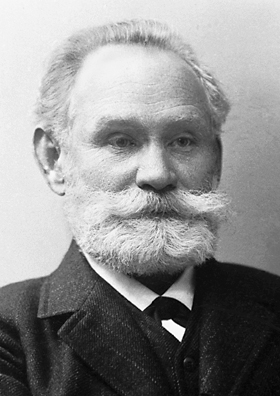
Nobel Prize Portrait of Ivan Pavlov
Unknown · 1904
 Document
Primary source
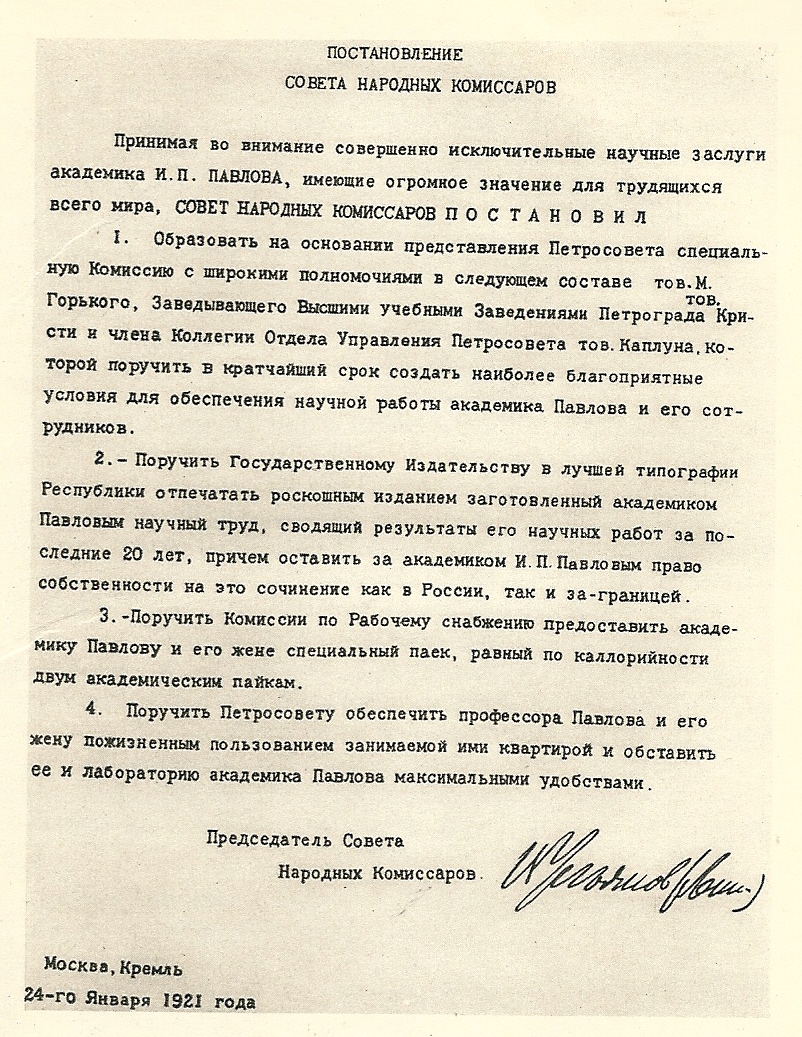
Sovnarkom Decree on Academician Pavlov
Vladimir Lenin · 24 January 1921
 Painting
Primary source
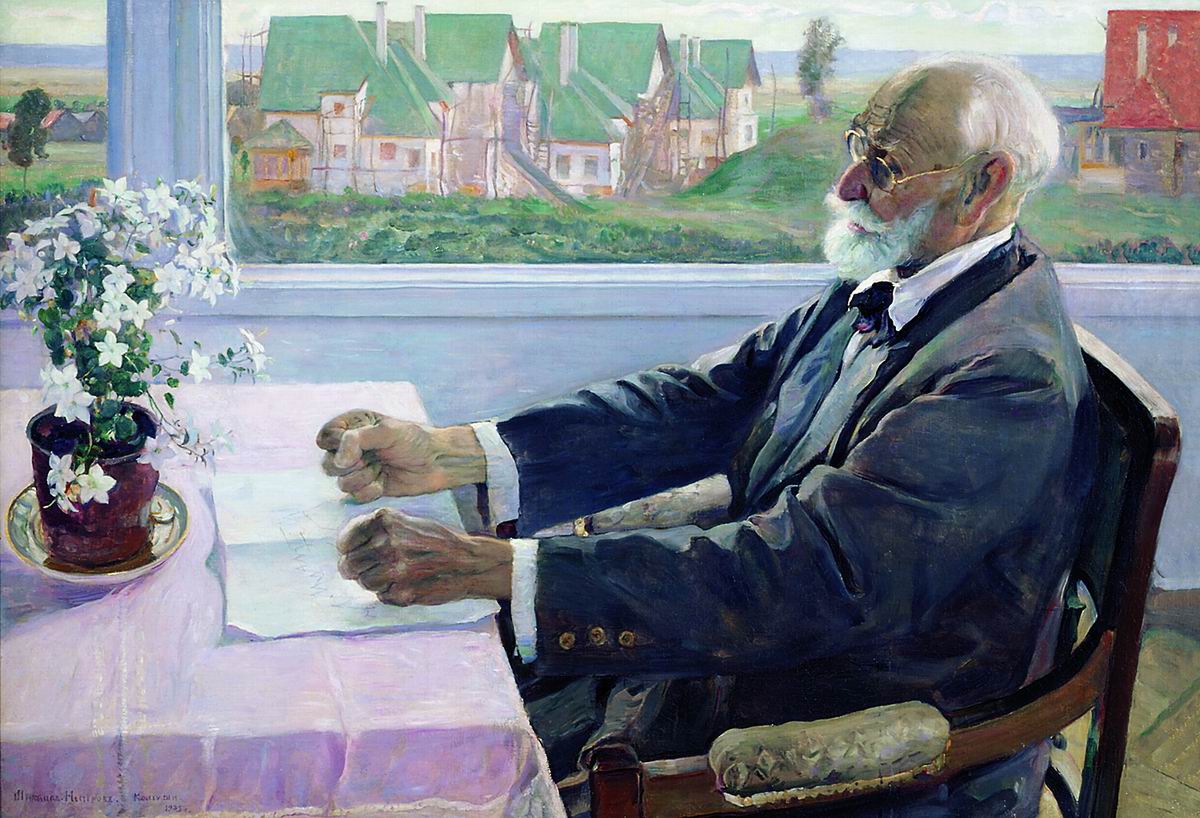
Portrait of Ivan Pavlov by Mikhail Nesterov
Mikhail Nesterov · 1935
Ready when you are
Start chatting with Ivan Pavlov now.
20 messages free · No credit card · Available in 50+ languages.