


Primary sourceDocumentJanuary 1730
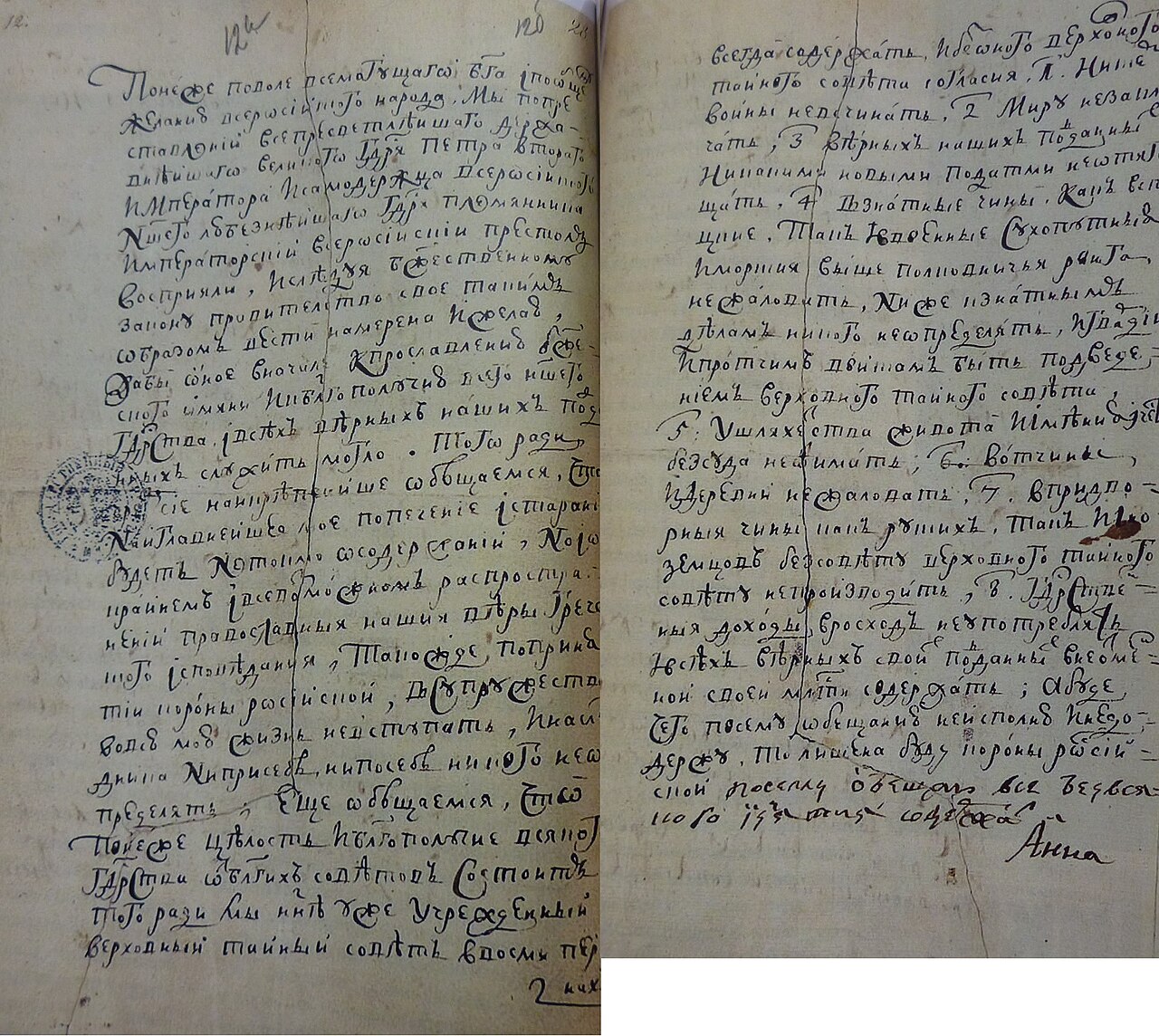
Conditions of 1730
Members of the Supreme Privy Council · January 1730
The document limiting the new empress's power, signed by Anna at Mitau in January 1730 before she tore it up to restore autocratic rule.
Anna signed this document agreeing to limit her power, then tore it up to seize full autocratic rule.
About this source
What it is
This is a handwritten 18th-century Russian manuscript, the 'Conditions' drawn up by members of the Supreme Privy Council and signed by Anna at Mitau in January 1730. It carries her signature and an official seal.
Why it matters
The Conditions would have bound Anna to rule only with the Council's approval, sharply limiting her power as empress. Her decision to publicly tear up the document on 7 March 1730 became the defining act of her reign, restoring full autocratic rule in Russia.
Look closer
- Why might the Council have wanted Anna to sign such conditions before letting her become empress?
- What does tearing up a signed agreement say about the real balance of power at court?
- What is missing from this document that would tell us how ordinary Russians felt about these events?
This document is part of the curated material that grounds the AI version of Anna of Russia on Humy.ai — when students ask about related events, the AI can quote it and cite it.
More Anna of Russia sources
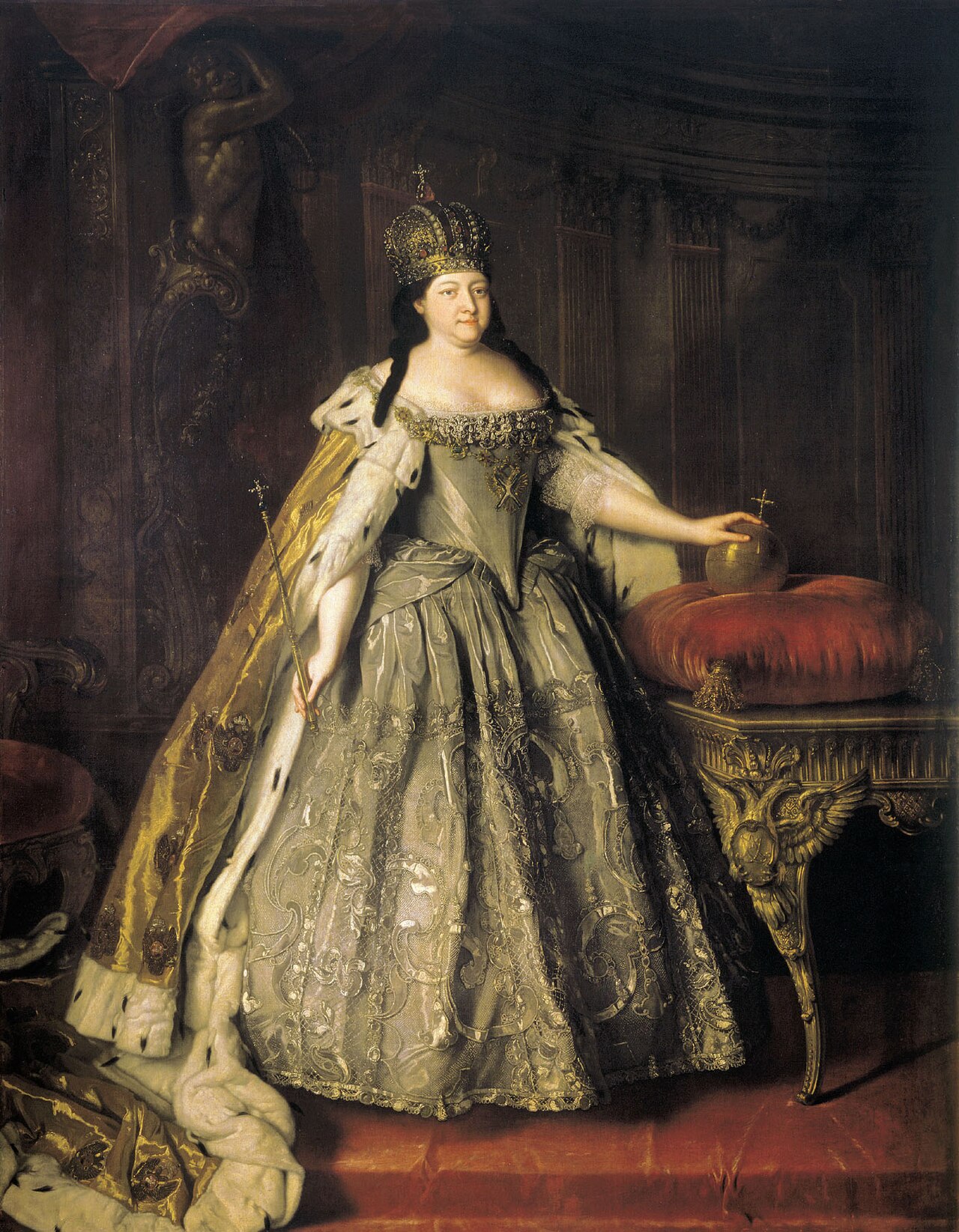
Browse all 52 →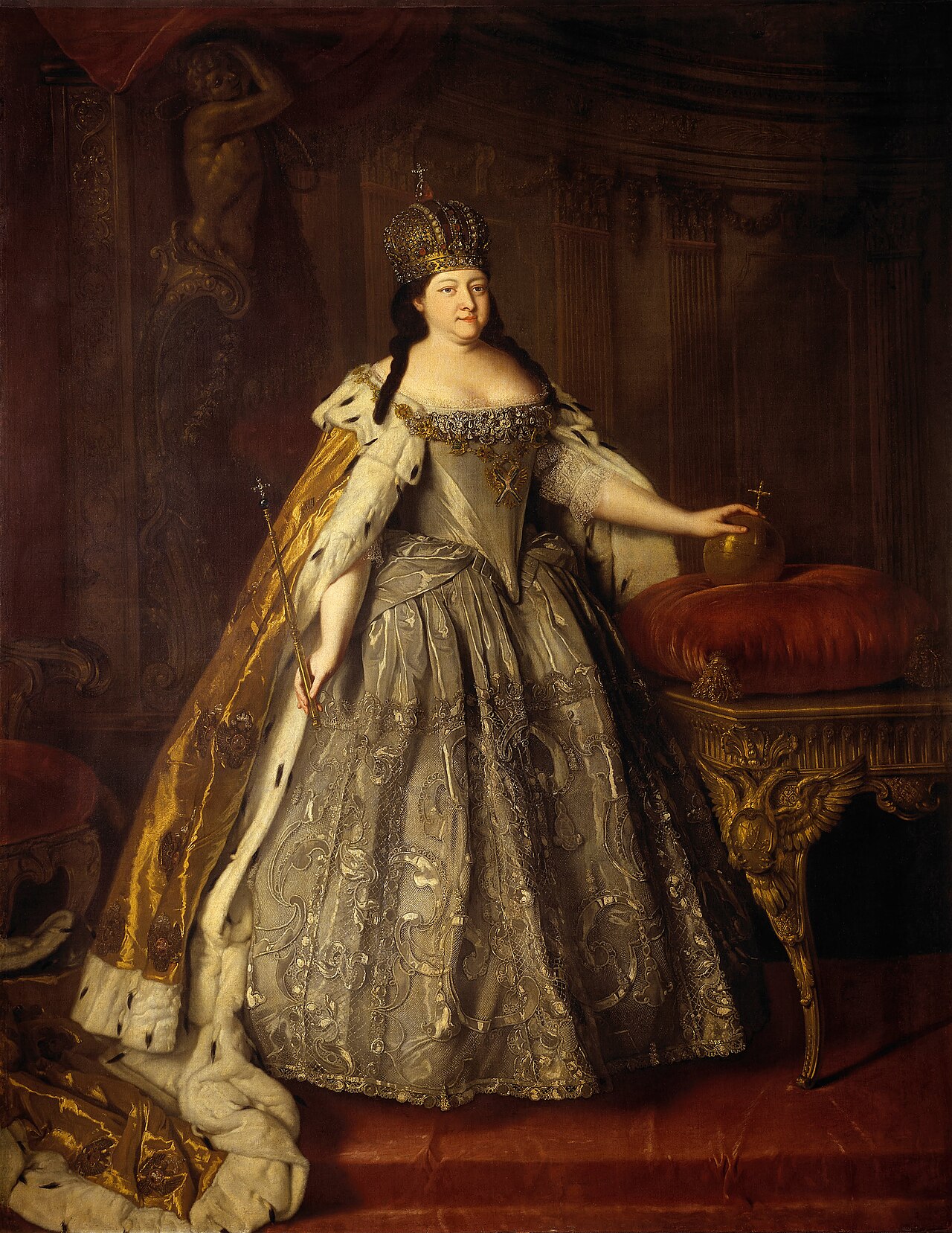 Painting
Primary source
Portrait of Empress Anna Ioannovna
Louis Caravaque · 1730
 Painting
Primary source
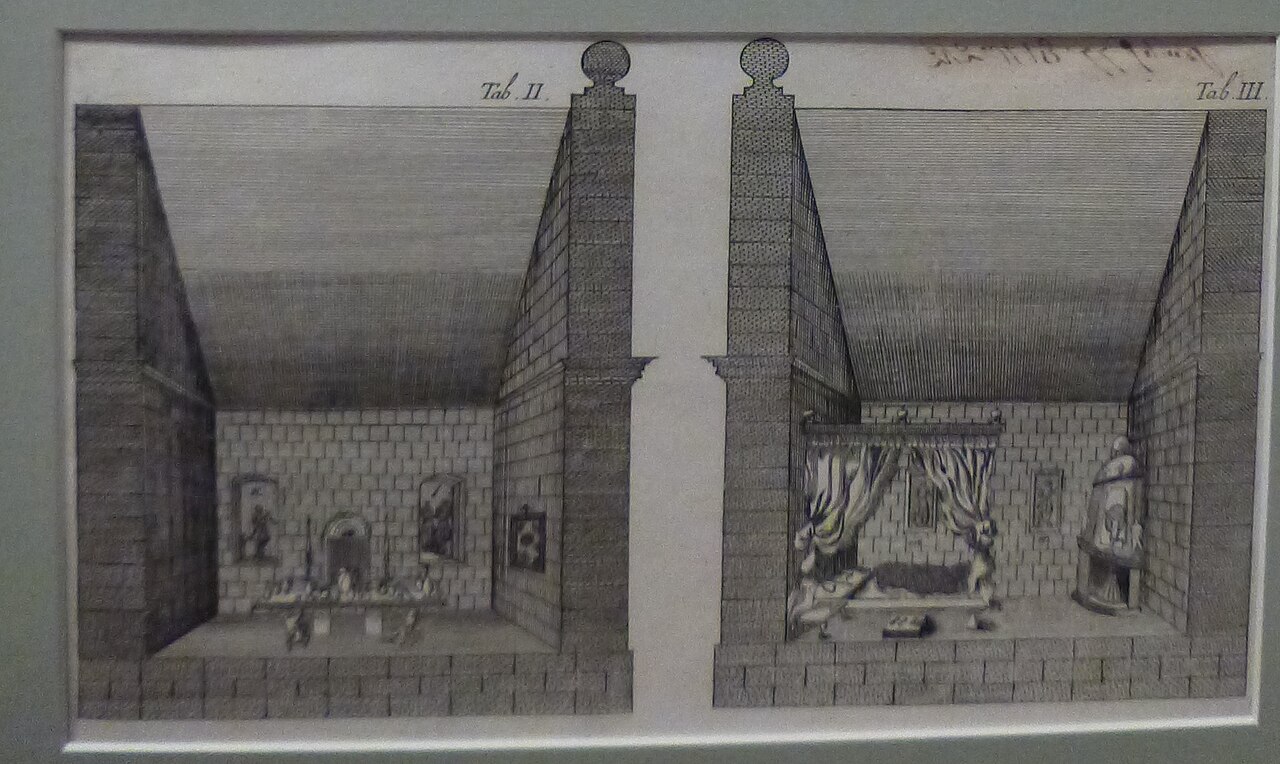
Cross-section of the Ice Palace Dining Room and Bedroom
Unknown engraver · 1741
 Artifact
Primary source
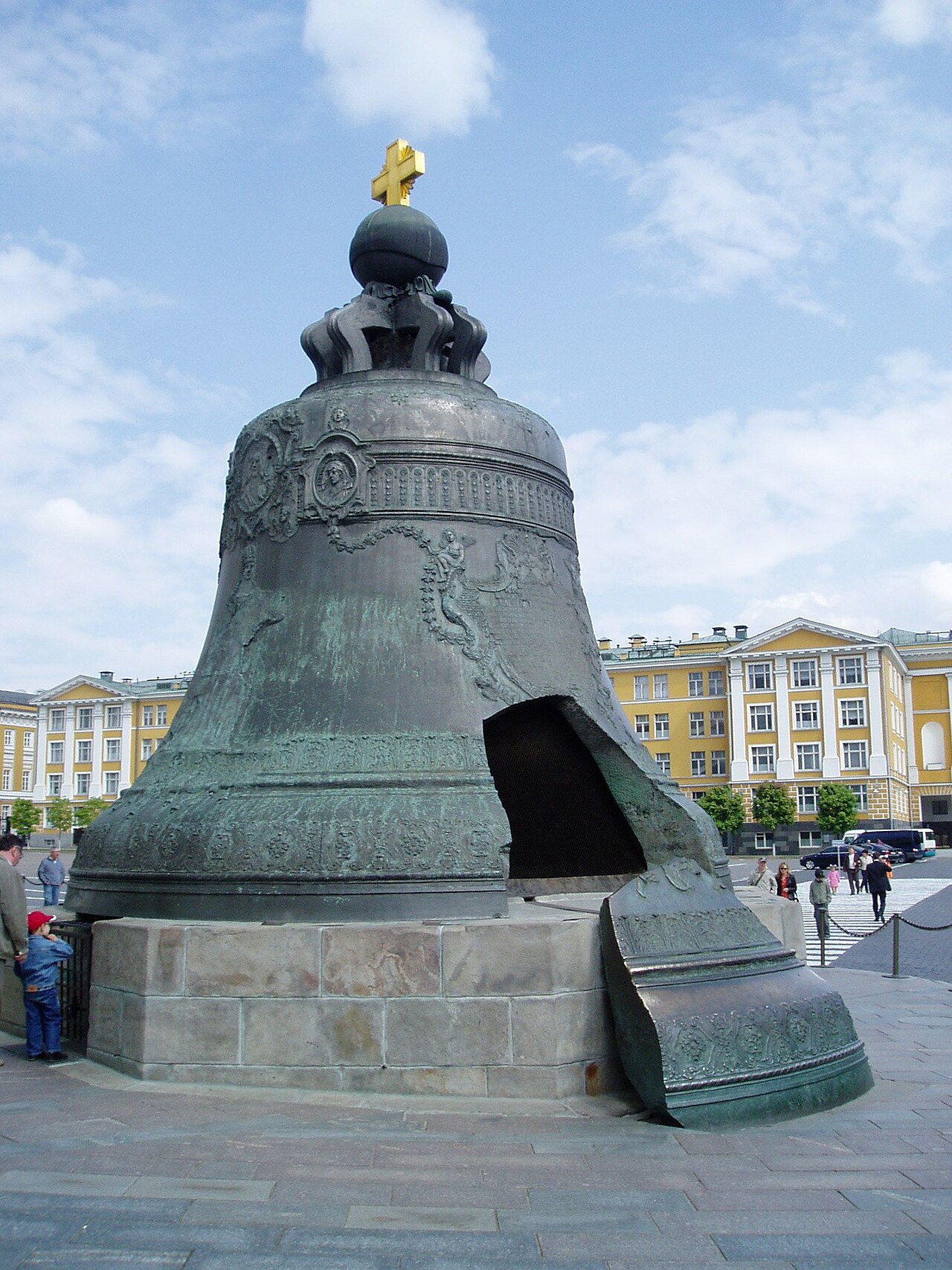
Tsar Bell
Ivan and Mikhail Motorin · 1733
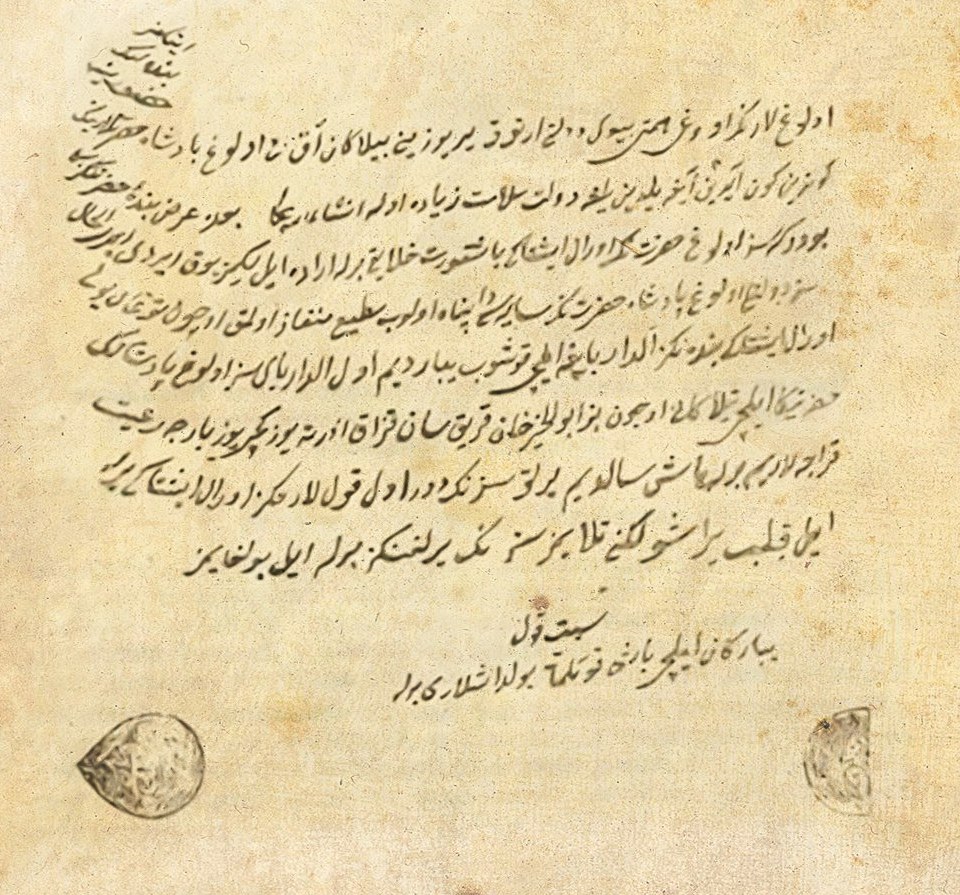 Letter
Primary source
Letter of Abulkhair Khan to Empress Anna
Abulkhair Khan · 1731
Free account
Read every Anna of Russia source
Sign up free →
Ready when you are
Start chatting with Anna of Russia now.
20 messages free · No credit card · Available in 50+ languages.