


Primary sourceDocument2 April 1924
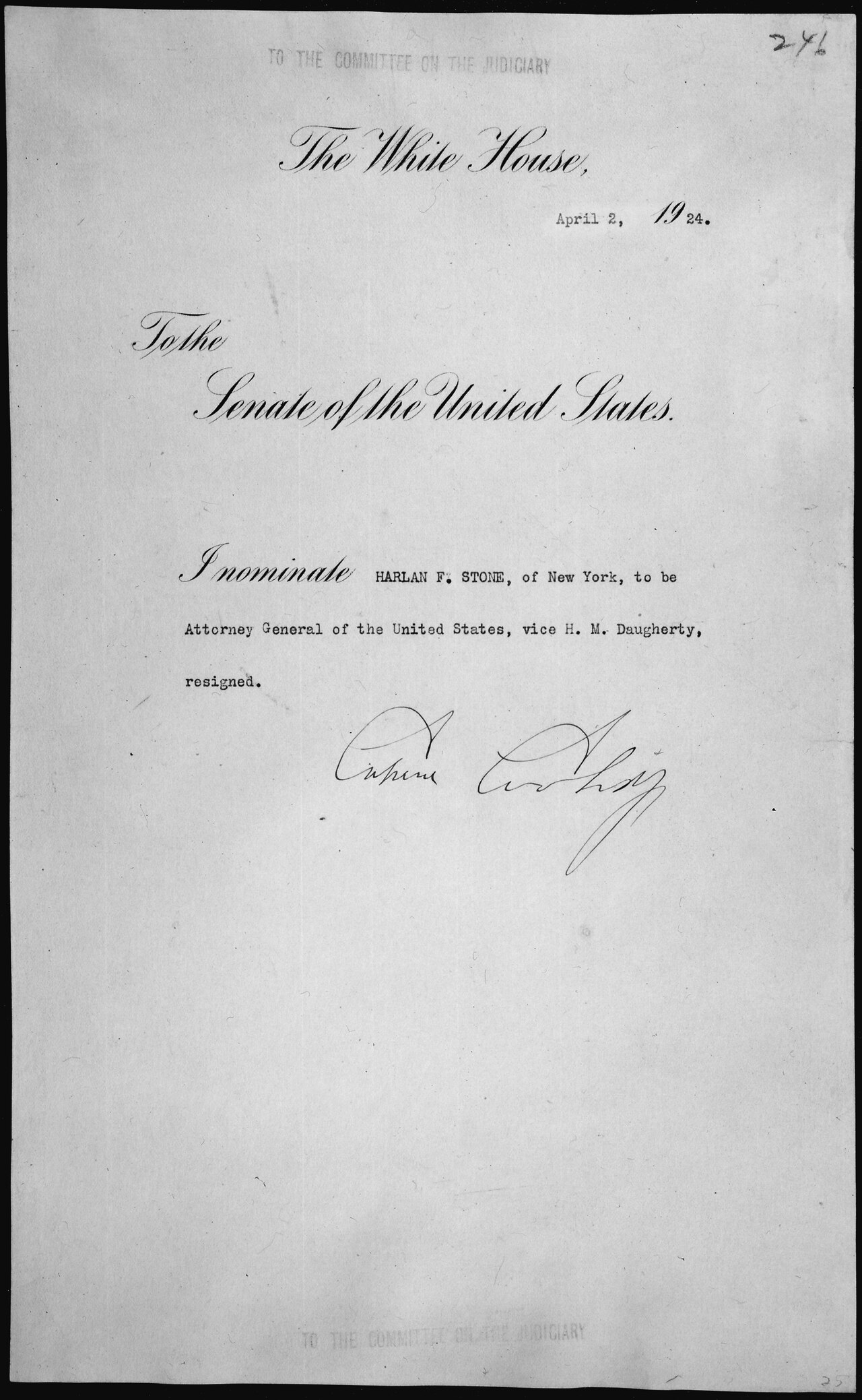
Coolidge message nominating Harlan F. Stone as Attorney General, 1924
2 April 1924
A White House message to the Senate, signed by Coolidge, nominating Harlan F. Stone as Attorney General. It shows how a president used nominations to fill cabinet posts.
Shows Coolidge using his executive power to nominate a cabinet officer to the Senate.
About this source
What it is
This is a scan of a typed White House message dated 2 April 1924, addressed to the Senate of the United States. It nominates Harlan F. Stone of New York to be Attorney General, to replace H. M. Daugherty, who had resigned. The message is signed by Calvin Coolidge and stamped 'To the Committee on the Judiciary' at the top and bottom.
Why it matters
Cabinet nominations required Senate approval, so messages like this were the formal start of a confirmation process. The message links Coolidge to Harlan F. Stone and to Daugherty, whose resignation created the vacancy, and it shows how the Senate committee system handled such appointments.
Look closer
- What words in the message show that the Senate had to approve the nominee?
- Why do the committee stamps matter for understanding how the process worked?
- What does a one-page message leave out about the reasons for the nomination?
This document is part of the curated material that grounds the AI version of Calvin Coolidge on Humy.ai — when students ask about related events, the AI can quote it and cite it.
More Calvin Coolidge sources
Meet the AI Calvin Coolidge →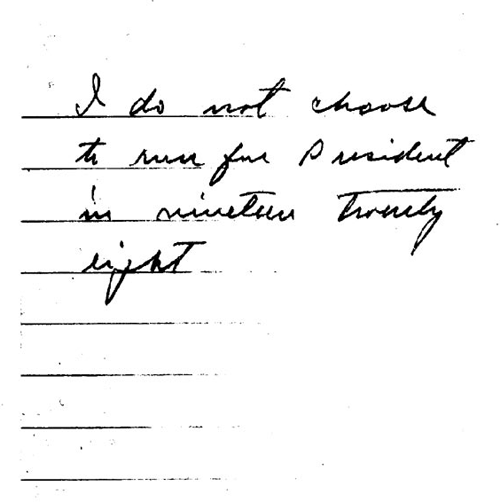 Document
Primary source
I Do Not Choose to Run
Calvin Coolidge · 2 August 1927
 Book
Primary source
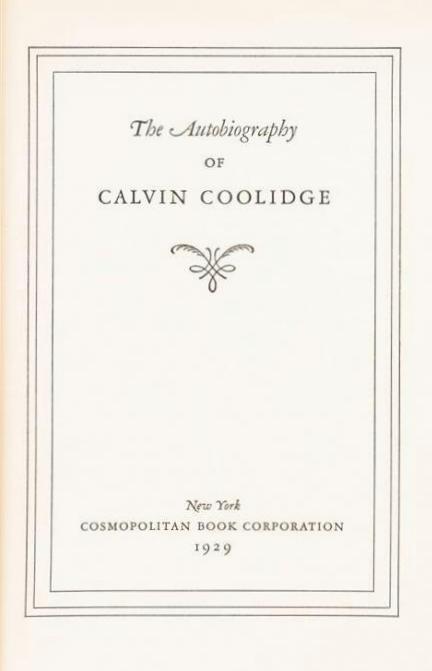
The Autobiography of Calvin Coolidge
Calvin Coolidge · 1929
 Speech
Primary source
Second Inaugural Address of Calvin Coolidge
Calvin Coolidge · 4 March 1925
Primary source
President Coolidge, Taken on the White House Grounds
Lee de Forest · 1924
Primary source
Calvin Coolidge's 1920 Fourth of July Speech
4 July 1920
Ready when you are
Start chatting with Calvin Coolidge now.
20 messages free · No credit card · Available in 50+ languages.