


Primary sourceArtifact1902
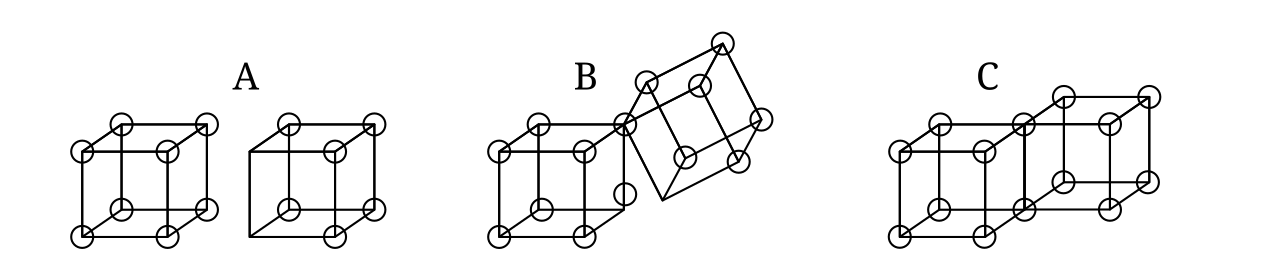
Cubical Atom Diagram
Gilbert N. Lewis · 1902
A drawing by Lewis from 1902 showing atoms as cubes with electrons at the corners, an early step toward his theory of chemical bonds.
Lewis's own sketch of his cubical atom idea, the seed of his later bonding theories.
About this source
What it is
This is a diagram by Gilbert N. Lewis, developed in 1902 and published in 1916, showing atoms as cubes with electrons placed at the eight corners. The drawing shows how bonds could form by atoms sharing an edge, corner, or face of their cubes.
Why it matters
Although the cubical atom model was later replaced by quantum mechanical models, it was an important early attempt to explain valency — why atoms combine the way they do. This same 1916 work introduced Lewis's lasting ideas of the electron pair, the octet rule, and what we now call the Lewis structure, tools still used in chemistry classrooms today.
Look closer
- What does drawing atoms as cubes suggest about how scientists use simple shapes to model complex, invisible things?
- Why do you think the triple bond was hard to represent with this cube model?
- What was later discovered that made this model need replacing?
This artifact is part of the curated material that grounds the AI version of Gilbert N. Lewis on Humy.ai — when students ask about related events, the AI can quote it and cite it.
More Gilbert N. Lewis sources
Browse all 14 →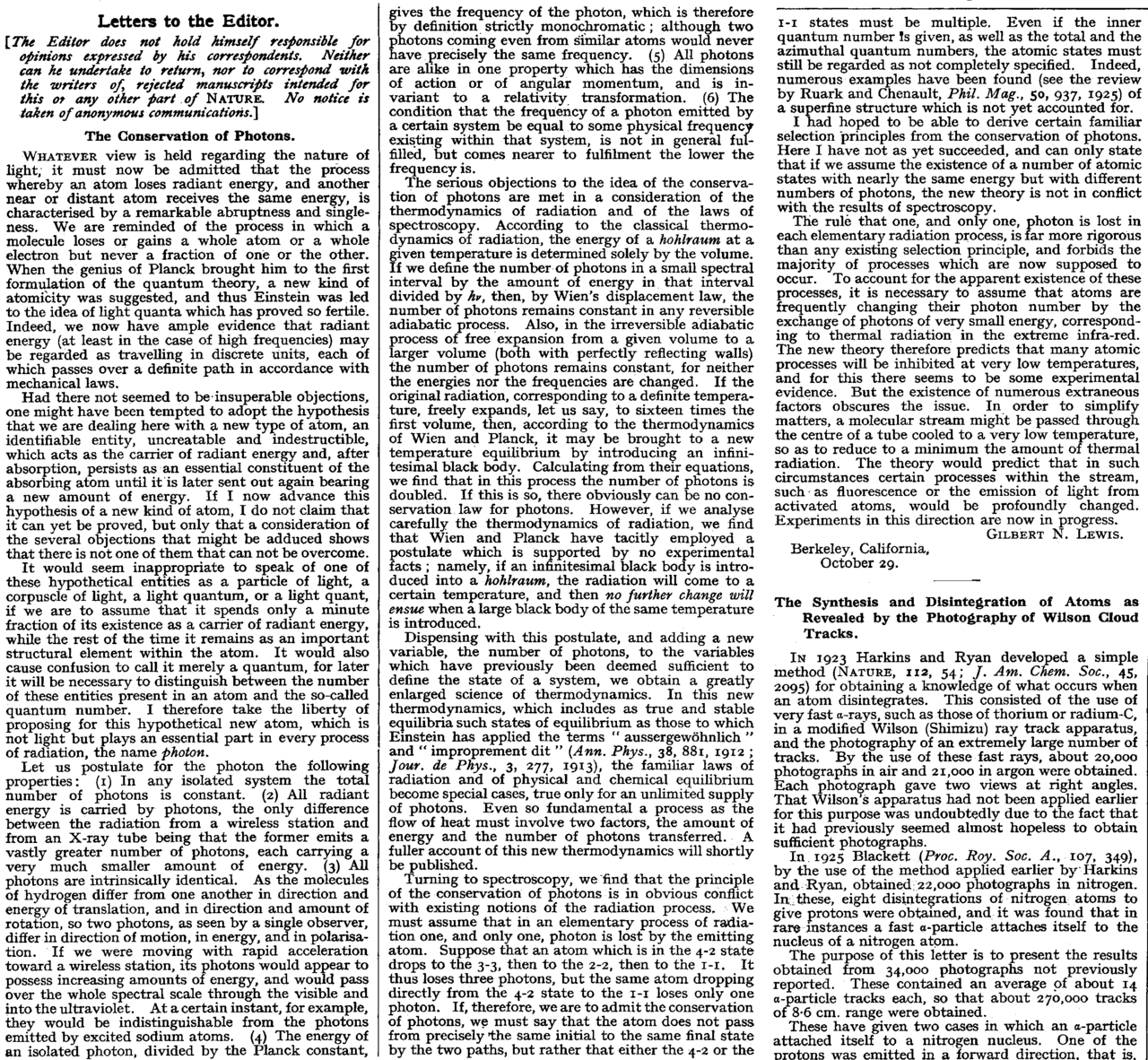 Letter
Primary source
Letter Introducing the Word Photon
Gilbert N. Lewis · 18 December 1926
 Photograph
Tertiary source
Heavy water (D2O) sample
Leiem · 3 November 2018
 Letter
Primary source
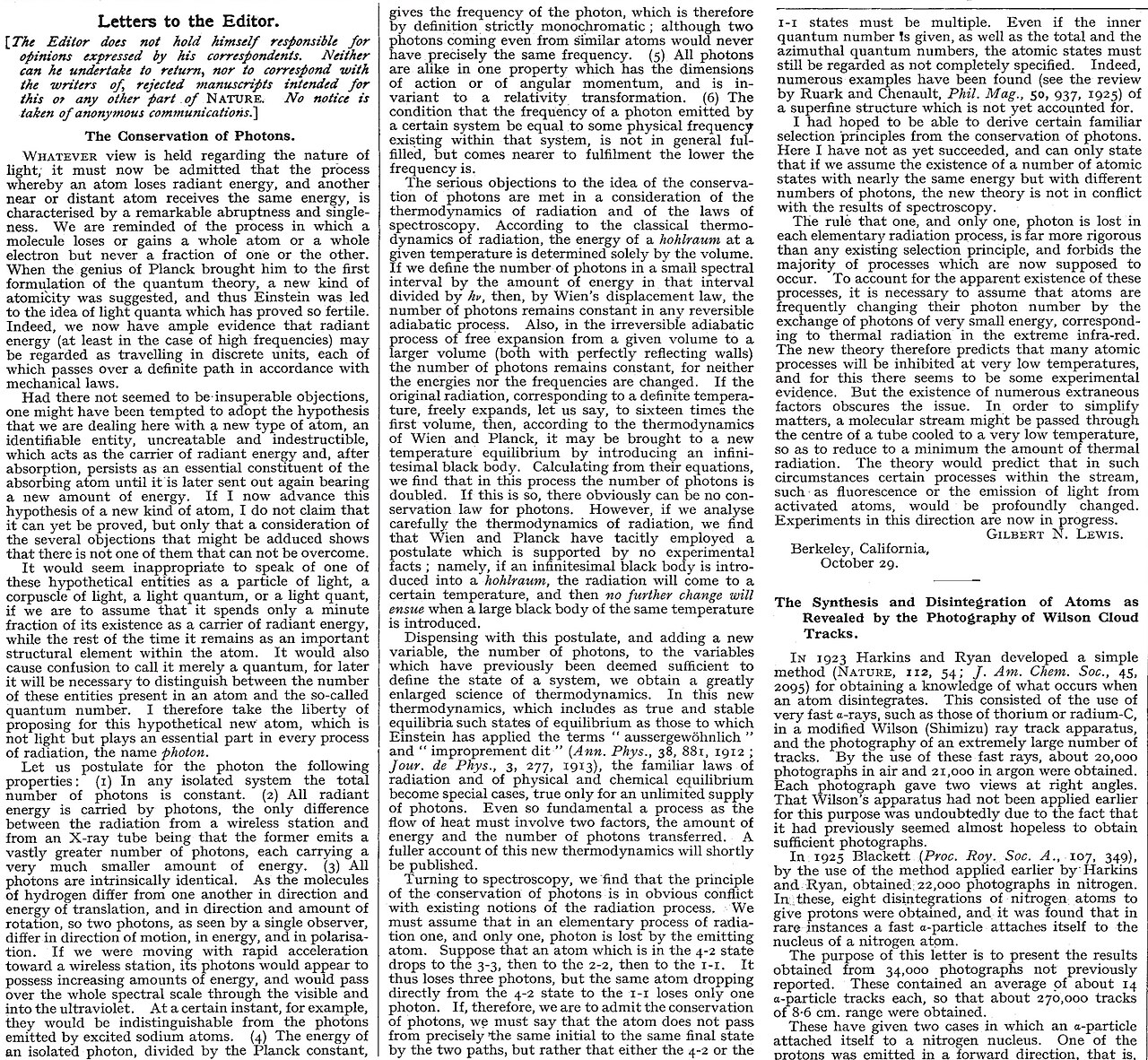
The Conservation of Photons
Gilbert N. Lewis · 1926
 Photograph
Tertiary source
Stanley Hall, UC Berkeley College of Chemistry, aerial view
Firstcultural · 12 March 2015

Free account
Read every Gilbert N. Lewis source
Sign up free →
Ready when you are
Start chatting with Gilbert N. Lewis now.
20 messages free · No credit card · Available in 50+ languages.