


Primary sourcePainting1910
Dance
Henri Matisse · 1910
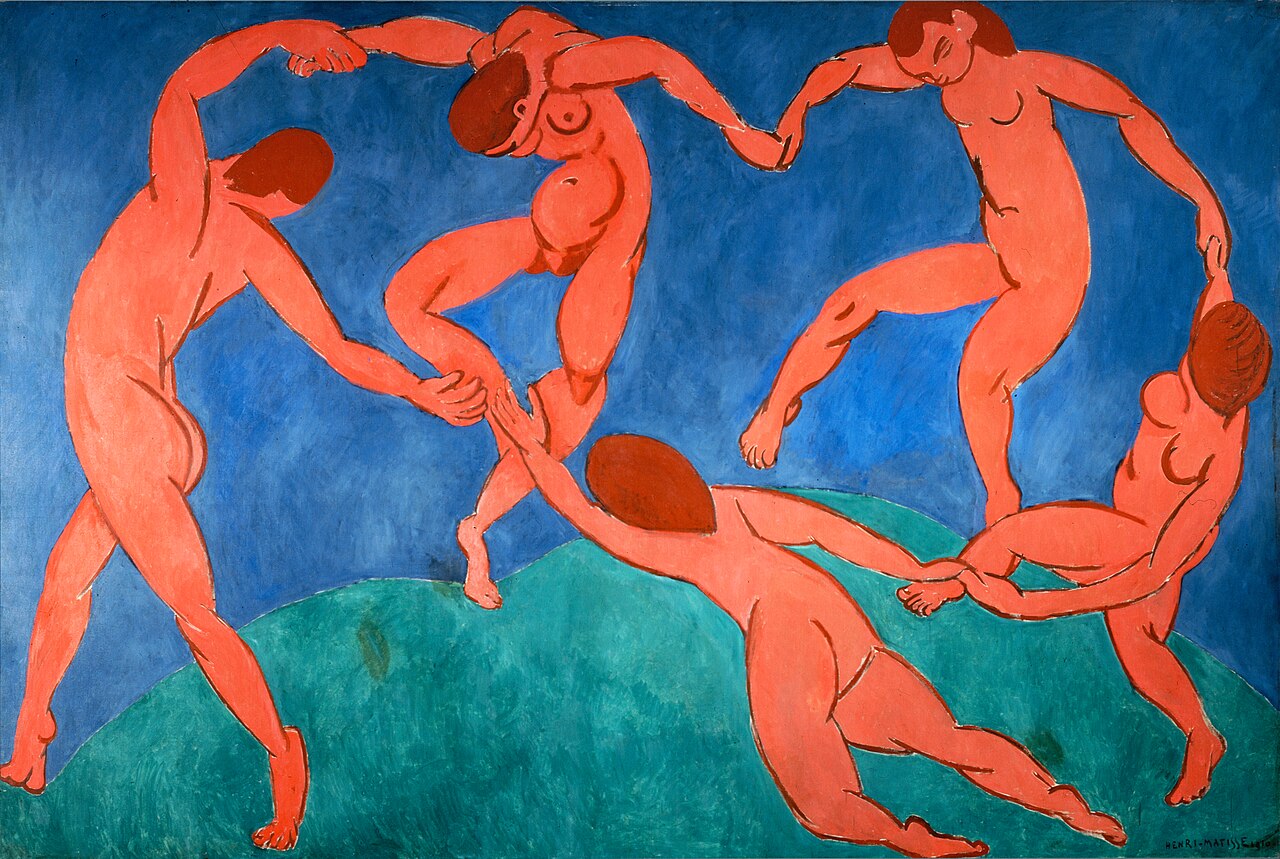
A large decorative panel by Henri Matisse showing five dancing nude figures, painted in 1910 for a Moscow patron's staircase.
Matisse painted this monumental work in 1910 as one of his most radical statements of decorative, colour-based art.
About this source
What it is
Dance is a large painting made by Henri Matisse in 1910, commissioned by the Russian collector Sergei Shchukin for the staircase of his Moscow mansion. It now hangs in the Hermitage Museum in Saint Petersburg, alongside its companion piece, Music.
Why it matters
The painting shows five dancing figures reduced to simple red forms against green and blue. It is considered one of the key works in Matisse's career and in the development of modern art, showing how far he pushed colour and form away from realistic representation. It also shows the importance of wealthy private patrons like Shchukin in supporting radical new art.
Look closer
- Why do you think Matisse used only three colours?
- What feeling does the circle of dancing figures create?
- Why might a patron want such a bold, unconventional painting on his staircase?
This painting is part of the curated material that grounds the AI version of Henri Matisse on Humy.ai — when students ask about related events, the AI can quote it and cite it.
More Henri Matisse sources
Browse all 99 →
Ready when you are
Start chatting with Henri Matisse now.
20 messages free · No credit card · Available in 50+ languages.