


Primary sourceDocument18 January 1409
Decree of Kutná Hora
Wenceslaus IV of Bohemia · 18 January 1409
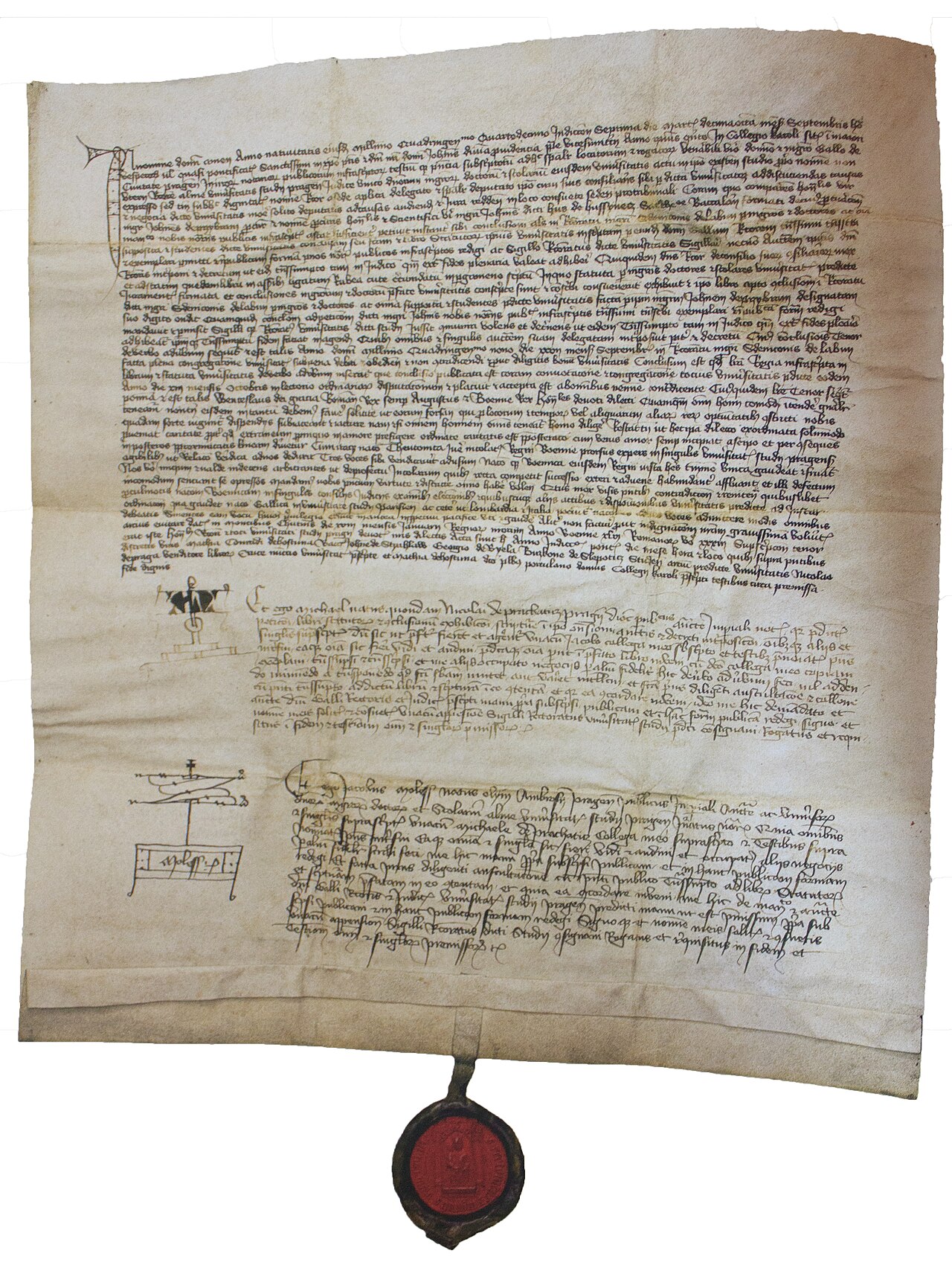
An 1409 decree by King Wenceslaus IV giving the Bohemian nation three votes at Prague University, a change championed by Jan Hus, who became the university's rector soon after.
Hus championed the reform this decree enacted, and it led directly to his appointment as university rector.
About this source
What it is
This is a parchment decree issued on 18 January 1409 by King Wenceslaus IV of Bohemia at Kutná Hora. It changed the voting rules of Charles University in Prague, giving the Bohemian nation three votes and the other three 'nations' (Bavarian, Saxon, Polish) only one between them.
Why it matters
The decree followed pressure from Bohemian reformers, including Jan Hus, who wanted the university to be more open to new religious ideas. Shortly after it was issued, Hus became rector of the university. The decree caused most German teachers and students to leave Prague, deepening the split between Hus's supporters and his opponents, and setting the stage for the conflicts that followed his later trial and death.
Look closer
- Why might a king's decree about university votes matter so much to a theologian like Hus?
- What does the exodus of German teachers suggest about how divisive this decision was?
- What is missing from a legal document like this that a letter or sermon might tell us?
This document is part of the curated material that grounds the AI version of Jan Hus on Humy.ai — when students ask about related events, the AI can quote it and cite it.
More Jan Hus sources
Meet the AI Jan Hus →
Ready when you are
Start chatting with Jan Hus now.
20 messages free · No credit card · Available in 50+ languages.