


Primary sourceDocument8 November 1917 (26 October O.S.)
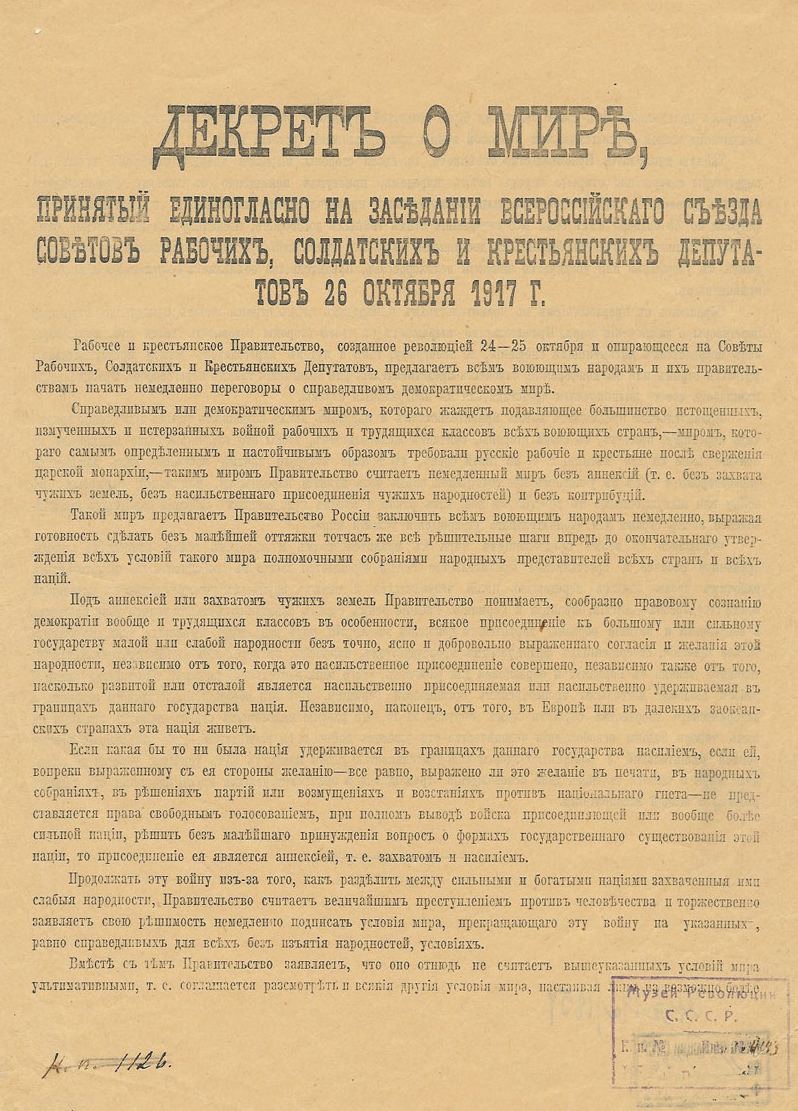
Decree on Peace
Vladimir Lenin · 8 November 1917 (26 October O.S.)
The first decree of Soviet power, drafted by Lenin, calling for an immediate end to World War I without annexations.
Lenin drafted this decree on the first day of Soviet power, setting out his government's foreign policy.
About this source
What it is
The Decree on Peace was written by Vladimir Lenin and passed by the Second All-Russian Congress of Soviets in November 1917, right after the October Revolution. It was published in the newspaper Izvestiya.
Why it matters
The decree called for an immediate peace without seizing land or demanding payments, appealing both to war-weary Russians and to workers in other warring countries. It eventually led to the Treaty of Brest-Litovsk, through which Russia lost large amounts of territory and resources. It even influenced Woodrow Wilson's later Fourteen Points. The decree shows how the new Bolshevik government tried to win support by promising an end to the suffering of World War I.
Look closer
- Who were the two audiences this decree was trying to reach, and why might that matter?
- What does the decree's language of "just and democratic peace" tell you about how the Bolsheviks wanted to be seen?
- What problems might arise when promises of peace meet the realities of ongoing war?
This document is part of the curated material that grounds the AI version of Vladimir Lenin on Humy.ai — when students ask about related events, the AI can quote it and cite it.
More Vladimir Lenin sources
Meet the AI Vladimir Lenin →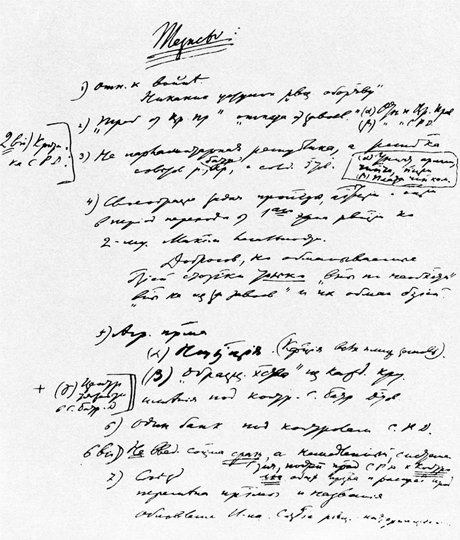 Document
Primary source
April Theses
Vladimir Lenin · 3/16 April 1917
 Photograph
Primary source
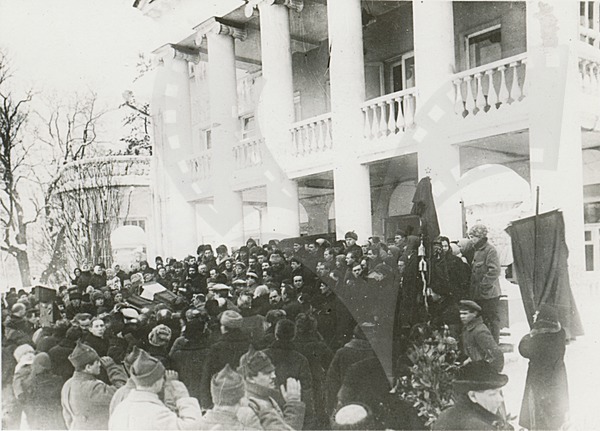
Georgi Dimitrov at Lenin's Funeral
January 1924
 Book
Primary source
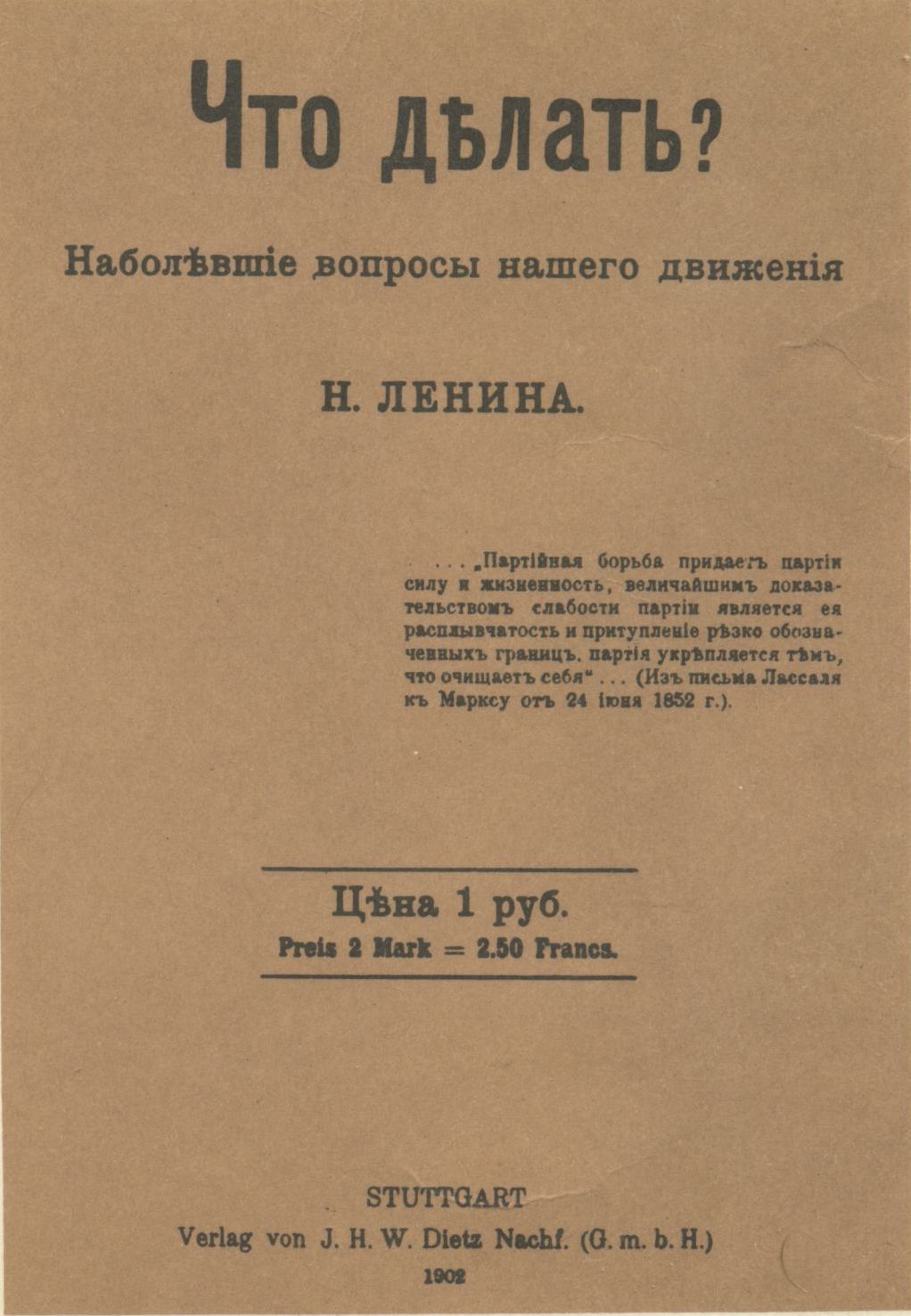
What Is to Be Done?
Vladimir Lenin · 1901 (published 1902)
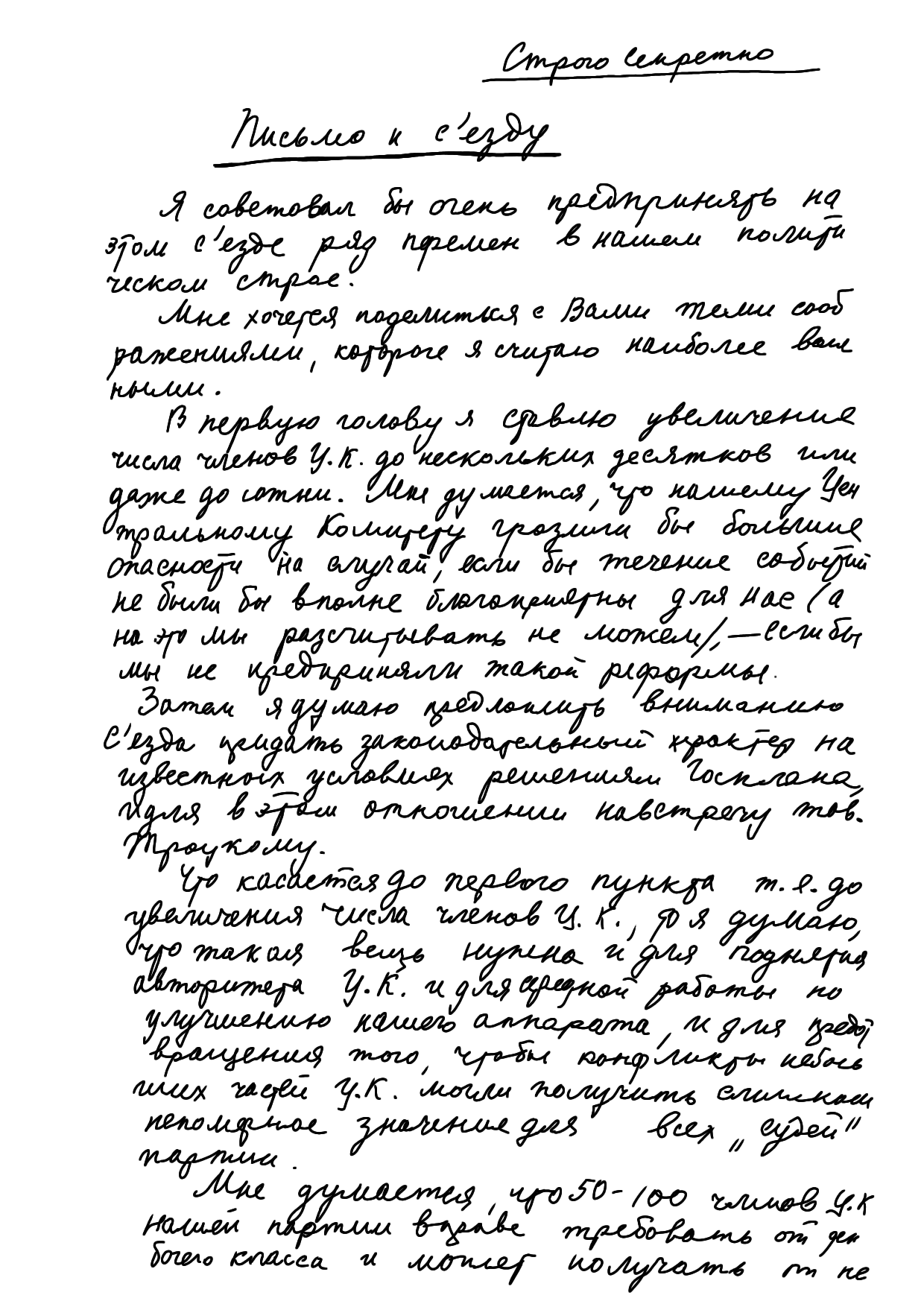 Letter
Primary source
Lenin's Testament
Vladimir Lenin · late 1922 – early 1923
Primary source
Decree on Land
Vladimir Lenin · 8 November 1917
Ready when you are
Start chatting with Vladimir Lenin now.
20 messages free · No credit card · Available in 50+ languages.