


Secondary sourceArtifact8 December 2014
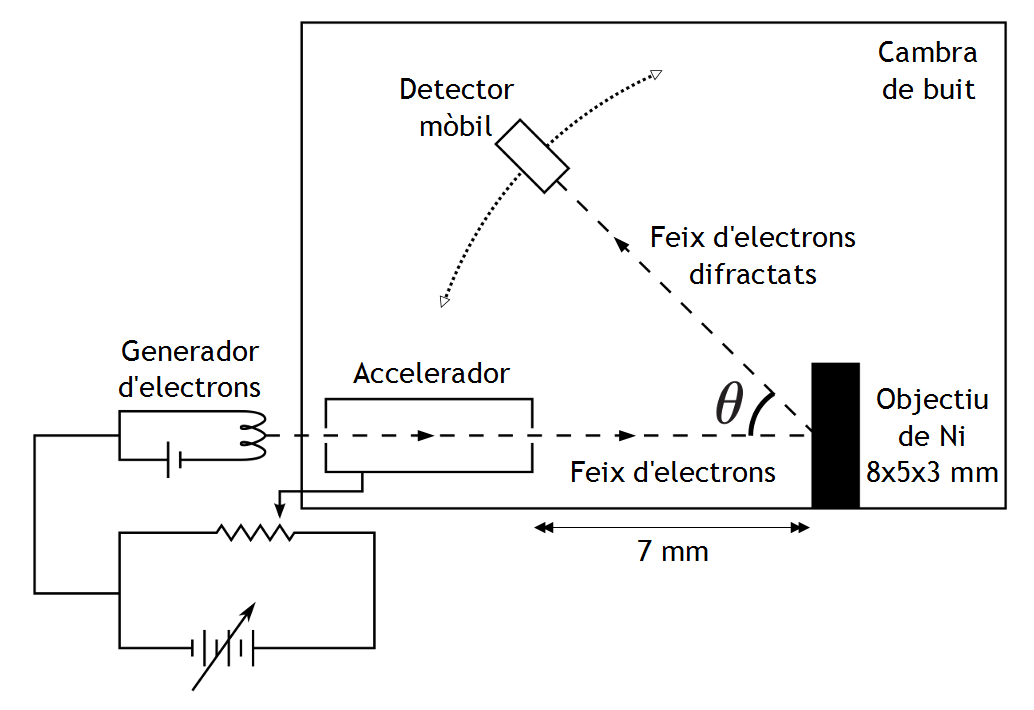
Diagram of the Davisson-Germer Electron Diffraction Apparatus
Antoni Salvà · 8 December 2014
A modern labeled diagram explaining the 1927 experiment that confirmed de Broglie's theory of matter waves.
Illustrates the 1927 experiment that confirmed de Broglie's matter-wave hypothesis.
About this source
What it is
A schematic drawing made in 2014 by Antoni Salvà, showing the apparatus used in the Davisson-Germer experiment of 1927. It labels the vacuum chamber, electron generator, accelerator, nickel target, and a movable detector, with text in Catalan.
Why it matters
This modern diagram is not the original apparatus but a teaching tool explaining how Davisson and Germer tested the wave behaviour of electrons predicted by Louis de Broglie. It helps show, step by step, how an abstract theory can be investigated with physical equipment.
Look closer
- How does a diagram like this help explain an experiment more clearly than a photograph might?
- Why is the nickel target such a small, precise object in the setup?
- What questions would you still have about how the detector actually worked?
This artifact is part of the curated material that grounds the AI version of Louis de Broglie on Humy.ai — when students ask about related events, the AI can quote it and cite it.
More Louis de Broglie sources
Meet the AI Louis de Broglie → Photograph
Primary source
1927 Solvay Conference Photograph
Benjamin Couprie · 1927
 Photograph
Primary source
Louis de Broglie Nobel Portrait
Nobel Foundation · c. 1929
 Book
Primary source
Ondes et mouvements
Louis de Broglie · 1926
 Photograph
Primary source
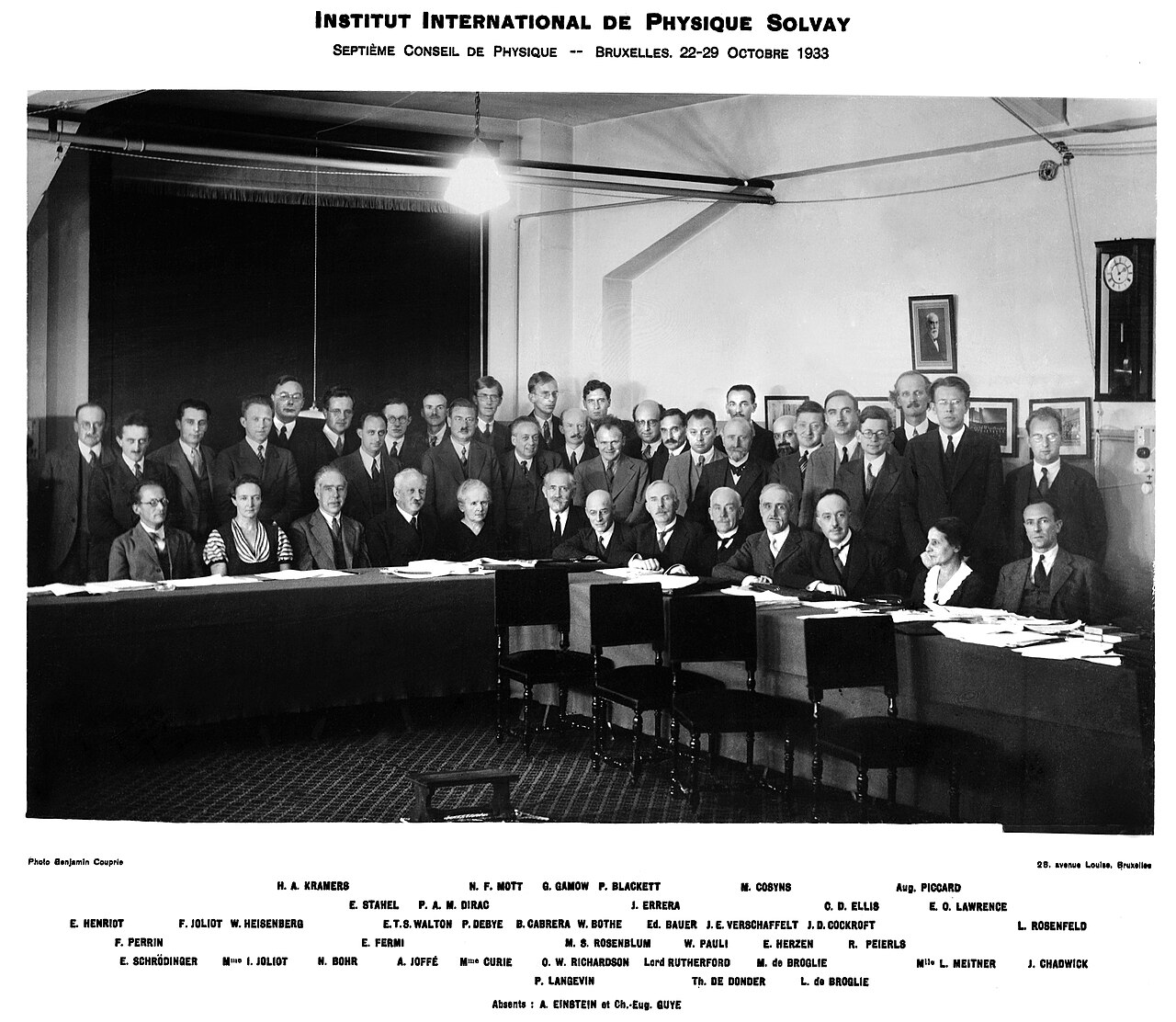
Photograph of the 1933 Solvay Conference
Benjamin Couprie · October 1933
 Photograph
Primary source
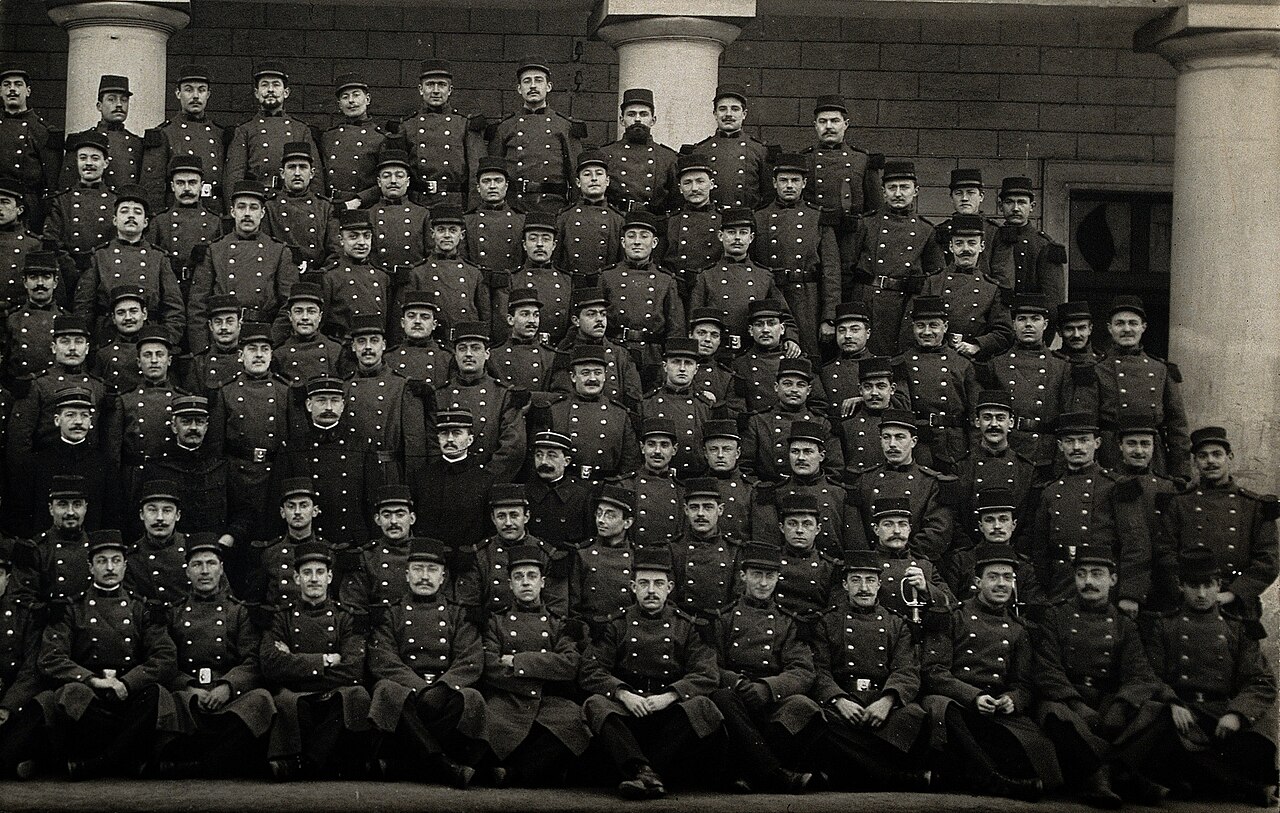
French Soldiers Including Louis de Broglie
1914
Ready when you are
Start chatting with Louis de Broglie now.
20 messages free · No credit card · Available in 50+ languages.