


Secondary sourcePaintingc. 1511-1513
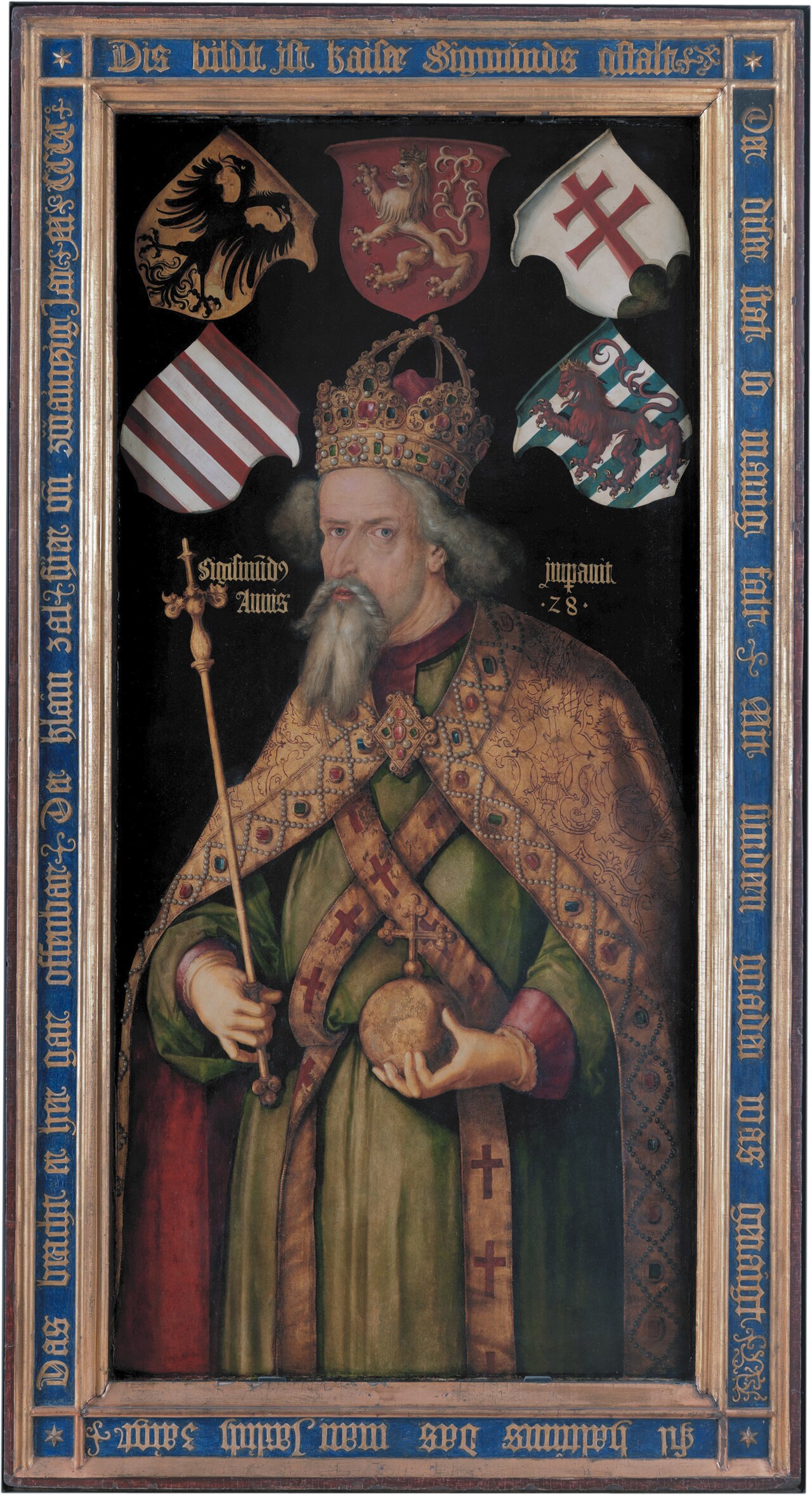
Emperor Sigismund
Albrecht Dürer · c. 1511-1513
Albrecht Dürer's posthumous official portrait of Sigismund, painted decades after his death for Nuremberg's relic chamber.
A posthumous commemorative portrait made for Nuremberg, honouring Sigismund's gift of the imperial regalia to the city.
About this source
What it is
This full-length panel painting by Albrecht Dürer shows Sigismund crowned, robed, and holding an orb and sceptre, surrounded by heraldic shields. It was made around 1511-1513, long after Sigismund's death, and is now in the Germanisches Nationalmuseum.
Why it matters
The painting was created for Nuremberg's relic chamber, commemorating Sigismund as the emperor who had placed the imperial regalia in that city. Painted inscriptions on the frame explain this connection, showing how a ruler's memory could be carefully shaped by a city decades after his death to honour its own history.
Look closer
- Why would Nuremberg commission a grand portrait of an emperor who had died so long before?
- What do the crown, orb, sceptre and heraldic shields tell you about how Sigismund was meant to be remembered?
- How might a portrait made for a specific city differ from one made during the ruler's own lifetime?
This painting is part of the curated material that grounds the AI version of Sigismund, Holy Roman Emperor on Humy.ai — when students ask about related events, the AI can quote it and cite it.
More Sigismund, Holy Roman Emperor sources
Browse all 95 →Primary source
Safe Conduct to John Huss
Sigismund
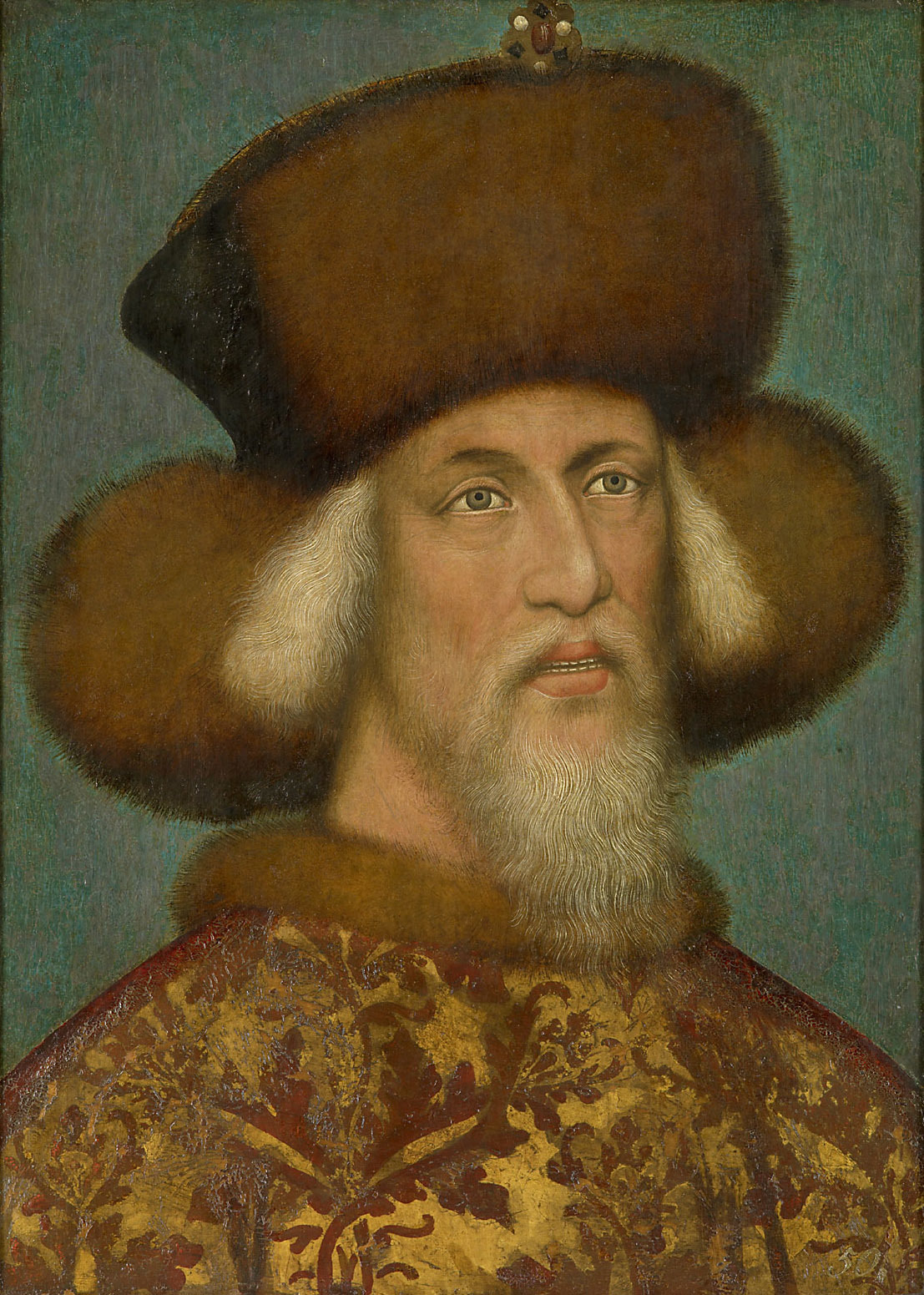 Painting
Primary source
Portrait of Sigismund of Luxemburg
Pisanello (attributed) · c. 1430
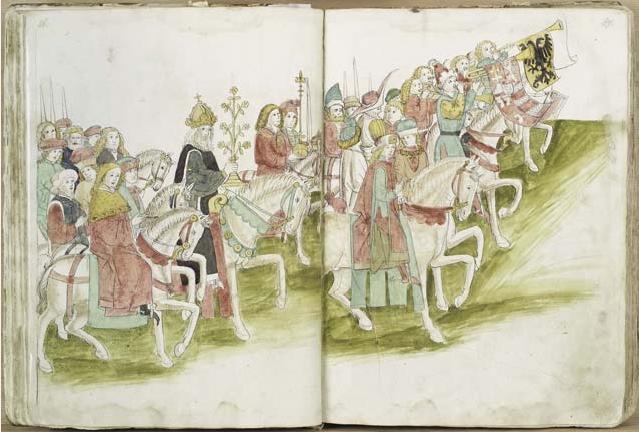 Painting
Primary source
Sigismund's Entry into the Council of Constance
Ulrich Richental
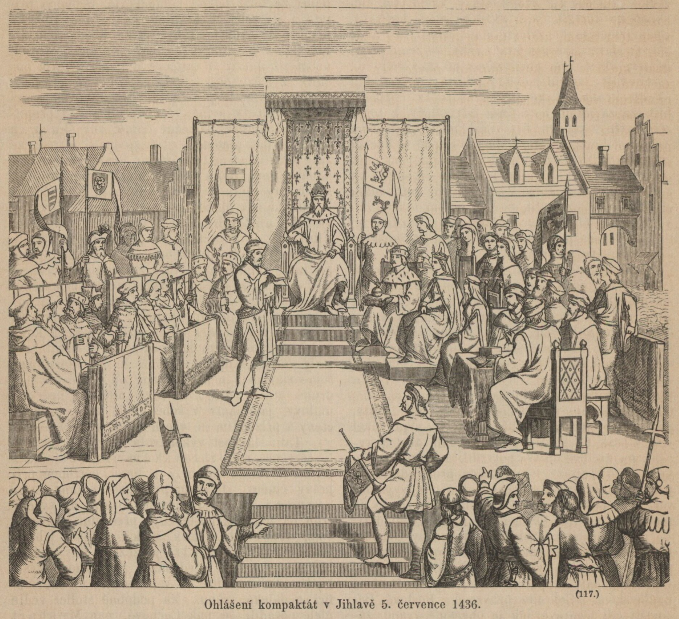 Document
Secondary source
Compacts of Basel
1436
Free account
Read every Sigismund, Holy Roman Emperor source
Sign up free →
Ready when you are
Start chatting with Sigismund, Holy Roman Emperor now.
20 messages free · No credit card · Available in 50+ languages.