


Primary sourceArtifact1945
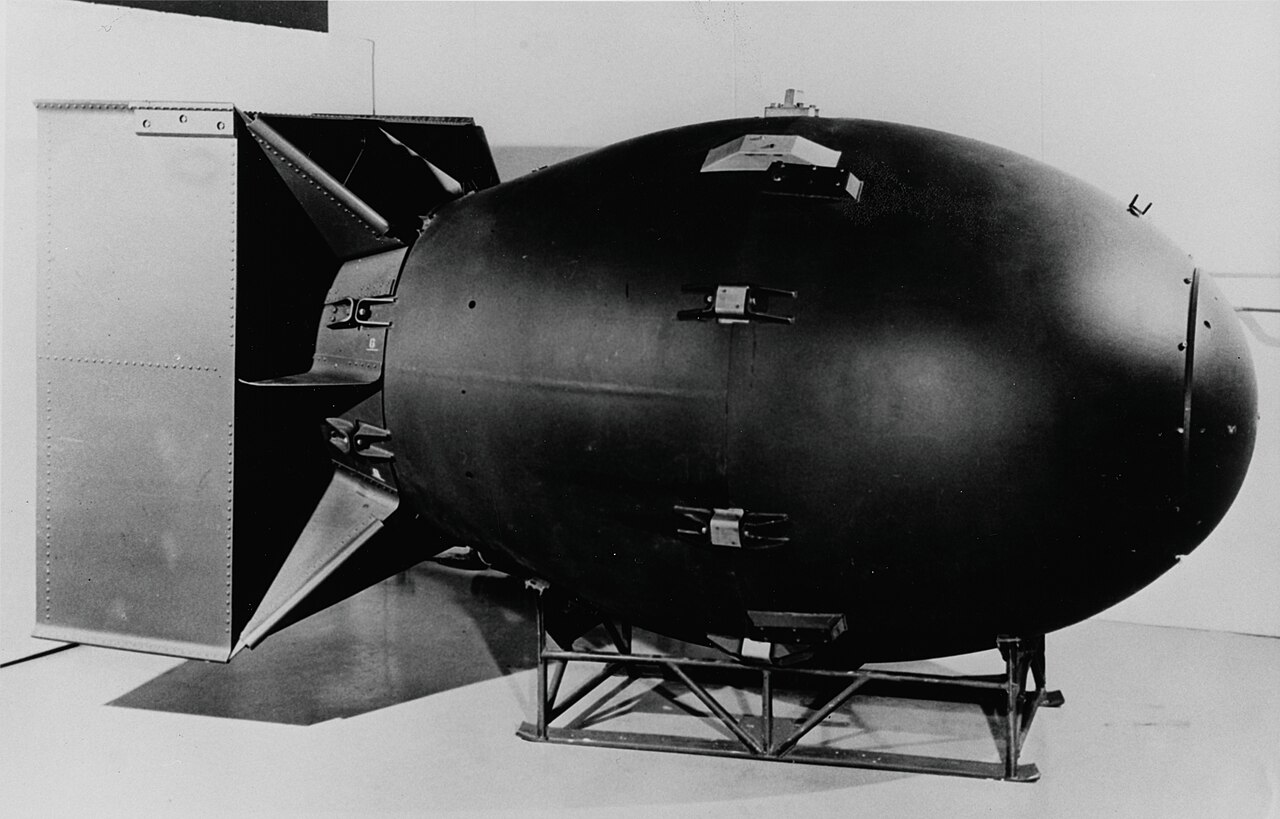
Fat Man
1945
The implosion-type atomic bomb dropped on Nagasaki in 1945, whose design relied on von Neumann's mathematics of shock waves and explosive lenses.
Von Neumann's mathematics of implosion and shock waves underpinned the design of this weapon, his key Manhattan Project contribution.
About this source
What it is
Fat Man was the design of the nuclear weapon used on seven of the first eight nuclear detonations in history. A Fat Man device was dropped on Nagasaki on 9 August 1945. It was an implosion-type bomb with a plutonium core, developed by scientists and engineers at Los Alamos Laboratory.
Why it matters
Fat Man's implosion design depended on precise mathematics of converging shock waves and explosive lenses, a problem John von Neumann worked on as part of his central contribution to the Manhattan Project. The bomb's use on Nagasaki marked one of the most consequential events of the twentieth century, raising questions about the responsibility of the scientists who helped design such weapons.
Look closer
- What does the image of the bomb casing not show about the human and political consequences of its use?
- Why might the device have been given a nickname instead of a technical name?
- What questions does this object raise about the relationship between scientific work and its use in war?
This artifact is part of the curated material that grounds the AI version of John von Neumann on Humy.ai — when students ask about related events, the AI can quote it and cite it.
More John von Neumann sources
Browse all 31 →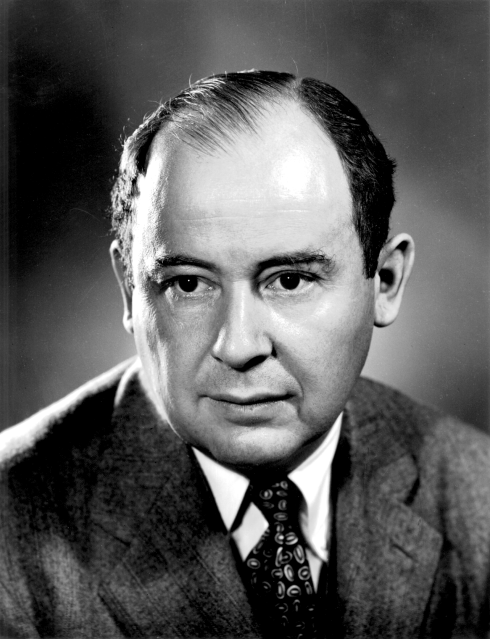 Photograph
Primary source
John von Neumann at Los Alamos
Los Alamos National Laboratory · 1940s
 Photograph
Primary source
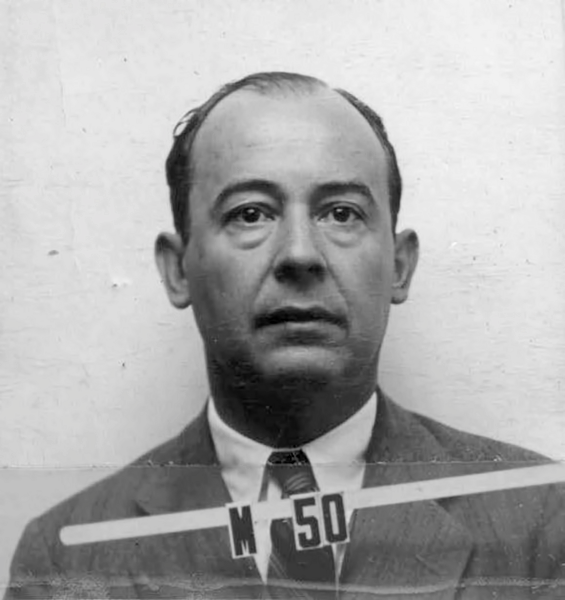
John von Neumann ID Badge
 Artifact
Primary source
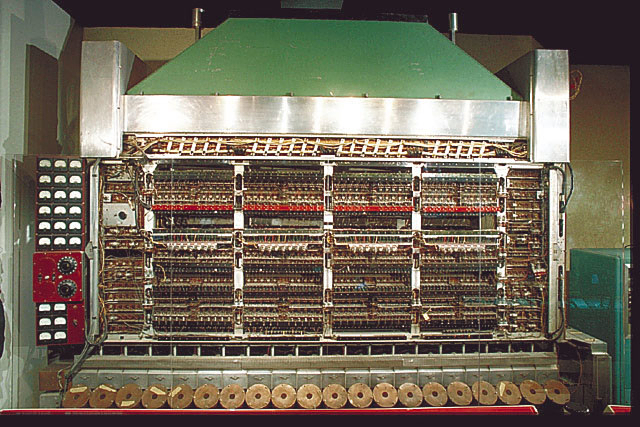
IAS Machine
Electronic Computer Project, Institute for Advanced Study · 1946–1952
 Photograph
Primary source
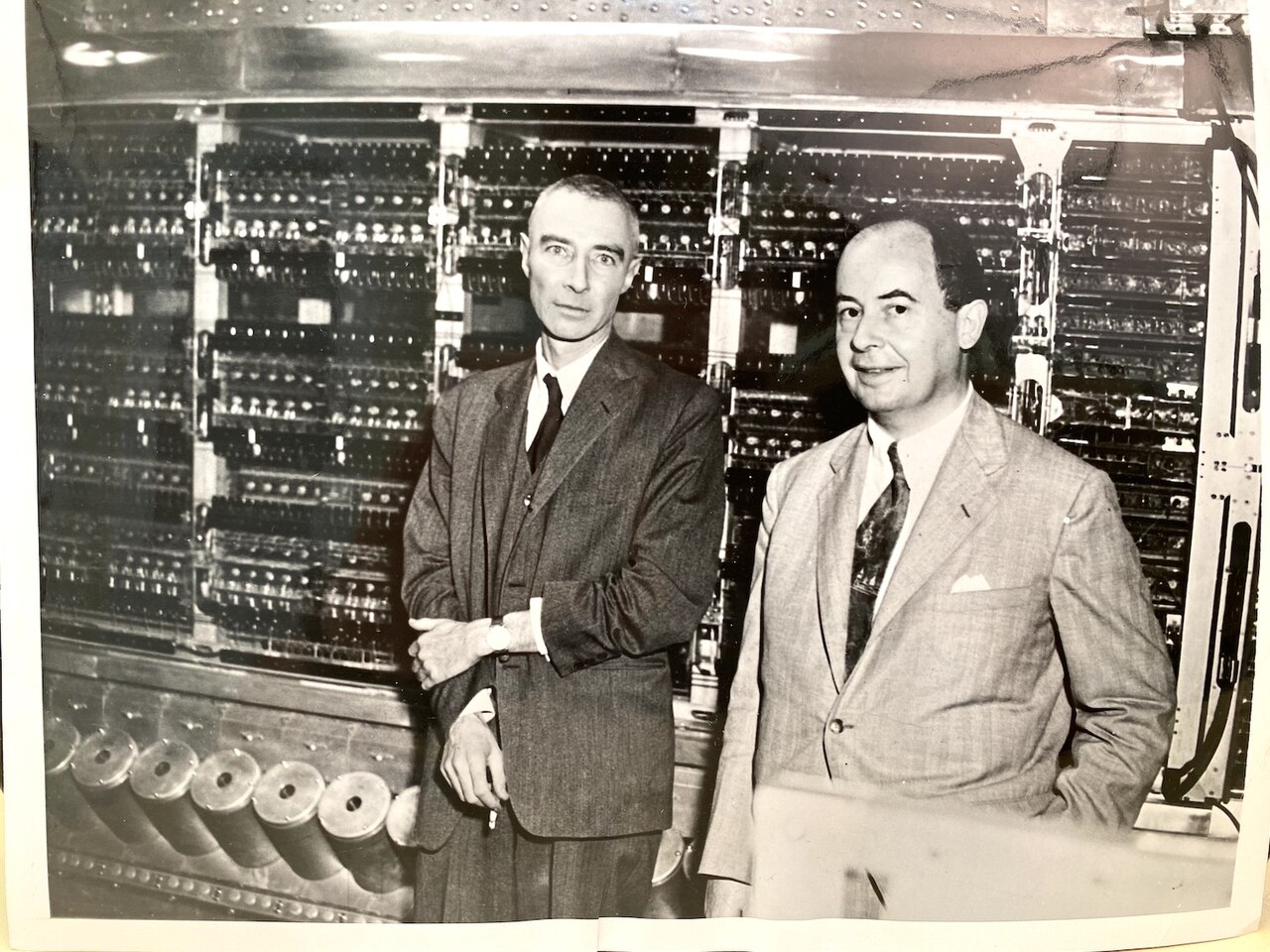
Oppenheimer and von Neumann Before the IAS Computer
Jeremy Norman Collection of Images · 10 June 1952
Free account
Read every John von Neumann source
Sign up free →
Ready when you are
Start chatting with John von Neumann now.
20 messages free · No credit card · Available in 50+ languages.