


Secondary sourcePainting1862
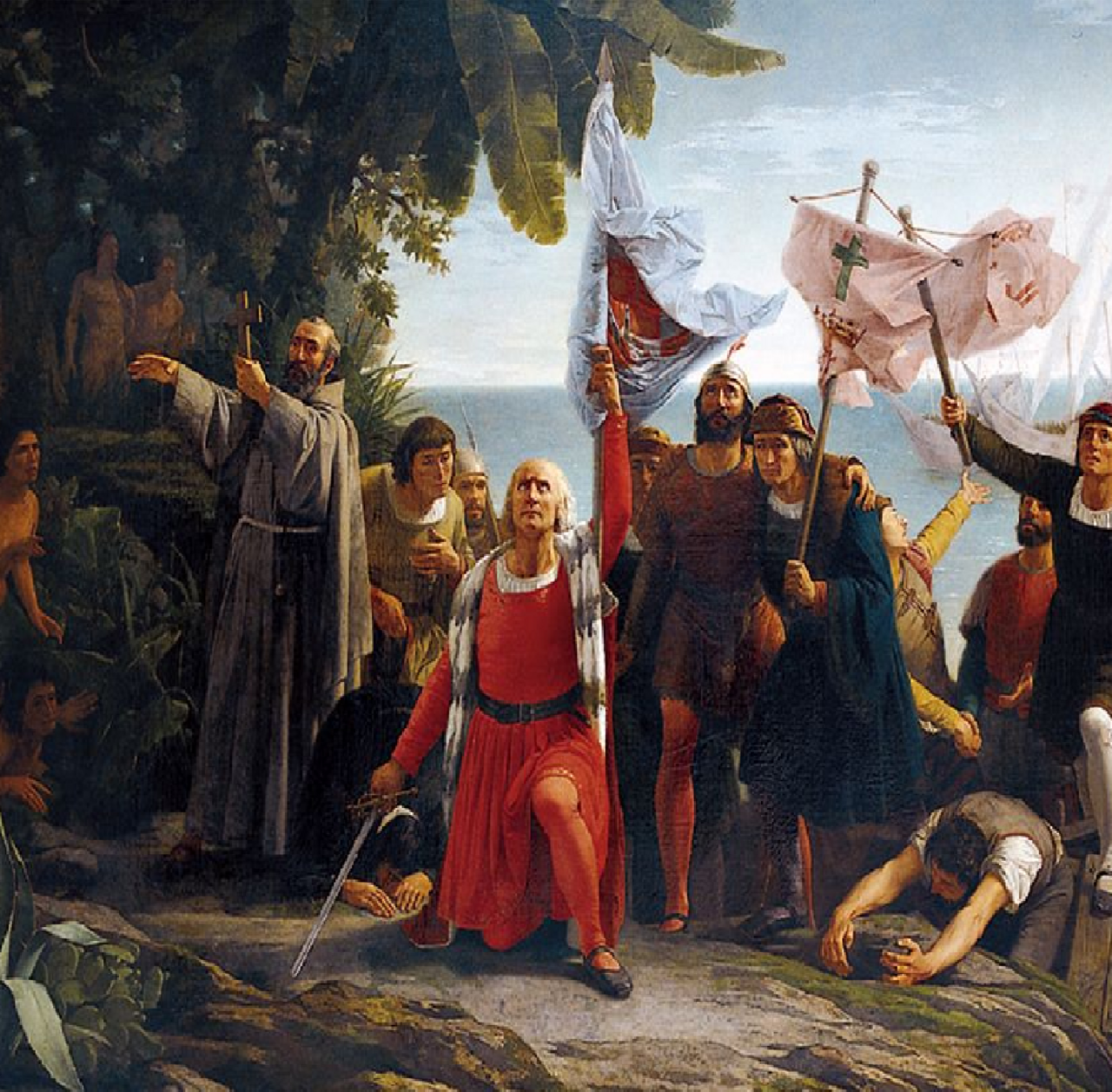
First Landing of Columbus in America
Dióscoro Puebla · 1862
An 1862 prize-winning painting imagining Columbus's first landing in the Americas, claiming the land with a cross and flag.
The painting commemorates Columbus's first landing in the Americas as a triumphant, celebrated moment.
About this source
What it is
This oil painting was made in 1862 by the Spanish painter Dióscoro Puebla and won a top prize at the National Exhibition that year. It shows a bearded man in a red tunic and white cape kneeling with a flag bearing a red cross, beside a friar holding a cross, while armored men, sailors and figures on the shore look on.
Why it matters
The painting imagines the moment Christopher Columbus first landed in the Americas, claiming the land for Spain with the help of the Church, shown through the friar's cross. Made over three centuries after the event, it reflects how 19th-century Spain wanted to remember and celebrate this moment, rather than recording it as it actually happened.
Look closer
- Why are the cross and flag placed at the very center of the painting?
- How are the people already living on the land shown, and what does that tell us about the painter's point of view?
- What questions does this image leave unanswered about what really happened that day?
This painting is part of the curated material that grounds the AI version of Christopher Columbus on Humy.ai — when students ask about related events, the AI can quote it and cite it.
More Christopher Columbus sources
Meet the AI Christopher Columbus →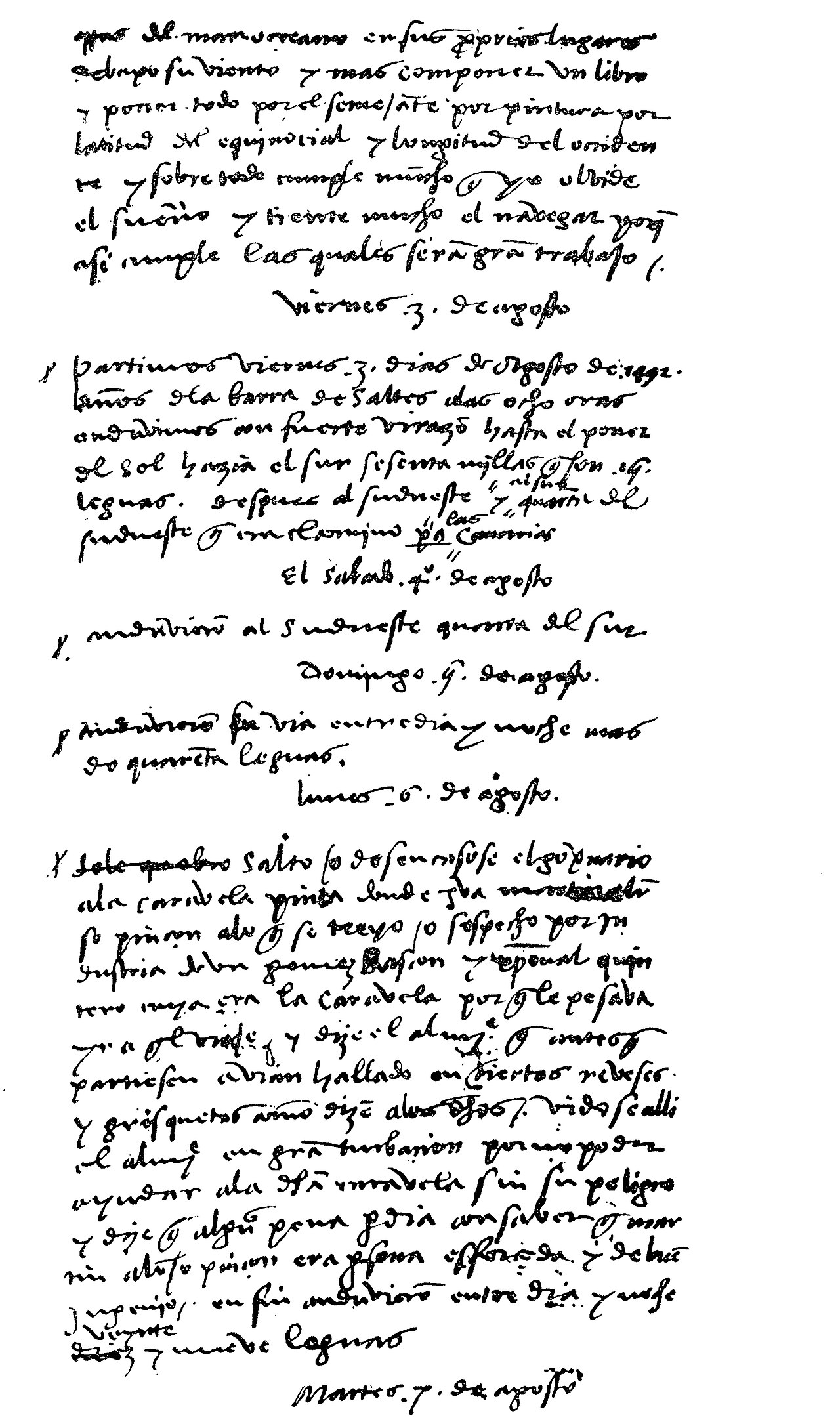 Diary entry
Primary source
Christopher Columbus' Journal
Christopher Columbus · 3 August 1492 – 15 March 1493
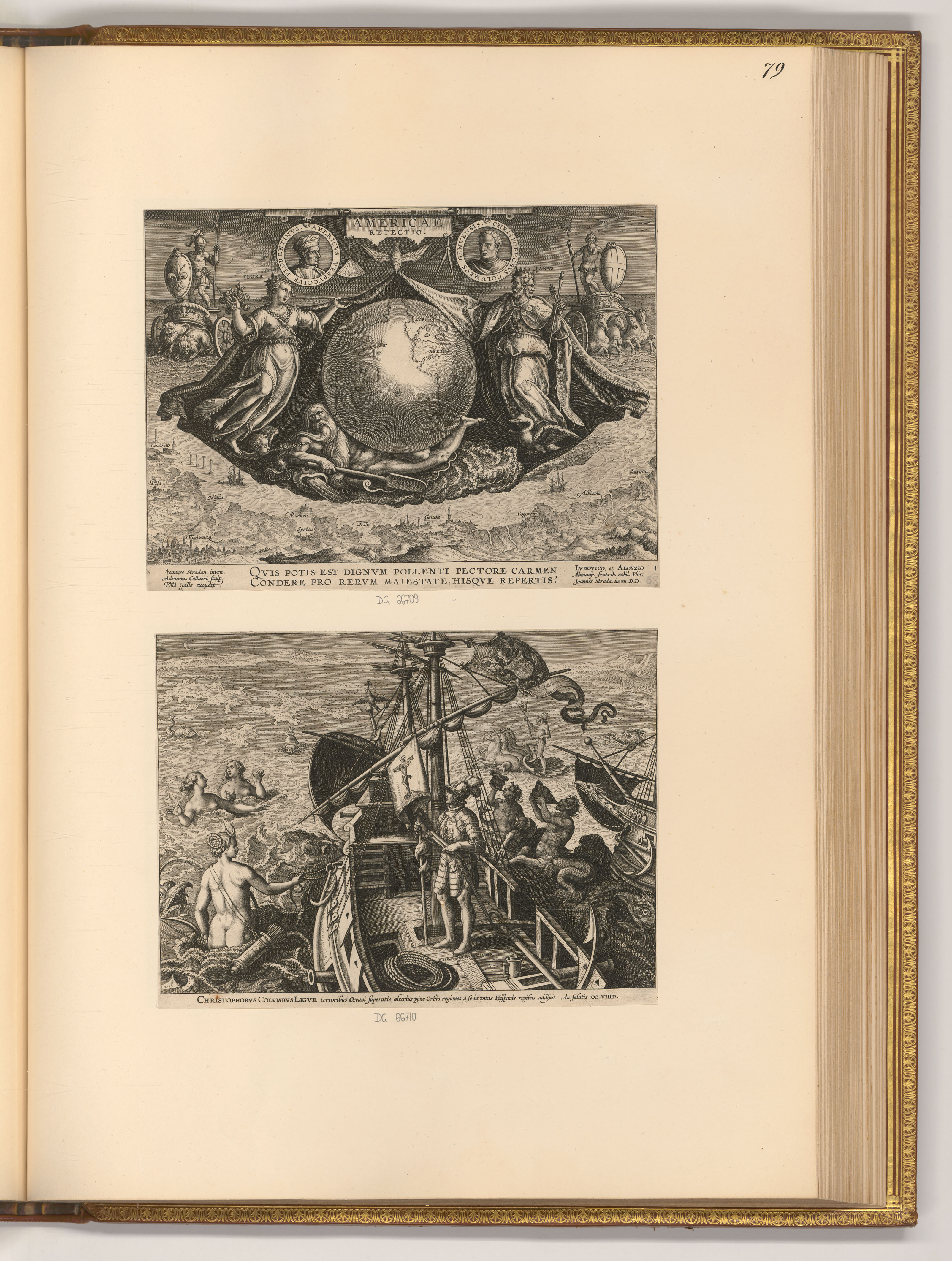 Painting
Secondary source
Americae Retectio Title Page with Columbus on His Ship
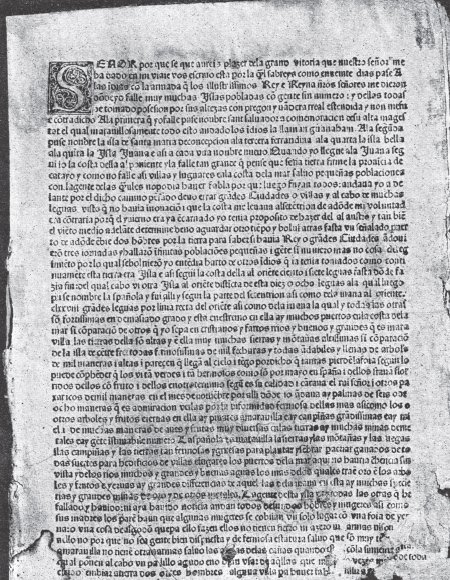 Letter
Primary source
Columbus Letter on the First Voyage
Christopher Columbus · 15 February 1493
 Painting
Secondary source
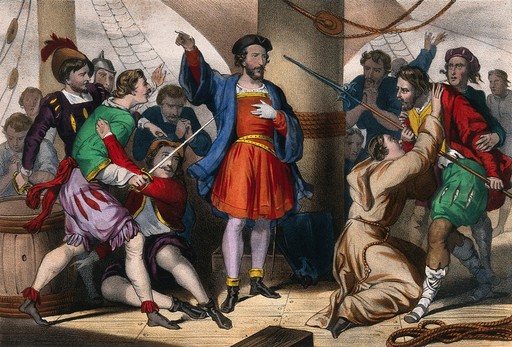
Columbus Admonishes His Men
Cassé
 Document
Primary source
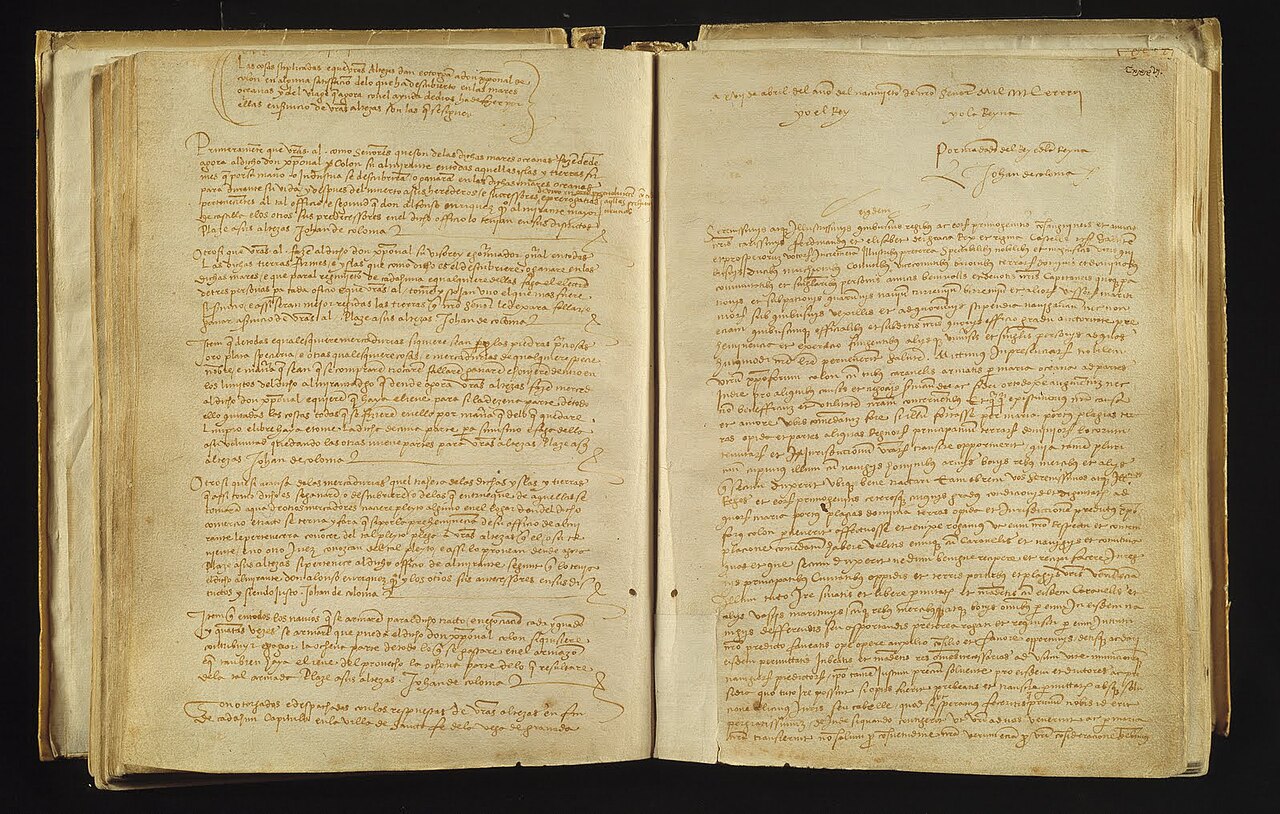
Capitulations of Santa Fe
Catholic Monarchs · 17 April 1492
Ready when you are
Start chatting with Christopher Columbus now.
20 messages free · No credit card · Available in 50+ languages.