


Secondary sourcePainting1910
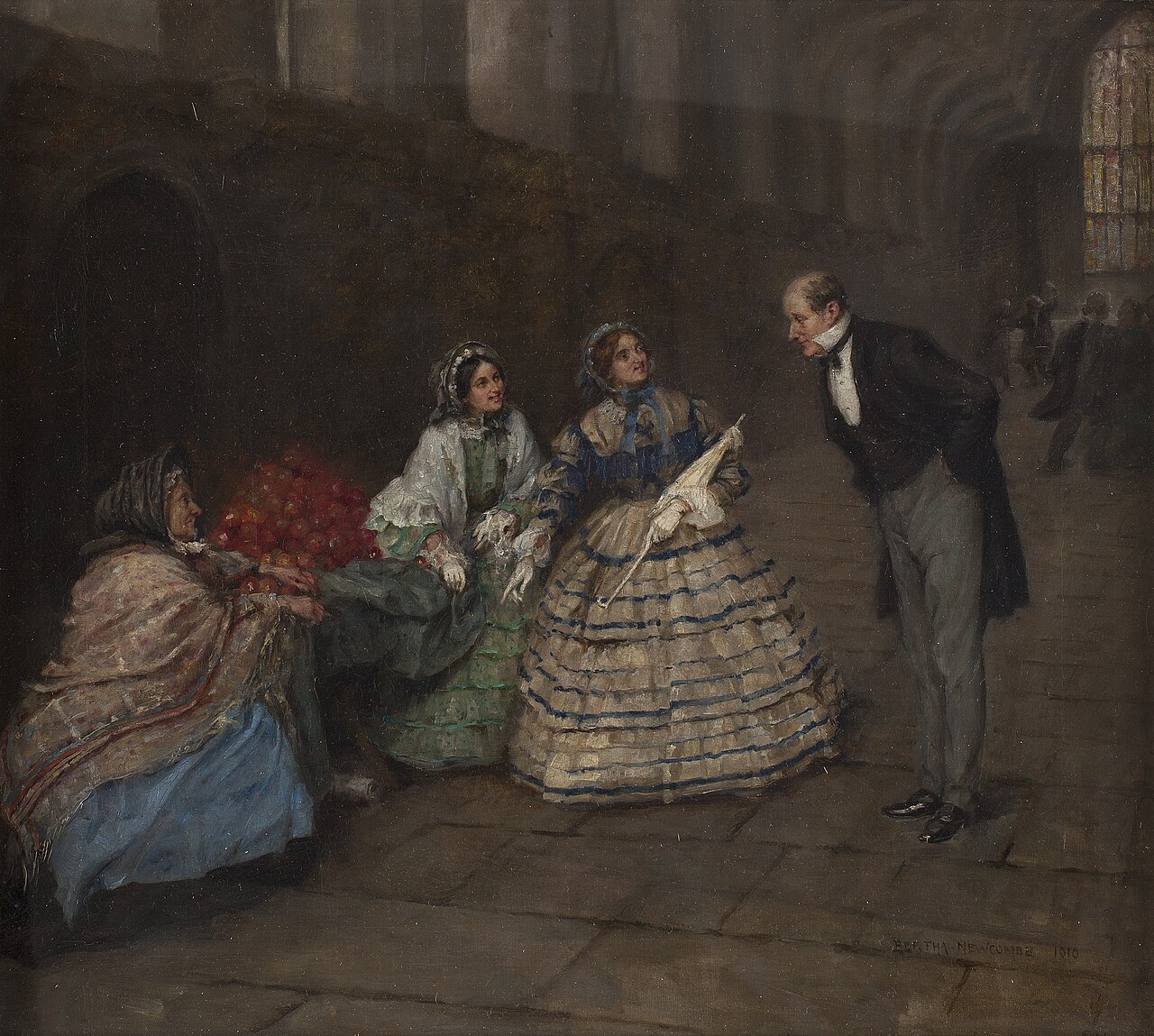
First Women's Suffrage Petition Hidden Under an Apple Stall
Bertha Newcombe · 1910
A 1910 painting imagining the moment the 1866 women's suffrage petition was hidden before being handed to Mill.
The painting depicts Mill receiving the 1866 women's suffrage petition, reflecting his support for women's rights.
About this source
What it is
This 1910 oil painting by Bertha Newcombe shows Emily Davies and Elizabeth Garrett hiding the first women's suffrage petition under an apple-seller's stall in Westminster Hall, waiting for John Stuart Mill to come and collect it.
Why it matters
The painting commemorates a key moment in the early women's suffrage movement, when Mill, then a Member of Parliament, agreed to present the petition to the House of Commons. Made decades after the event, it shows how later suffragists remembered and honoured Mill's support for their cause.
Look closer
- Why do you think the artist chose to paint this scene nearly 45 years after it happened?
- What does the hiding of the petition suggest about the risks or obstacles faced by early suffragists?
- How does the painting present Mill's role compared to the women who organised the petition?
This painting is part of the curated material that grounds the AI version of John Stuart Mill on Humy.ai — when students ask about related events, the AI can quote it and cite it.
More John Stuart Mill sources
Meet the AI John Stuart Mill → Book
Primary source
On Liberty
John Stuart Mill · 1859
 Book
Primary source
Utilitarianism
John Stuart Mill · 1861
 Book
Primary source
The Subjection of Women
John Stuart Mill · 1869
 Book
Primary source
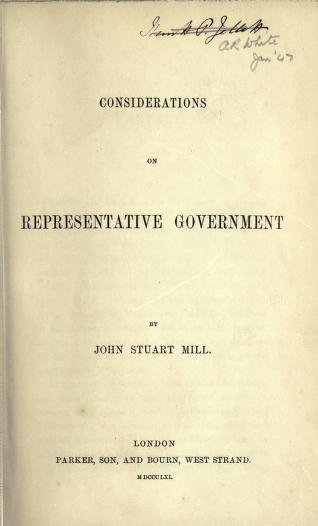
Considerations on Representative Government
John Stuart Mill · 1861
Primary source
Autobiography
John Stuart Mill · 1873 (written; published posthumously)
Ready when you are
Start chatting with John Stuart Mill now.
20 messages free · No credit card · Available in 50+ languages.