


Primary sourceSpeech8 January 1918
Fourteen Points
Woodrow Wilson · 8 January 1918
Woodrow Wilson's 1918 speech on peace terms, whose call for autonomy for Austria-Hungary's peoples shaped the context of Charles's federalization efforts.
Wilson's speech set the international context that pressured Charles to attempt federal reform of his empire.
Free Humy account · No credit card · 120,912 sources to read
About this source
What it is
This is a speech given by U.S. President Woodrow Wilson to Congress on 8 January 1918, outlining fourteen principles for ending the First World War and establishing a lasting peace.
Why it matters
Point Ten called for 'autonomous development' for the peoples of Austria-Hungary, rather than full independence. This framed how the Allies and Charles I approached the empire's future: Charles's own attempts to federalize the empire can be read as a response to, or an attempt to pre-empt, this kind of international pressure. The speech reveals how outside powers were already shaping the fate of Austria-Hungary's peoples before the war even ended.
Look closer
- How does Wilson's idea of 'autonomous development' compare to full independence?
- Why might Charles have tried to act on federalization before the Allies decided the empire's fate for him?
- What does this speech suggest about how much control Austria-Hungary had over its own future by 1918?
This speech is part of the curated material that grounds the AI version of Charles I of Austria on Humy.ai — when students ask about related events, the AI can quote it and cite it.
More Charles I of Austria sources
Browse all 98 →Primary source
People's Manifesto
Charles I of Austria · 16 October 1918
Primary source
Recording of the Voice of Charles I of Austria
Charles I of Austria · 1915
 Photograph
Primary source
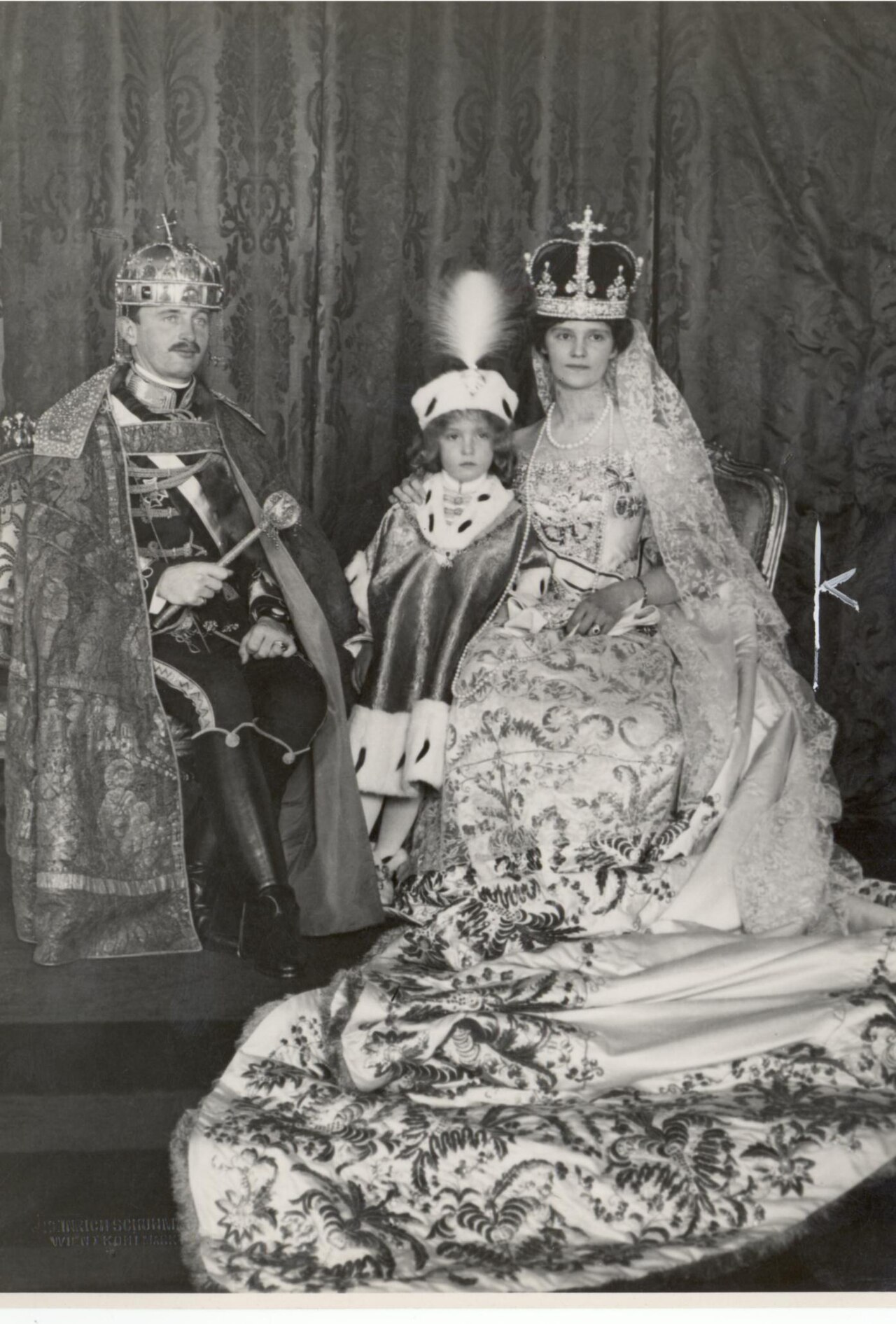
Coronation of King Charles IV and Queen Zita in Budapest
Heinrich Schuhmann jun. · 30 December 1916
 Document
Primary source
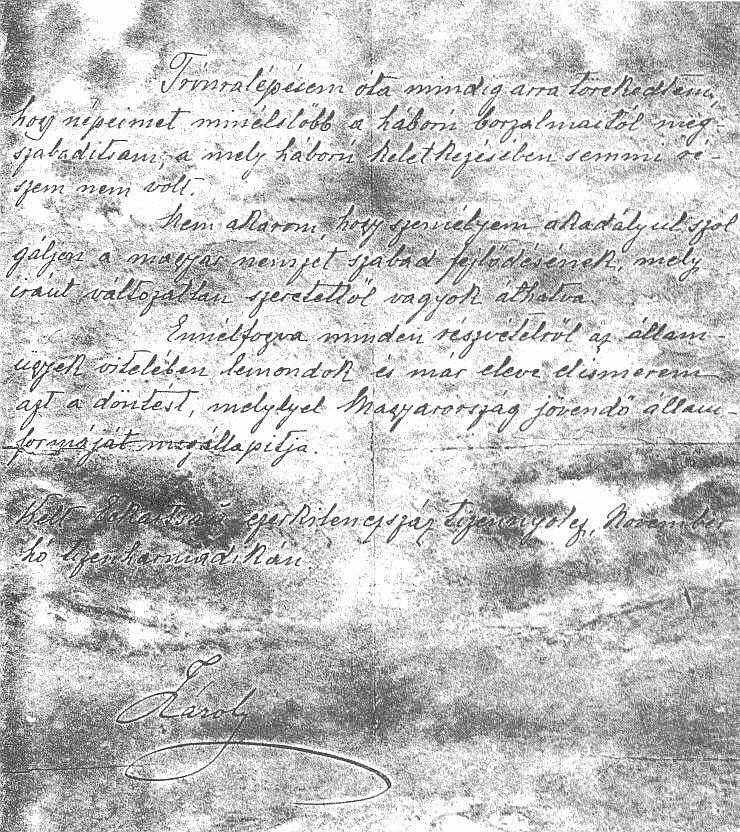
The Eckartsau Proclamation for Hungary
Charles I of Austria · 13 November 1918
Free account
Read every Charles I of Austria source
Sign up free →
Ready when you are
Start chatting with Charles I of Austria now.
20 messages free · No credit card · Available in 50+ languages.