


Primary sourceDocument1966
Freedom of Information Act
1966
The 1966 law requiring disclosure of government records, signed reluctantly by President Johnson without a public ceremony.
Johnson reluctantly signed this act into law despite his own reservations about government transparency.
About this source
What it is
A federal law, part of U.S. Code Title 5, requiring government agencies to disclose records to the public upon request, with certain exemptions. It grew out of concerns, pushed especially by Representative John E. Moss, that earlier rules let agencies withhold too much information. President Lyndon B. Johnson signed it in 1966.
Why it matters
The Act reflects a broader push in the 1960s for government transparency and accountability. Johnson himself reportedly believed some government information should stay confidential and opposed parts of the bill, yet he signed it under pressure from Congress — showing tension between a president's instincts and democratic demands for openness.
Look closer
- Why might a president sign a law he privately disagreed with?
- What does the choice to skip a signing ceremony tell you about Johnson's feelings toward this law?
- Who benefits most from a law like this, and who might want information kept secret?
This document is part of the curated material that grounds the AI version of Lyndon B. Johnson on Humy.ai — when students ask about related events, the AI can quote it and cite it.
More Lyndon B. Johnson sources
Meet the AI Lyndon B. Johnson →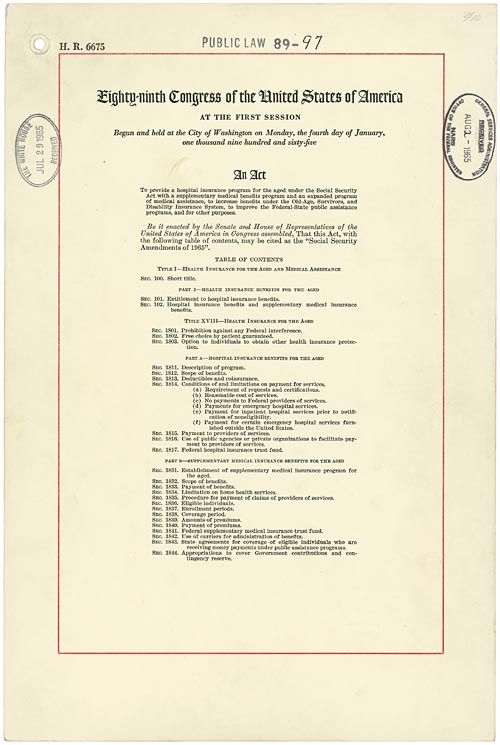 Document
Primary source
Social Security Amendments of 1965 (Medicare and Medicaid Act)
United States Congress · 30 July 1965
Primary source
Great Society Speech at the University of Michigan
Lyndon B. Johnson · 22 May 1964
Primary source
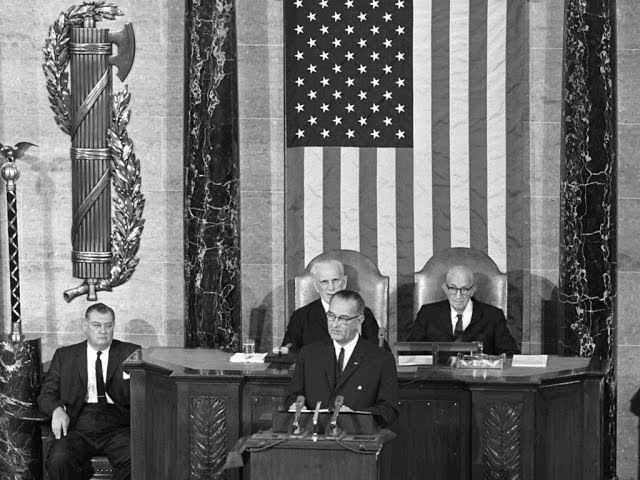
The American Promise Speech to Congress
Lyndon B. Johnson · 15 March 1965
 Speech
Primary source
1964 State of the Union Address
Lyndon B. Johnson · 8 January 1964
Primary source
Renunciation Speech
Lyndon B. Johnson · 31 March 1968
Ready when you are
Start chatting with Lyndon B. Johnson now.
20 messages free · No credit card · Available in 50+ languages.