


Secondary sourceDocument1853
Gadsden Purchase
1853
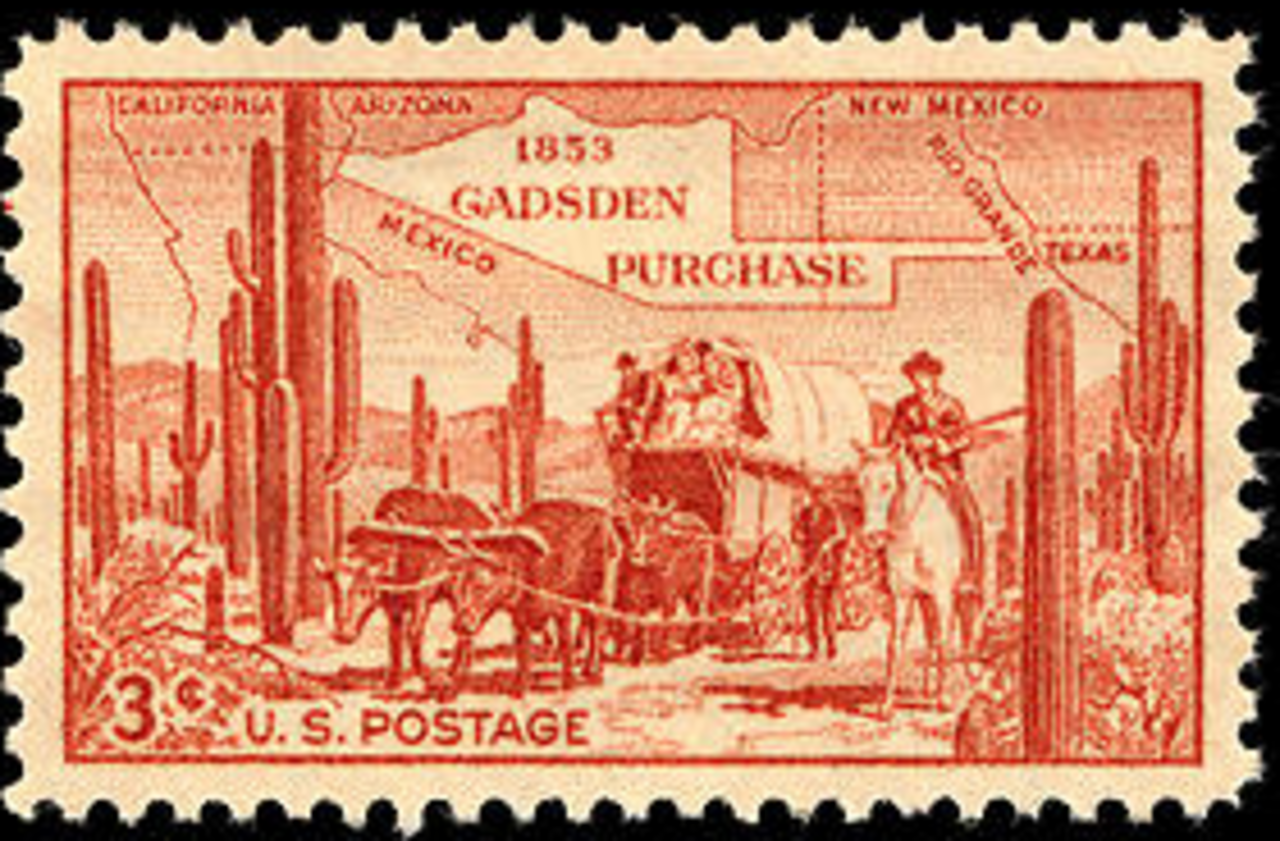
An 1853 land purchase from Mexico, negotiated under Pierce's administration to secure a southern railroad route.
Pierce's administration negotiated this purchase, reflecting his expansionist and Southern-leaning policy goals.
About this source
What it is
The Gadsden Purchase was an agreement by which the United States bought a large area of present-day southern Arizona and southwestern New Mexico from Mexico. It was first signed in December 1853 by James Gadsden, U.S. Minister to Mexico, and Mexican president Antonio López de Santa Anna, and took effect in 1854.
Why it matters
Pierce's administration, strongly influenced by Secretary of War Jefferson Davis, pursued the purchase to secure land for a southern transcontinental railroad route, reflecting the Southern-leaning, expansionist aims of his presidency. The sale also eased Mexico's financial troubles and fixed the modern U.S.–Mexico border. Because new territory raised the question of whether it would allow slavery, the purchase was tangled up in the national slavery debate that dominated Pierce's years in office.
Look closer
- Why would a railroad route matter enough to justify buying land from another country?
- Whose interests shaped this deal, and whose were left out?
- What does the stamp commemorating this purchase choose to show, and what might it leave out?
This document is part of the curated material that grounds the AI version of Franklin Pierce on Humy.ai — when students ask about related events, the AI can quote it and cite it.
More Franklin Pierce sources
Meet the AI Franklin Pierce →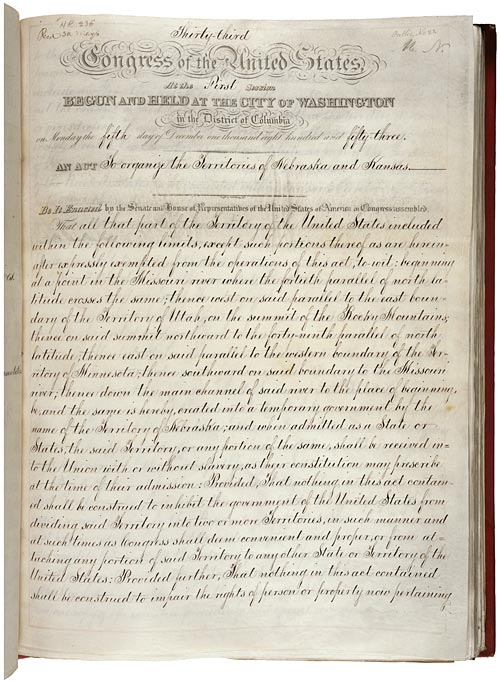 Document
Primary source
Kansas-Nebraska Act
United States Congress · 1854
Primary source
Inaugural Address of Franklin Pierce
Franklin Pierce · 4 March 1853
 Painting
Primary source
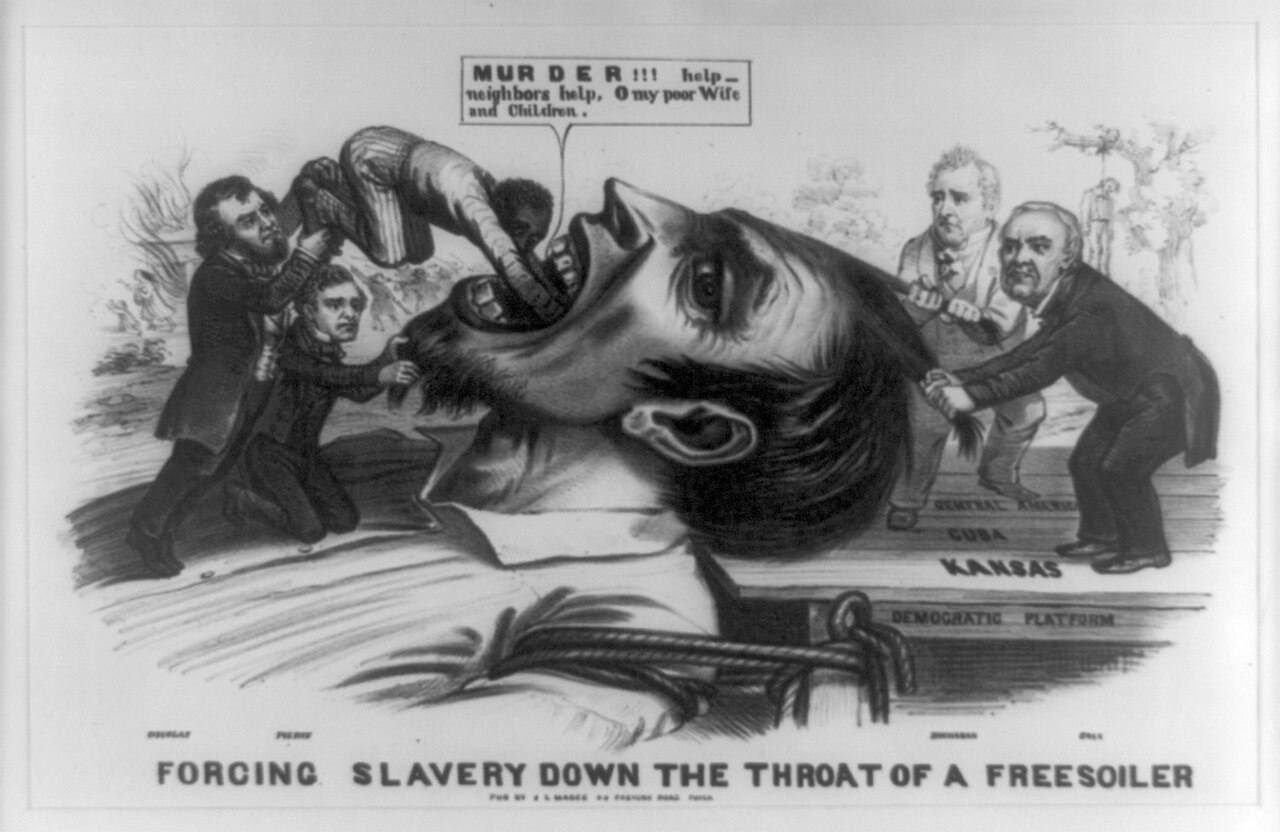
Forcing Slavery Down the Throat of a Freesoiler
John L. Magee · 1856
 Painting
Primary source
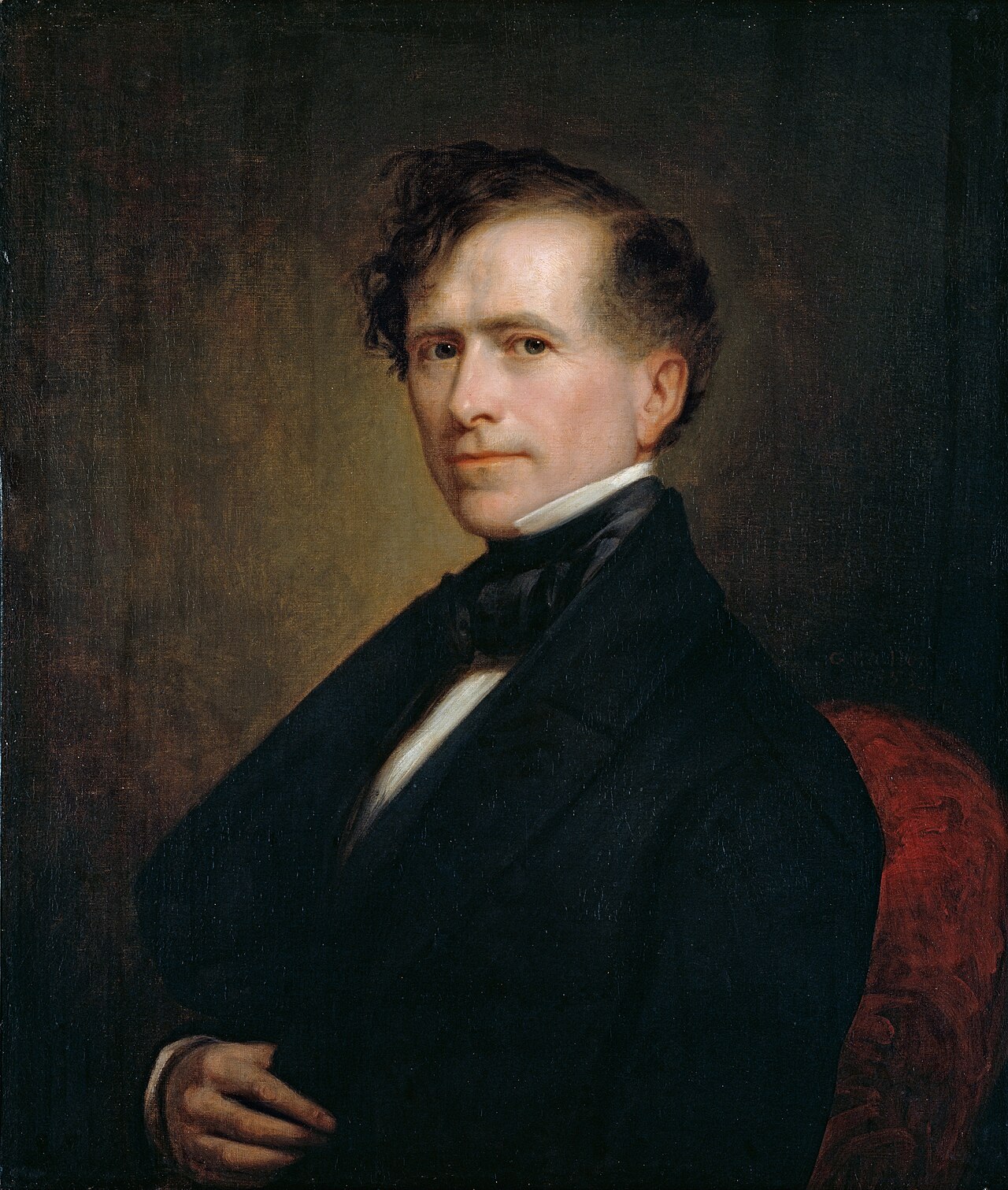
Franklin Pierce
George Peter Alexander Healy · 1853
 Photograph
Primary source
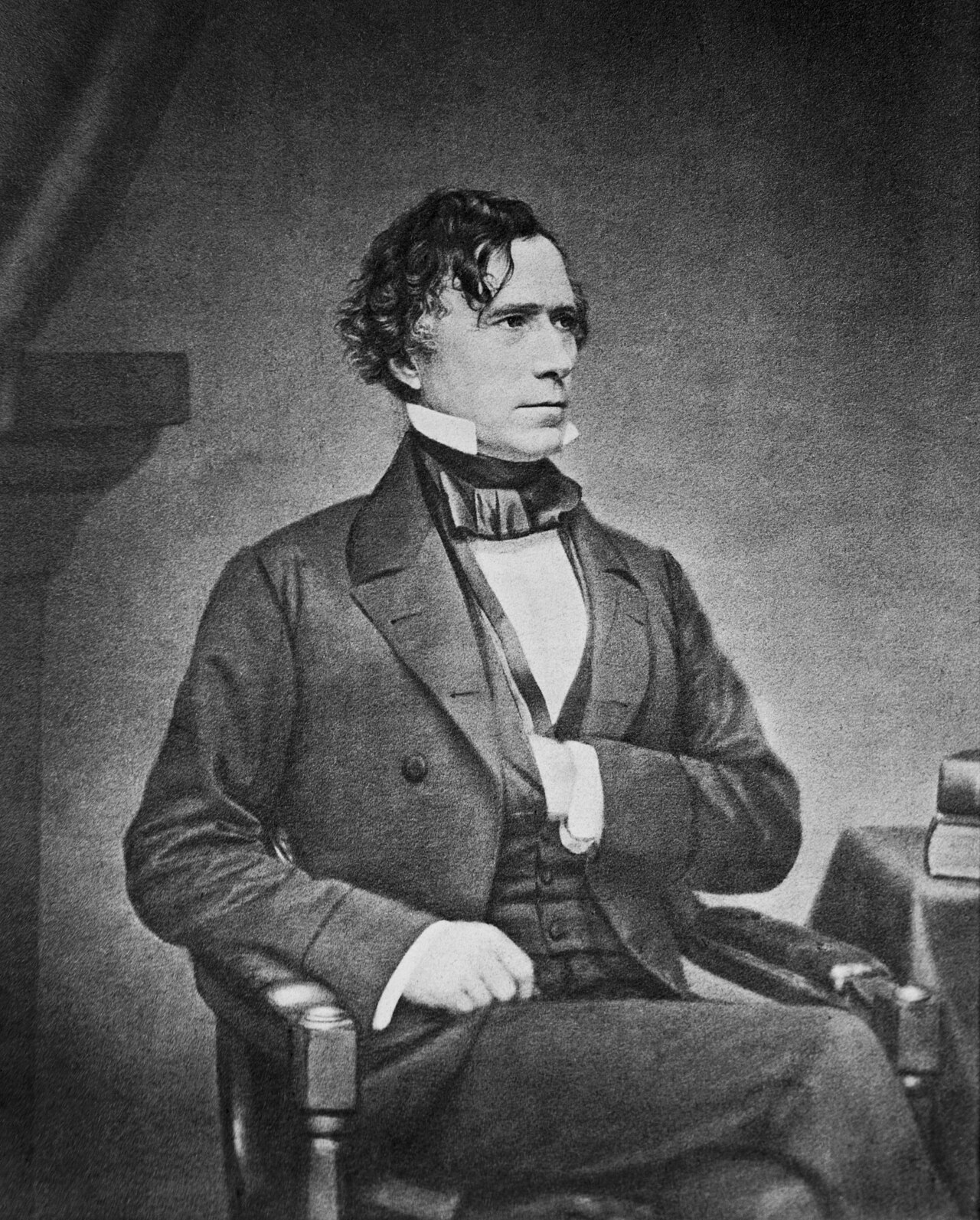
Portrait of Franklin Pierce by Mathew Brady
Mathew Brady
Ready when you are
Start chatting with Franklin Pierce now.
20 messages free · No credit card · Available in 50+ languages.