


Primary sourceDocument1864
Geneva Convention of 1864
1864
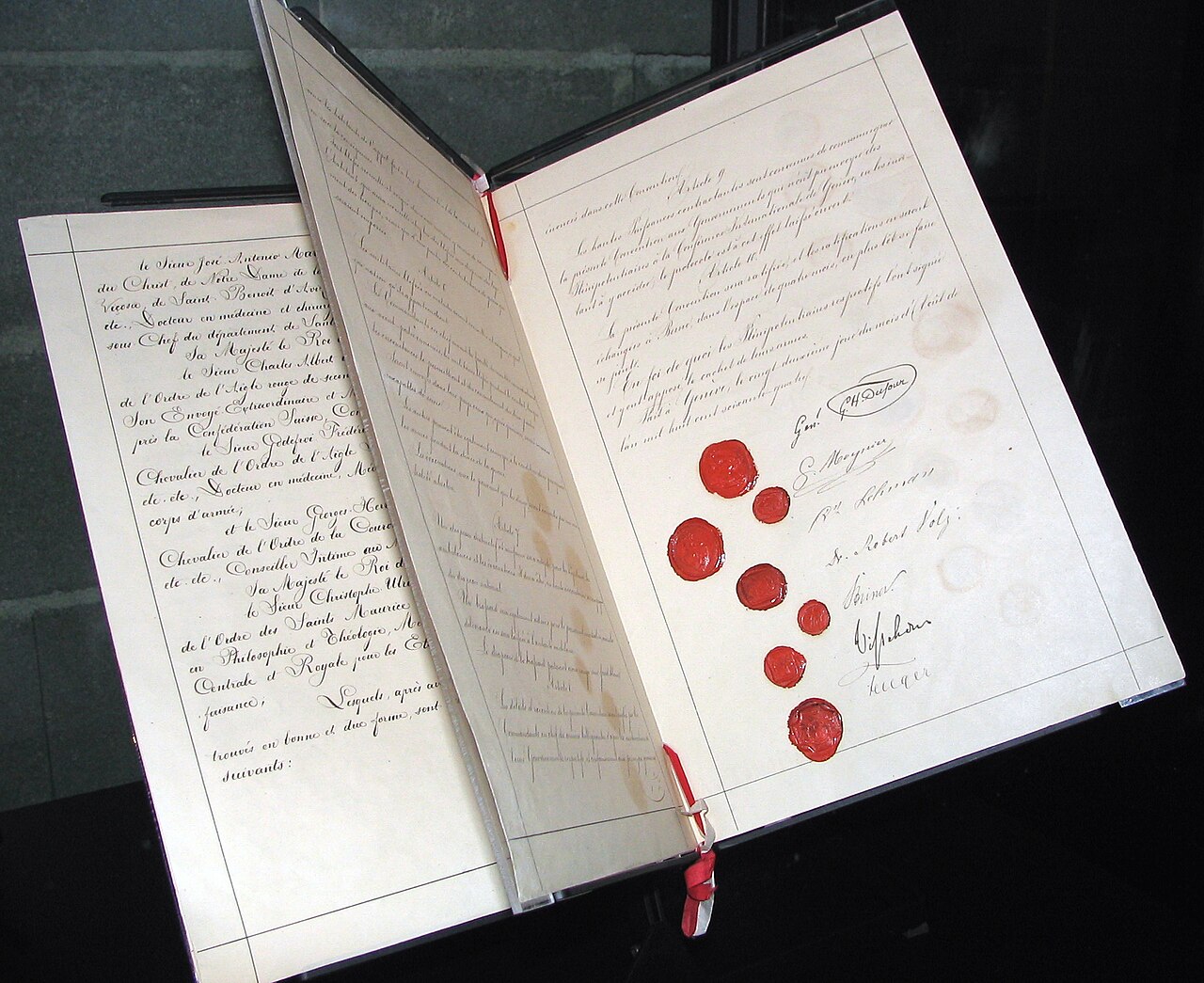
The 1864 treaty, signed by twelve states, that turned Dunant's proposal for protecting the wounded into binding international law.
Dunant helped organise the conference that produced this treaty, the legal result of his book's proposal.
About this source
What it is
This document is the first Geneva Convention, adopted in 1864, for the amelioration of the condition of the wounded in armies in the field. The image shown is a facsimile of the original, held on loan at the International Red Cross and Red Crescent Museum in Geneva.
It set out basic rules: medical facilities and personnel caring for the wounded would be protected, the wounded would be treated impartially, and a red cross symbol would mark people and equipment covered by the agreement.
Why it matters
This treaty is inseparable from the International Committee of the Red Cross, the organisation that pushed for it. Henry Dunant helped organise the conference that produced it, turning the proposal from his book into binding law among states. It was later expanded in 1906, 1929 and 1949.
Look closer
- Why might governments have agreed to limit their own actions in wartime by signing this treaty?
- What do the seals and signatures on the document tell you about how international agreements were formalised?
- What does the choice of a red cross as a protective symbol tell you about the convention's origins?
This document is part of the curated material that grounds the AI version of Henry Dunant and Guillaume Henri Dufour on Humy.ai — when students ask about related events, the AI can quote it and cite it.
More Henry Dunant sources
Browse all 81 →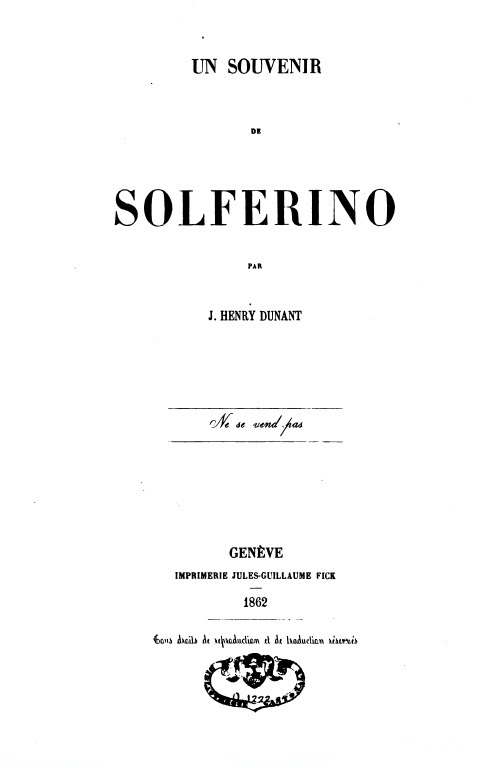 Book
Primary source
A Memory of Solferino
Henry Dunant · 1862
 Photograph
Primary source
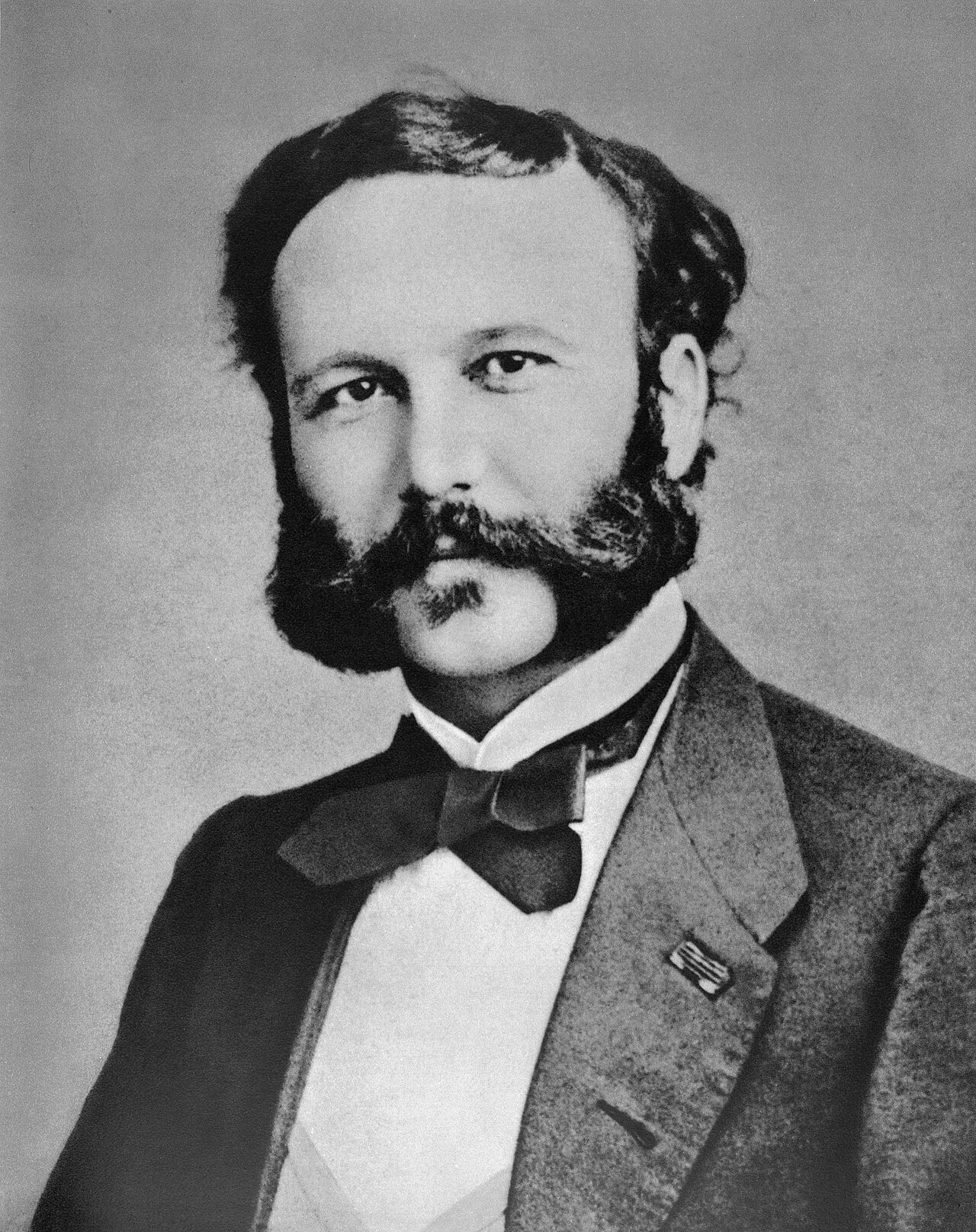
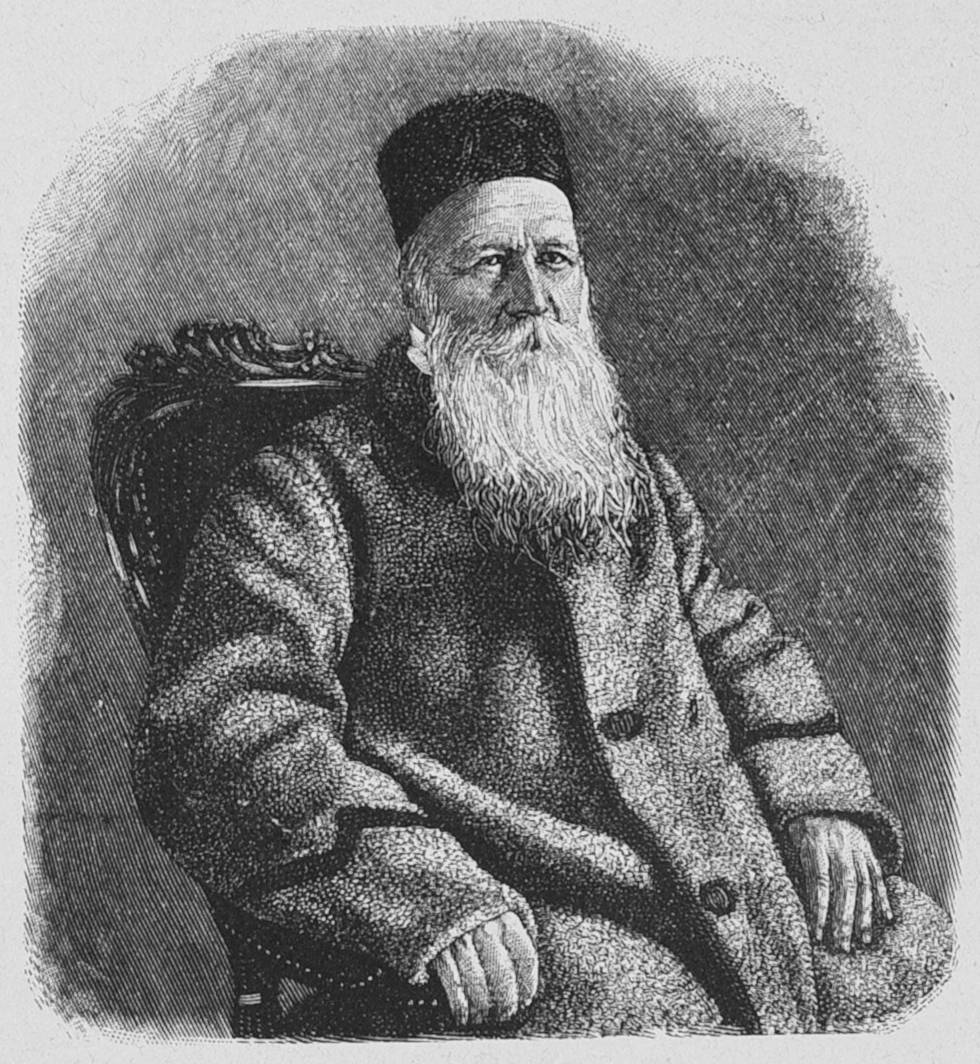
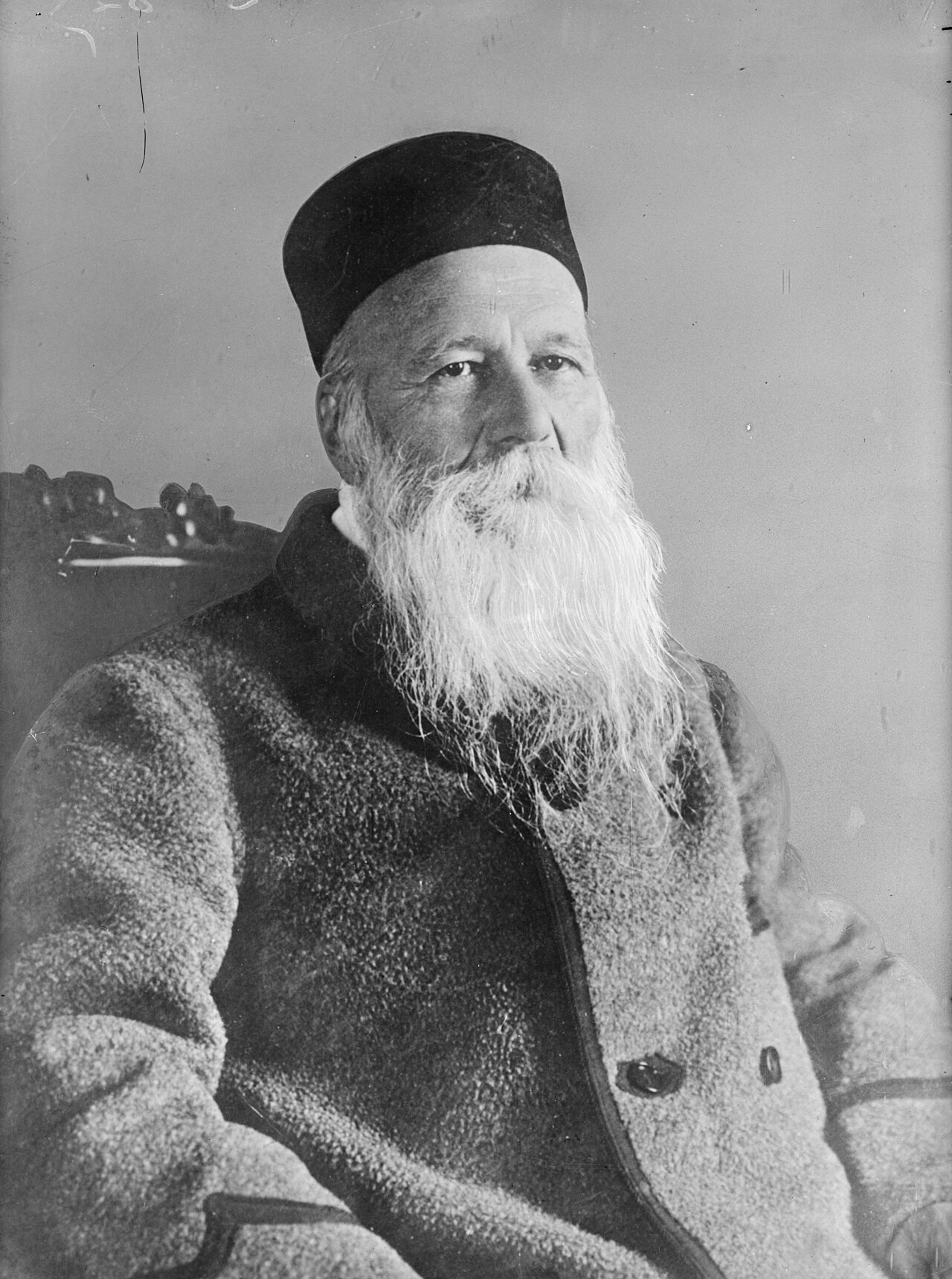
Portrait of Henry Dunant
 Photograph
Primary source
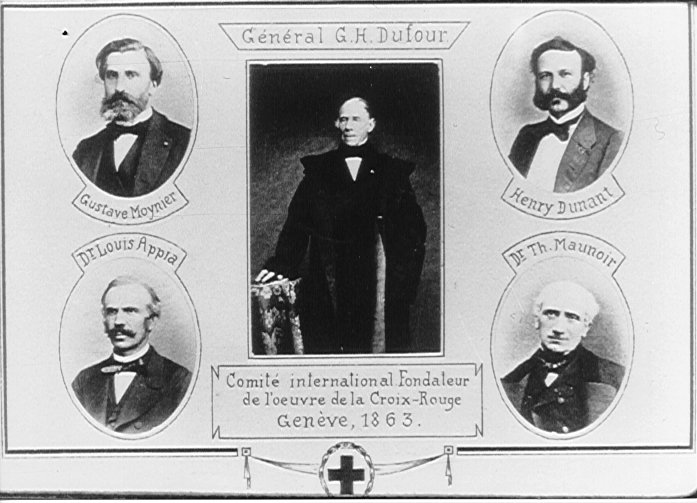
Committee of Five Geneva 1863
1863
 Document
Primary source
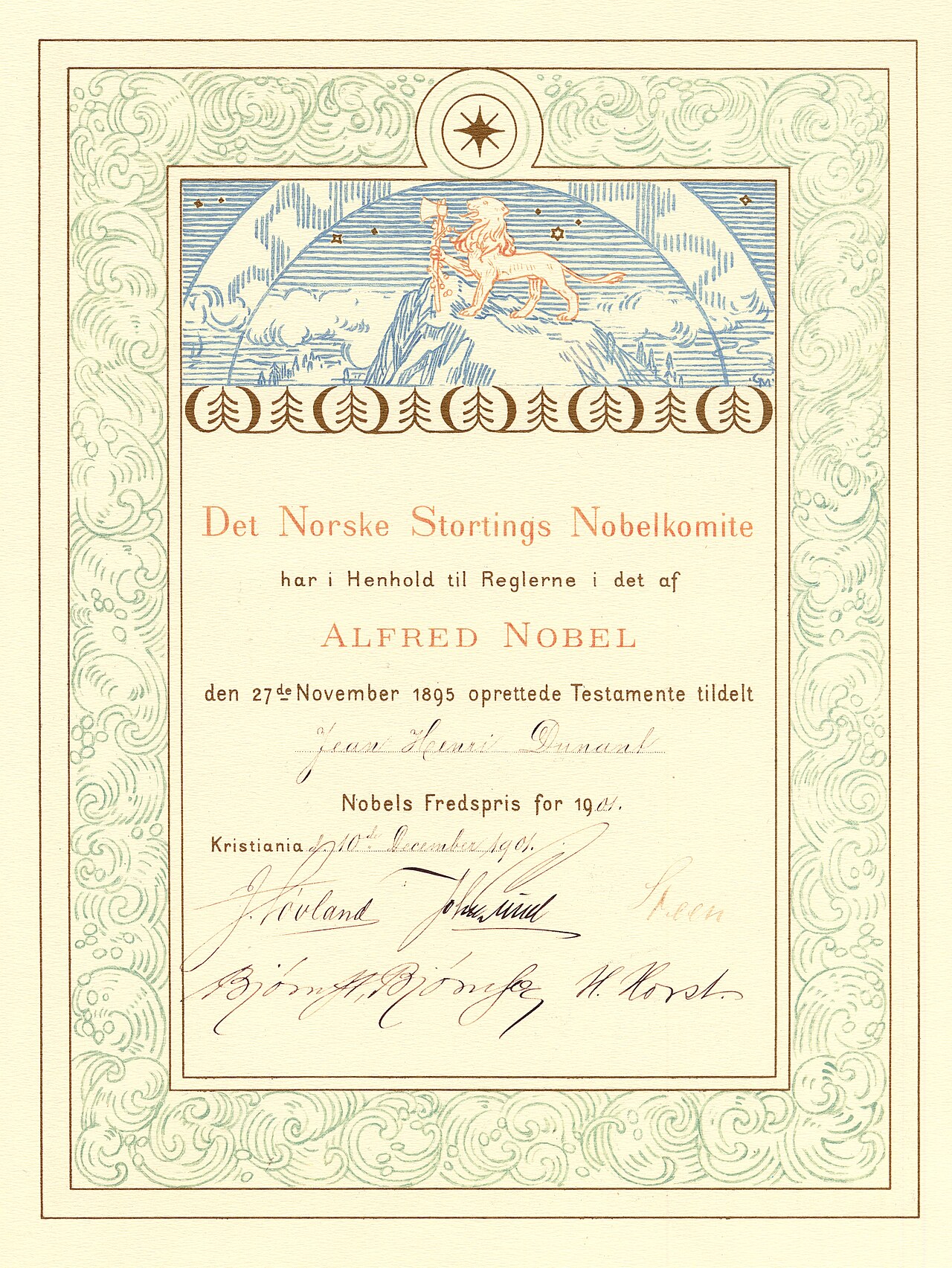
Henry Dunant Nobel Peace Prize
Norwegian Storting's Nobel Committee · 1901
Free account
Browse every Henry Dunant source
Sign up free →
Ready when you are
Start chatting with Henry Dunant now.
20 messages free · No credit card · Available in 50+ languages.