


Secondary sourceArtifactremains moved 1921
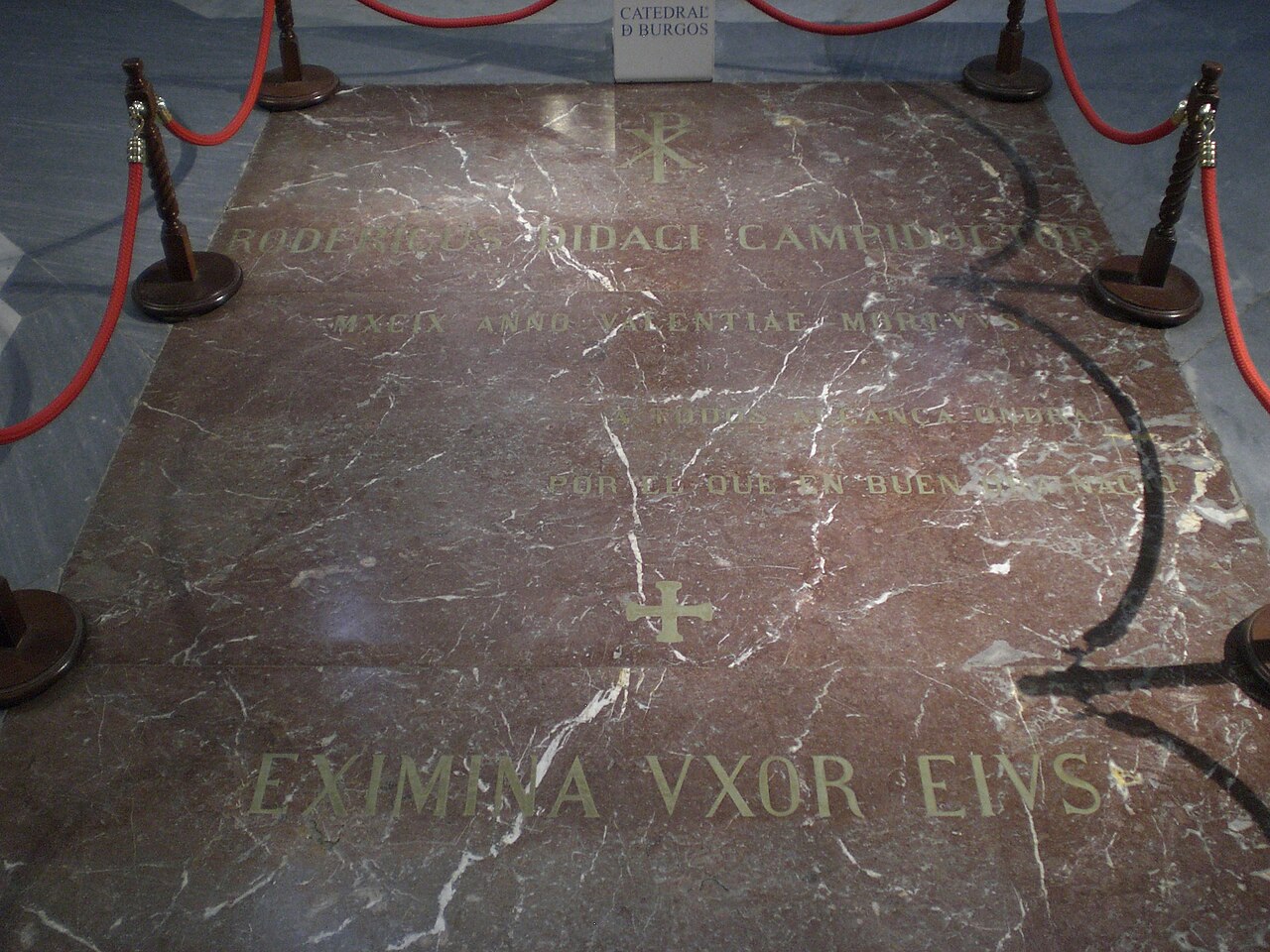
Grave of Rodrigo Díaz de Villarreal
remains moved 1921
The tomb of Rodrigo Díaz and his wife Jimena beneath the crossing of Burgos Cathedral, where their remains were reinterred in 1921.
This is the final resting place of Rodrigo Díaz, marking his transformation into a national symbol.
About this source
What it is
This is the marble floor tomb of Rodrigo Díaz, El Cid, and his wife Jimena, located under the transept crossing of Burgos Cathedral. Their remains were moved to this spot in 1921. The inscription names him as 'Roderici Ruidiaci Campidoctoris' and records his death in Valencia, with a further line naming 'Eximina', his wife.
Why it matters
The tomb reflects how Rodrigo Díaz became a Spanish national hero long after his death, with his remains moved and honored centuries later as a symbol of Spanish identity. It shows how historical figures can be reshaped into national symbols through monuments and commemoration.
Look closer
- Why might a cathedral choose to give a medieval nobleman such a prominent burial place centuries after his death?
- What does the Latin inscription tell us about how Rodrigo was remembered?
- What does the inclusion of his wife's name on the tomb suggest about her place in his story?
This artifact is part of the curated material that grounds the AI version of El Cid on Humy.ai — when students ask about related events, the AI can quote it and cite it.
More El Cid sources
Browse all 80 →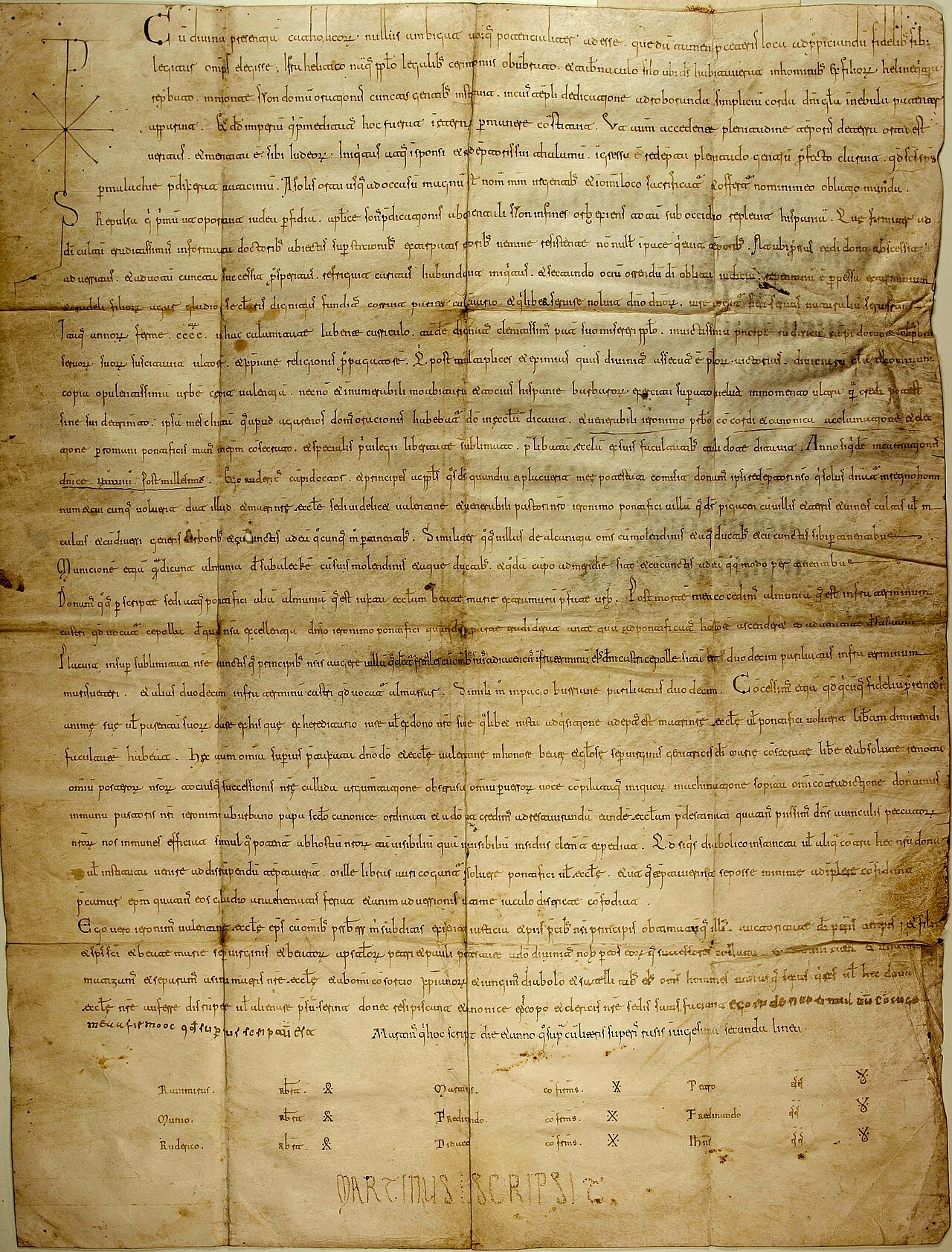 Document
Primary source
Dotación del Cid a la catedral de Valencia
Martinus (notary) · 1098
 Document
Primary source
Ego Ruderico
Rodrigo Díaz el Campeador · 1098
 Artifact
Secondary source
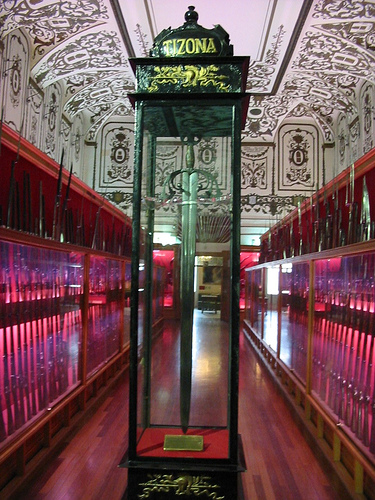
Tizona
disputed, possibly 11th century blade with 15th-century hilt
 Book
Secondary source
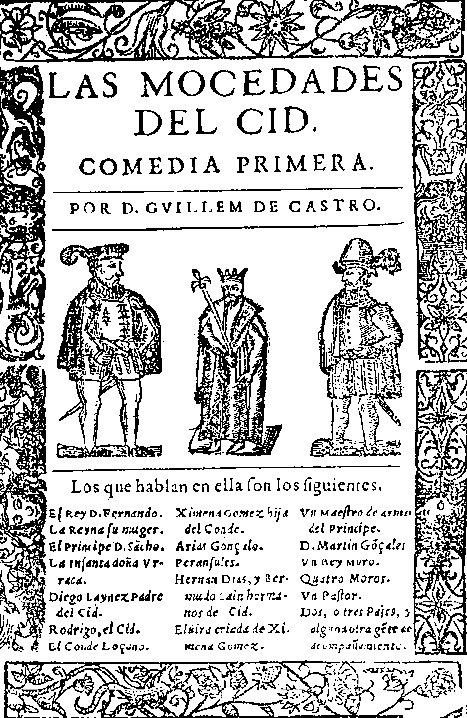
Las mocedades del Cid
Guillén de Castro y Bellvis · c. 1605-1615, printed 1618
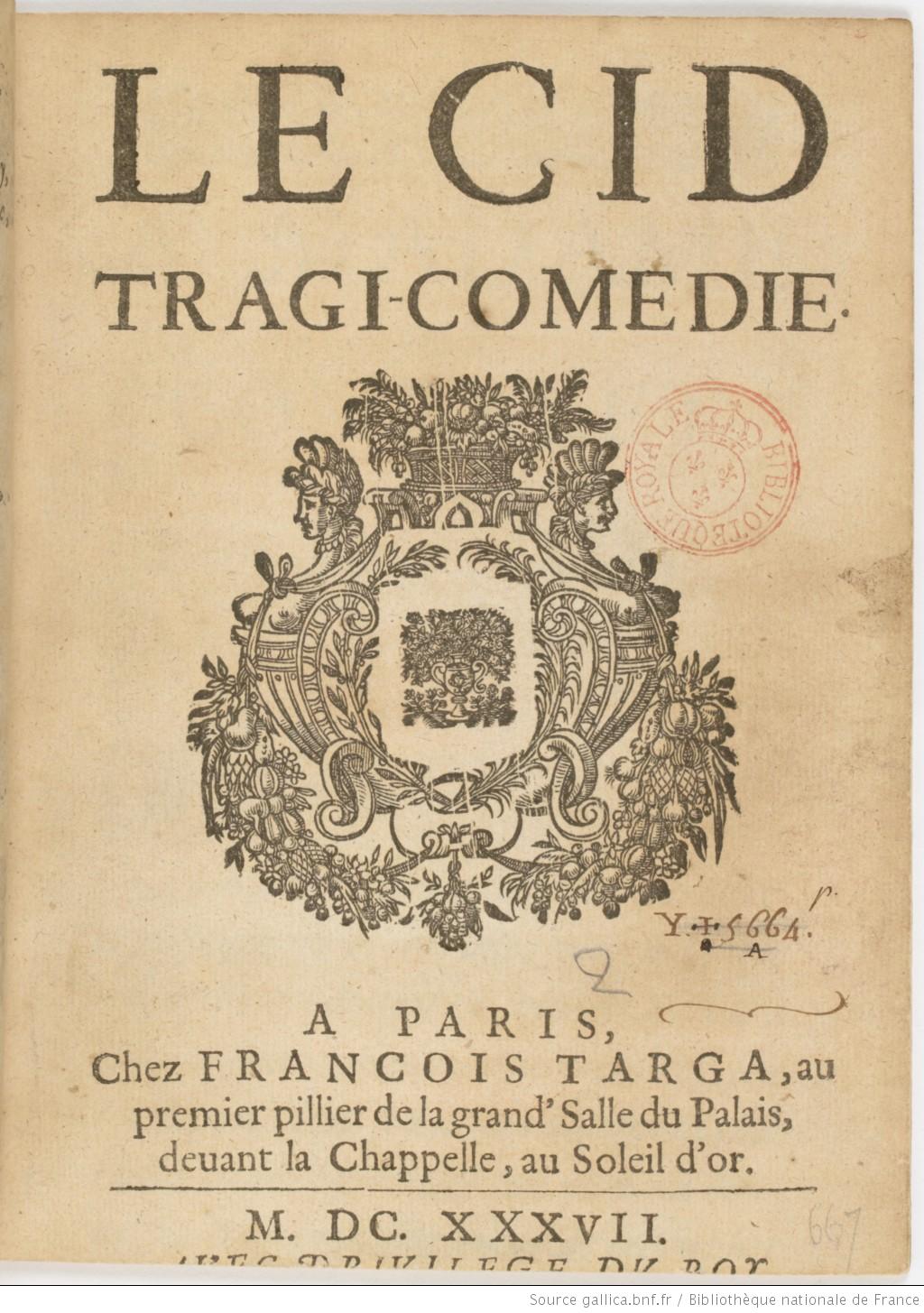
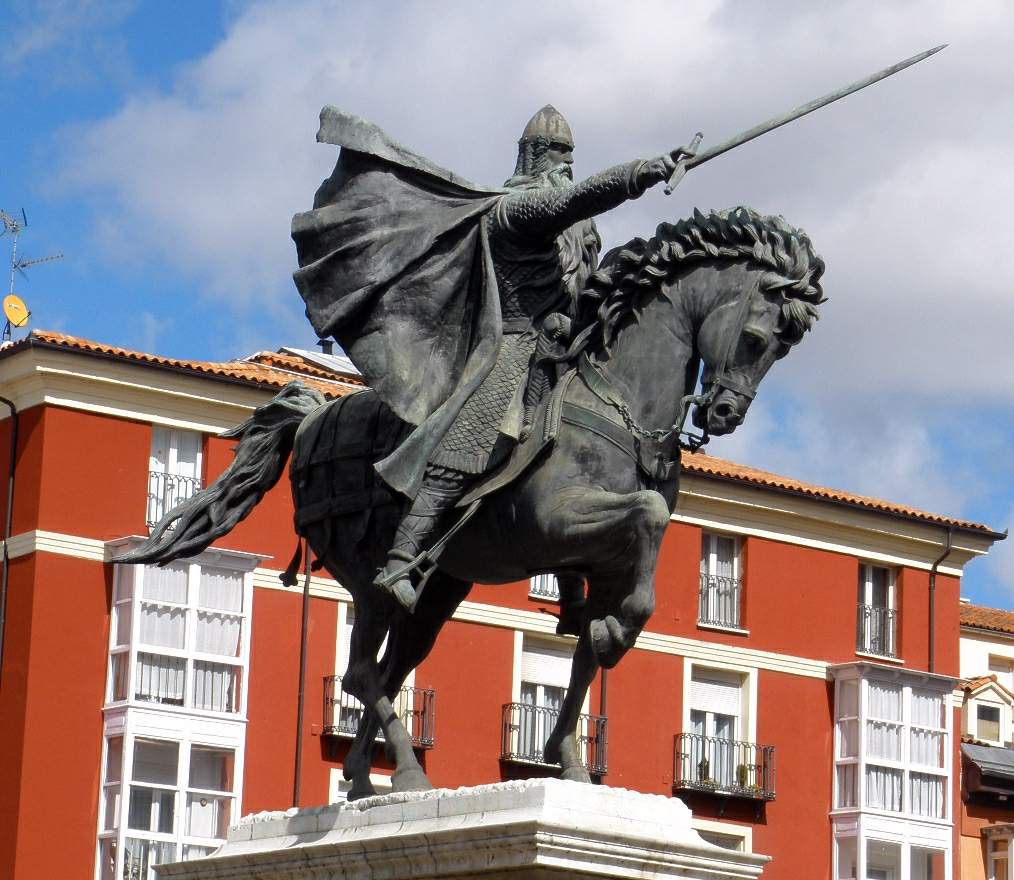
Free account
Read every El Cid source
Sign up free →
Ready when you are
Start chatting with El Cid now.
20 messages free · No credit card · Available in 50+ languages.