


Secondary sourcePaintingc. 1550
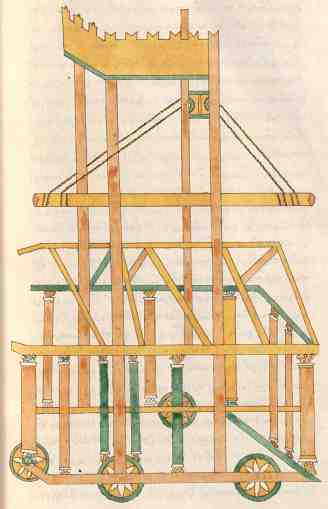
Greek Siege Engine Drawing
Unknown · c. 1550
A 16th-century drawing of a wheeled siege tower, from the tradition of Greek military manuscripts in which Hero's writings on siegecraft were copied.
This siege tower drawing comes from the manuscript tradition that also preserved Hero's writings on military engineering.
About this source
What it is
This colored drawing, from a manuscript dated around 1550, shows a wheeled siege tower with a crenellated top platform, tall wooden posts, diagonal bracing, and large spoked wheels. Its creator is unknown.
Why it matters
This image comes from the tradition of Greek poliorcetic (siege-craft) manuscripts, the same body of texts through which Hero's own military writings were copied and transmitted. It shows the kind of practical engineering knowledge, including siege machinery, that ancient Greek engineers like Hero studied and wrote about.
Such manuscripts connect Hero's mathematical and mechanical interests to broader military technology of the ancient and medieval worlds.
Look closer
- What features of the tower's design suggest it was built to be moved and to protect the people inside?
- Why might this kind of siege engine have been included in a manuscript alongside works like Hero's?
- What does the survival of such drawings tell you about how ancient military technology was studied later on?
This painting is part of the curated material that grounds the AI version of Hero of Alexandria on Humy.ai — when students ask about related events, the AI can quote it and cite it.
More Hero of Alexandria sources
Meet the AI Hero of Alexandria →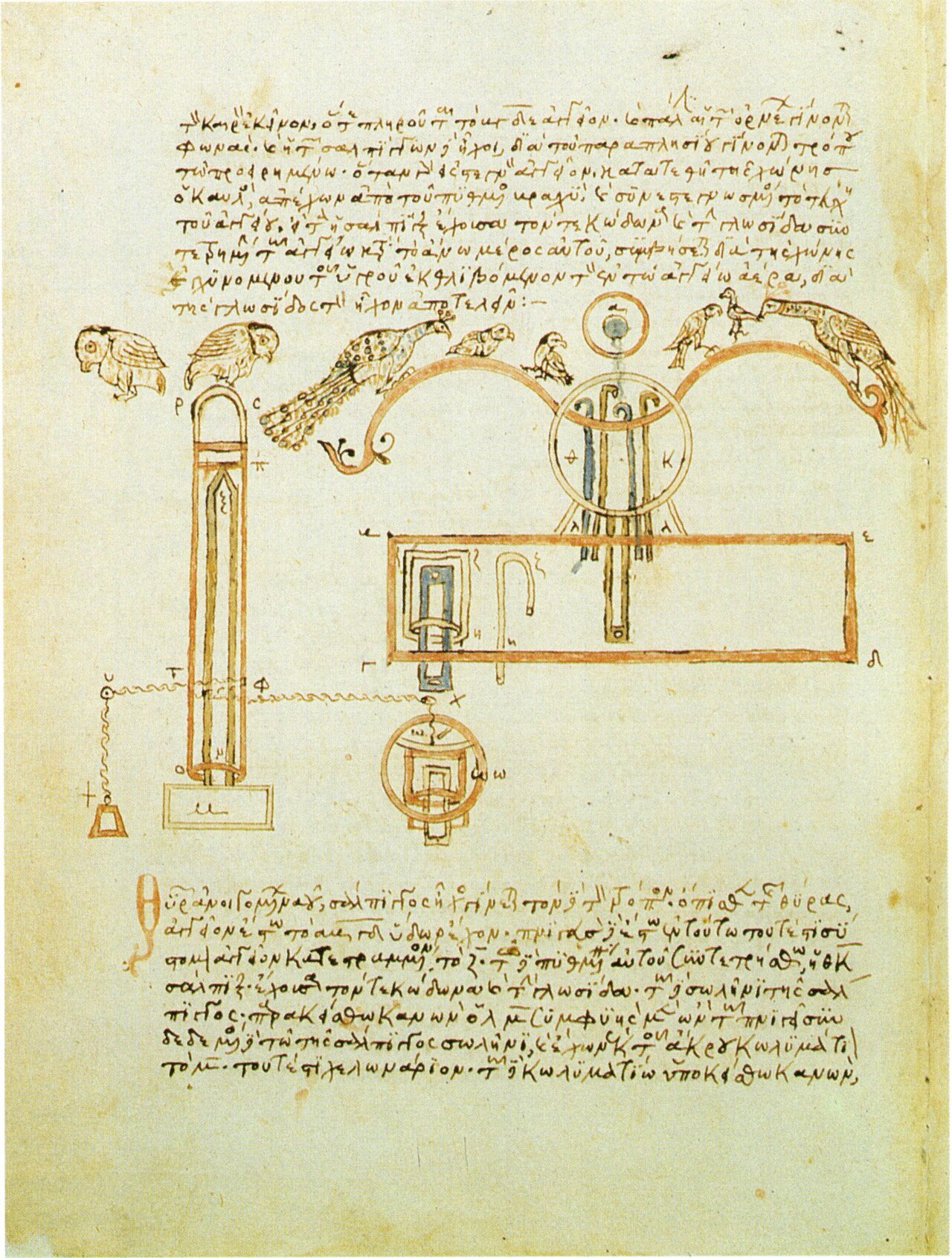 Book
Secondary source
Pneumatica
Hero of Alexandria · 1st century AD (this copy later)
 Book
Secondary source
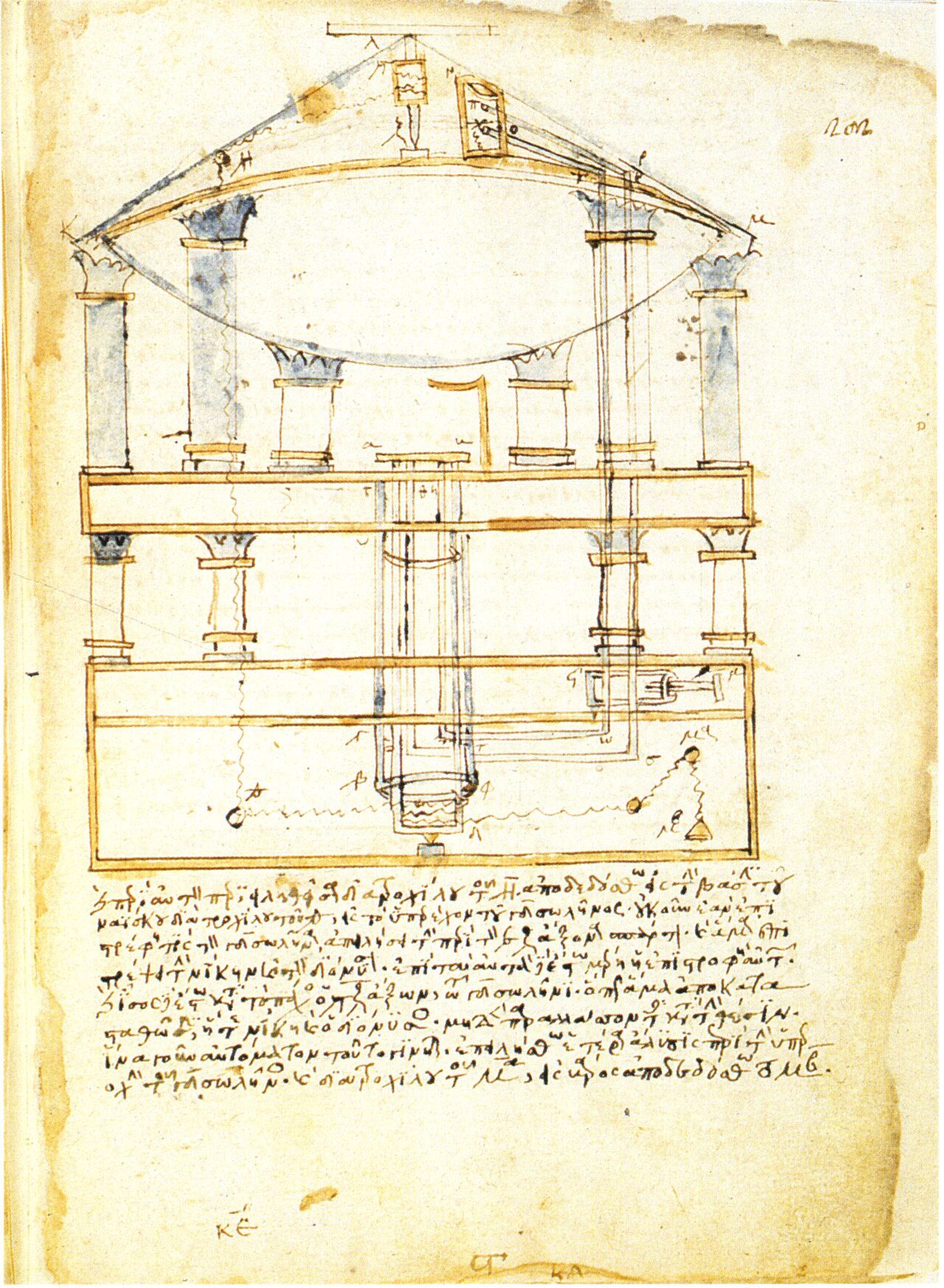
Automata (Bacchus diagram)
Hero of Alexandria · 1st century AD (this copy later)
 Painting
Secondary source
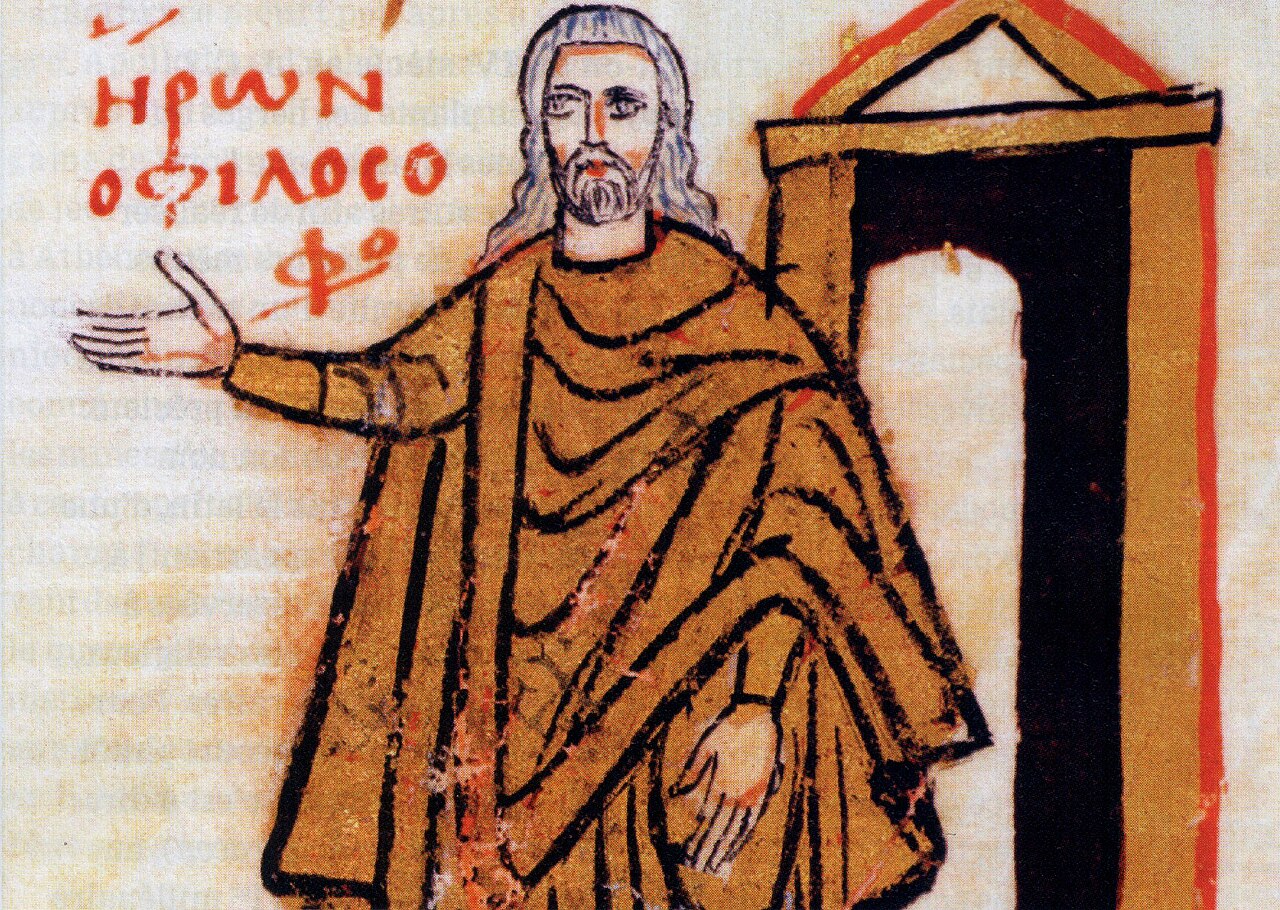
Hero of Alexandria in the Codex of Saint Gregory Nazianzenos
Unknown author · 9th century AD
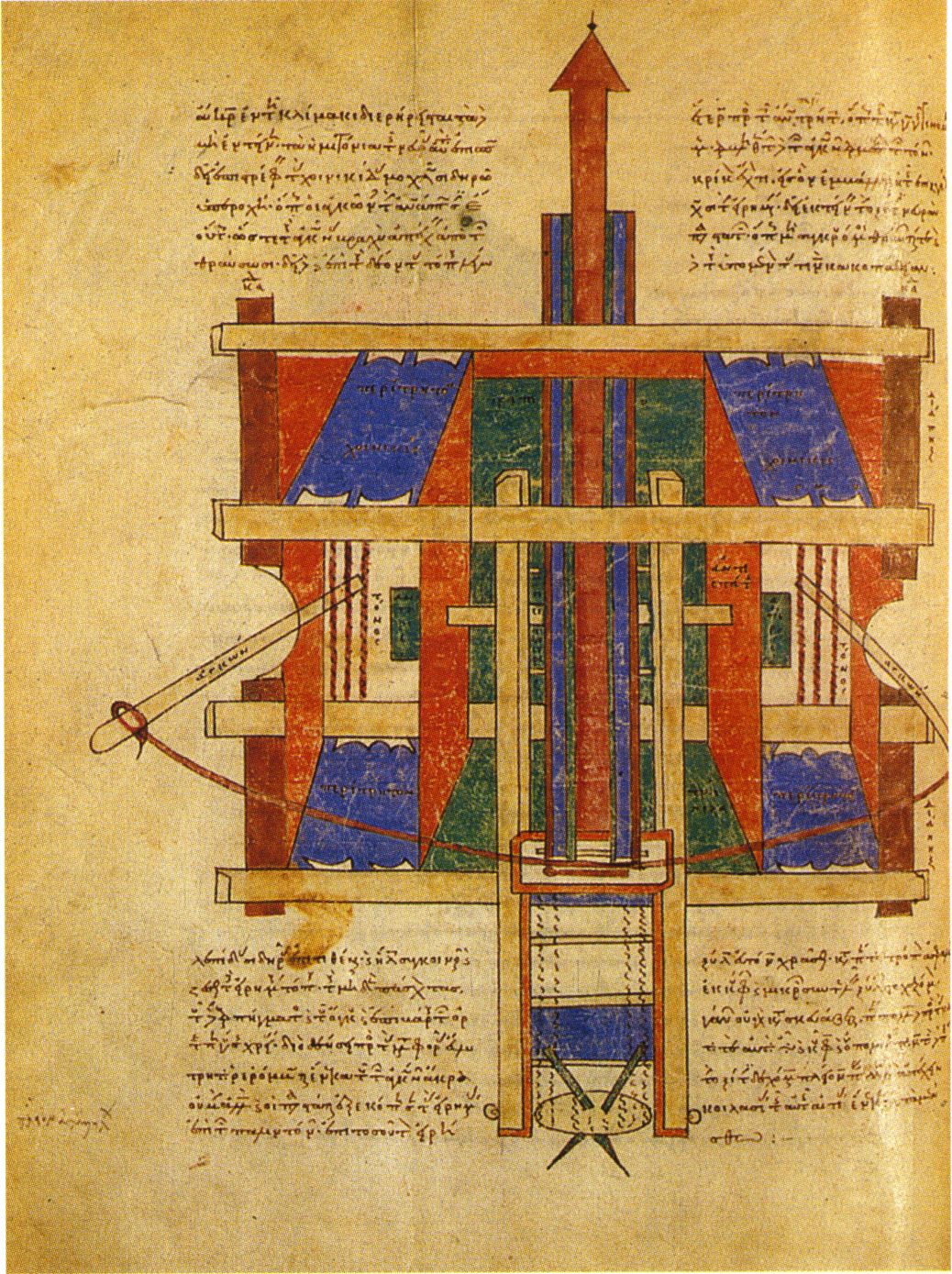 Document
Secondary source
Belopoiika (design drawing of a siege engine)
Hero of Alexandria · 1st century AD (this copy later)
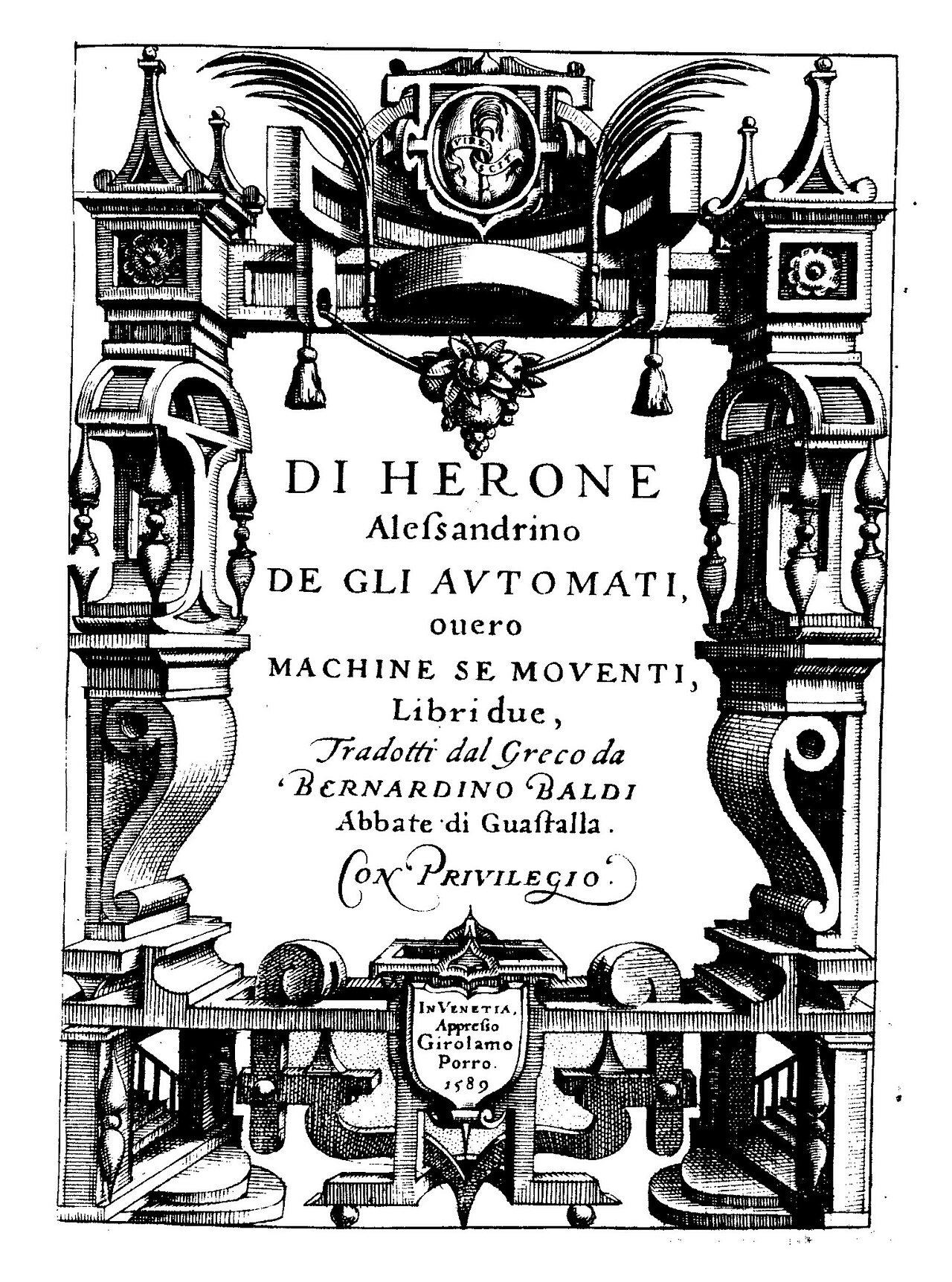 Book
Secondary source
De gli automati, ouero Machine se mouenti
Hero : Alexandrinus · 1589
Ready when you are
Start chatting with Hero of Alexandria now.
20 messages free · No credit card · Available in 50+ languages.