


Secondary sourcePhotograph
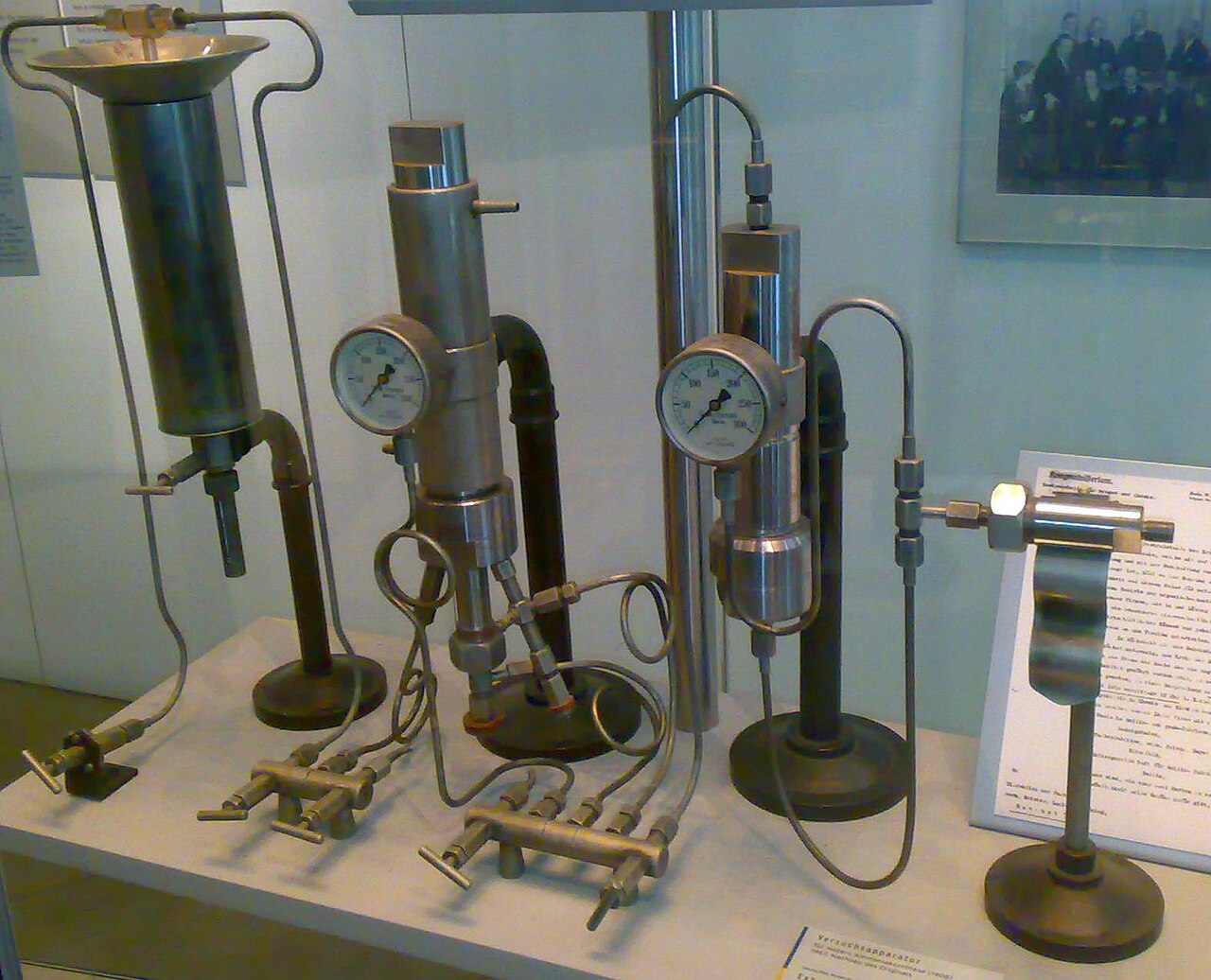
Haber Ammonia Apparatus
JGvBerkel
A museum display of the tabletop high-pressure apparatus Haber and Robert Le Rossignol used to first produce a continuous flow of synthetic ammonia.
Shows the actual apparatus Haber used with Le Rossignol to first synthesise ammonia continuously, the breakthrough behind his Nobel Prize.
About this source
What it is
This photograph shows a museum display of metal laboratory equipment: steel cylinders, pressure gauges, valves and tubing. It is the type of tabletop high-pressure apparatus used by Fritz Haber and his assistant Robert Le Rossignol to first produce a continuous flow of synthetic ammonia in 1909.
Why it matters
This small device led to one of the most important chemical processes in history: turning nitrogen from the air into ammonia for fertiliser and explosives. It shows how a tabletop experiment by Haber and Le Rossignol changed agriculture and industry worldwide.
Look closer
- Why would such a small piece of equipment have such a huge historical impact?
- What does the museum setting tell you about how this object is remembered today?
- What is missing from this photo that you would need to understand how the process actually worked?
This photograph is part of the curated material that grounds the AI version of Fritz Haber on Humy.ai — when students ask about related events, the AI can quote it and cite it.
More Fritz Haber sources
Browse all 51 →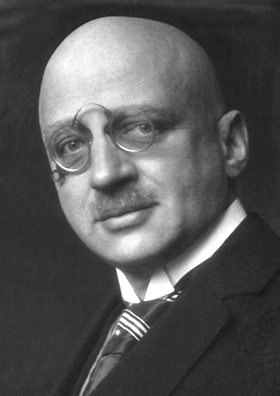 Photograph
Primary source
Fritz Haber
The Nobel Foundation
 Document
Primary source
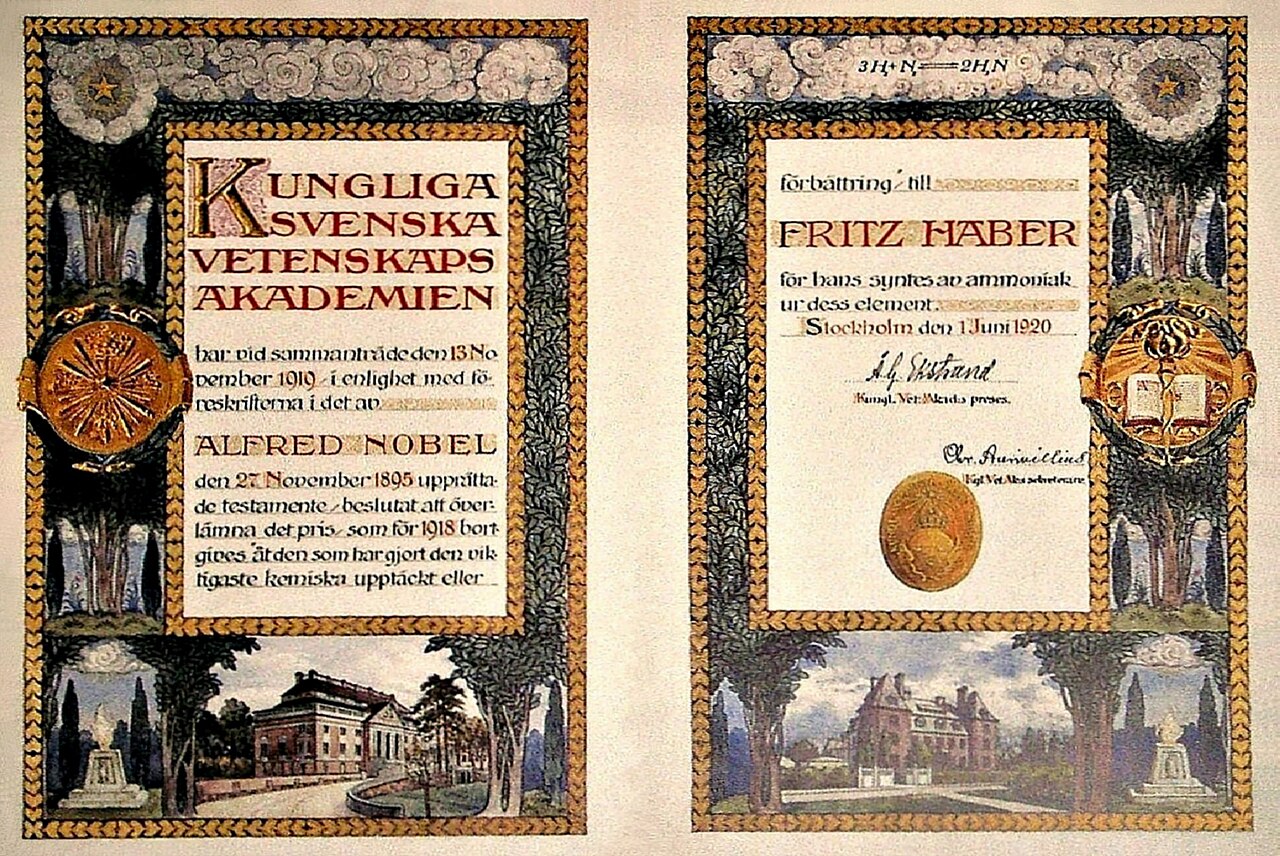
Nobel Prize Diploma Fritz Haber 1918
Sofia Gisberg · 1 June 1920
 Photograph
Primary source
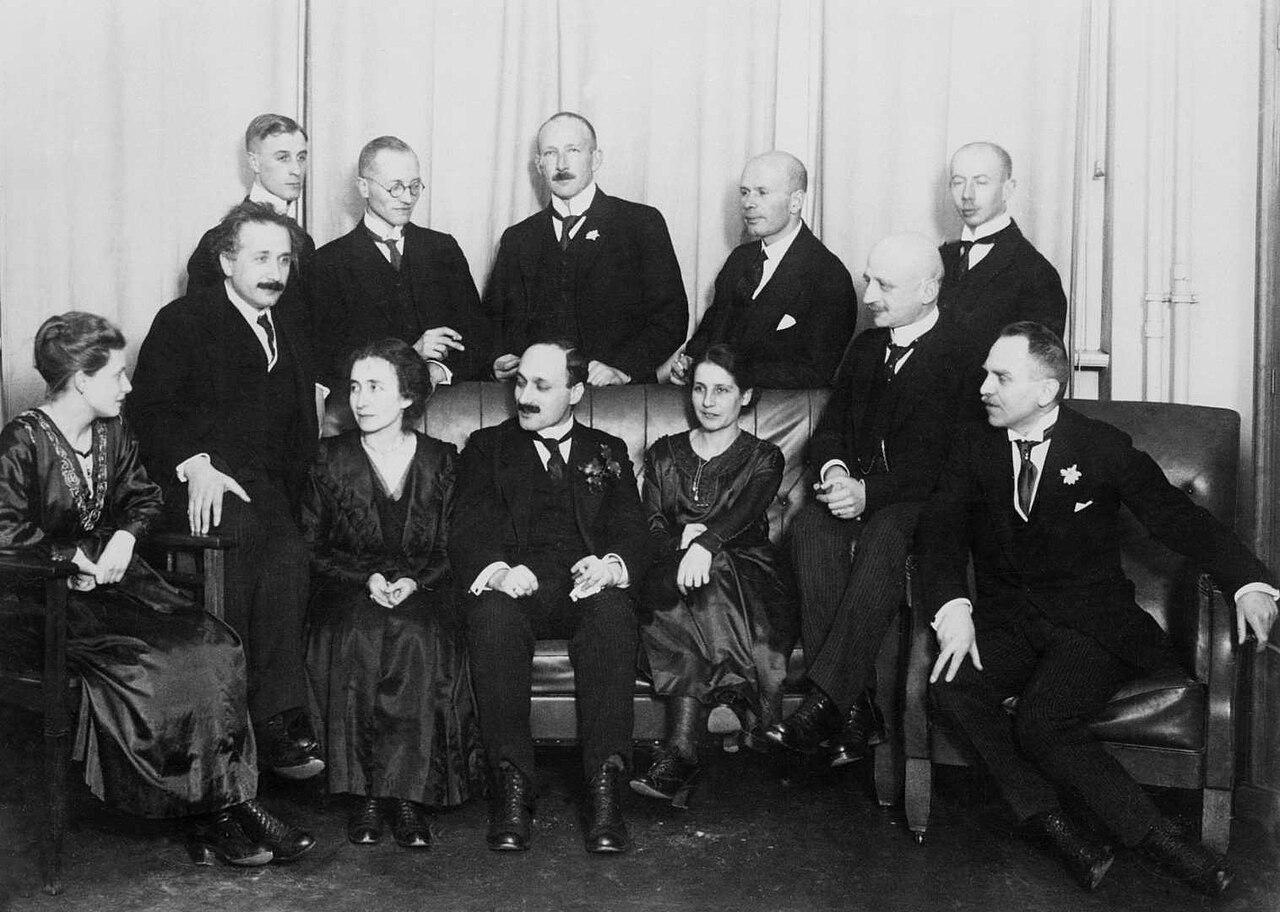
Berliner Physiker und Chemiker 1920
1920
 Artifact
Secondary source
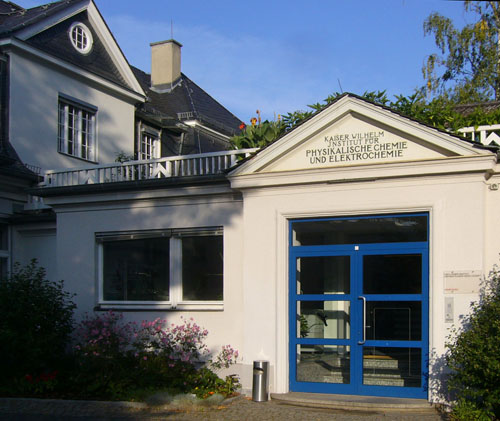
Fritz Haber Institute of the MPG
1911
Free account
Read every Fritz Haber source
Sign up free →
Ready when you are
Start chatting with Fritz Haber now.
20 messages free · No credit card · Available in 50+ languages.