


Secondary sourceArtifact1940s (Nash's version); commercial edition 1952
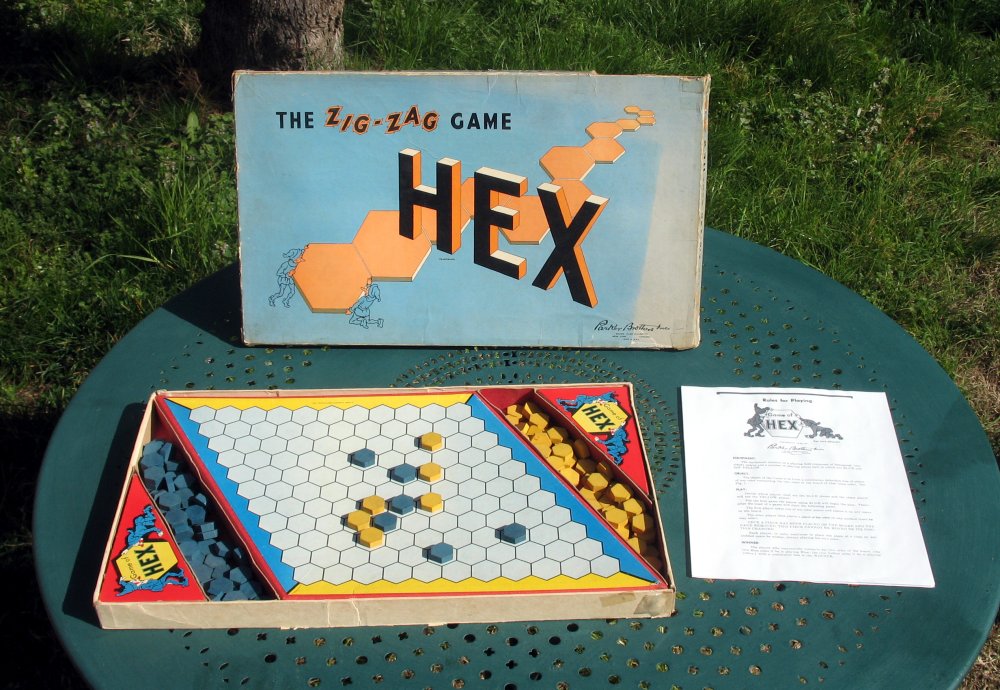
Hex Board Game
Piet Hein (original); John Nash (independent rediscovery) · 1940s (Nash's version); commercial edition 1952
A two-player strategy board game independently invented by Nash at Princeton, where it was known among students as 'Nash'.
Nash independently invented this game at Princeton, where students nicknamed it 'Nash', showing his playful, inventive side.
About this source
What it is
Hex is a two-player abstract strategy board game played on a rhombus-shaped grid of hexagonal cells, where each player tries to connect opposite sides of the board. It was invented by Danish mathematician and poet Piet Hein in 1942, then independently rediscovered by John Nash at Princeton University around 1948. Parker Brothers later marketed a commercial version under the name 'Hex' in 1952.
Why it matters
At Princeton, students called the game 'Nash' because of his connection to it, showing his playful and inventive side alongside his serious mathematical work. The game also has deep mathematical foundations related to topology and graph theory, areas close to Nash's own interests. There was some dispute, noted by writer Martin Gardner, over whether Nash truly invented it independently of Hein.
Look closer
- Why might two people invent the same game independently in different places?
- What does this story suggest about how ideas spread, even without direct copying?
- How might a simple game reveal deep mathematical ideas?
This artifact is part of the curated material that grounds the AI version of John Forbes Nash Jr. on Humy.ai — when students ask about related events, the AI can quote it and cite it.
More John Forbes Nash Jr. sources
Browse all 23 → Photograph
Primary source
Portrait of John Forbes Nash
Peter Badge
 Photograph
Primary source
John Forbes Nash at the Cologne Game Theory Symposium
Elke Wetzig (Elya) · 2 November 2006
 Photograph
Primary source
John Forbes Nash at a Public Event
Elke Wetzig (Elya) · 2 November 2006
 Document
Primary source
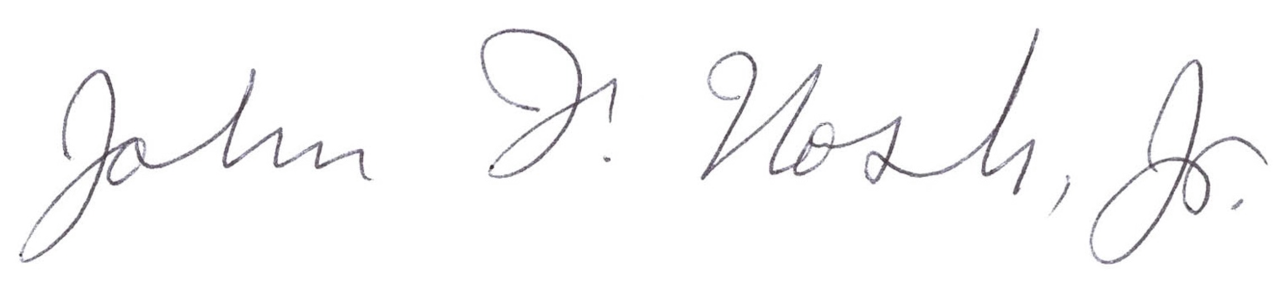
Signature of John Forbes Nash
John Forbes Nash



Free account
Read every John Forbes Nash Jr. source
Sign up free →
Ready when you are
Start chatting with John Forbes Nash Jr. now.
20 messages free · No credit card · Available in 50+ languages.