


Primary sourceBook428 BCE
Hippolytus
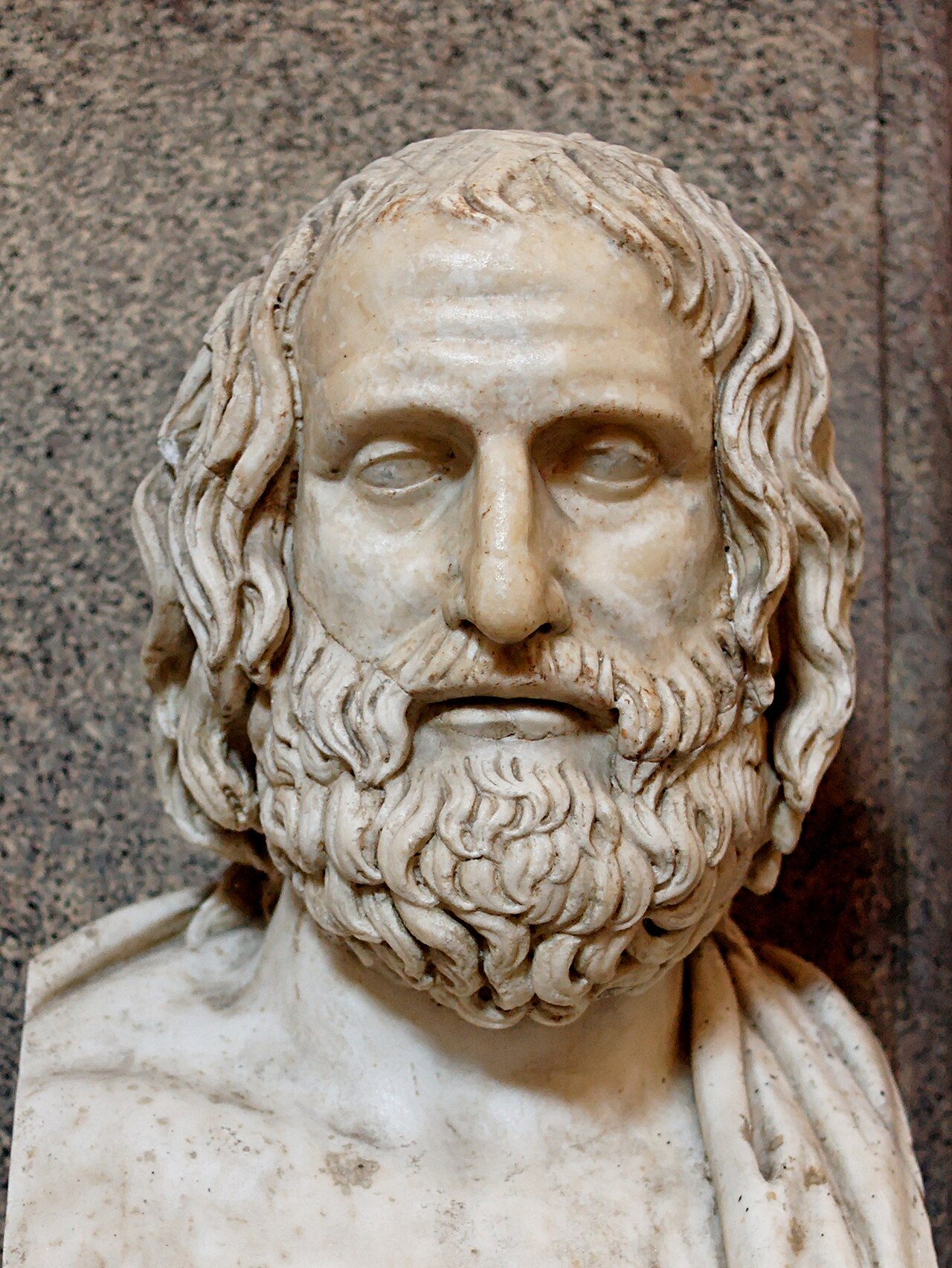
Euripides · 428 BCE
A tragedy by Euripides about Phaedra's destructive and forbidden desire for her stepson, which won first prize in Athens.
This first-prize revision shows Euripides' psychological study of Phaedra's destructive desire.
Free Humy account · No credit card · 120,912 sources to read
About this source
What it is
Hippolytus is a tragedy by Euripides, first performed at the City Dionysia of Athens in 428 BCE, where it won first prize as part of a trilogy. It is Euripides' second treatment of the myth, after an earlier, now-lost version that may have offended audiences with its portrayal of Phaedra.
Why it matters
The surviving version shows Phaedra actively resisting the desire for her stepson Hippolytus that the goddess Aphrodite has forced upon her, rather than simply giving in to it. This revision suggests Euripides responded carefully to how his earlier work was received, and the play is valued as an early, detailed study of inner psychological conflict rather than simple divine punishment. It also shows the gods Aphrodite and Artemis directly shaping human lives, reflecting Greek ideas about fate and desire.
Look closer
- Why might Euripides have rewritten this story after an earlier version failed to please audiences?
- What does Phaedra's struggle against her own feelings suggest about how Euripides portrayed human emotion?
- How does the play use gods like Aphrodite and Artemis to frame human responsibility for tragic events?
This book is part of the curated material that grounds the AI version of Euripides on Humy.ai — when students ask about related events, the AI can quote it and cite it.


Ready when you are
Start chatting with Euripides now.
20 messages free · No credit card · Available in 50+ languages.