


Primary sourceDocument1936
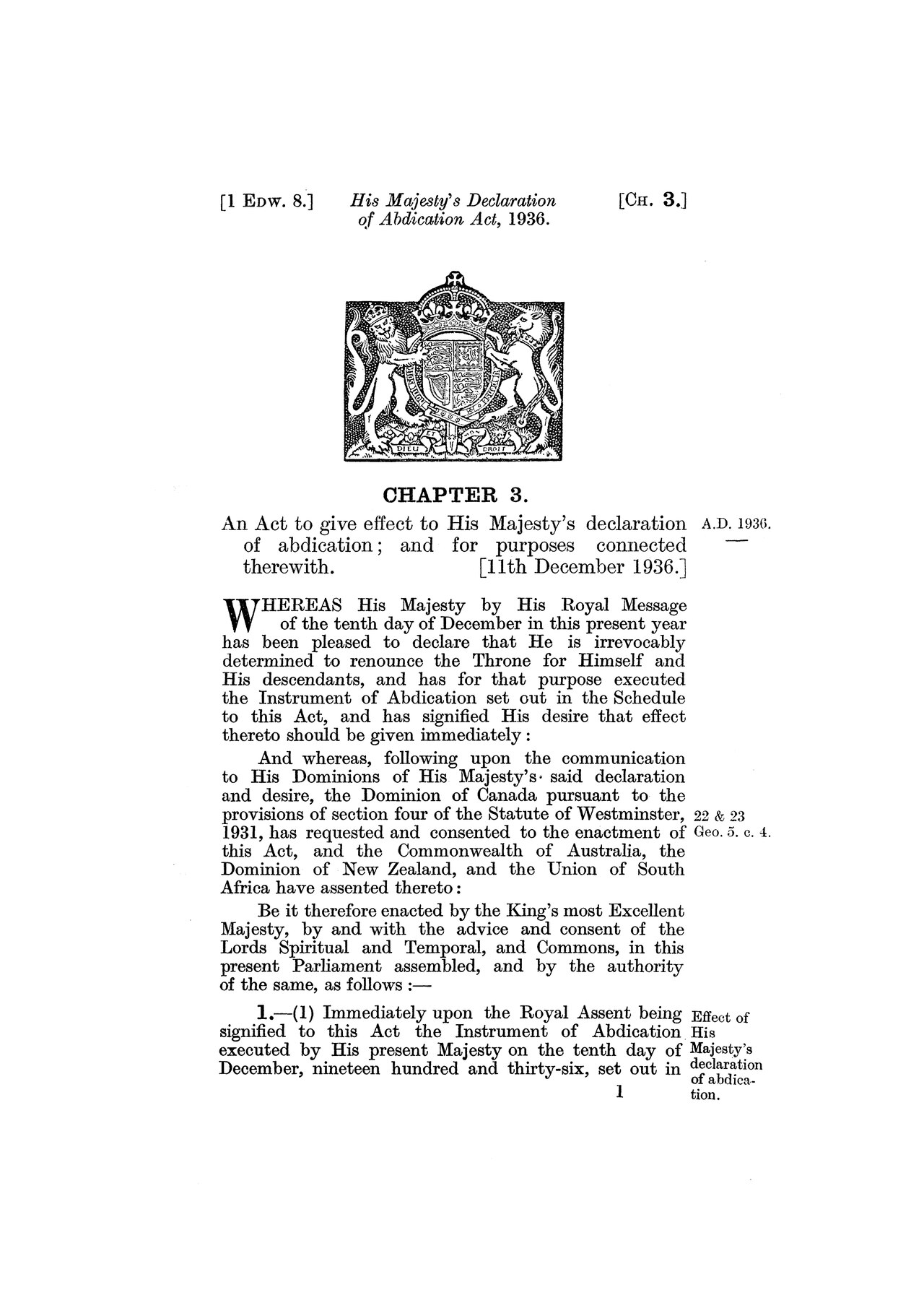
His Majesty's Declaration of Abdication Act 1936
1936
The Act of Parliament that gave legal force to Edward VIII's abdication and passed the crown to his brother George VI.
This Act legally ended Edward VIII's reign and formalised the succession after his abdication.
Free Humy account · No credit card · 65,431 sources to read
About this source
What it is
This is an Act of the Parliament of the United Kingdom, passed on 11 December 1936, which recognised and ratified Edward VIII's abdication and placed his brother George VI on the throne. It also barred any future descendants of Edward from the line of succession. The bill was introduced by Prime Minister Stanley Baldwin and supported by opposition leader Clement Attlee.
Why it matters
The Act shows that a British monarch could not simply walk away from the throne by personal declaration alone; Parliament, and the Dominions under the Statute of Westminster, had to formally agree. An amendment by MP James Maxton to abolish the monarchy instead was heavily defeated, showing strong support for the monarchy's continuation despite the crisis.
Look closer
- Why did governments across the Dominions need to give their consent for this Act to take effect?
- What does the near-unanimous defeat of Maxton's republican amendment suggest about public and political opinion at the time?
- What does this legal document tell you that Edward's own declaration could not do by itself?
This document is part of the curated material that grounds the AI version of Edward VIII on Humy.ai — when students ask about related events, the AI can quote it and cite it.
More Edward VIII sources
Browse all 99 →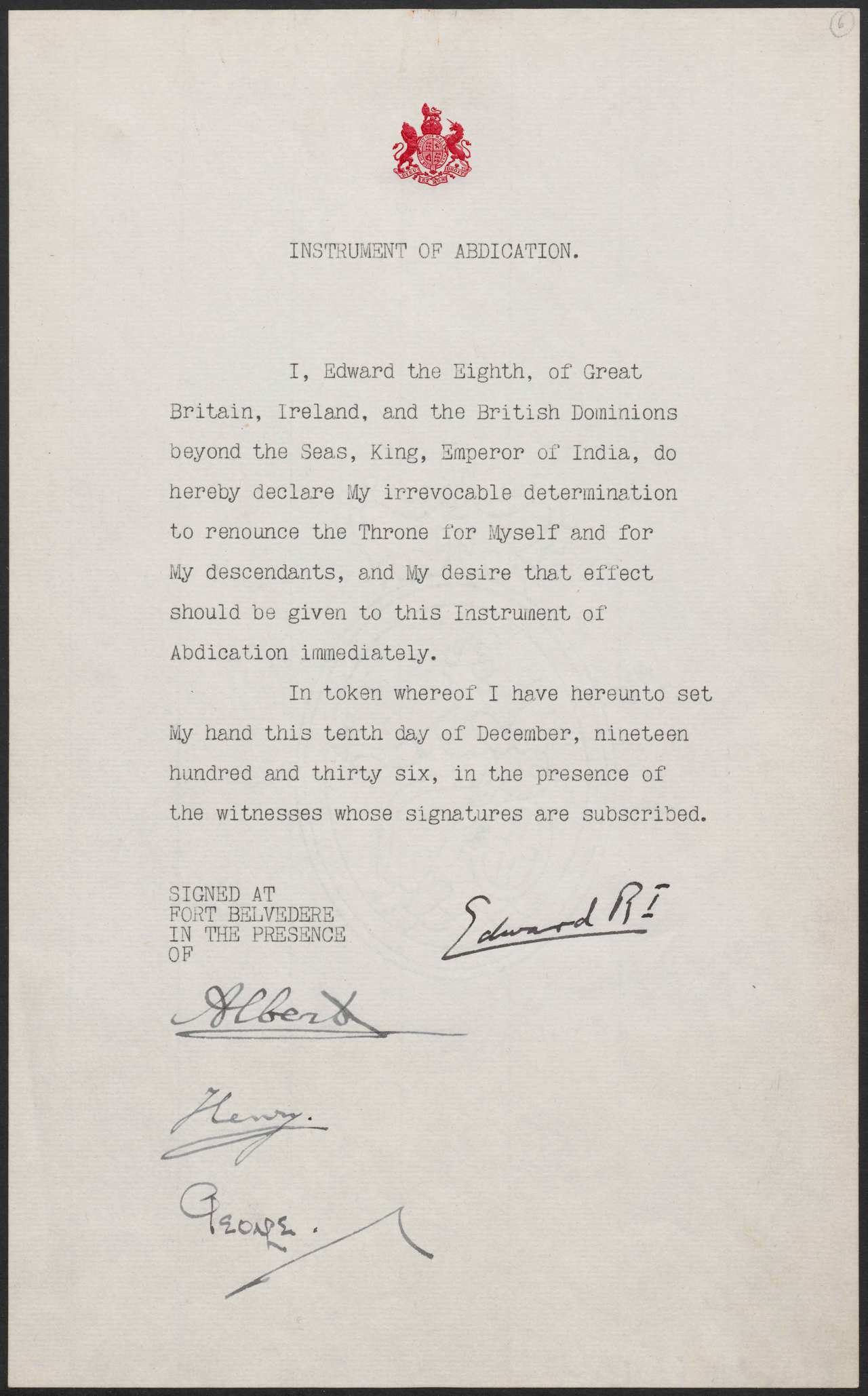 Document
Primary source
Instrument of Abdication of King Edward VIII
Edward VIII · 10 December 1936
Primary source
Edward VIII's abdication speech
Edward VIII · 1936
Primary source
Recording of the voice of Edward VIII
Edward VIII · 1936
 Photograph
Primary source
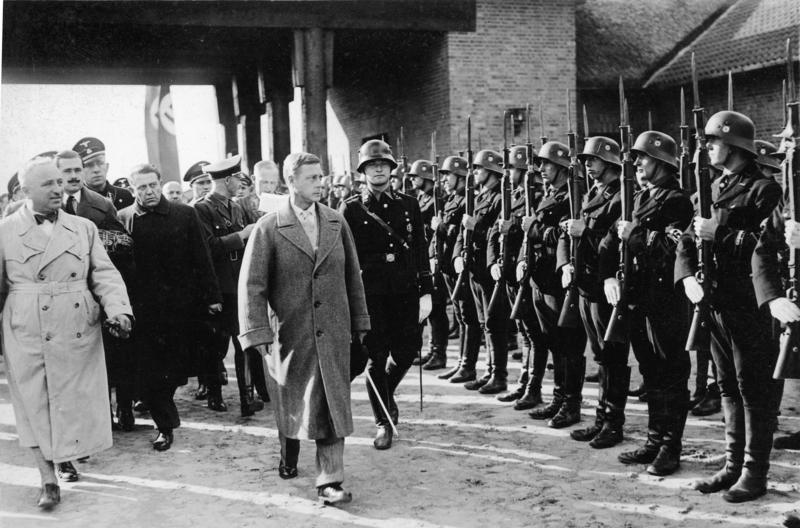
The Duke of Windsor at Ordensburg Krössinsee
Georg Pahl · 13 October 1937
Free account
Read every Edward VIII source
Sign up free →
Ready when you are
Start chatting with Edward VIII now.
20 messages free · No credit card · Available in 50+ languages.