


Primary sourceArtifactDecember 1858
Hoch tut euch auf (Lift Up Your Heads)
Friedrich Wilhelm Nietzsche · December 1858
A modern audio recording of a motet Nietzsche wrote for his family in December 1858, for four-part choir a cappella.
Shows Nietzsche writing choral music for his family as a young man, using a German text he found in Handel's Messiah.
About this source
What it is
This is an audio recording of Hoch tut euch auf, known in English as Lift Up Your Heads. The catalogue record describes it as a motet for four-part choir a cappella, written in December 1858 for Nietzsche's family. The record notes that the original version consisted of separate parts that did not always fit together, so a version for chorus alone was made. The text is Psalm 24, verse 7, in the German translation Nietzsche found in Handel's Messiah. The recording is a modern performance, not a recording from his lifetime.
Why it matters
The motet shows Nietzsche writing sacred music for his family, which was part of his home musical life as a young man. The record notes that he did not always finish a piece the way he began it, a habit that appears in his later works too. The shift from G major to E major gives special emphasis to the festive words of the text. The work links his youthful music to the German choral tradition he knew.
Look closer
- How does the change from G major to E major affect the mood of the words about lifting heads and opening gates?
- Why might a family want a choral piece written for them, and who would have sung it?
- The record says the original parts did not always fit together. What problems might that cause, and how did the later version solve them?
This artifact is part of the curated material that grounds the AI version of Friedrich Nietzsche on Humy.ai — when students ask about related events, the AI can quote it and cite it.
More Friedrich Nietzsche sources
Meet the AI Friedrich Nietzsche →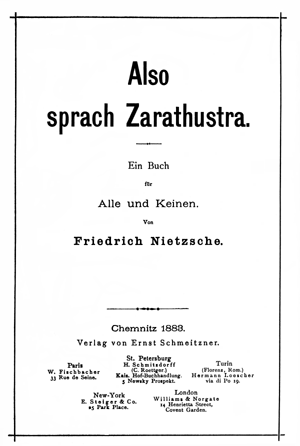 Book
Primary source
Thus Spoke Zarathustra
Friedrich Nietzsche · 1883-1885
 Book
Primary source
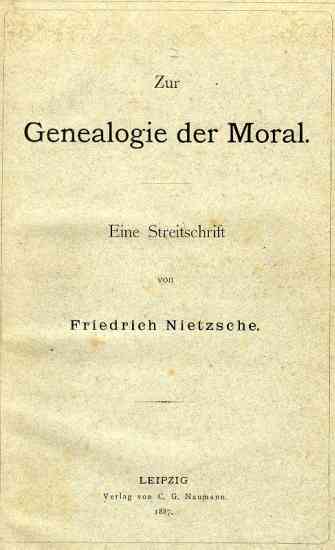
On the Genealogy of Morality
Friedrich Nietzsche · 1887
 Book
Primary source
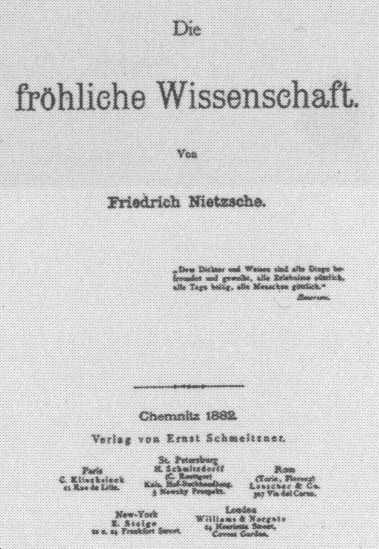
The Gay Science
Friedrich Nietzsche · 1882
 Book
Primary source
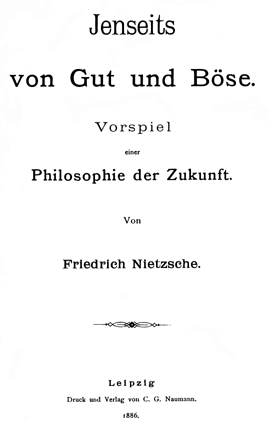
Beyond Good and Evil
Friedrich Nietzsche · 1886
 Book
Primary source
The Birth of Tragedy
Friedrich Nietzsche · 1872
Ready when you are
Start chatting with Friedrich Nietzsche now.
20 messages free · No credit card · Available in 50+ languages.