


Secondary sourceArtifact1070s, present form c. late 12th century
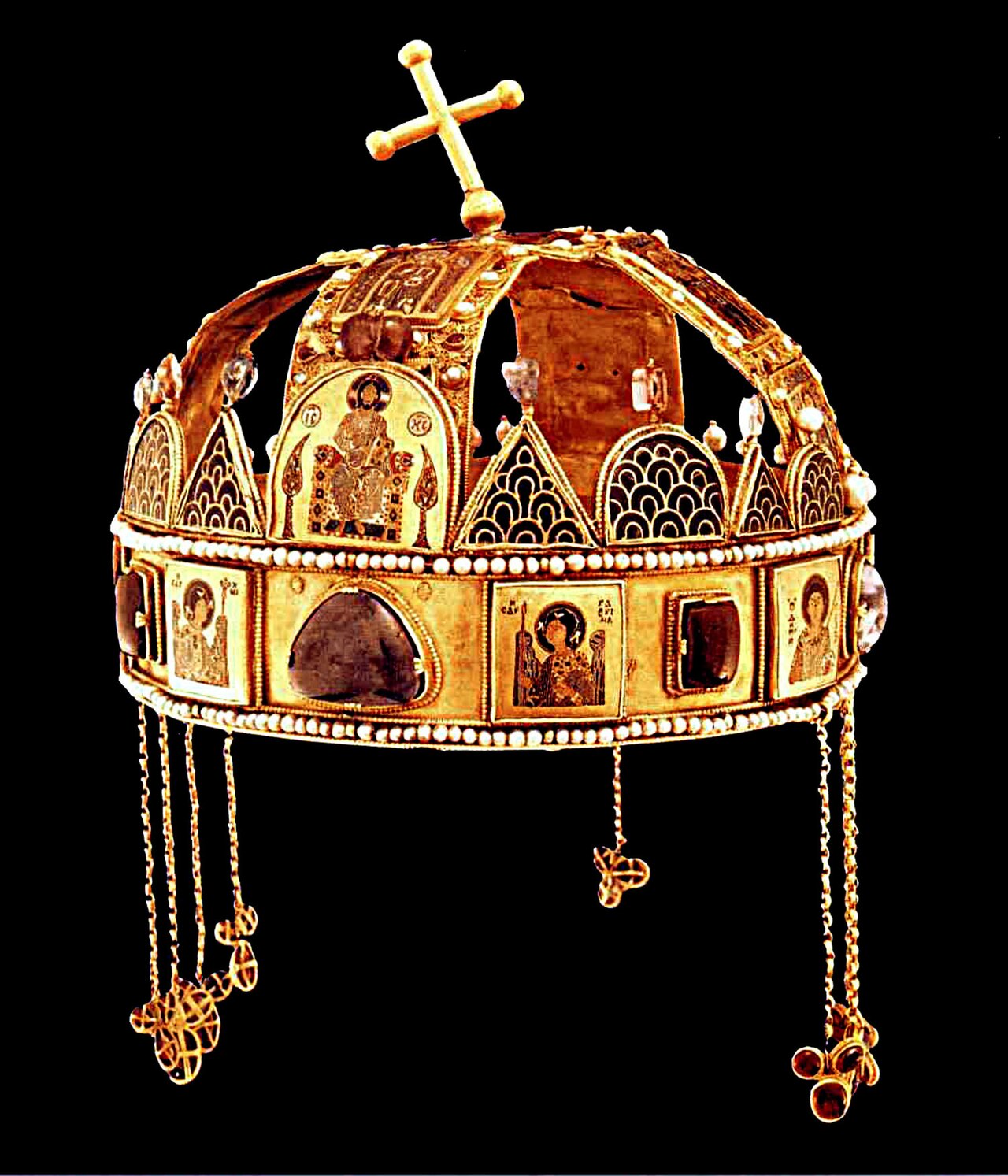
Holy Crown of Hungary
1070s, present form c. late 12th century
The coronation crown of the Kingdom of Hungary, popularly known as Saint Stephen's Crown though made long after his reign.
Though made after his death, it was venerated as Stephen's Crown and symbolized the legitimacy of the state he founded.
Free Humy account · No credit card · 65,431 sources to read
About this source
What it is
The Holy Crown is the historic coronation crown used for most of Hungary's existence, with more than fifty kings crowned wearing it from the 12th century onward, the last in 1916. Its enamels are mainly Byzantine work probably made in Constantinople in the 1070s and given to King Géza I, with the crown's present form dated to around the late 12th century. It is now displayed in the Hungarian Parliament Building.
Why it matters
Although it postdates Stephen's reign, the crown became known as "Saint Stephen's Crown" and was believed to descend from him, making it the central symbol that legitimacy of Hungarian kingship flowed from Stephen's founding reign. A later doctrine even held the crown itself to be a legal person superior to any monarch.
Look closer
- Why might Hungarians want to connect a 12th-century object to a king who lived earlier?
- What does it mean for an object to represent an idea of statehood rather than just a king's head size?
- How does the legend of the crown differ from what historians and scientists have found about its origin?
This artifact is part of the curated material that grounds the AI version of Stephen I of Hungary, Matthias Corvinus and Béla IV of Hungary on Humy.ai — when students ask about related events, the AI can quote it and cite it.
More Stephen I of Hungary sources
Browse all 93 →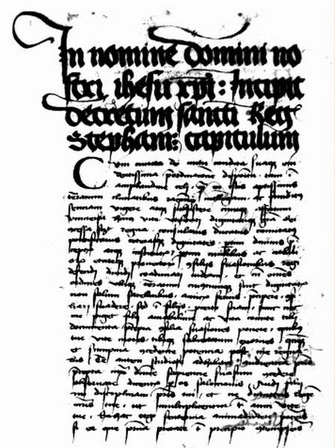 Book
Secondary source
Admonitions
Unknown (traditionally attributed to Stephen I of Hungary) · 1010s or 1020s
 Book
Secondary source
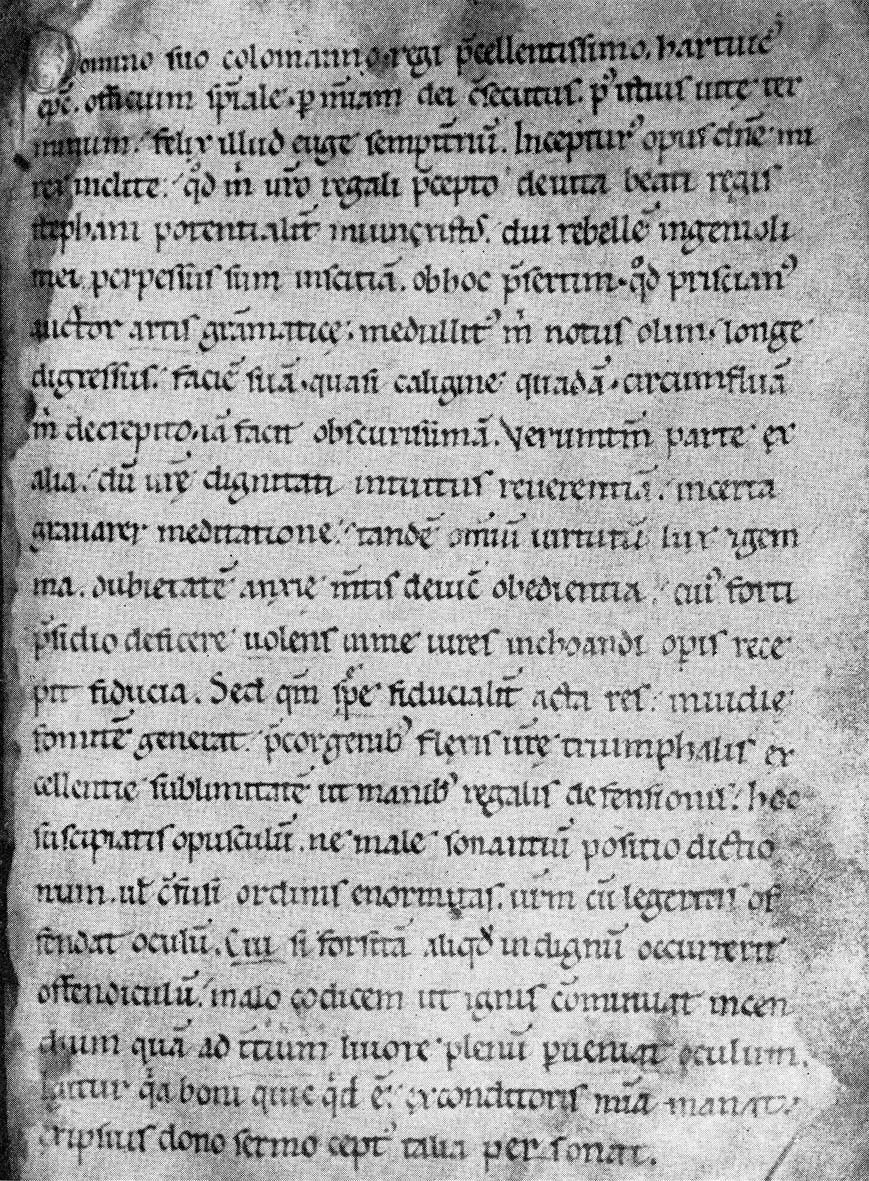
Legend of Saint Stephen by Hartvik
Bishop Hartvik · 12th century
 Book
Secondary source
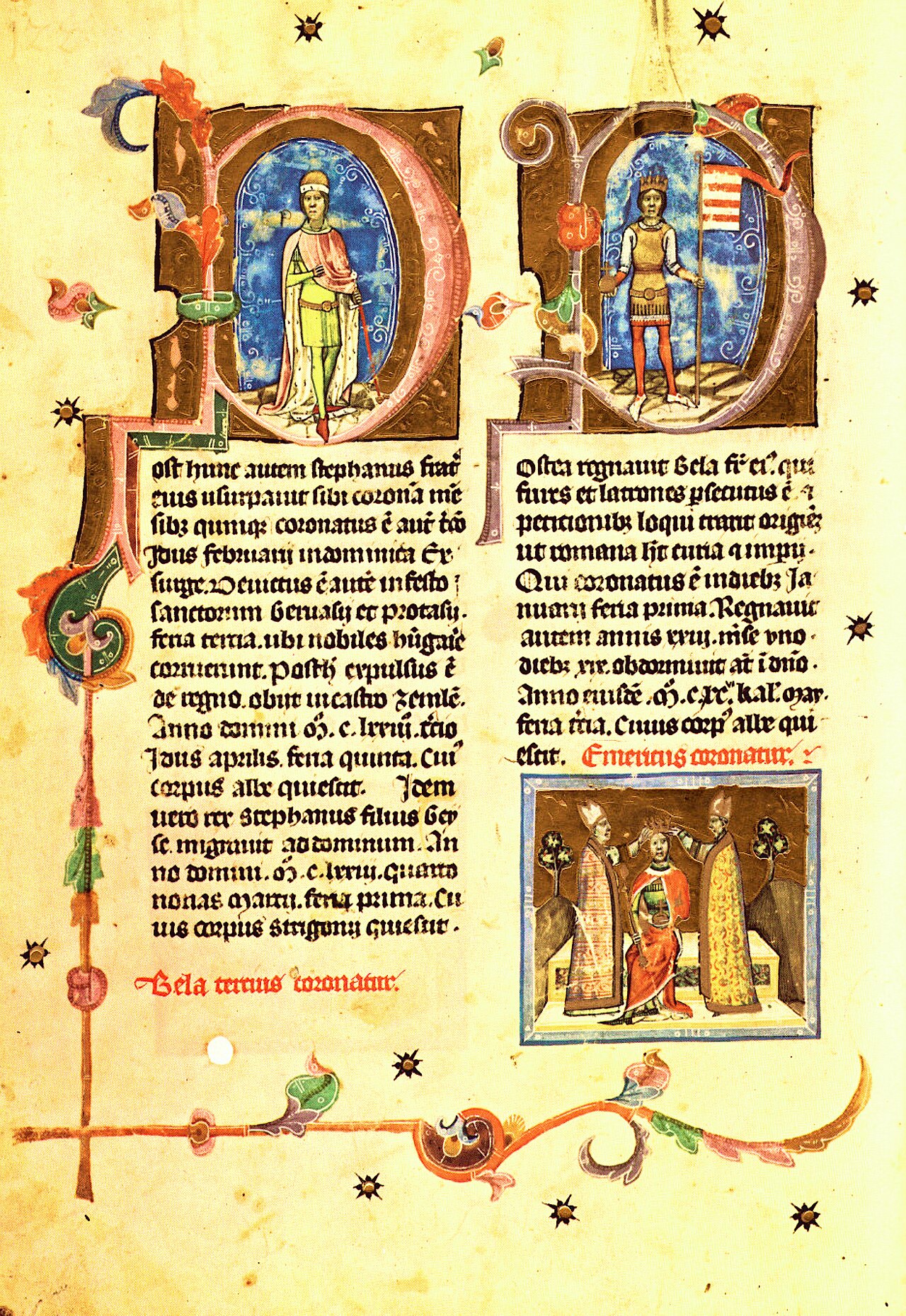
Chronicon Pictum
Márk Kálti · after 1358, no later than 1370
 Document
Primary source
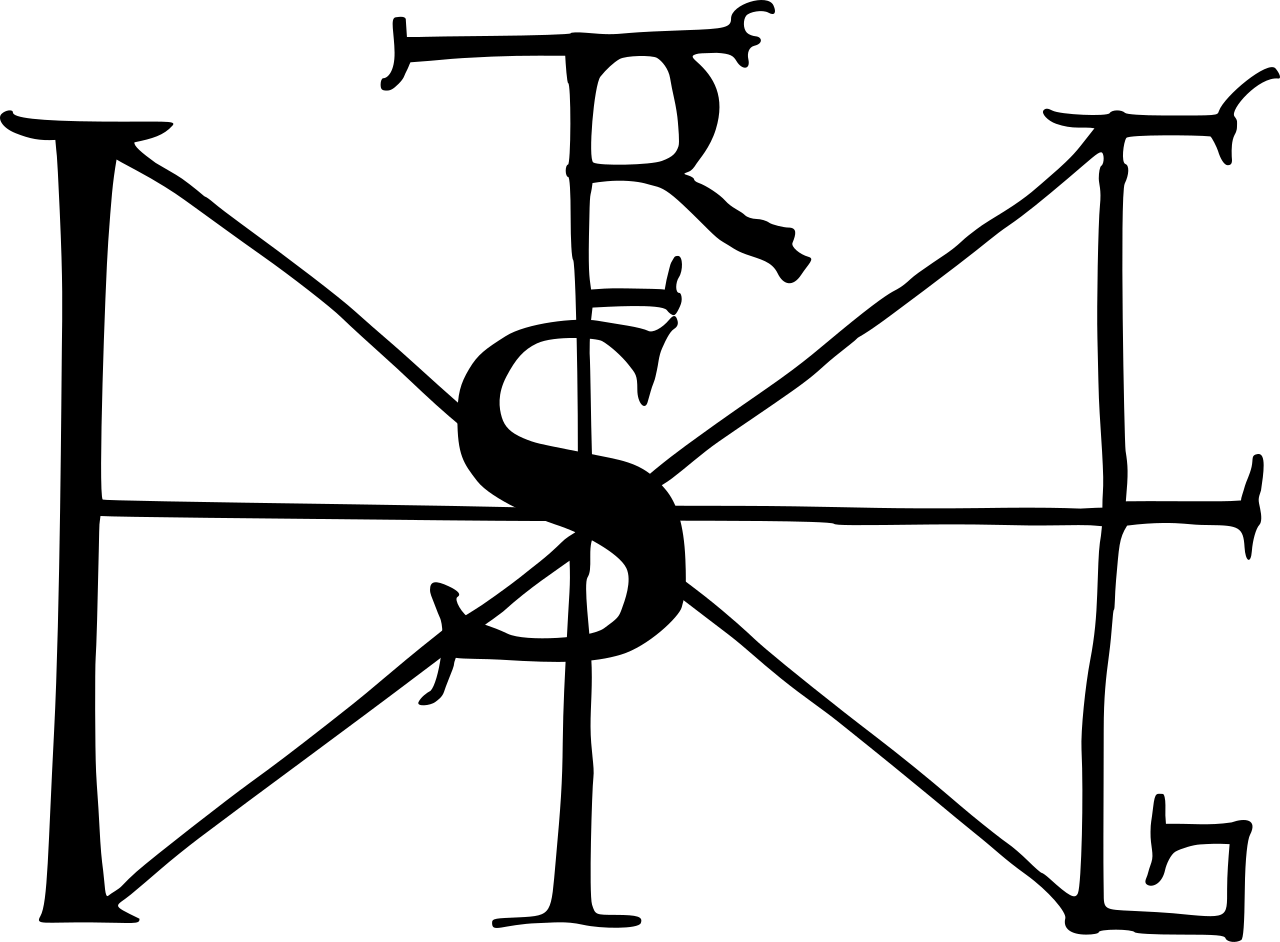
Signature of Stephen I of Hungary
Stephen I of Hungary

Free account
Read every Stephen I of Hungary source
Sign up free →
Ready when you are
Start chatting with Stephen I of Hungary now.
20 messages free · No credit card · Available in 50+ languages.