


Secondary sourceArtifact1802
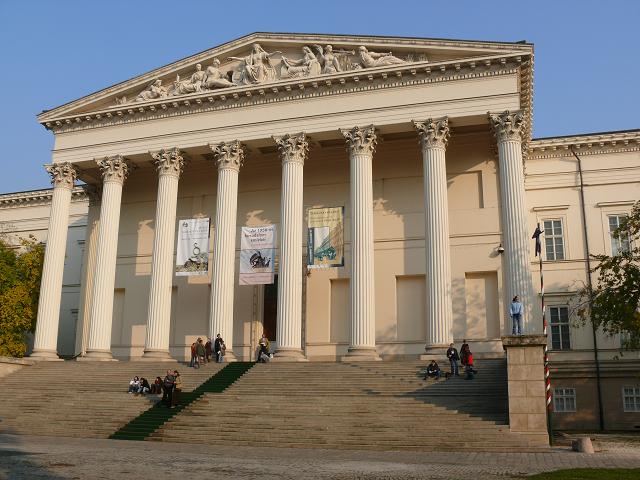
Hungarian National Museum
Mihály Pollack · 1802
The Budapest museum whose steps were the site of the 1848 rally where Petőfi's National Song and the Twelve Points were proclaimed.
Petőfi proclaimed his National Song and the Twelve Points on the museum's steps on 15 March 1848, sparking the revolution.
About this source
What it is
The Hungarian National Museum is a neoclassical building in Budapest, designed by architect Mihály Pollack and built between 1837 and 1847. It holds collections on Hungarian history, art and archaeology.
Why it matters
On 15 March 1848, a mass rally took place on the museum's steps where Sándor Petőfi's poem 'Nemzeti dal' (National Song) and the Twelve Points were proclaimed, a key moment that helped spark the Hungarian Revolution. The museum's first director, Ágoston Kubinyi, later protected the original manuscript of the poem during the War of Independence. Statues of Petőfi and his friend János Arany were later added to the museum in memory of these events.
Look closer
- Why might the steps of a museum become the stage for a revolutionary gathering?
- What does the later addition of statues to the building tell us about how Hungary remembers 1848?
- What role did ordinary people play in the events that happened here, beyond Petőfi himself?
This artifact is part of the curated material that grounds the AI version of Sándor Petőfi on Humy.ai — when students ask about related events, the AI can quote it and cite it.
More Sándor Petőfi sources
Meet the AI Sándor Petőfi →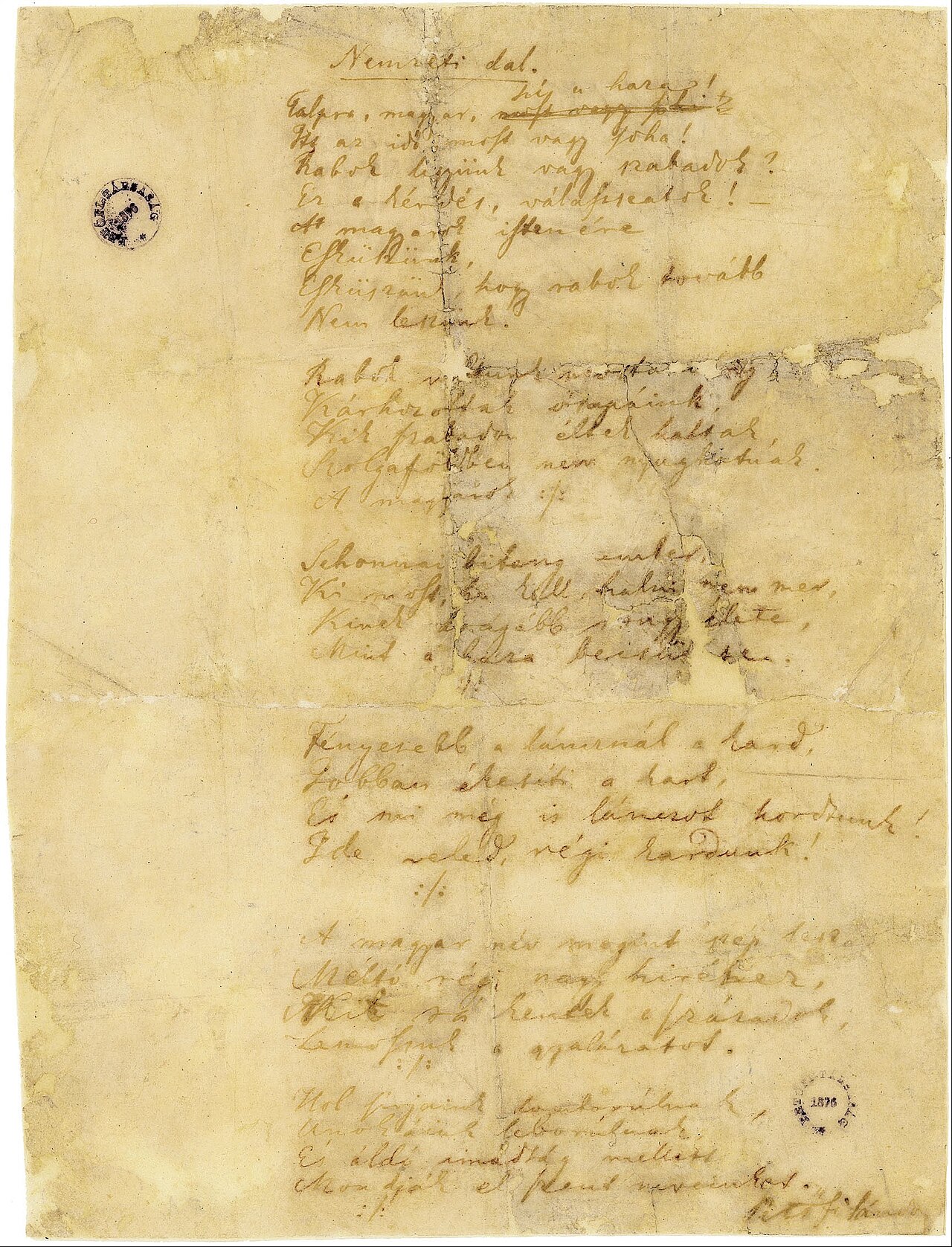 Book
Primary source
Nemzeti dal
Sándor Petőfi · 13 March 1848
 Document
Primary source
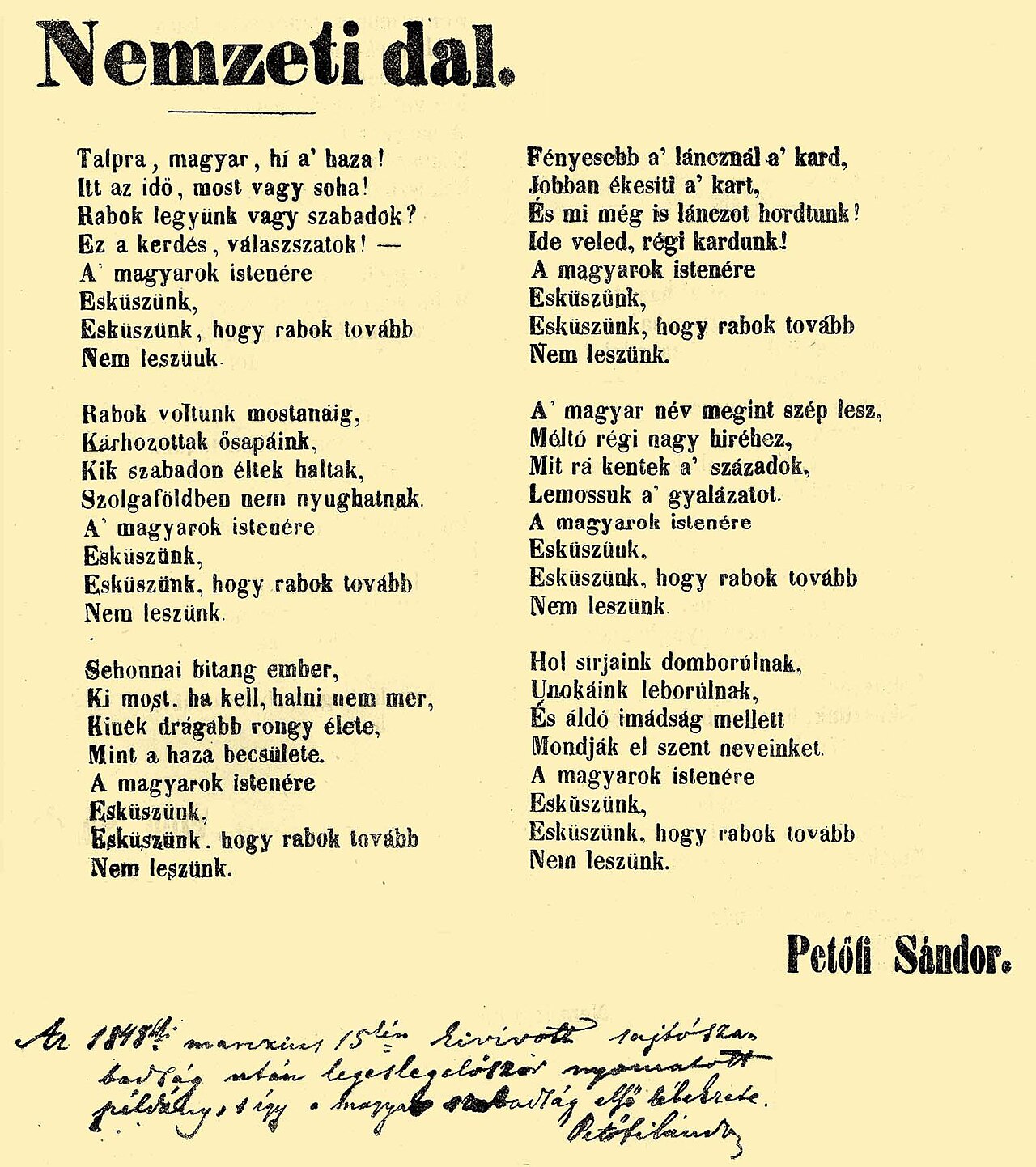
Nemzetidal broadside
Sándor Petőfi · 15 March 1848
 Book
Primary source
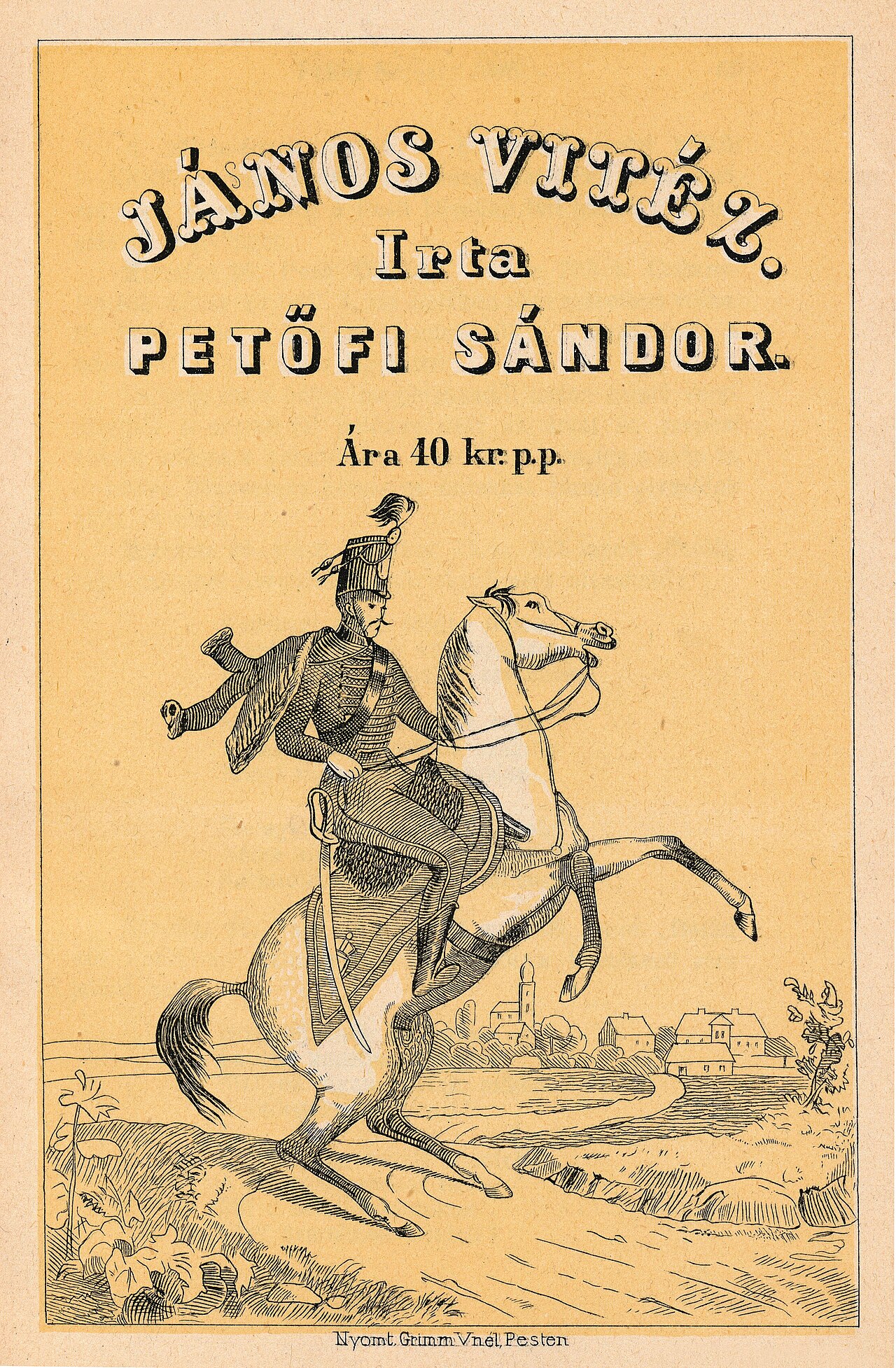
János vitéz
Sándor Petőfi · 1845 (written 1844)
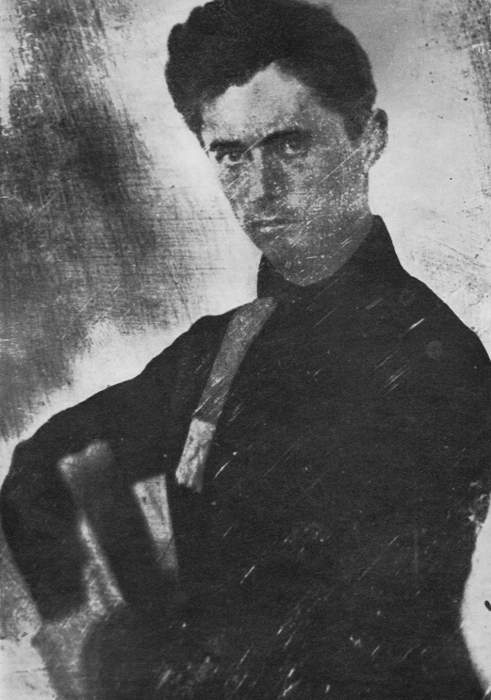 Photograph
Primary source
Sándor Petőfi
Gábor Egressy · 1844
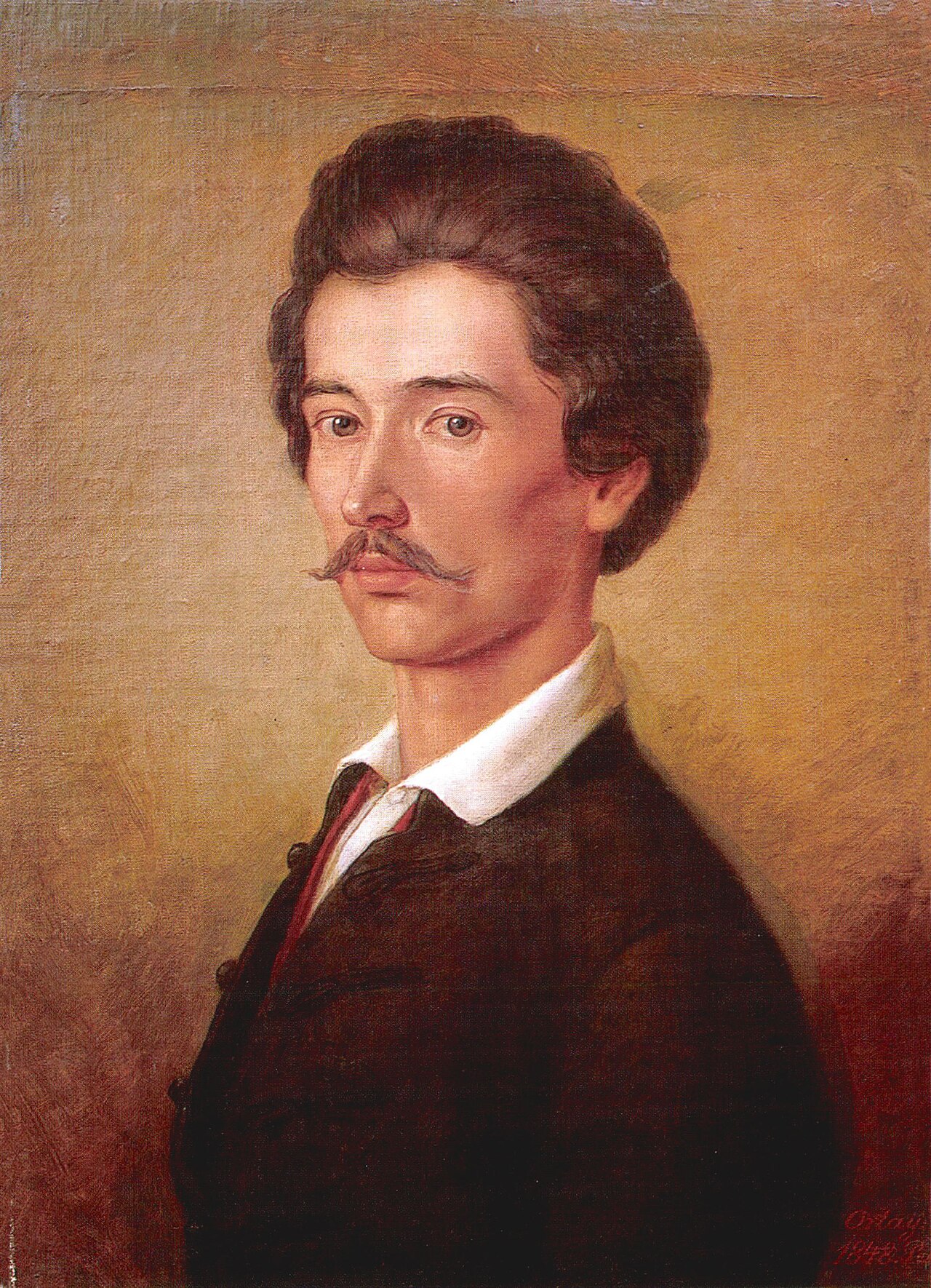 Painting
Primary source
Portrait of Sándor Petőfi
Orlai Petrich Soma
Ready when you are
Start chatting with Sándor Petőfi now.
20 messages free · No credit card · Available in 50+ languages.