


Secondary sourceArtifact1930 (tablet); house built c. 1687
Hutchinson House, Garden Court Street
1930 (tablet); house built c. 1687
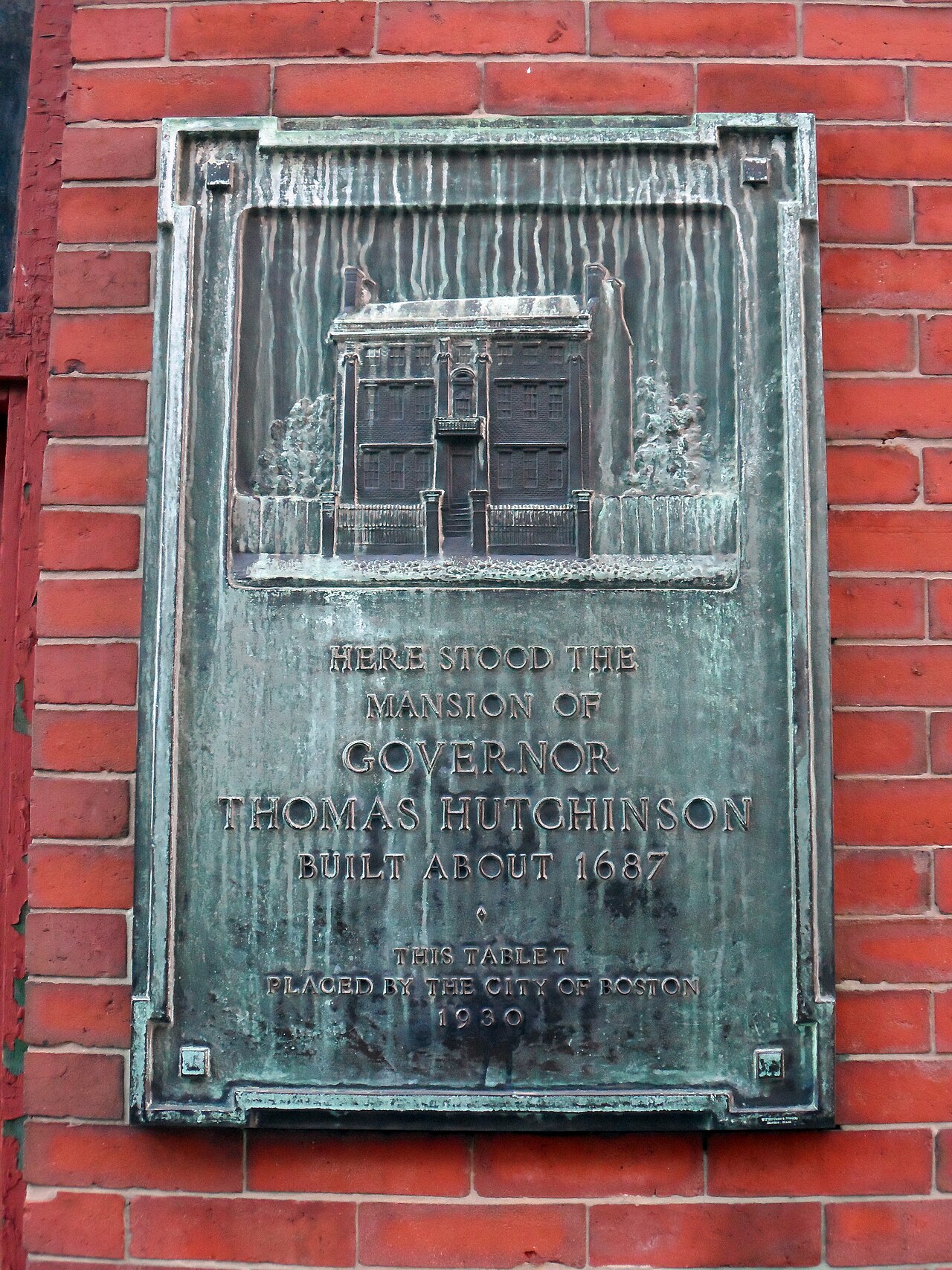
A commemorative tablet marking the site of Thomas Hutchinson's North End mansion, destroyed by a Stamp Act mob in 1765.
Marks the site of Hutchinson's own mansion, destroyed by a mob protesting his loyalty to Britain.
About this source
What it is
This bronze tablet, placed by the City of Boston in 1930, marks the site of a mansion built around 1687 in Boston's North End. The house belonged to Governor Thomas Hutchinson and stood until its destruction.
Why it matters
In 1765, during protests against the Stamp Act, a mob attacked and gutted Hutchinson's house, scattering his belongings and papers. The attack showed how deeply unpopular Hutchinson had become as a symbol of royal authority in Massachusetts. The house itself was later demolished in 1833, so this tablet is the only marker of where it stood.
Look closer
- Why would the city choose to commemorate this site over 150 years later?
- What does the destruction of a governor's house tell you about public anger in colonial Boston?
- What is missing from a plaque that a photograph of the actual event might show?
This artifact is part of the curated material that grounds the AI version of Thomas Hutchinson on Humy.ai — when students ask about related events, the AI can quote it and cite it.
More Thomas Hutchinson sources
Meet the AI Thomas Hutchinson → Letter
Primary source
Hutchinson–Whately Letters
Thomas Hutchinson · 1767–1769 (published 1773)
 Book
Primary source
The History of the Colony and Province of Massachusetts-Bay
Thomas Hutchinson · 1764, 1767, 1828
 Painting
Primary source
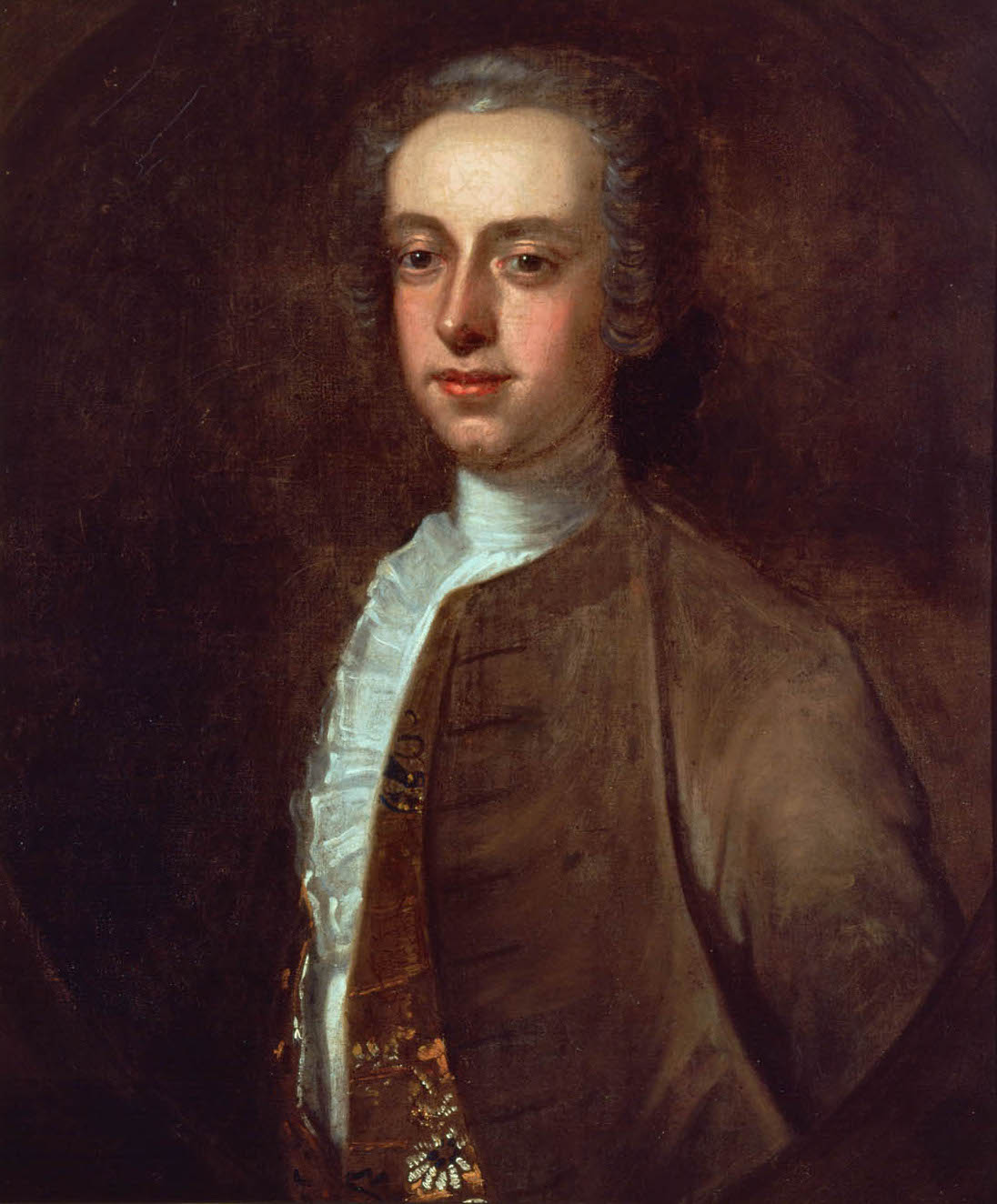
Portrait of Thomas Hutchinson
Edward Truman · 1741
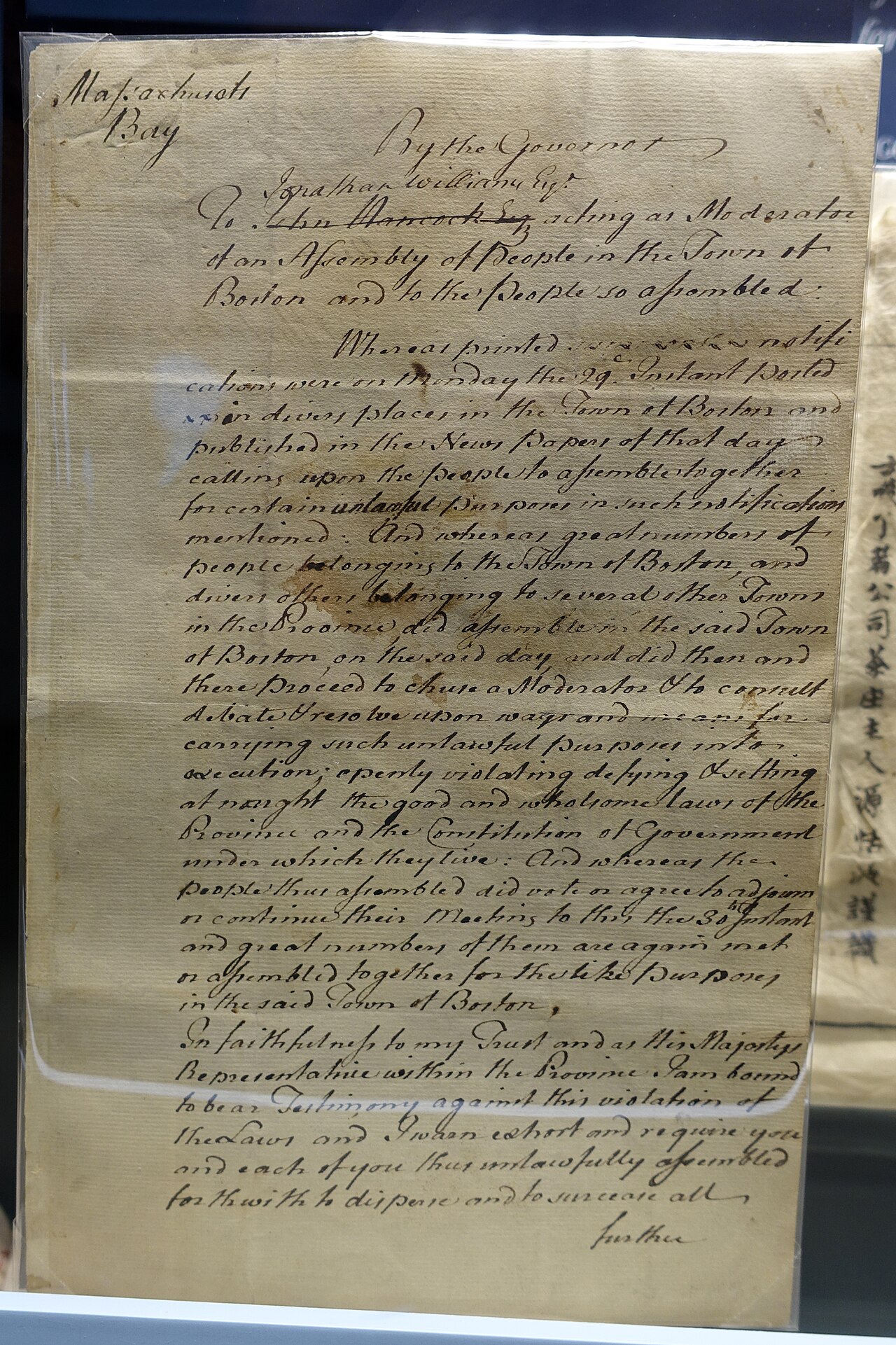 Document
Primary source
Letter Directing the Old South Tea Meeting to Adjourn
Thomas Hutchinson · November 30, 1773
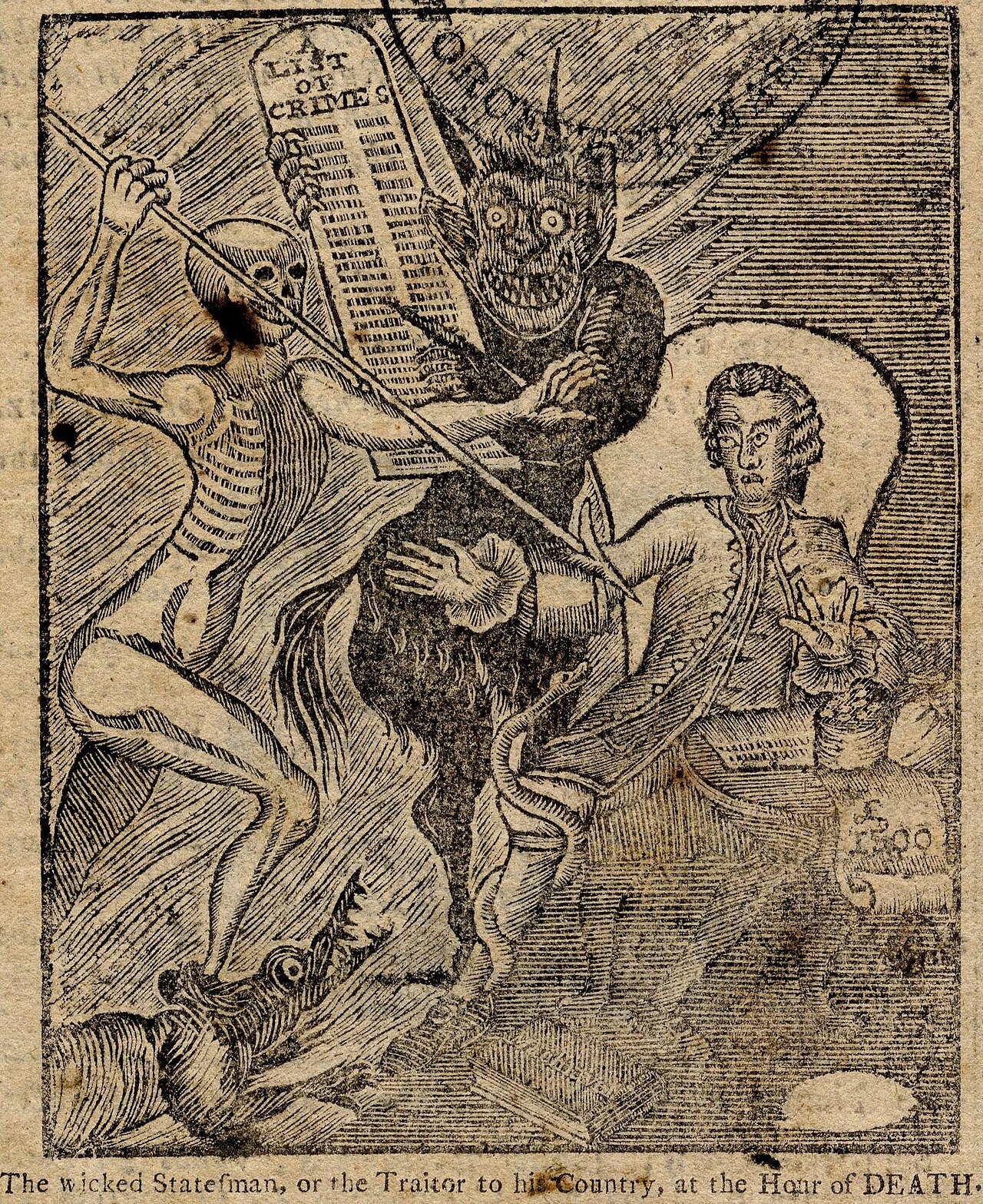 Painting
Primary source
The Wicked Statesman political cartoon
Paul Revere · published 1774
Ready when you are
Start chatting with Thomas Hutchinson now.
20 messages free · No credit card · Available in 50+ languages.