


Primary sourceDocument10 July 1657
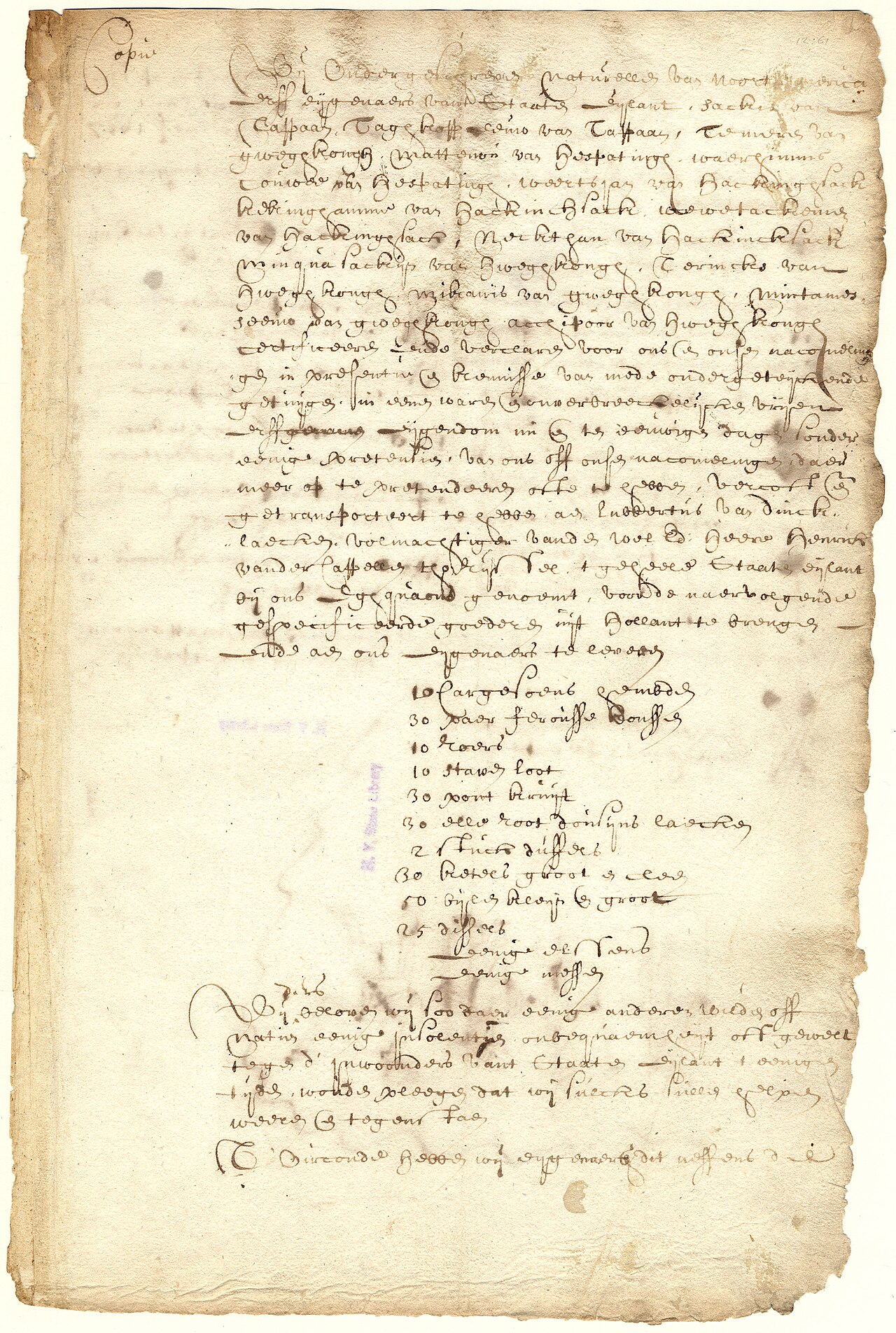
Indian Deed to Lubbertus van Dincklage for Staten Island
Lubbertus van Dincklage · 10 July 1657
A 1657 Dutch manuscript deed recording the purchase of Staten Island from Native Americans, part of the New Netherland colonial world Hutchinson's family lived in.
This land deed reflects the New Netherland colonial world connected to the region where Hutchinson's family later lived.
About this source
What it is
This is the first part of a handwritten Dutch deed, dated 10 July 1657, recording the transfer of Staten Island—called Eghquaons by its Native inhabitants—to Lubbertus van Dincklage, acting as attorney for Henrick van der Capelle tho Ryssel. The document includes a small drawing of Native Americans and a Dutch settler smoking a pipe.
Why it matters
The deed shows how Dutch colonists acquired land from Native peoples in the region around New Netherland, the broader colonial world connected to Anne Hutchinson's later life after her banishment from Massachusetts. It is a primary record of the land transactions that reshaped the area.
Look closer
- What does the small drawing tell you about how the Dutch recorder viewed the Native people in the transaction?
- Whose voice is missing from a deed written entirely in Dutch?
- Why might such land deeds matter for understanding colonization in this period?
This document is part of the curated material that grounds the AI version of Anne Hutchinson on Humy.ai — when students ask about related events, the AI can quote it and cite it.
More Anne Hutchinson sources
Meet the AI Anne Hutchinson → Book
Primary source
A Short Story of the Rise, Reign, and Ruin of the Antinomians, Familists & Libertines
John Winthrop · 1644
 Diary entry
Primary source
Journal of John Winthrop
John Winthrop · 1630–1649
 Document
Primary source
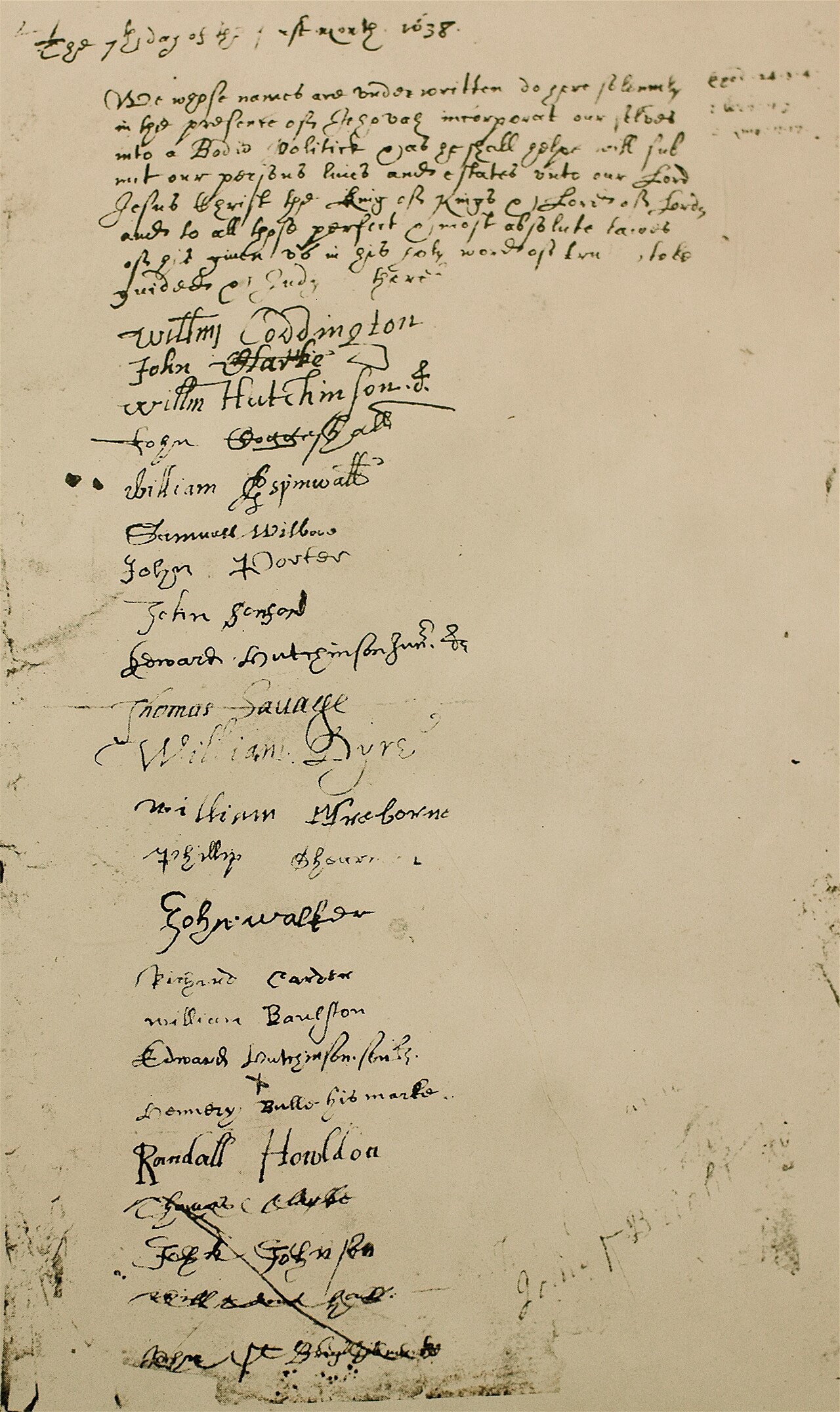
Portsmouth Compact
William Coddington, William Hutchinson and others · 7 March 1638
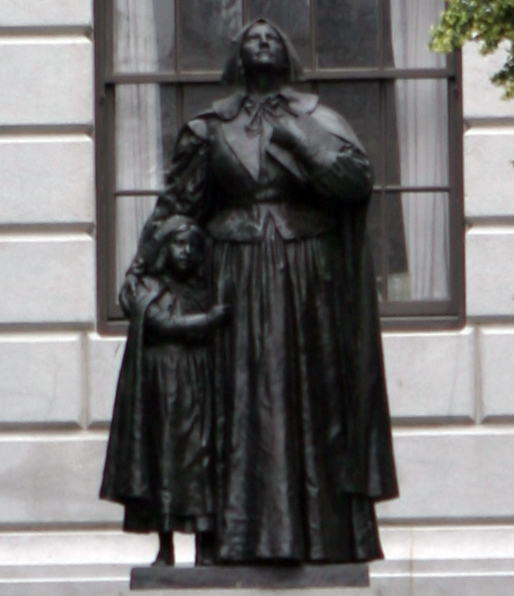 Sculpture
Secondary source
Statue of Anne Hutchinson
Cyrus Edwin Dallin · 1915 (dedicated 1922)
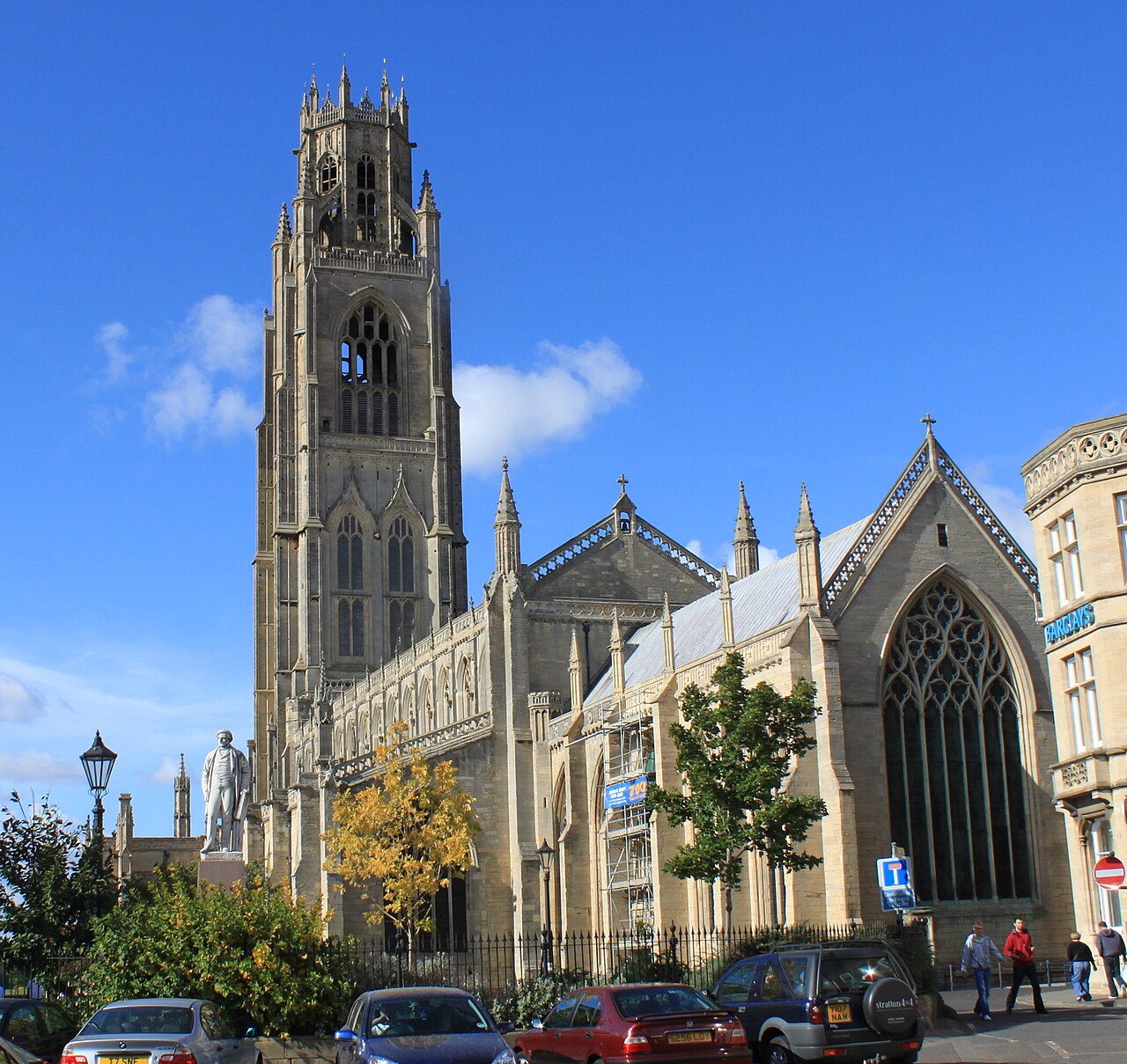 Artifact
Secondary source
St Botolph's Church, Boston
begun 1309
Ready when you are
Start chatting with Anne Hutchinson now.
20 messages free · No credit card · Available in 50+ languages.