


Primary sourceDocument8 December 1987
Intermediate-Range Nuclear Forces Treaty
8 December 1987
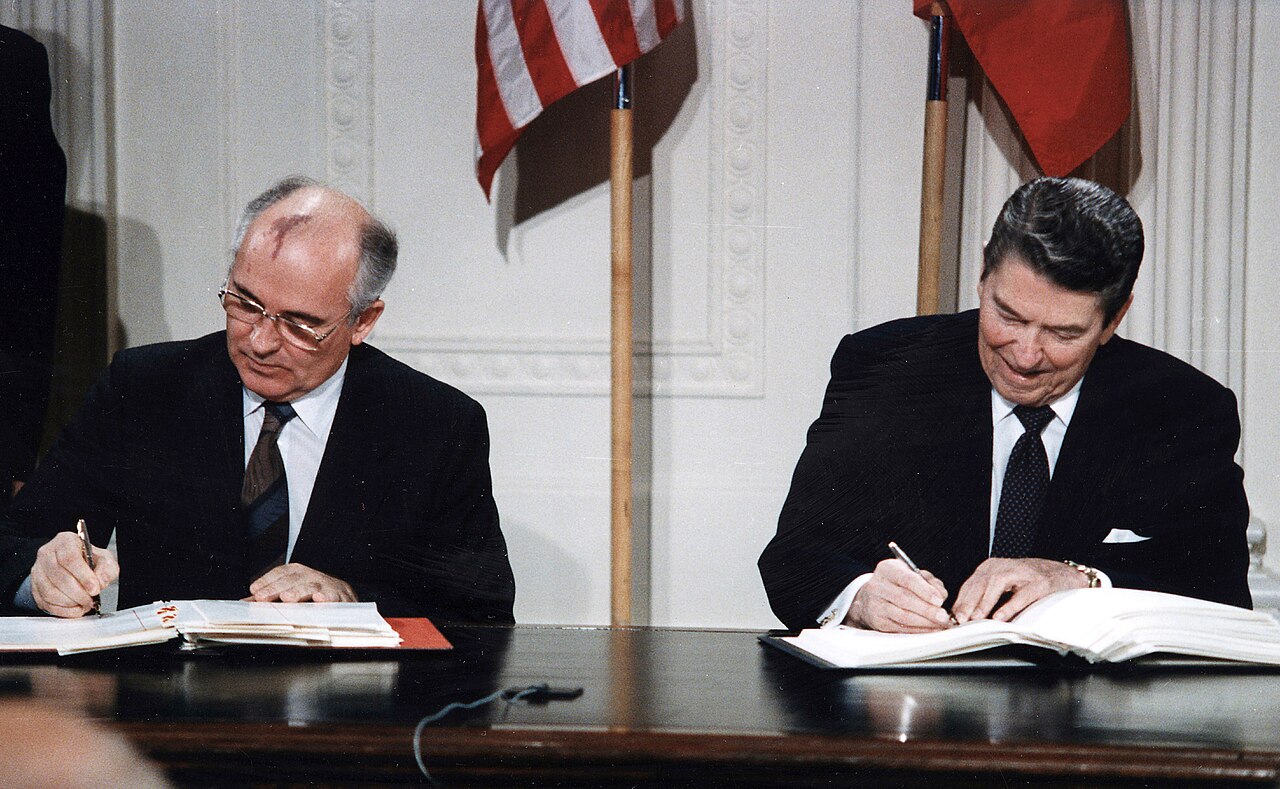
The 1987 arms control treaty signed by Reagan and Gorbachev, eliminating a whole class of nuclear missiles.
Powell, as National Security Advisor, helped manage follow-up to this treaty with the Soviet Union.
About this source
What it is
The Intermediate-Range Nuclear Forces Treaty was signed on 8 December 1987 by US president Ronald Reagan and Soviet General Secretary Mikhail Gorbachev. It banned ground-launched ballistic and cruise missiles with ranges of 500 to 5,500 kilometers. The US Senate approved it in May 1988, and both leaders ratified it in June 1988.
Why it matters
The treaty led to the elimination of thousands of missiles and years of on-site inspections, marking a turning point from the nuclear buildup of the early 1980s toward negotiation between the superpowers. It shows the personal relationship that developed between Reagan and Gorbachev and their shared willingness to reduce nuclear arsenals after years of tension.
Look closer
- What does the image of the two leaders signing together suggest about their relationship by 1987?
- Why might it have taken years of negotiation to reach this point?
- What does a treaty like this not tell us about ordinary people living through the Cold War?
This document is part of the curated material that grounds the AI version of Colin Powell and Ronald Reagan on Humy.ai — when students ask about related events, the AI can quote it and cite it.
More Colin Powell sources
Meet the AI Colin Powell →Primary source
Address to the United Nations Security Council on Iraq
Colin Powell · 5 February 2003
Primary source
Authorization for Use of Military Force Against Iraq Resolution of 2002
United States Congress · 2002
Primary source
United Nations Security Council Resolution 1441
United Nations Security Council · 8 November 2002
 Artifact
Primary source
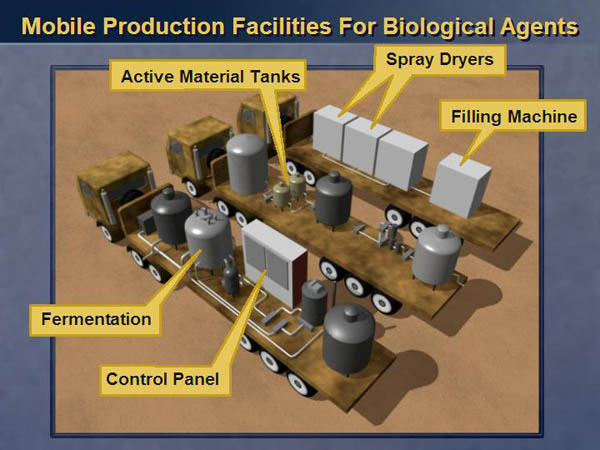
Mobile weapons laboratory slide
Colin Powell · 5 February 2003
 Document
Primary source
Senate confirmation hearing of Colin Powell as Secretary of State
U.S. Senate Committee on Foreign Relations · 17 January 2001
Ready when you are
Start chatting with Colin Powell now.
20 messages free · No credit card · Available in 50+ languages.