


Primary sourceDocument4 February 1887
Interstate Commerce Act
4 February 1887
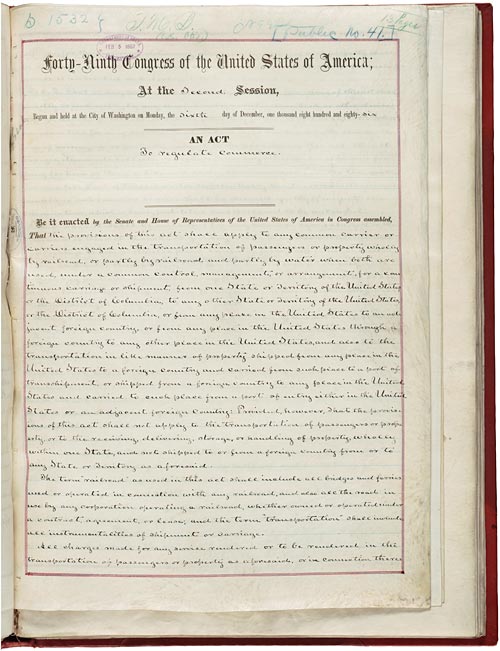
The 1887 law banning secret railroad rebates, a practice Standard Oil had used to undercut rival refiners.
This law banned the railroad rebate practices that Standard Oil, Rockefeller's company, had used against competitors.
About this source
What it is
This handwritten manuscript is the Interstate Commerce Act, passed by the 49th Congress and signed into law in February 1887. It is held by the U.S. National Archives.
Why it matters
The act made railroads the first industry subject to federal regulation, banning special rates and rebates for individual shippers and creating the Interstate Commerce Commission to enforce the rules. Standard Oil, run by Rockefeller, had used secret rebates from railroads to gain an advantage over competing refiners, and this law targeted exactly that kind of practice.
Look closer
- Why would railroad rebates give one company an unfair advantage over its rivals?
- Who benefited and who was harmed by the old system of unregulated railroad pricing?
- Why might a law like this be hard to enforce in practice?
This document is part of the curated material that grounds the AI version of John D. Rockefeller on Humy.ai — when students ask about related events, the AI can quote it and cite it.
More John D. Rockefeller sources
Meet the AI John D. Rockefeller →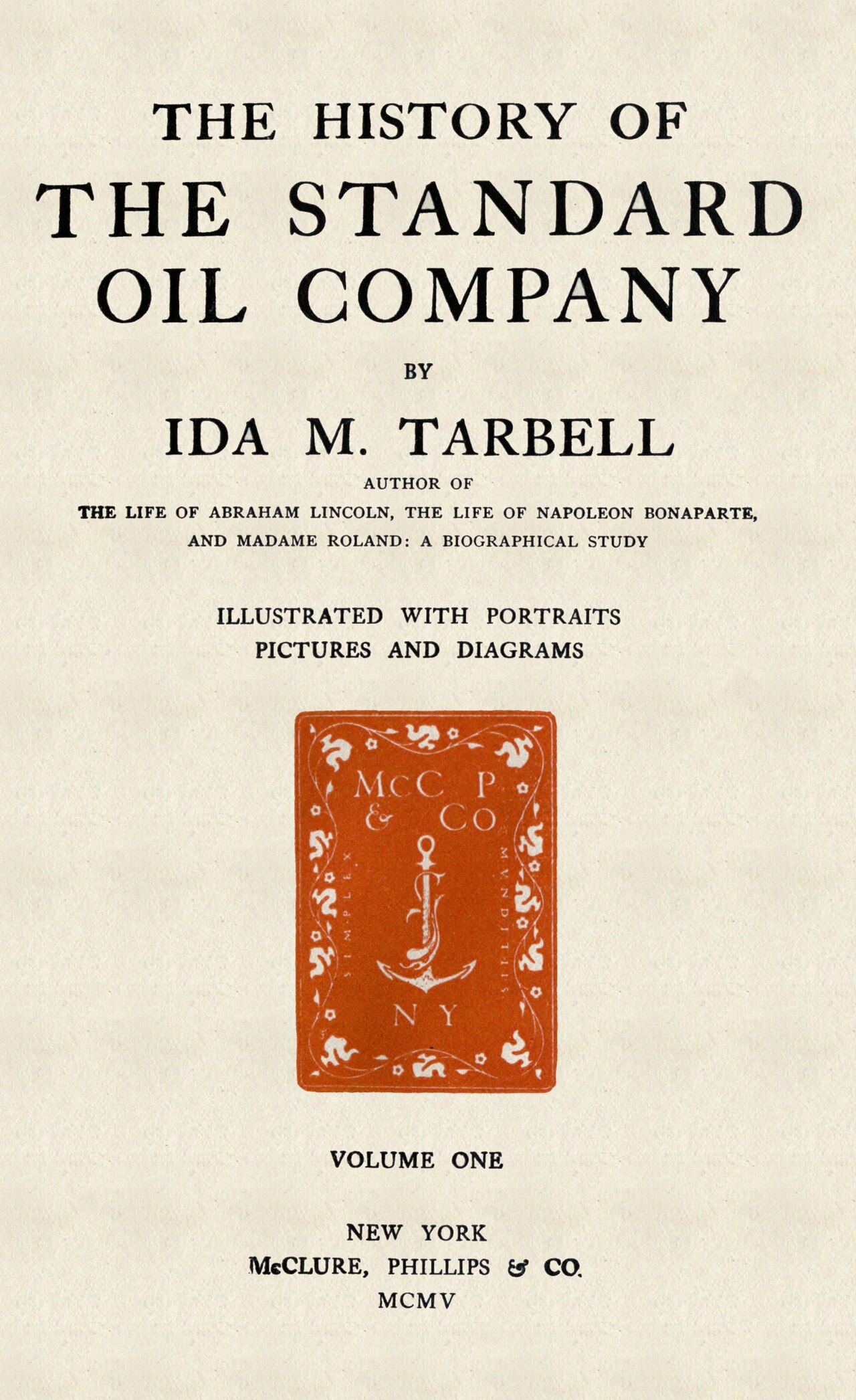 Book
Secondary source
The History of the Standard Oil Company
Ida Tarbell · 1904
 Document
Primary source
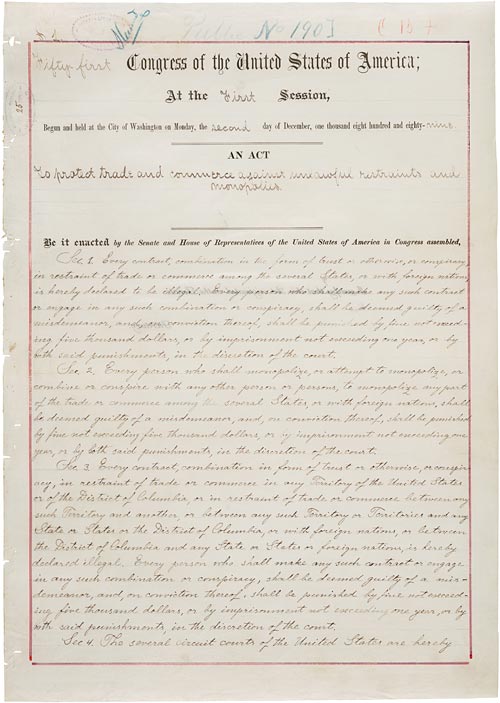
Sherman Anti-Trust Act
2 July 1890
 Painting
Primary source
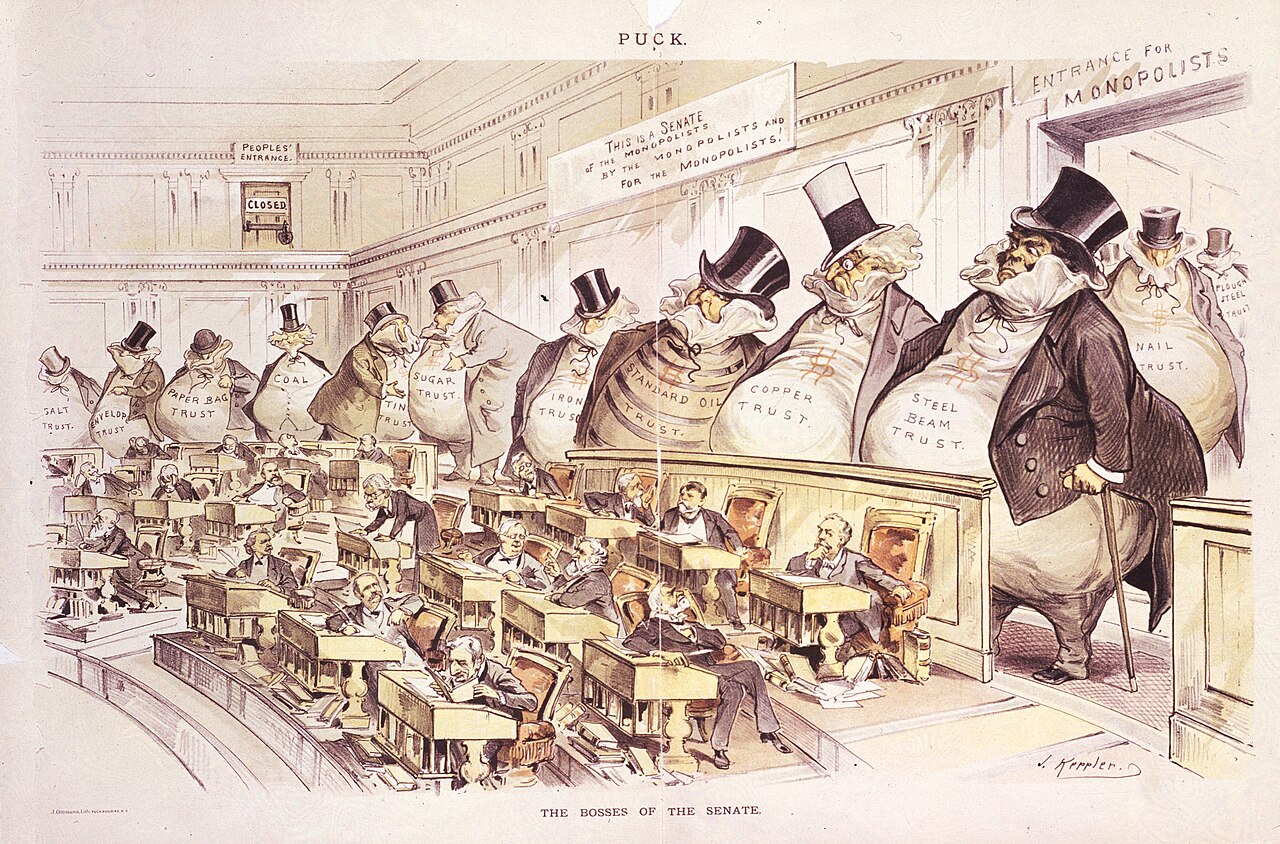
The Bosses of the Senate
Joseph Keppler · 23 January 1889
 Photograph
Primary source
John D. Rockefeller at 22
Unknown · c. 1861
 Document
Primary source
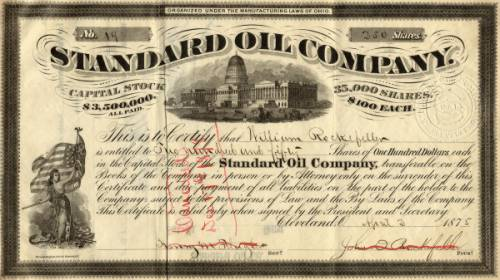
Standard Oil Stock Certificate
Standard Oil Company · 1872
Ready when you are
Start chatting with John D. Rockefeller now.
20 messages free · No credit card · Available in 50+ languages.