


Primary sourceDocument27 July 1953
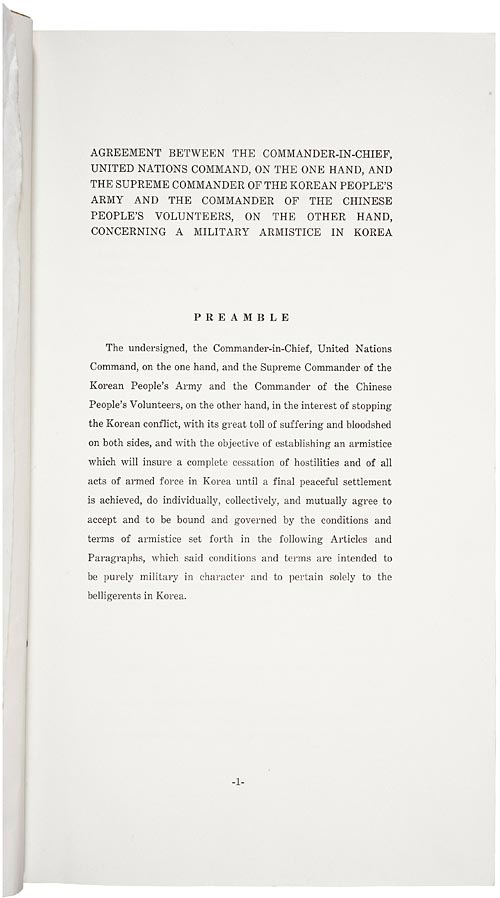
Korean War Armistice Agreement
27 July 1953
The 1953 armistice ending active fighting in the Korean War, achieved early in Eisenhower's presidency after his campaign pledge to end the war.
This armistice ended the Korean War five days after Glenn's third MiG kill as a Marine fighter pilot.
About this source
What it is
This is the Korean War Armistice Agreement, signed July 27, 1953, at Panmunjom by U.S. Lt. Gen. William K. Harrison, Jr. for the United Nations Command and North Korean Gen. Nam Il for the Korean People's Army and Chinese People's Volunteers. It is held by the U.S. National Archives.
Why it matters
The agreement ended three years of fighting that followed North Korea's 1950 invasion across the 38th parallel, though it was a military truce, not a peace treaty. Dwight D. Eisenhower, who had pledged during his 1952 campaign to end the war, announced the agreement to Americans on television, honoring the many U.S. troops who had served and died in Korea. The document shows how Cold War conflicts were often settled through uneasy truces rather than lasting peace.
Look closer
- Why do you think the agreement is described as "purely a military document" with no nation as a signatory?
- What does Eisenhower's warning that this was "an armistice on a single battleground—not peace in the world" suggest about his view of the Cold War?
- Why might Korea remain divided along nearly the same lines as before the war?
This document is part of the curated material that grounds the AI version of John Glenn, Dwight D. Eisenhower and Douglas MacArthur on Humy.ai — when students ask about related events, the AI can quote it and cite it.
More John Glenn sources
Meet the AI John Glenn →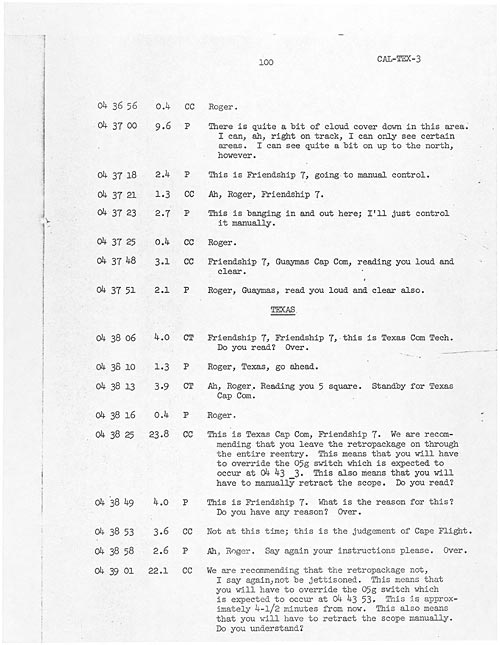 Document
Primary source
Transcript of John Glenn's Official Communication with the Command Center
28 February 1962
 Artifact
Primary source
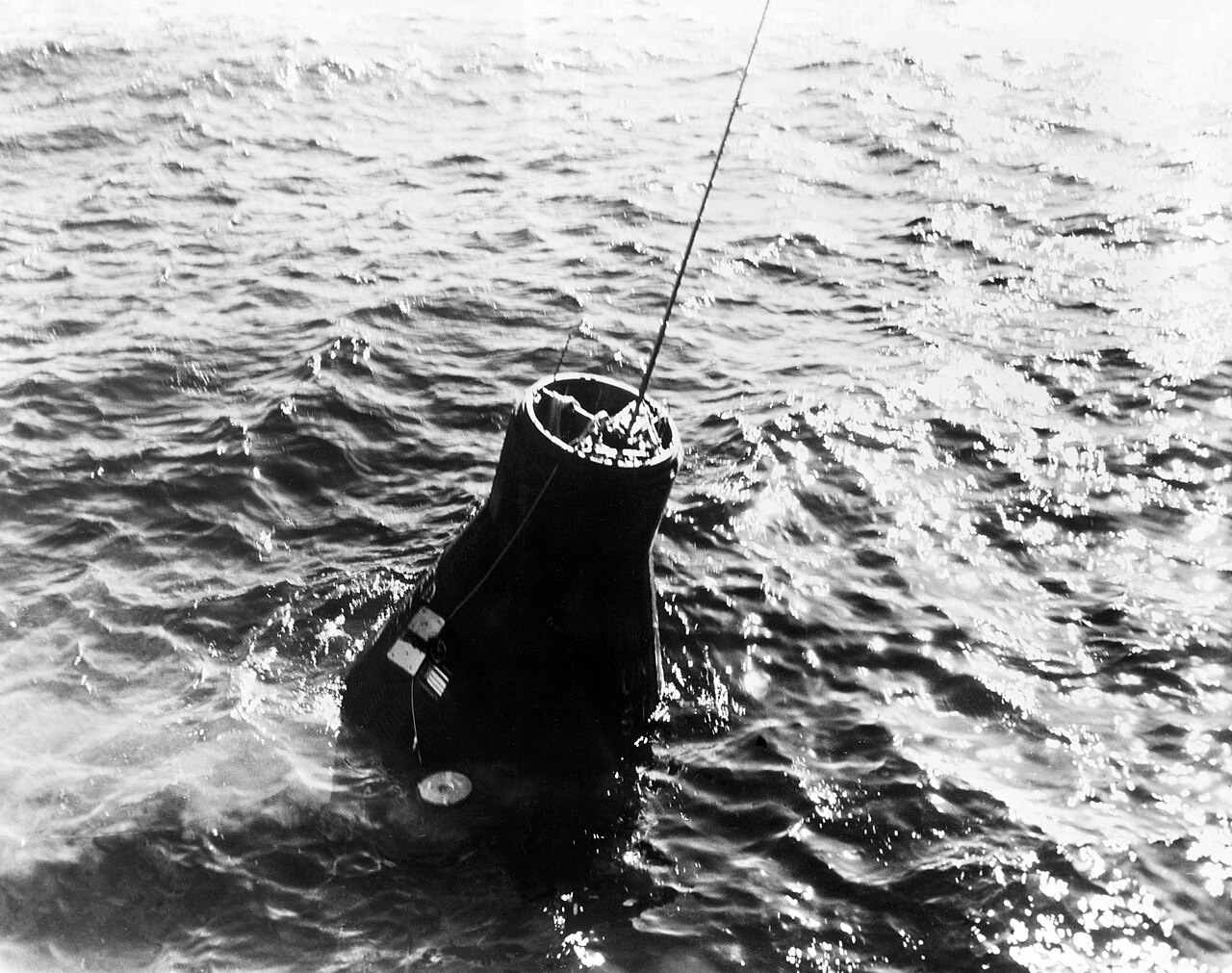
Friendship 7 Mercury Spacecraft
McDonnell Aircraft / NASA · 1962
 Artifact
Primary source
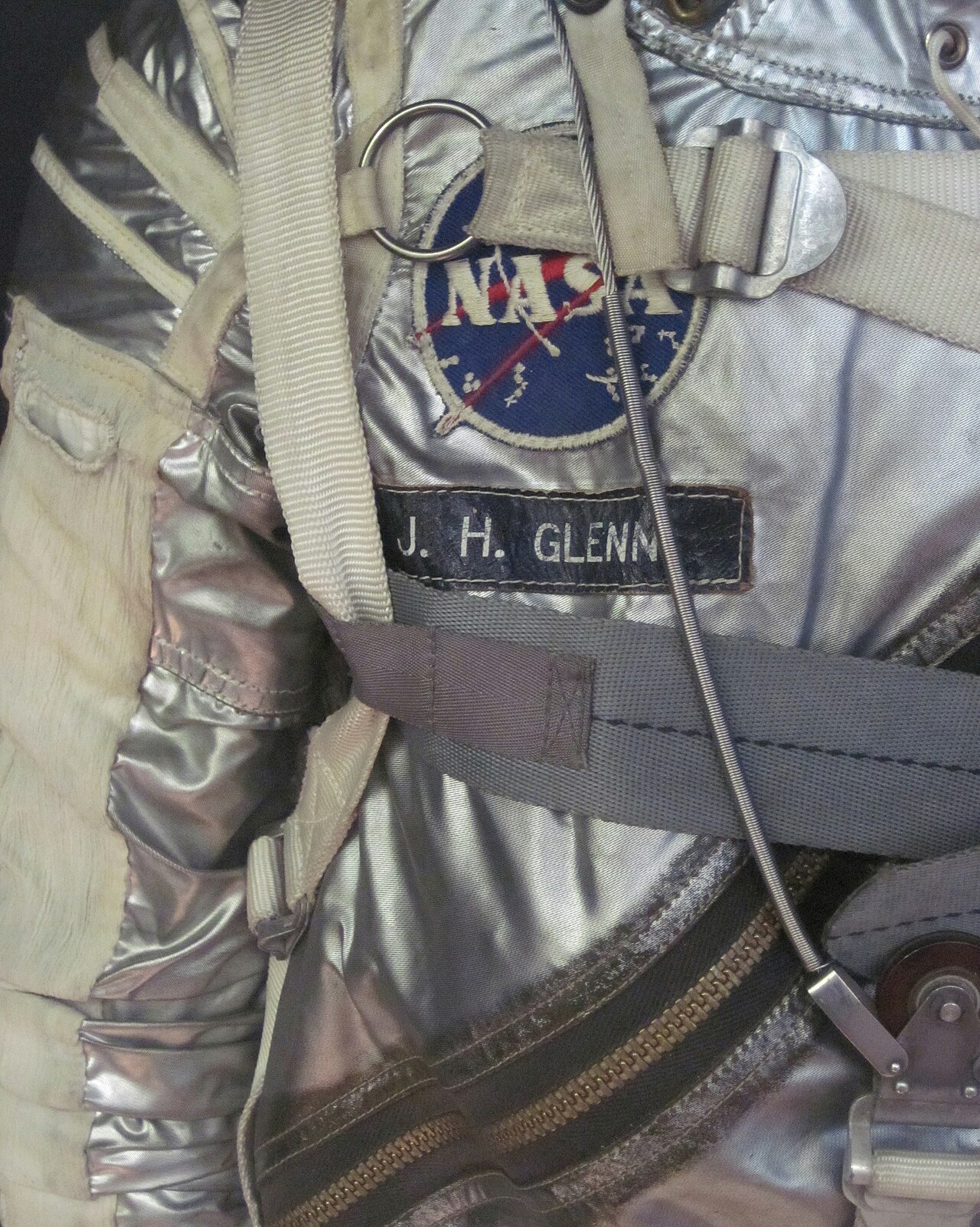
Mercury Pressure Suit Worn by John Glenn
1962
 Photograph
Primary source
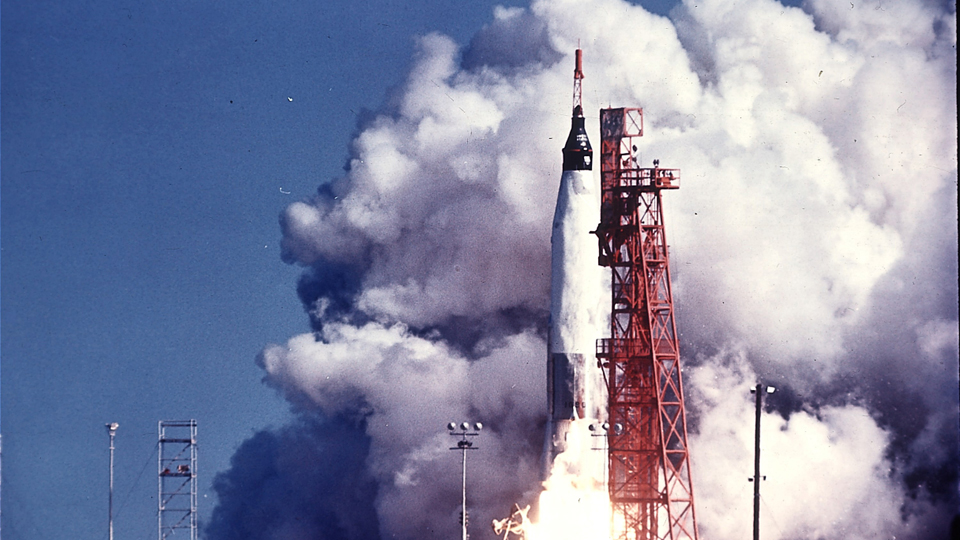
Launch of Mercury-Atlas 6 (Friendship 7)
NASA · 20 February 1962
 Photograph
Primary source
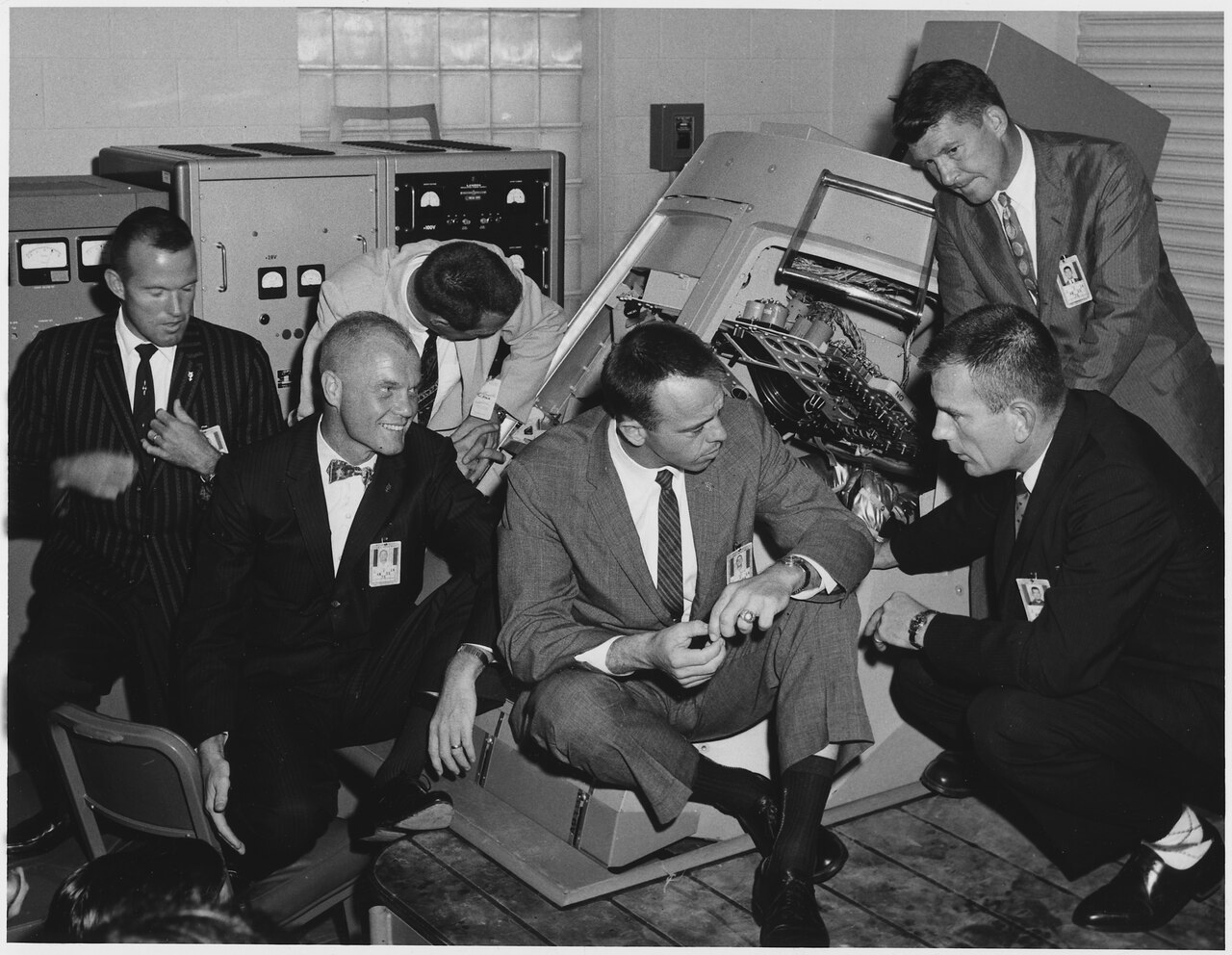
John Glenn Jr. and Others Around Capsule
Unknown
Ready when you are
Start chatting with John Glenn now.
20 messages free · No credit card · Available in 50+ languages.