


Primary sourceBook13th century
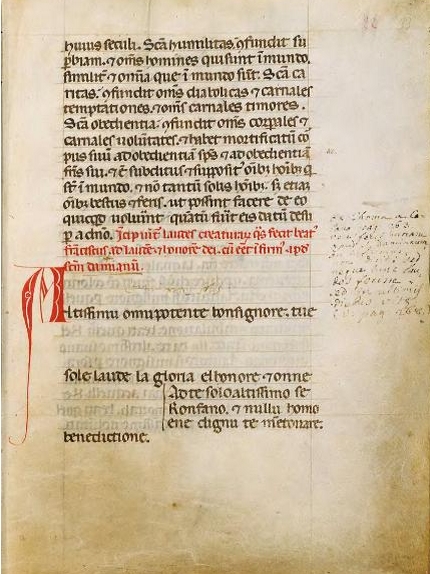
Laudes creaturarum Manuscript Page
Francis of Assisi · 13th century
A page from a 13th-century manuscript of Francis of Assisi's Canticle of the Creatures, close to his own lifetime.
This manuscript page preserves Francis's own composition, the Canticle of the Creatures, in a copy close to his lifetime.
About this source
What it is
This is a photograph of folios from a 13th-century manuscript, Codex 338, held in Assisi. It preserves the text of the Laudes creaturarum (Canticle of the Creatures), composed by Francis of Assisi.
Why it matters
The Canticle is one of the earliest known works of Italian literature and one of the few texts attributed directly to Francis himself. Its survival in a manuscript so close to his own time lets historians study his words almost as he spoke them, giving a rare direct link to his voice and ideas about creation and faith.
Look closer
- What details in the handwriting or layout suggest this is a medieval, not modern, document?
- Why might marginal notes have been added later, and what do they tell us about how the text was used?
- What is missing from a page like this that a translation would need to explain?
This book is part of the curated material that grounds the AI version of Saint Francis on Humy.ai — when students ask about related events, the AI can quote it and cite it.
More Saint Francis sources
Meet the AI Saint Francis →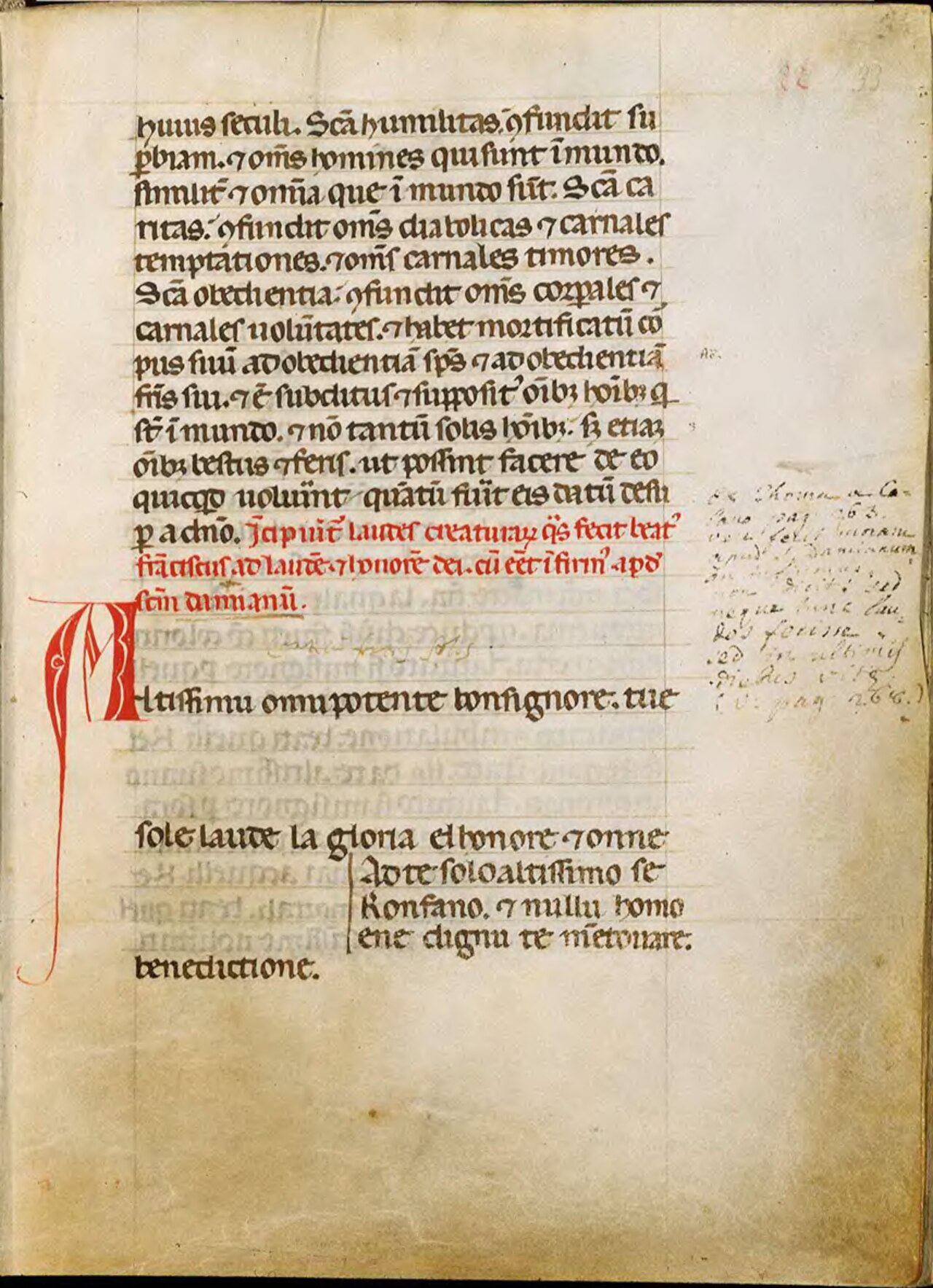 Book
Primary source
Canticle of the Sun
Francis of Assisi · 1226
 Document
Primary source
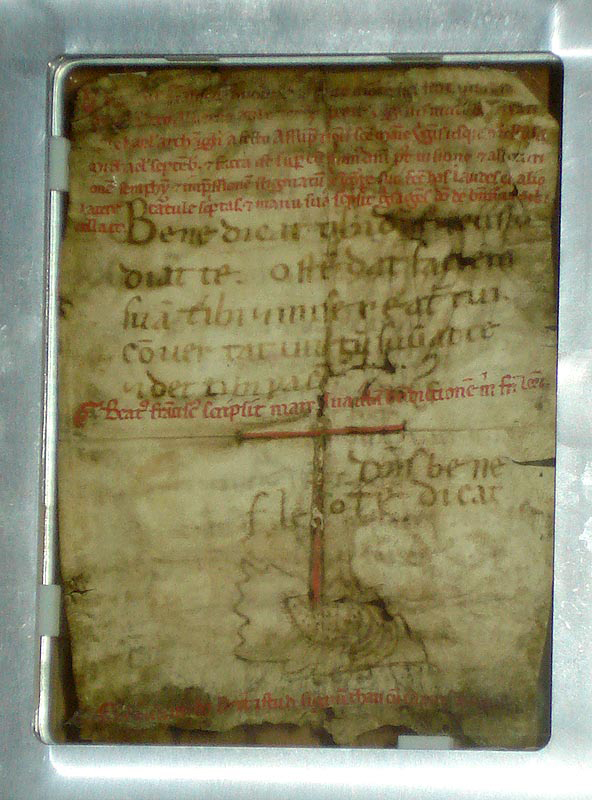
Chartula fratri Leonis
Francis of Assisi · 1224
Secondary source
First Life of Saint Francis
Thomas of Celano · 1230
 Painting
Secondary source
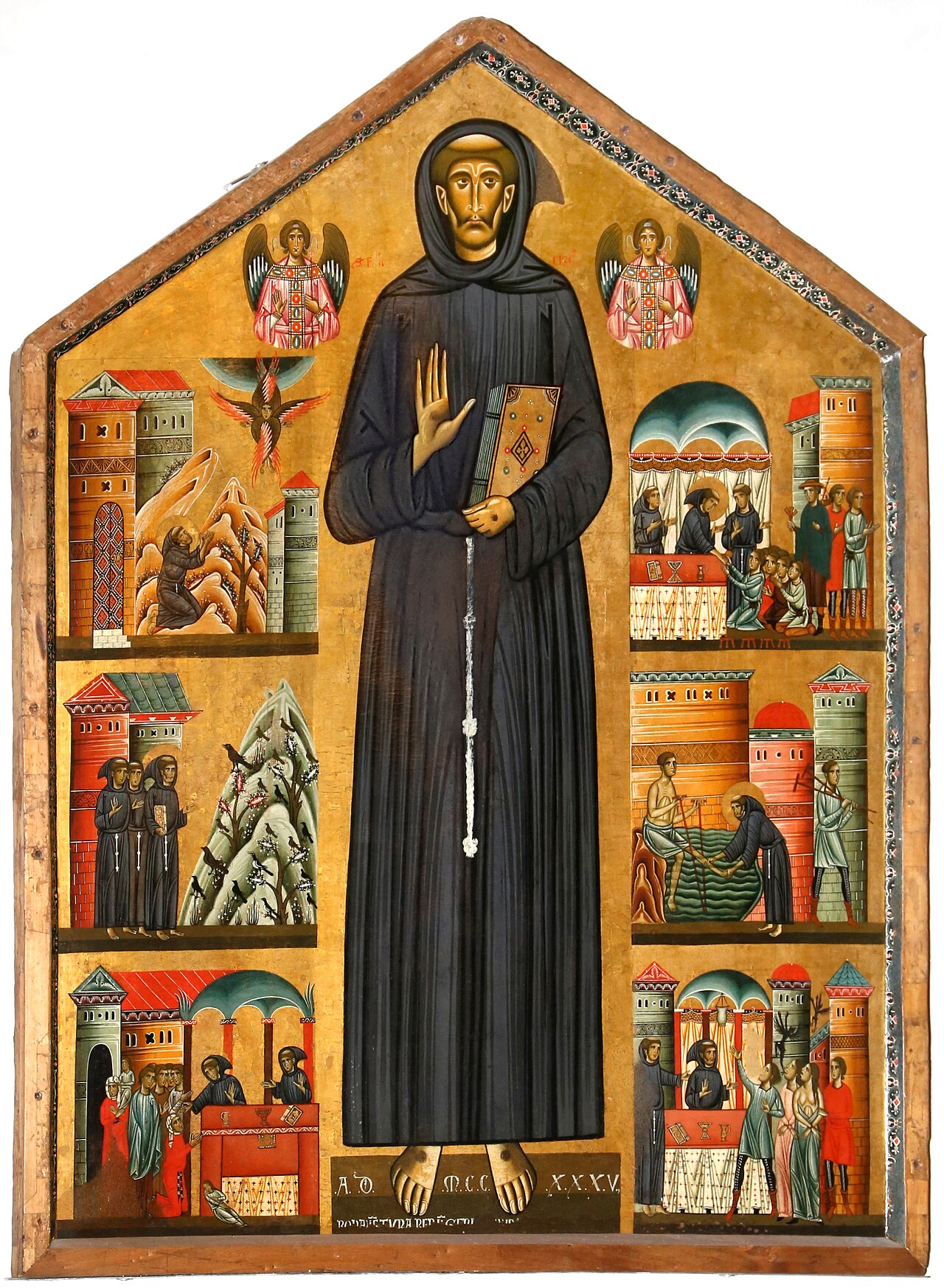
Saint Francis of Assisi and Scenes of His Life
Bonaventura Berlinghieri · 1235
 Artifact
Secondary source
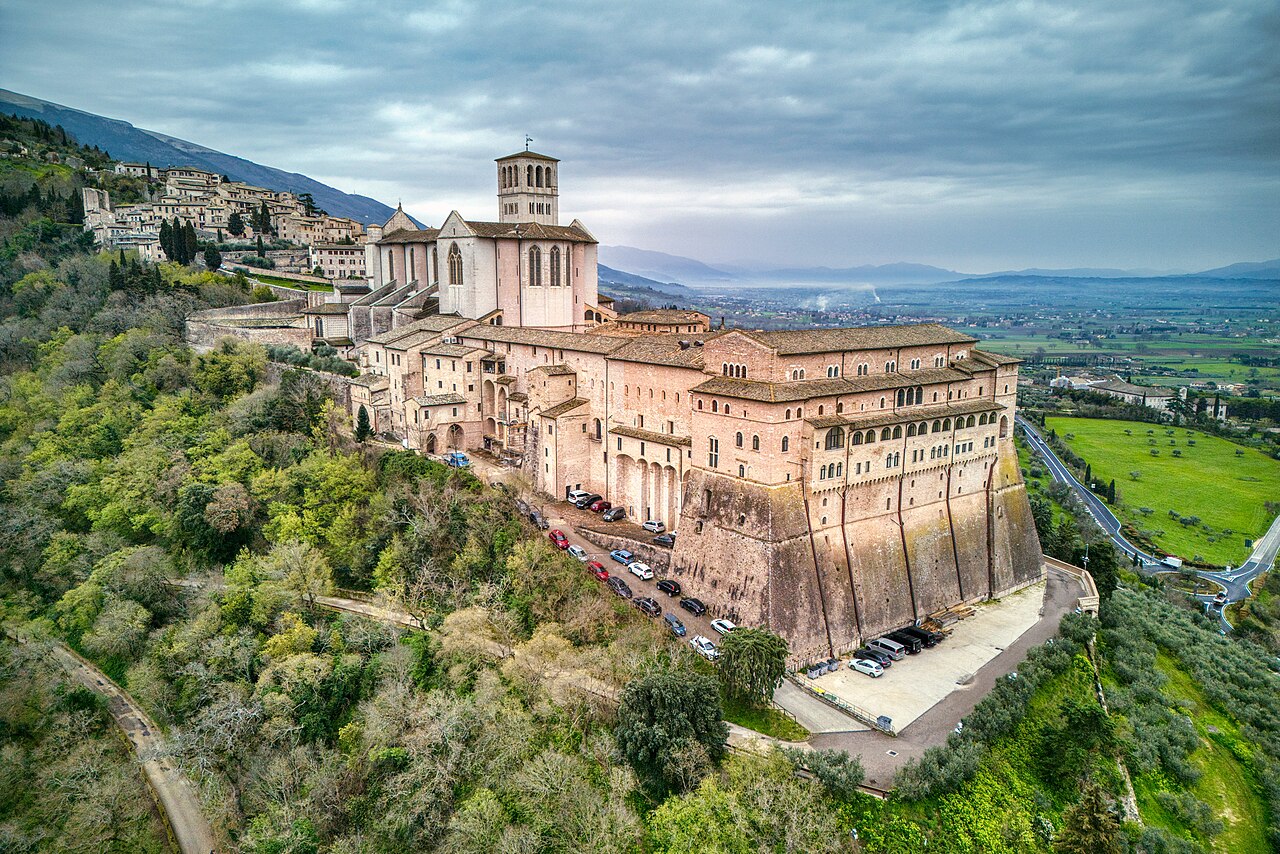
Basilica of San Francesco d'Assisi
begun 1228
Ready when you are
Start chatting with Saint Francis now.
20 messages free · No credit card · Available in 50+ languages.