


Primary sourceDocument1871
Mendeleev's Periodic System (1871)
Dmitri Mendeleev · 1871
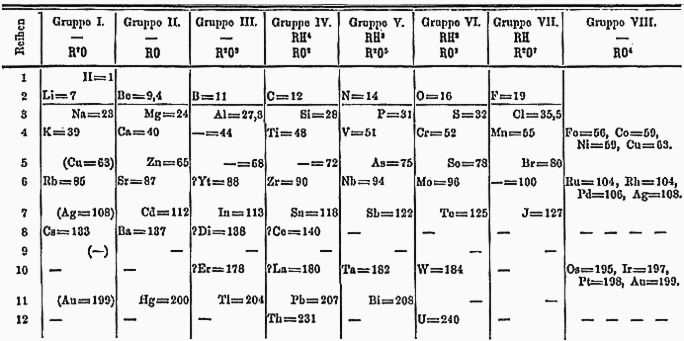
A refined 1871 version of Mendeleev's periodic table, with dashes marking elements he predicted but that had not yet been discovered.
This refined table is Mendeleev's own improved version, showing his predictions of yet-undiscovered elements.
About this source
What it is
This is a scanned table of Mendeleev's 1871 periodic system, with columns labeled Group I to Group VIII and rows numbered 1 to 12, listing element symbols with their atomic weights. Dashes mark the positions of elements predicted but not yet found.
Why it matters
This later, more refined version of the table is the one most often used to show how accurately Mendeleev's predictions came true. The dashes stand for elements such as eka-aluminium, eka-boron and eka-silicon, which were later discovered and matched his predicted properties closely.
Look closer
- Why do you think Mendeleev used dashes rather than leaving blank spaces?
- What does it mean for a scientific prediction to later be confirmed by discovery?
- How does this table differ in organization from his 1869 version?
This document is part of the curated material that grounds the AI version of Dmitri Mendeleev on Humy.ai — when students ask about related events, the AI can quote it and cite it.
More Dmitri Mendeleev sources
Browse all 42 →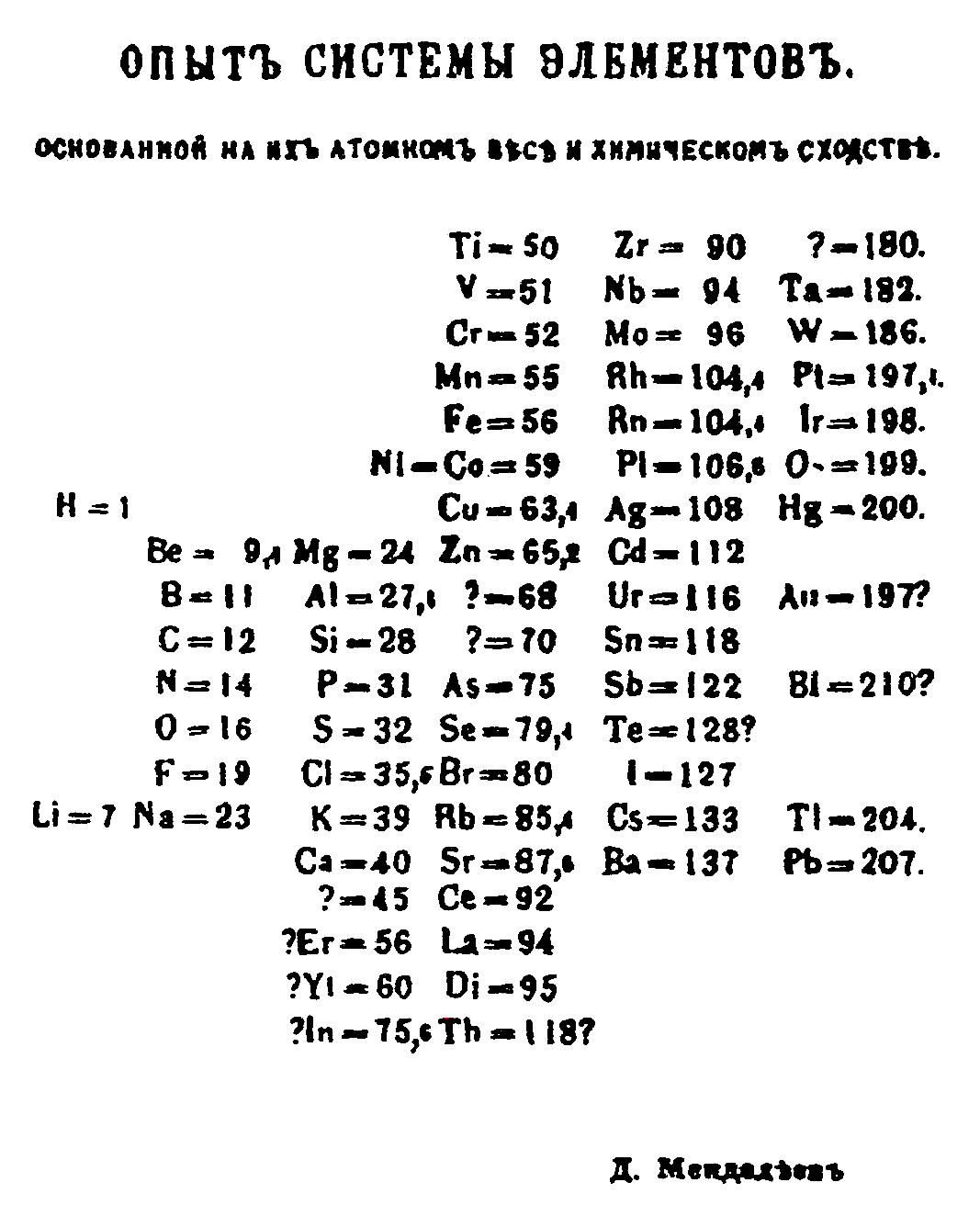 Document
Primary source
Attempt at a System of Elements (1869)
Dmitri Mendeleev · 1869
 Document
Primary source
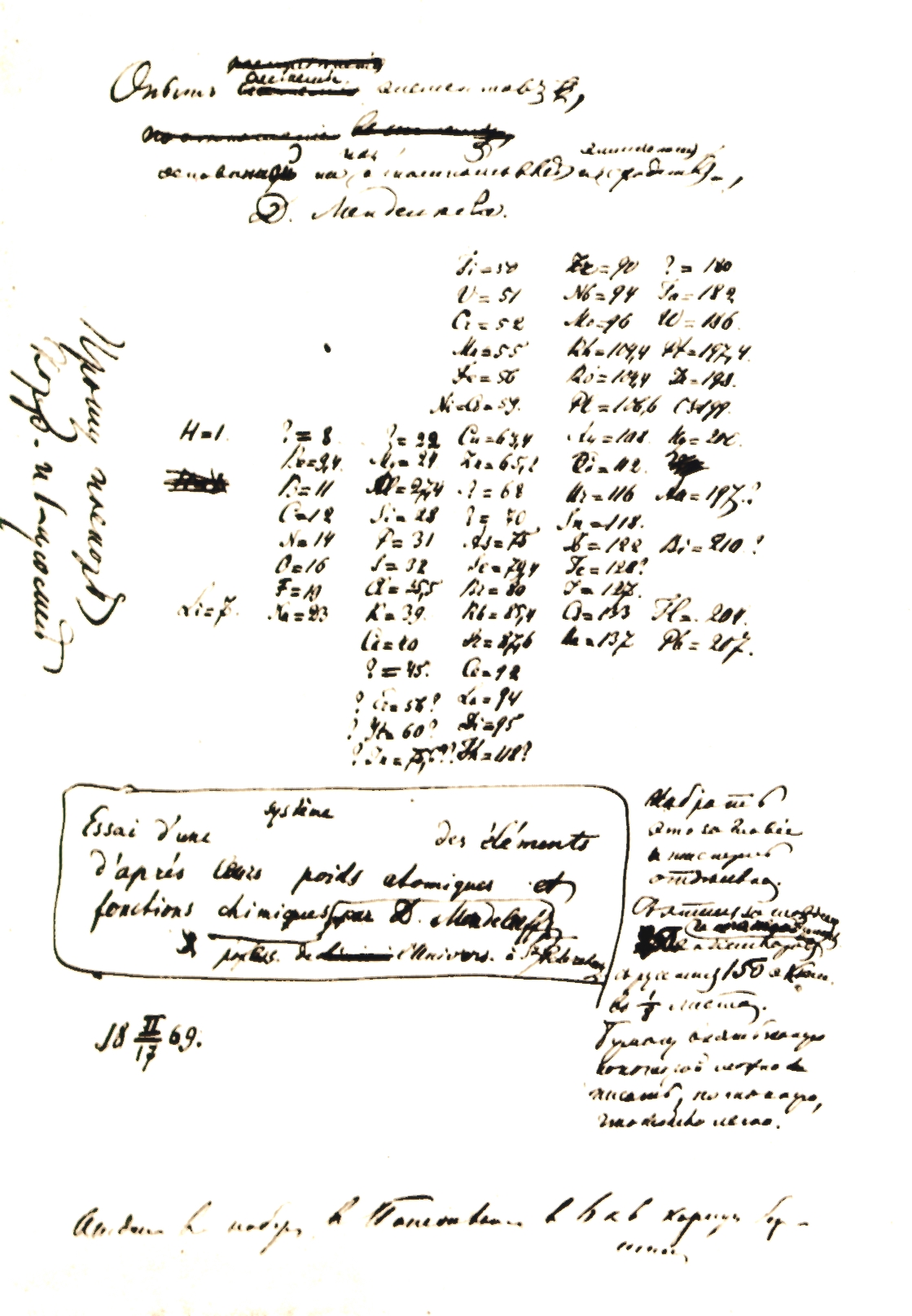
Handwritten Draft of the Periodic Law
Dmitri Mendeleev · 17 February 1869
 Document
Primary source
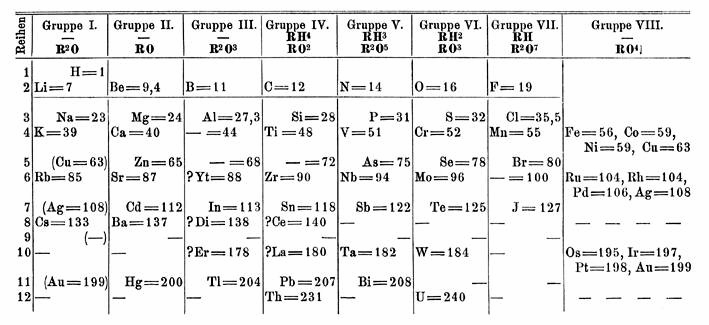
Mendeleev's Periodic System (Liebig's Annalen, 1872)
Dmitri Mendeleev · 1871–1872
 Photograph
Primary source
Portrait of Dmitri Mendeleev
Free account
Browse every Dmitri Mendeleev source
Sign up free →
Ready when you are
Start chatting with Dmitri Mendeleev now.
20 messages free · No credit card · Available in 50+ languages.