


Primary sourceDocument1875
Minor v. Happersett Supreme Court Decision
U.S. Supreme Court (Chief Justice Morrison Waite) · 1875
The 1875 U.S. Supreme Court ruling that rejected the argument Anthony had made that the Constitution already gave women the right to vote.
This ruling rejected the constitutional argument Anthony had made after her 1872 vote, redirecting her campaign toward a federal amendment.
About this source
What it is
This is the 1875 decision of the U.S. Supreme Court, written under Chief Justice Morrison Waite, in the case Minor v. Happersett. It is held by the U.S. National Archives.
Why it matters
The ruling held that the Constitution did not already guarantee women the right to vote under the Fourteenth Amendment — the very argument Susan B. Anthony had made after casting her illegal vote in 1872. The decision was a major setback for the suffrage movement and pushed Anthony and her allies to campaign instead for a separate constitutional amendment guaranteeing women's suffrage.
Look closer
- Why might activists have hoped the Fourteenth Amendment, written to protect the rights of newly freed enslaved people, could also be used to secure votes for women?
- How did this legal defeat change the strategy of the suffrage movement?
- What does this case show about the limits of using the courts, rather than lawmaking, to win political rights?
This document is part of the curated material that grounds the AI version of Susan B. Anthony on Humy.ai — when students ask about related events, the AI can quote it and cite it.
More Susan B. Anthony sources
Meet the AI Susan B. Anthony →Primary source
Susan B. Anthony's Petition for Remission of Fine
Susan B. Anthony · 1874
 Document
Primary source
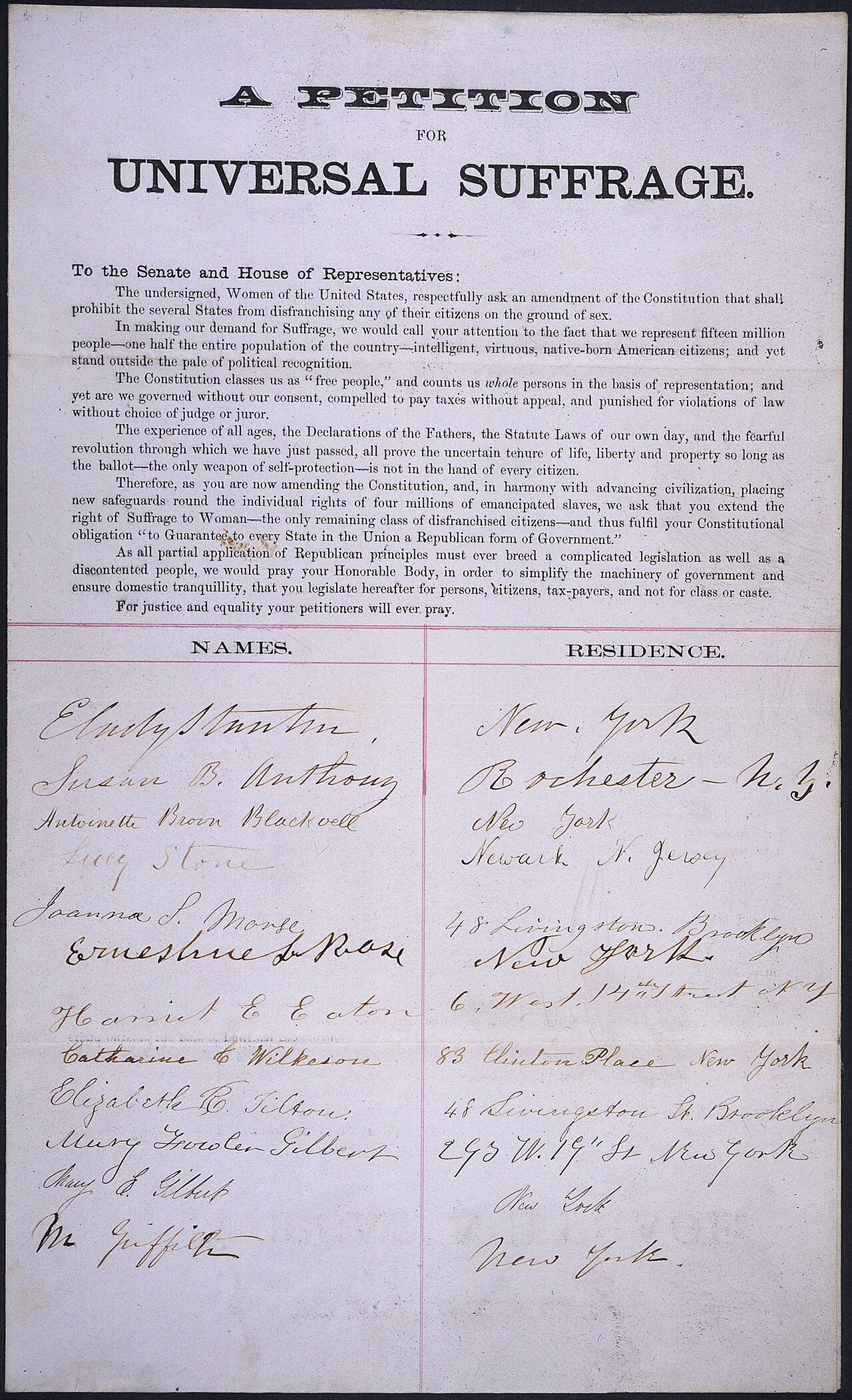
Petition for Universal Suffrage, circa 1865
Susan B. Anthony and others · circa 1865
 Newspaper article
Primary source
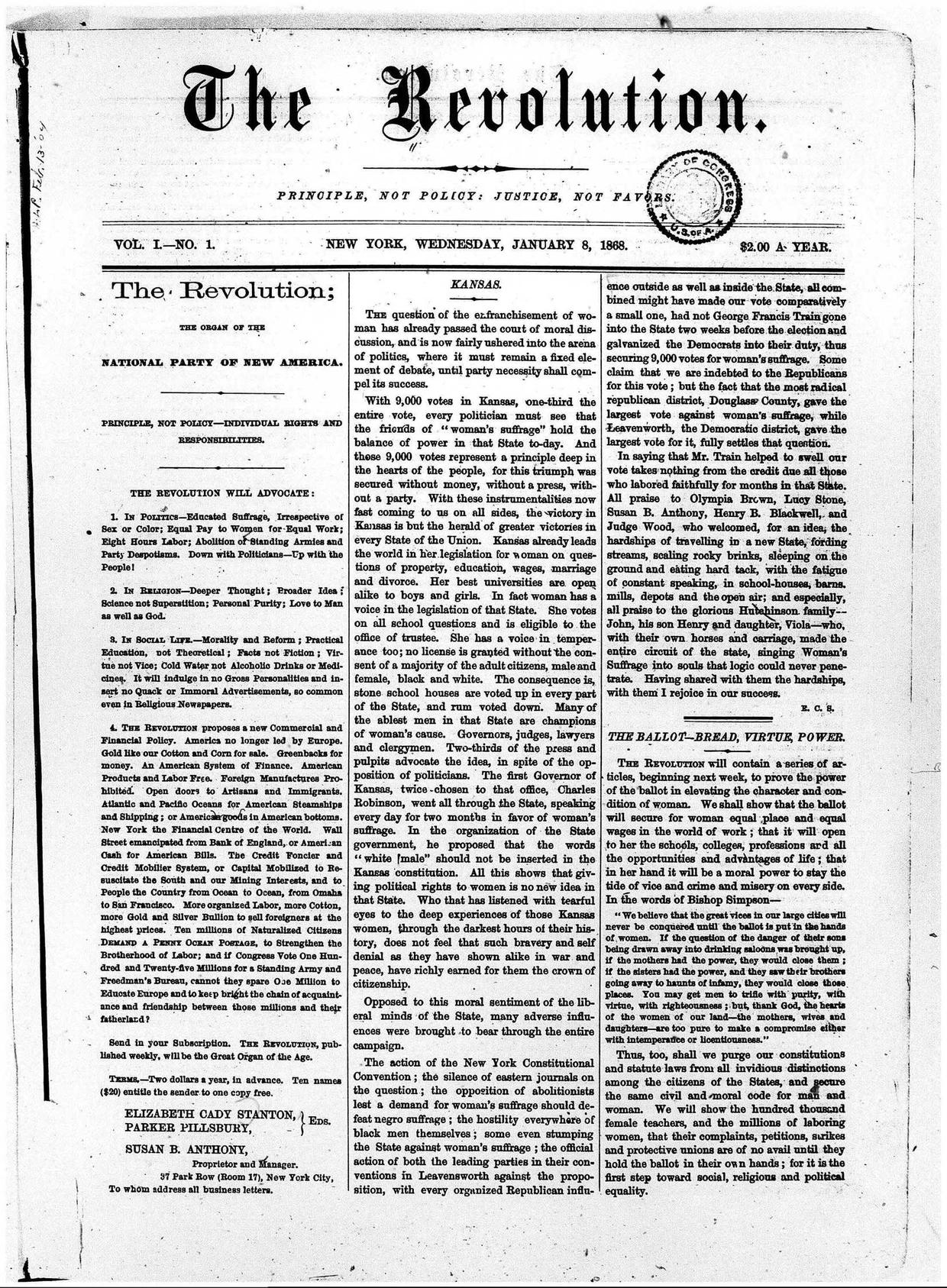
The Revolution
Elizabeth Cady Stanton · 1868
 Book
Secondary source
History of Woman Suffrage
Elizabeth Cady Stanton · 1881-1922
 Photograph
Primary source
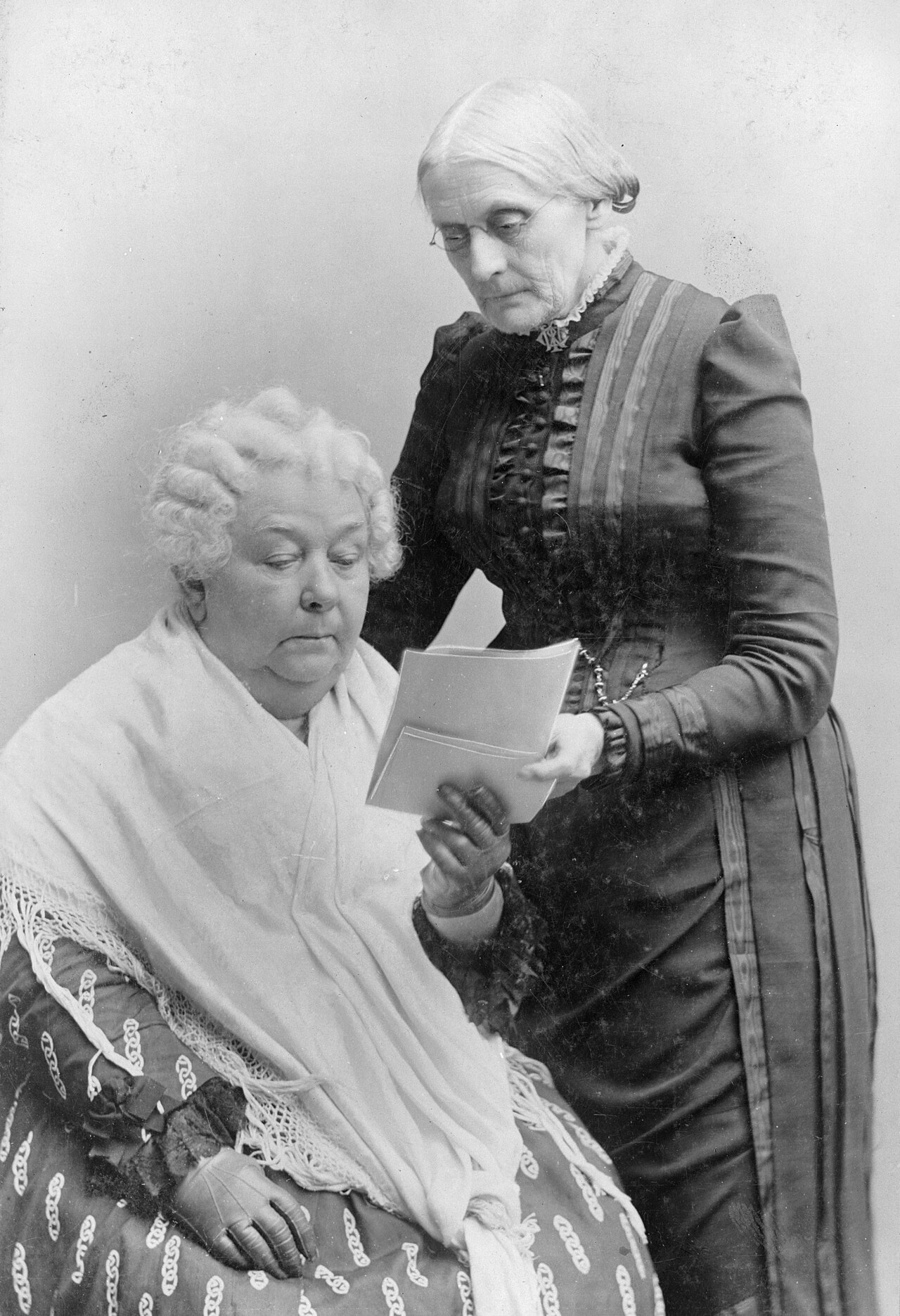
Elizabeth Cady Stanton and Susan B. Anthony
Ready when you are
Start chatting with Susan B. Anthony now.
20 messages free · No credit card · Available in 50+ languages.